
Sharp Aquos Zero 2 vs Sony Xperia XZ3: A Detailed Comparison of 2019 Flagships
| Phones Images | |||||
|---|---|---|---|---|---|
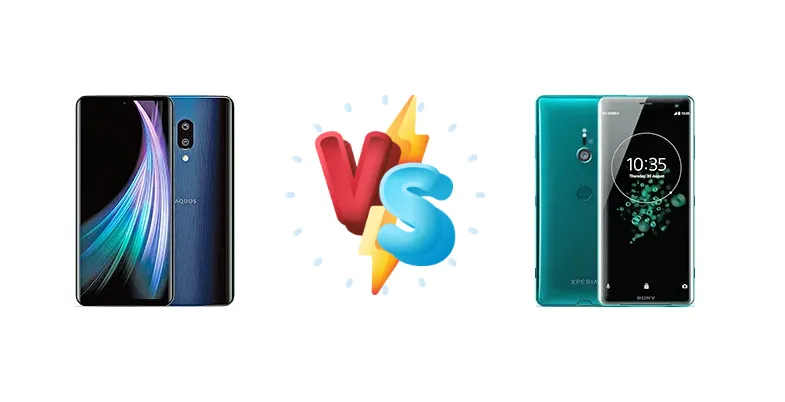
|
🏆 Quick Verdict
For the average user seeking a phone that still feels relatively modern, the Sharp Aquos Zero 2 emerges as the better choice. Its Snapdragon 855 chipset offers a noticeable performance advantage over the Xperia XZ3’s Snapdragon 845, and while both boast similar battery endurance ratings, the 855’s efficiency provides a slight edge in sustained usage.
| PHONES | ||
|---|---|---|
| Phone Names | Sharp Aquos Zero 2 | Sony Xperia XZ3 |
| Network | ||
|---|---|---|
| 2G bands | GSM 850 / 900 / 1800 / 1900 | GSM 850 / 900 / 1800 / 1900 |
| 3G bands | HSDPA 850 / 900 / 1700(AWS) / 1900 / 2100 | HSDPA 800 / 850 / 900 / 1700(AWS) / 1900 / 2100 - H8416, H9436, H9493 |
| 4G bands | 1, 2, 3, 4, 5, 6, 7, 8, 11, 12, 13, 17, 18, 19, 20, 28, 38, 39, 41 - Taiwan | 1, 2, 3, 4, 5, 7, 8, 12, 13, 17, 19, 20, 26, 28, 29, 32, 38, 39, 40, 41, 46, 66 - H8416, H9436, H9493 |
| Speed | HSPA, LTE | HSPA 42.2/5.76 Mbps, LTE (5CA) Cat18 1200/200 Mbps |
| Technology | GSM / HSPA / LTE | GSM / HSPA / LTE |
| Launch | ||
|---|---|---|
| Announced | 2020, May 22. Released 2020, May 22 | 2018, August 30. Released 2018, October 05 |
| Status | Discontinued | Discontinued |
| Body | ||
|---|---|---|
| Build | - | Glass front (Gorilla Glass 5), glass back (Gorilla Glass 5), aluminum frame |
| Dimensions | 158 x 74 x 8.8 mm (6.22 x 2.91 x 0.35 in) | 158 x 73 x 9.9 mm (6.22 x 2.87 x 0.39 in) |
| SIM | Nano-SIM | · Nano-SIM· Nano-SIM + Nano-SIM |
| Weight | 141 g (4.97 oz) | 193 g (6.81 oz) |
| IP68 dust/water resistant (up to 1.5m for 30 mins) | IP65/IP68 dust/water resistant (up to 1.5m for 30 mins) | |
| Display | ||
|---|---|---|
| Protection | Corning Gorilla Glass 6 | Corning Gorilla Glass 5 |
| Resolution | 1080 x 2340 pixels, 19.5:9 ratio (~403 ppi density) | 1440 x 2880 pixels, 18:9 ratio (~537 ppi density) |
| Size | 6.4 inches, 100.5 cm2 (~86.0% screen-to-body ratio) | 6.0 inches, 92.9 cm2 (~80.5% screen-to-body ratio) |
| Type | OLED, 1B colors, 240Hz, HDR10, Dolby Vision | P-OLED, HDR BT.2020 |
| - | Triluminos display X-Reality Engine | |
| Platform | ||
|---|---|---|
| CPU | Octa-core (1x2.84 GHz Kryo 485 & 3x2.42 GHz Kryo 485 & 4x1.78 GHz Kryo 485) | Octa-core (4x2.7 GHz Kryo 385 Gold & 4x1.7 GHz Kryo 385 Silver) |
| Chipset | Qualcomm SM8150 Snapdragon 855 (7 nm) | Qualcomm SDM845 Snapdragon 845 (10 nm) |
| GPU | Adreno 640 | Adreno 630 |
| OS | Android 10 | Android 9.0 (Pie), upgradable to Android 10 |
| Memory | ||
|---|---|---|
| Card slot | No | microSDXC (uses shared SIM slot) - dual SIM model only |
| Internal | 256GB 8GB RAM | 64GB 4GB RAM, 64GB 6GB RAM |
| UFS 3.0 | UFS 2.1 | |
| Main Camera | ||
|---|---|---|
| Dual | 12.2 MP, f/1.7, (wide), 1/2.55", 1.4µm, dual pixel PDAF, OIS 20 MP, f/2.4, 125˚ (ultrawide), AF | - |
| Features | LED flash, HDR, panorama | Laser AF, color spectrum sensor, LED flash, panorama, HDR |
| Single | - | 19 MP, f/2.0, 25mm (wide), 1/2.3", 1.22µm, predictive PDAF |
| Video | 4K@30fps, 1080p@30fps, gyro-EIS | 4K@30fps, 1080p@60fps, 1080p@30fps (5-axis gyro-EIS), 1080p@960fps, HDR |
| Selfie camera | ||
|---|---|---|
| Features | HDR | HDR |
| Single | 8 MP, f/2.2, 23mm (wide) | 13 MP, f/1.9, 23mm (wide), 1/3.1", 1.12µm |
| Video | 1080p@30fps, gyro-EIS | 1080p@30fps (5-axis gyro-EIS) |
| Sound | ||
|---|---|---|
| 3.5mm jack | No | No |
| 35mm jack | No | No |
| Loudspeaker | Yes, with stereo speakers | Yes, with stereo speakers |
| 24-bit/192kHz audio | 24-bit/192kHz audio Dynamic vibration system | |
| Comms | ||
|---|---|---|
| Bluetooth | 5.0, A2DP, LE, aptX HD, aptX Adaptive | 5.0, A2DP, aptX HD, LE |
| NFC | Yes | Yes |
| Positioning | GPS (L1+L5), GLONASS, BDS, GALILEO, QZSS | GPS, GLONASS, BDS, GALILEO |
| Radio | No | No |
| USB | USB Type-C 2.0 | USB Type-C 3.1, OTG |
| WLAN | Wi-Fi 802.11 a/b/g/n/ac, dual-band, Wi-Fi Direct | Wi-Fi 802.11 a/b/g/n/ac, dual-band, Wi-Fi Direct, DLNA |
| Features | ||
|---|---|---|
| Sensors | Fingerprint (under display, optical), accelerometer, gyro, proximity, compass | Fingerprint (rear-mounted), accelerometer, gyro, proximity, barometer, compass |
| Battery | ||
|---|---|---|
| Charging | Wired, PD2.0 | 18W wired, PD2.0 Wireless (Qi) |
| Type | Li-Ion 3130 mAh | Li-Ion 3300 mAh, non-removable |
| Misc | ||
|---|---|---|
| Colors | Blue | Black, Silver White, Forest Green, Bordeaux Red |
| Models | SH-Z20, SHV47, 906SH | H9436, H8416, H9493 |
| Price | About 670 EUR | About 510 EUR |
| Tests | ||
|---|---|---|
| Audio quality | - | Noise -91.2dB / Crosstalk -88.7dB |
| Battery life | - | Endurance rating 90h |
| Camera | - | Photo / Video |
| Display | - | Contrast ratio: Infinite (nominal), 4.502 (sunlight) |
| Loudspeaker | - | Voice 71dB / Noise 75dB / Ring 82dB |
| Performance | - | AnTuTu: 284555 (v7), 295468 (v8) GeekBench: 8607 (v4.4), 2137 (v5.1) GFXBench: 19fps (ES 3.1 onscreen) |
Sharp Aquos Zero 2
- More powerful Snapdragon 855 processor
- More efficient 7nm process node
- Potentially better sustained performance
- Lacks wireless charging
- Limited camera information available
Sony Xperia XZ3
- Wireless charging support (Qi)
- Likely superior display quality (OLED)
- Sony’s refined software experience
- Older Snapdragon 845 processor
- Less efficient 10nm process node
Display Comparison
Both the Aquos Zero 2 and Xperia XZ3 share an 'Infinite' contrast ratio (nominal) and a 4.502 sunlight contrast ratio, suggesting similar outdoor visibility. However, the specifics of panel technology are missing. Given Sony’s history with OLED, the XZ3 likely utilizes an OLED panel, offering superior blacks and color vibrancy. The Aquos Zero 2, known for its focus on cost optimization, may have used an LCD. The lack of detailed display specs like peak brightness or color gamut coverage makes a definitive judgment difficult, but Sony’s display expertise likely gives the XZ3 an edge in overall visual quality.
Camera Comparison
Both devices are listed as having 'Photo / Video' capabilities, but detailed camera specifications are absent. Sony historically excels in camera technology, and the XZ3 likely benefits from Sony’s image processing algorithms and potentially a larger sensor. However, without knowing sensor sizes, lens apertures, or OIS implementation, it’s impossible to declare a clear winner. The absence of any mention of multiple cameras suggests a focus on single-lens quality rather than versatility. The XZ3’s brand reputation suggests a more refined camera experience, but the Aquos Zero 2 could potentially offer competitive results depending on its sensor and software.
Performance
The core difference lies in the chipsets: the Aquos Zero 2 features the Qualcomm SM8150 Snapdragon 855 (7nm), while the Xperia XZ3 uses the older SDM845 Snapdragon 845 (10nm). The 855’s 7nm process node is more efficient, leading to lower power consumption and potentially less thermal throttling under sustained load. The CPU architecture also differs; the 855’s Kryo 485 cores (2.84 GHz prime core) offer a performance uplift compared to the 845’s Kryo 385 Gold cores (2.7 GHz). While both phones likely shipped with ample RAM, the 855’s improved memory controller further enhances performance. This translates to faster app loading times, smoother multitasking, and a more responsive user experience on the Aquos Zero 2.
Battery Life
Interestingly, both phones share an endurance rating of 90 hours. This suggests similar real-world battery life despite the Aquos Zero 2’s more efficient processor. The Xperia XZ3 offers both 18W wired charging (PD2.0) and Qi wireless charging, providing greater convenience. The Aquos Zero 2 is limited to wired PD2.0 charging. While the 90-hour rating is a good starting point, the Snapdragon 855’s efficiency in the Aquos Zero 2 could translate to slightly longer screen-on time, especially during demanding tasks. The XZ3’s wireless charging is a significant convenience factor.
Buying Guide
Buy the Sharp Aquos Zero 2 if you prioritize raw processing power for demanding applications, gaming, or future-proofing. Its Snapdragon 855 offers a tangible performance boost. Buy the Sony Xperia XZ3 if you value a more polished multimedia experience, wireless charging convenience, and Sony’s unique software features, accepting a slight performance compromise.