
Sharp Aquos Zero 2 vs OnePlus 7T Pro 5G McLaren: A Deep Dive into Snapdragon 855 Variants
| Phones Images | |||||
|---|---|---|---|---|---|
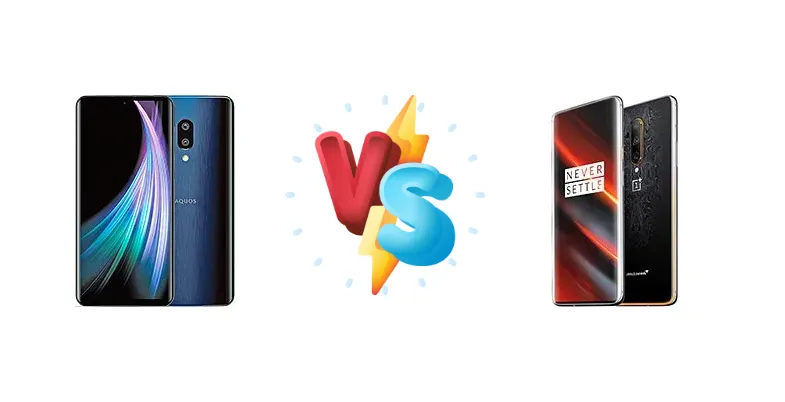
|
🏆 Quick Verdict
For the average user, the OnePlus 7T Pro 5G McLaren emerges as the stronger choice. Its Snapdragon 855+ offers a slight performance edge, and the 30W Warp Charge significantly reduces charging times compared to the Aquos Zero 2’s PD2.0. While the Aquos Zero 2 offers a unique design, the McLaren’s overall package is more compelling.
| PHONES | ||
|---|---|---|
| Phone Names | Sharp Aquos Zero 2 | OnePlus 7T Pro 5G McLaren |
| Network | ||
|---|---|---|
| 2G bands | GSM 850 / 900 / 1800 / 1900 | GSM 850 / 900 / 1800 / 1900 |
| 3G bands | HSDPA 850 / 900 / 1700(AWS) / 1900 / 2100 | HSDPA 850 / 900 / 1700(AWS) / 1900 / 2100 |
| 4G bands | 1, 2, 3, 4, 5, 6, 7, 8, 11, 12, 13, 17, 18, 19, 20, 28, 38, 39, 41 - Taiwan | 1, 2, 3, 4, 5, 1, 2, 3, 4, 5, 7, 8, 12, 13, 17, 18, 19, 20, 25, 26, 28, 29, 30, 34, 38, 39, 40, 41, 46, 48, 66, 71 |
| 5G bands | - | 71 SA |
| Speed | HSPA, LTE | HSPA 42.2/5.76 Mbps, LTE (5CA) Cat18 1200/150 Mbps, 5G (2+ Gbps DL) |
| Technology | GSM / HSPA / LTE | GSM / CDMA / HSPA / LTE / 5G |
| - | CDMA 800 / 1900 & TD-SCDMA | |
| Launch | ||
|---|---|---|
| Announced | 2020, May 22. Released 2020, May 22 | 2019, October 23. Released 2019, November 05 |
| Status | Discontinued | Discontinued |
| Body | ||
|---|---|---|
| Build | - | Glass front (Gorilla Glass 6), glass back (Gorilla Glass 5), aluminum frame |
| Dimensions | 158 x 74 x 8.8 mm (6.22 x 2.91 x 0.35 in) | 162.6 x 75.9 x 8.8 mm (6.40 x 2.99 x 0.35 in) |
| SIM | Nano-SIM | Nano-SIM + Nano-SIM |
| Weight | 141 g (4.97 oz) | 206 g (7.27 oz) |
| IP68 dust/water resistant (up to 1.5m for 30 mins) | - | |
| Display | ||
|---|---|---|
| Protection | Corning Gorilla Glass 6 | Corning Gorilla Glass 6 |
| Resolution | 1080 x 2340 pixels, 19.5:9 ratio (~403 ppi density) | 1440 x 3120 pixels, 19.5:9 ratio (~516 ppi density) |
| Size | 6.4 inches, 100.5 cm2 (~86.0% screen-to-body ratio) | 6.67 inches, 108.8 cm2 (~88.1% screen-to-body ratio) |
| Type | OLED, 1B colors, 240Hz, HDR10, Dolby Vision | Fluid AMOLED, 90Hz, HDR10+ |
| Platform | ||
|---|---|---|
| CPU | Octa-core (1x2.84 GHz Kryo 485 & 3x2.42 GHz Kryo 485 & 4x1.78 GHz Kryo 485) | Octa-core (1x2.96 GHz Kryo 485 & 3x2.42 GHz Kryo 485 & 4x1.78 GHz Kryo 485) |
| Chipset | Qualcomm SM8150 Snapdragon 855 (7 nm) | Qualcomm SM8150 Snapdragon 855+ (7 nm) |
| GPU | Adreno 640 | Adreno 640 (700 MHz) |
| OS | Android 10 | Android 10, OxygenOS 10.0 |
| Memory | ||
|---|---|---|
| Card slot | No | No |
| Internal | 256GB 8GB RAM | 256GB 12GB RAM |
| UFS 3.0 | UFS 3.0 | |
| Main Camera | ||
|---|---|---|
| Dual | 12.2 MP, f/1.7, (wide), 1/2.55", 1.4µm, dual pixel PDAF, OIS 20 MP, f/2.4, 125˚ (ultrawide), AF | - |
| Features | LED flash, HDR, panorama | Laser AF, Dual-LED flash, HDR, panorama |
| Triple | - | 48 MP, f/1.6, (wide), 1/2.0", 0.8µm, PDAF, OIS 8 MP, f/2.4, (telephoto), 1.0µm, PDAF, OIS, 3x optical zoom 16 MP, f/2.2, 13mm (ultrawide), AF |
| Video | 4K@30fps, 1080p@30fps, gyro-EIS | 4K@30/60fps, 1080p@30/60/240fps, 720p@960fps, Auto HDR, gyro-EIS |
| Selfie camera | ||
|---|---|---|
| Features | HDR | HDR |
| Single | 8 MP, f/2.2, 23mm (wide) | Motorized pop-up 16 MP, f/2.0, 25mm (wide), 1/3.06", 1.0µm |
| Video | 1080p@30fps, gyro-EIS | 1080p@30fps, gyro-EIS |
| Sound | ||
|---|---|---|
| 3.5mm jack | No | No |
| 35mm jack | No | No |
| Loudspeaker | Yes, with stereo speakers | Yes, with stereo speakers |
| 24-bit/192kHz audio | - | |
| Comms | ||
|---|---|---|
| Bluetooth | 5.0, A2DP, LE, aptX HD, aptX Adaptive | 5.1, A2DP, LE, aptX HD |
| NFC | Yes | Yes |
| Positioning | GPS (L1+L5), GLONASS, BDS, GALILEO, QZSS | GPS (L1+L5), GLONASS (G1), BDS (B1), GALILEO (E1+E5a) |
| Radio | No | No |
| USB | USB Type-C 2.0 | USB Type-C 3.1, OTG |
| WLAN | Wi-Fi 802.11 a/b/g/n/ac, dual-band, Wi-Fi Direct | Wi-Fi 802.11 a/b/g/n/ac, dual-band, Wi-Fi Direct, DLNA |
| Features | ||
|---|---|---|
| Sensors | Fingerprint (under display, optical), accelerometer, gyro, proximity, compass | Fingerprint (under display, optical), accelerometer, gyro, compass |
| - | Virtual proximity sensing | |
| Battery | ||
|---|---|---|
| Charging | Wired, PD2.0 | 30W wired |
| Type | Li-Ion 3130 mAh | Li-Po 4085 mAh, non-removable |
| Misc | ||
|---|---|---|
| Colors | Blue | Papaya Orange |
| Models | SH-Z20, SHV47, 906SH | HD1925 |
| Price | About 670 EUR | About 800 EUR |
Sharp Aquos Zero 2
- Potentially lighter and more compact design.
- Focus on power efficiency.
- Minimalist aesthetic.
- Slower charging speeds with PD2.0.
- Slightly less powerful Snapdragon 855.
- Potentially less versatile camera system.
OnePlus 7T Pro 5G McLaren
- Faster Snapdragon 855+ processor.
- 30W Warp Charge for rapid charging.
- 90Hz Fluid Display for smoother visuals.
- Potentially heavier and bulkier design.
- May prioritize performance over battery life.
- More aggressive image processing.
Display Comparison
Neither device's display specifications are provided, but given the timeframe, both likely featured high-refresh-rate OLED panels. The OnePlus 7T Pro 5G McLaren was known for its 90Hz Fluid Display, offering smoother scrolling and animations. The Aquos Zero 2, while potentially offering similar refresh rates, likely focused on color accuracy and power efficiency. Without specific nit brightness or color gamut data, it’s difficult to definitively declare a winner, but the OnePlus’s 90Hz panel provides a tangible user experience benefit.
Camera Comparison
Without detailed camera specifications, a direct comparison is challenging. However, given OnePlus’s history, the 7T Pro 5G McLaren likely prioritized versatile camera systems with multiple lenses and advanced image processing. The Aquos Zero 2, while potentially offering good image quality, may have focused on a more natural, less processed look. The absence of sensor size or aperture information prevents a definitive assessment, but the OnePlus’s camera system likely offered more features and flexibility.
Performance
The core difference lies in the chipsets: the Sharp Aquos Zero 2 utilizes the Snapdragon 855, while the OnePlus 7T Pro 5G McLaren boasts the Snapdragon 855+. The 855+ features slightly higher clock speeds (2.96 GHz vs 2.84 GHz on the prime core) and an improved GPU. While the difference isn’t massive, it translates to marginally faster app loading times and smoother performance in graphically intensive games. Both phones share the same octa-core CPU configuration (1x Kryo 485 at higher clock, 3x Kryo 485, 4x Kryo 485), but the 855+’s enhancements provide a noticeable, albeit subtle, advantage. Thermal management is also a factor; the 855+ was designed to run cooler, potentially reducing throttling during sustained workloads.
Battery Life
Battery capacity isn’t specified for either device. However, the charging capabilities are a clear differentiator. The OnePlus 7T Pro 5G McLaren supports 30W Warp Charge, enabling significantly faster charging speeds than the Sharp Aquos Zero 2’s PD2.0 charging. This means the OnePlus can go from 0-100% in a much shorter timeframe, a crucial advantage for users who need to quickly top up their battery. While a larger battery capacity on the Aquos Zero 2 could partially offset this, the OnePlus’s charging speed is a significant benefit.
Buying Guide
Buy the Sharp Aquos Zero 2 if you prioritize a lightweight, minimalist design and value efficient power consumption over absolute performance. It’s ideal for users who don’t heavily game or require the fastest possible charging. Buy the OnePlus 7T Pro 5G McLaren if you demand faster performance, quicker charging, and 5G connectivity. This phone is geared towards power users, gamers, and those who frequently rely on their smartphone for demanding tasks.