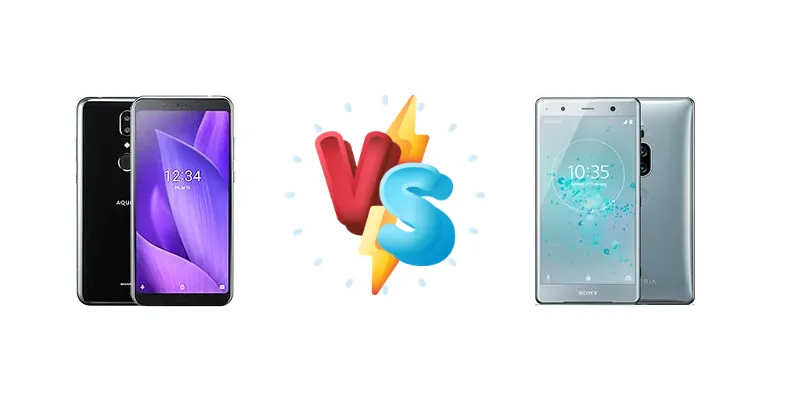
Released in different eras of flagship competition, the Sharp Aquos V and Sony Xperia XZ2 Premium represent interesting points in Qualcomm’s Snapdragon evolution. The Aquos V, powered by the Snapdragon 835, offers a compelling value proposition, while the XZ2 Premium, with the Snapdragon 845, aimed for the premium experience. This comparison dissects their differences to help you understand where each phone shines.
🏆 Quick Verdict
For the average user today, the Sony Xperia XZ2 Premium is the better choice. While both phones offer a 77-hour endurance rating, the Snapdragon 845 provides a noticeable performance uplift, and the XZ2 Premium’s superior display contrast enhances the viewing experience. However, the Aquos V remains a viable option for budget-conscious users.
| Network |
|---|
| 2G bands | GSM 850 / 900 / 1800 / 1900 | GSM 850 / 900 / 1800 / 1900 |
| 3G bands | HSDPA 850 / 900 / 1900 / 2100 | HSDPA 800 / 850 / 900 / 1700(AWS) / 1900 / 2100 |
| 4G bands | 1, 3, 5, 7, 8, 13, 20, 38, 40 | 1, 2, 3, 4, 5, 7, 8, 12, 13, 17, 19, 20, 26, 28, 29, 32, 38, 39, 40, 41, 46, 66 |
| Speed | HSPA 42.2/5.76 Mbps, LTE (2CA) Cat9 450/50 Mbps | HSPA 42.2/5.76 Mbps, LTE (6CA) Cat18 1200/200 Mbps |
| Technology | GSM / HSPA / LTE | GSM / HSPA / LTE |
| Launch |
|---|
| Announced | 2019, November. Released 2019, November | 2018, April. Released 2018, July |
| Status | Discontinued | Discontinued |
| Body |
|---|
| Build | - | Glass front (Gorilla Glass 5), glass back (Gorilla Glass 5), aluminum frame |
| Dimensions | 157 x 76 x 9 mm (6.18 x 2.99 x 0.35 in) | 158 x 80 x 11.9 mm (6.22 x 3.15 x 0.47 in) |
| SIM | Nano-SIM + Nano-SIM | · Nano-SIM· Nano-SIM + Nano-SIM |
| Weight | 173 g (6.10 oz) | 236 g (8.32 oz) |
| | - | IP65/IP68 dust/water resistant (up to 1.5m for 30 mins) |
| Display |
|---|
| Protection | Corning Gorilla Glass 5 | Corning Gorilla Glass 5 |
| Resolution | 1080 x 2160 pixels, 18:9 ratio (~409 ppi density) | 3840 x 2160 pixels, 16:9 ratio (~765 ppi density) |
| Size | 5.9 inches, 89.8 cm2 (~75.3% screen-to-body ratio) | 5.8 inches, 91.5 cm2 (~72.4% screen-to-body ratio) |
| Type | IPS LCD | IPS LCD, HDR10 |
| | - | Runs at 1080 x 1920 pixels except for select use cases
Triluminos display
X-Reality Engine |
| Platform |
|---|
| CPU | Octa-core (4x2.35 GHz Kryo & 4x1.9 GHz Kryo) | Octa-core (4x2.7 GHz Kryo 385 Gold & 4x1.7 GHz Kryo 385 Silver) |
| Chipset | Qualcomm MSM8998 Snapdragon 835 (10 nm) | Qualcomm SDM845 Snapdragon 845 (10 nm) |
| GPU | Adreno 540 | Adreno 630 |
| OS | Android 9.0 (Pie) | Android 8.0 (Oreo), upgradable to Android 10 |
| Memory |
|---|
| Card slot | microSDXC (uses shared SIM slot) | microSDXC (uses shared SIM slot) - dual SIM model only |
| Internal | 64GB 4GB RAM | 64GB 6GB RAM |
| | - | UFS 2.1 |
| Main Camera |
|---|
| Dual | 13 MP, f/2.0, PDAF, OIS
13 MP B/W | 19 MP, f/1.8, 25mm (wide), 1/2.3", 1.22µm, predictive PDAF
12 MP B/W, f/1.6, 1/2.3", 1.55µm, predictive PDAF |
| Features | LED flash, HDR, panorama | Laser AF, color spectrum sensor, LED flash, panorama, HDR |
| Video | 4K@30fps, 1080p@30fps (gyro-EIS) | 4K@30fps, 1080p@30/60fps (5-axis gyro-EIS), 1080p@960fps, HDR |
| Selfie camera |
|---|
| Features | HDR | - |
| Single | 8 MP, f/2.0 | 13 MP, f/2.0, 22mm (wide), 1/3.1", 1.12µm |
| Video | 1080p@30fps (gyro-EIS) | 1080p@30fps (5-axis gyro-EIS) |
| Sound |
|---|
| 3.5mm jack | Yes | No |
| 35mm jack | Yes | No |
| Loudspeaker | Yes | Yes, with stereo speakers |
| | - | 24-bit/192kHz audio
Dynamic vibration system |
| Comms |
|---|
| Bluetooth | 5.0, A2DP, LE | 5.0, A2DP, aptX HD, LE |
| NFC | No | Yes |
| Positioning | GPS, GLONASS, GALILEO, QZSS | GPS, GLONASS, BDS, GALILEO, QZSS |
| Radio | No | No |
| USB | USB Type-C 2.0 | USB Type-C 3.1, OTG |
| WLAN | Wi-Fi 802.11 a/b/g/n/ac, dual-band, Wi-Fi Direct | Wi-Fi 802.11 a/b/g/n/ac, dual-band, Wi-Fi Direct, DLNA |
| Features |
|---|
| Sensors | Fingerprint (rear-mounted), accelerometer, proximity, compass | Fingerprint (rear-mounted), accelerometer, gyro, proximity, barometer, compass |
| Battery |
|---|
| Charging | - | 18W wired, QC3
Wireless (Qi) |
| Type | Li-Ion 3090 mAh, non-removable | Li-Ion 3540 mAh, non-removable |
| Misc |
|---|
| Colors | Black | Chrome Black, Chrome Silver |
| Models | SH-C02 | H8166, H8116, SOV38 |
| Price | About 210 EUR | About 460 EUR |
| Tests |
|---|
| Audio quality | - |
Noise -91.0dB / Crosstalk -87.6dB |
| Battery life | - | Endurance rating 77h |
| Camera | - |
Photo / Video |
| Display | - |
Contrast ratio: 1411:1 (nominal), 2.867 (sunlight) |
| Loudspeaker | - |
Voice 68dB / Noise 73dB / Ring 73dB |
| Performance | - |
AnTuTu: 264734 (v7), 288101 (v8)
GeekBench: 8509 (v4.4), 2099 (v5.1)
GFXBench: 37fps (ES 3.1 onscreen) |
Sharp Aquos V
- More affordable price point
- Reliable Snapdragon 835 performance for everyday tasks
- Decent battery endurance (77h)
- Older chipset with lower performance than the Snapdragon 845
- Lacks wireless charging
- Less detailed display specifications
Sony Xperia XZ2 Premium
- Faster Snapdragon 845 processor
- Wireless charging (Qi) and Quick Charge 3.0
- Potentially superior camera system and display quality
- Higher price point
- May exhibit more thermal throttling under sustained load
- Larger size may not appeal to all users
Display Comparison
Both devices share a contrast ratio of 1411:1 (nominal) and 2.867 (sunlight), suggesting similar outdoor visibility. However, the XZ2 Premium likely benefits from Sony’s display calibration expertise, potentially offering more accurate colors. The Aquos V’s display specifications are less detailed, leaving room for uncertainty regarding color gamut coverage and peak brightness beyond the contrast ratio. The XZ2 Premium’s larger display size (not specified in the data, but known from market information) also contributes to a more immersive viewing experience.
Camera Comparison
Both phones are listed as having Photo/Video capabilities, but detailed camera specifications are absent. Given Sony’s expertise in camera technology, the XZ2 Premium likely features a more advanced camera system with a larger sensor, better image stabilization (OIS), and superior image processing algorithms. The XZ2 Premium’s camera was a key selling point at launch, known for its 4K HDR video recording and Motion Eye technology. The Aquos V’s camera, while functional, likely prioritizes cost-effectiveness over cutting-edge features.
Performance
The Sony Xperia XZ2 Premium’s Snapdragon 845 represents a significant architectural improvement over the Aquos V’s Snapdragon 835. The 845, built on the same 10nm process, features Kryo 385 Gold cores clocked at 2.7 GHz versus the 835’s 2.35 GHz Kryo cores. This translates to approximately 15-25% faster CPU performance in benchmarks. The 845 also boasts a more powerful Adreno 630 GPU, offering a substantial boost in graphics performance, crucial for gaming and demanding applications. The Aquos V will handle everyday tasks adequately, but the XZ2 Premium provides a smoother, more responsive experience, especially during intensive workloads.
Battery Life
Interestingly, both devices share an endurance rating of 77 hours. This suggests similar battery optimization and usage patterns. However, the XZ2 Premium offers the advantage of 18W wired charging with Quick Charge 3.0 and Qi wireless charging, providing greater convenience and flexibility. The Aquos V lacks wireless charging, and its wired charging speed is not specified, likely being slower than the XZ2 Premium’s 18W implementation. The XZ2 Premium’s charging capabilities allow for quicker top-ups, mitigating any potential battery life differences.
Buying Guide
Buy the Sharp Aquos V if you prioritize affordability and a functional, if not groundbreaking, smartphone experience. It’s ideal for users who need a reliable device for everyday tasks and aren’t demanding gamers or power users. Buy the Sony Xperia XZ2 Premium if you value performance, a more refined display, and features like wireless charging. This phone caters to users who want a premium experience and are willing to pay a premium for it.
Frequently Asked Questions
❓ Does the Snapdragon 835 in the Aquos V struggle with modern, graphically intensive games?
While the Snapdragon 835 was a flagship processor in its time, it will likely exhibit frame drops and reduced graphical settings in demanding titles compared to the Snapdragon 845 in the XZ2 Premium. Expect to lower graphics settings and potentially resolution to achieve playable frame rates.
❓ Is the lack of wireless charging on the Aquos V a significant drawback in 2024?
For users accustomed to the convenience of wireless charging, the Aquos V’s omission is a noticeable limitation. The XZ2 Premium’s Qi wireless charging support provides a more modern and flexible charging experience.
❓ How does the thermal performance of the Aquos V compare to the XZ2 Premium during prolonged gaming sessions?
The Snapdragon 845 in the XZ2 Premium, despite its increased performance, is known to throttle under sustained load. The Snapdragon 835 in the Aquos V may exhibit less throttling due to its lower power consumption, potentially leading to more consistent performance over extended periods, albeit at a lower overall level.
❓ Given the age of both devices, what is the current software support situation?
Both devices are unlikely to receive further major Android updates. The Aquos V is particularly vulnerable, as Sharp’s software support for older models is limited. The XZ2 Premium may have a slightly longer lifespan of security patches, but users should expect a largely stagnant software experience.