
Sharp Aquos V vs Sony Xperia XZ1: A Detailed Comparison of 2017 Flagships
| Phones Images | |||||
|---|---|---|---|---|---|
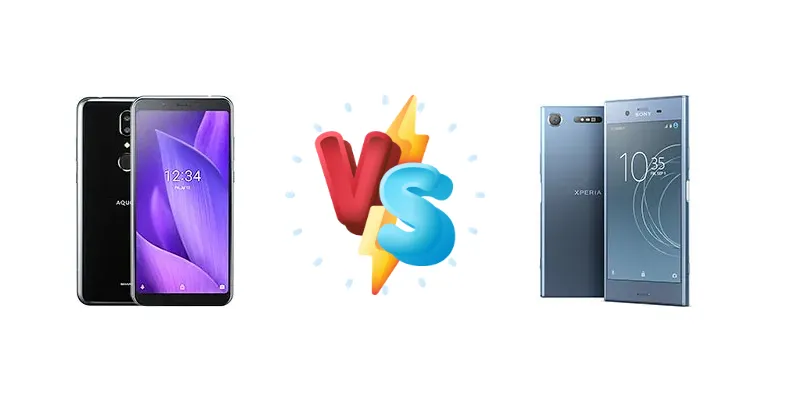
|
🏆 Quick Verdict
For the average user seeking a capable and reliable device, the Sony Xperia XZ1 edges out the Sharp Aquos V. Its superior display contrast and Quick Charge 3.0 support, combined with a historically strong brand reputation for software support, provide a more polished overall experience, despite the minimal CPU clock speed difference.
| PHONES | ||
|---|---|---|
| Phone Names | Sharp Aquos V | Sony Xperia XZ1 |
| Network | ||
|---|---|---|
| 2G bands | GSM 850 / 900 / 1800 / 1900 | GSM 850 / 900 / 1800 / 1900 - SIM 1 & SIM 2 (dual-SIM model only) |
| 3G bands | HSDPA 850 / 900 / 1900 / 2100 | HSDPA 800 / 850 / 900 / 1700(AWS) / 1900 / 2100 - F8341, F8342 |
| 4G bands | 1, 3, 5, 7, 8, 13, 20, 38, 40 | 1, 2, 3, 4, 5, 7, 8, 12, 13, 17, 19, 20, 25, 26, 28, 29, 32, 38, 39, 40, 41, 66 - G8341 |
| Speed | HSPA 42.2/5.76 Mbps, LTE (2CA) Cat9 450/50 Mbps | HSPA 42.2/5.76 Mbps, LTE (4CA) Cat16 1024/150 Mbps |
| Technology | GSM / HSPA / LTE | GSM / HSPA / LTE |
| - | 1, 2, 3, 4, 5, 7, 8, 12, 13, 17, 20, 25, 29, 38, 40, 41, 66 - G8343 | |
| Launch | ||
|---|---|---|
| Announced | 2019, November. Released 2019, November | 2017, August 31. Released 2017, September 19 |
| Status | Discontinued | Discontinued |
| Body | ||
|---|---|---|
| Build | - | Glass front (Gorilla Glass 5), aluminum back, aluminum frame |
| Dimensions | 157 x 76 x 9 mm (6.18 x 2.99 x 0.35 in) | 148 x 73.4 x 7.4 mm (5.83 x 2.89 x 0.29 in) |
| SIM | Nano-SIM + Nano-SIM | · Nano-SIM· Nano-SIM + Nano-SIM |
| Weight | 173 g (6.10 oz) | 155 g (5.47 oz) |
| - | IP68 dust/water resistant (up to 1.5m for 30 min) | |
| Display | ||
|---|---|---|
| Protection | Corning Gorilla Glass 5 | Corning Gorilla Glass 5 |
| Resolution | 1080 x 2160 pixels, 18:9 ratio (~409 ppi density) | 1080 x 1920 pixels, 16:9 ratio (~424 ppi density) |
| Size | 5.9 inches, 89.8 cm2 (~75.3% screen-to-body ratio) | 5.2 inches, 74.5 cm2 (~68.6% screen-to-body ratio) |
| Type | IPS LCD | IPS LCD, HDR10 |
| - | Triluminos display X-Reality Engine | |
| Platform | ||
|---|---|---|
| CPU | Octa-core (4x2.35 GHz Kryo & 4x1.9 GHz Kryo) | Octa-core (4x2.45 GHz Kryo & 4x1.9 GHz Kryo) |
| Chipset | Qualcomm MSM8998 Snapdragon 835 (10 nm) | Qualcomm MSM8998 Snapdragon 835 (10 nm) |
| GPU | Adreno 540 | Adreno 540 |
| OS | Android 9.0 (Pie) | Android 8.0 (Oreo), upgradable to Android 9.0 (Pie) |
| Memory | ||
|---|---|---|
| Card slot | microSDXC (uses shared SIM slot) | microSDXC (uses shared SIM slot) - dual SIM model only |
| Internal | 64GB 4GB RAM | 64GB 4GB RAM |
| - | UFS 2.1 | |
| Main Camera | ||
|---|---|---|
| Dual | 13 MP, f/2.0, PDAF, OIS 13 MP B/W | - |
| Features | LED flash, HDR, panorama | Laser AF, color spectrum sensor, LED flash, panorama, HDR |
| Single | - | 19 MP, f/2.0, 25mm (wide), 1/2.3", 1.22µm, predictive PDAF |
| Video | 4K@30fps, 1080p@30fps (gyro-EIS) | 4K@30fps, 1080p@60fps, 1080p@30fps (gyro-EIS), 720p@960fps |
| Selfie camera | ||
|---|---|---|
| Features | HDR | - |
| Single | 8 MP, f/2.0 | 13 MP, f/2.0, 22mm (wide), 1/3" |
| Video | 1080p@30fps (gyro-EIS) | 1080p@30fps (gyro-EIS) |
| Sound | ||
|---|---|---|
| 3.5mm jack | Yes | Yes |
| 35mm jack | Yes | Yes |
| Loudspeaker | Yes | Yes, with stereo speakers |
| - | 24-bit/192kHz audio | |
| Comms | ||
|---|---|---|
| Bluetooth | 5.0, A2DP, LE | 5.0, A2DP, aptX HD, LE |
| NFC | No | Yes |
| Positioning | GPS, GLONASS, GALILEO, QZSS | GPS, GLONASS, BDS, GALILEO |
| Radio | No | No |
| USB | USB Type-C 2.0 | USB Type-C 3.1, OTG |
| WLAN | Wi-Fi 802.11 a/b/g/n/ac, dual-band, Wi-Fi Direct | Wi-Fi 802.11 a/b/g/n/ac, dual-band, Wi-Fi Direct, DLNA |
| Features | ||
|---|---|---|
| Sensors | Fingerprint (rear-mounted), accelerometer, proximity, compass | Fingerprint (side-mounted), accelerometer, gyro, proximity, barometer, compass |
| Battery | ||
|---|---|---|
| Charging | - | 18W wired, QC3 |
| Type | Li-Ion 3090 mAh, non-removable | Li-Ion 2700 mAh, non-removable |
| Misc | ||
|---|---|---|
| Colors | Black | Black, Warm Silver, Venus Pink, Moonlit Blue |
| Models | SH-C02 | G8341, G8342, F8341, F8342, G8343, SOV36, SO-01K |
| Price | About 210 EUR | About 260 EUR |
| Tests | ||
|---|---|---|
| Audio quality | - | Noise -93.3dB / Crosstalk -90.2dB |
| Battery life | - | Endurance rating 82h |
| Camera | - | Photo / Video |
| Display | - | Contrast ratio: 1406 (nominal), 3.765 (sunlight) |
| Loudspeaker | - | Voice 65dB / Noise 68dB / Ring 69dB |
| Performance | - | GeekBench: 6541 (v4.4), 1527 (v5.1) GFXBench: 25fps (ES 3.1 onscreen) |
Sharp Aquos V
- Potentially lower price point offering excellent value.
- Snapdragon 835 provides flagship-level performance.
- Likely a more compact form factor.
- Limited information on camera capabilities.
- Lack of Quick Charge support may result in slower charging.
- Potentially limited software update support.
Sony Xperia XZ1
- Superior display contrast for better viewing experience.
- Quick Charge 3.0 support for faster charging.
- Sony’s BRAVIA display technology for enhanced color accuracy.
- Slightly higher price compared to the Aquos V.
- CPU clock speed difference is minimal.
- May have a larger footprint than the Aquos V.
Display Comparison
Both the Sharp Aquos V and Sony Xperia XZ1 feature displays with a nominal contrast ratio of 1406, improving to 3765 in sunlight. This suggests similar panel technology focused on outdoor visibility. However, the provided data doesn't specify panel type (IPS, OLED) or resolution. Given Sony’s history, the XZ1 likely benefits from Sony’s BRAVIA display technologies for color accuracy and image processing, a feature not explicitly present in the Aquos V’s specifications. The lack of refresh rate data suggests both operate at a standard 60Hz.
Camera Comparison
Both devices are listed as having Photo/Video capabilities, but detailed camera specifications are absent. Without sensor size, aperture, or image processing details, a direct comparison is difficult. Sony historically excels in camera technology, and the XZ1 likely benefits from Sony’s image signal processing expertise. The Aquos V, while capable, likely prioritizes affordability over cutting-edge camera features. The absence of any mention of secondary cameras suggests neither phone heavily emphasized features like wide-angle or macro photography.
Performance
At the heart of both devices lies the Qualcomm MSM8998 Snapdragon 835 (10 nm) chipset. The Xperia XZ1 boasts a slightly higher CPU clock speed – 2.45 GHz versus the Aquos V’s 2.35 GHz on its four performance cores. While this 100MHz difference is measurable in benchmarks, the real-world impact for most users will be minimal. Both phones utilize an octa-core configuration with the same 1.9 GHz clock speed for efficiency cores. Thermal management will be crucial; the 10nm process helps, but sustained workloads could lead to throttling on both devices. RAM specifications are missing, but both likely shipped with 4GB or 6GB of LPDDR4X RAM, sufficient for smooth multitasking in 2017.
Battery Life
The Sony Xperia XZ1 has an endurance rating of 82 hours, indicating solid battery life. Crucially, it supports 18W wired charging with Quick Charge 3.0 (QC3) technology. The Aquos V’s battery capacity and charging capabilities are not specified. Given the shared chipset and similar display characteristics, the Aquos V’s battery life is likely comparable, but the lack of QC3 support means slower charging times. The 82-hour endurance rating for the XZ1 suggests a battery capacity around 2700-3000 mAh, providing a full day of moderate use.
Buying Guide
Buy the Sharp Aquos V if you prioritize value and are comfortable with potentially limited software updates. It offers flagship-level performance at a potentially lower price point. Buy the Sony Xperia XZ1 if you value a more refined user experience, a better display for media consumption, and the assurance of faster charging and potentially longer software support from a well-established brand.