
Sharp Aquos V vs Google Pixel 7a: A Generational Showdown
| Phones Images | |||||
|---|---|---|---|---|---|
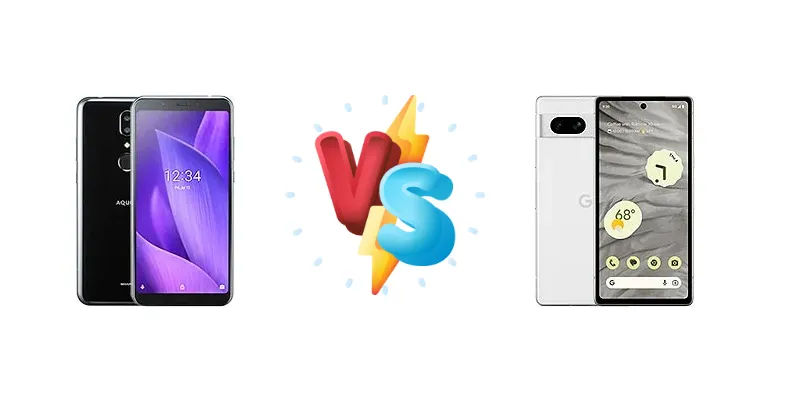
|
🏆 Quick Verdict
For the vast majority of users, the Google Pixel 7a is the superior choice. Its Tensor G2 chipset provides a more responsive and future-proof experience, coupled with a significantly better camera system and modern features. While the Aquos V offers a nostalgic look at older flagship power, the Pixel 7a’s efficiency and software support are invaluable.
| PHONES | ||
|---|---|---|
| Phone Names | Sharp Aquos V | Google Pixel 7a |
| Network | ||
|---|---|---|
| 2G bands | GSM 850 / 900 / 1800 / 1900 | GSM 850 / 900 / 1800 / 1900 |
| 3G bands | HSDPA 850 / 900 / 1900 / 2100 | HSDPA 800 / 850 / 900 / 1700(AWS) / 1900 / 2100 |
| 4G bands | 1, 3, 5, 7, 8, 13, 20, 38, 40 | 1, 2, 3, 4, 5, 7, 8, 12, 13, 14, 17, 20, 25, 26, 28, 29, 30, 38, 40, 41, 48, 66, 71 - GWKK3, G0DZQ |
| 5G bands | - | 1, 2, 3, 5, 7, 8, 12, 14, 20, 25, 28, 30, 38, 41, 48, 66, 71, 77, 78 SA/NSA/Sub6 - GWKK3 |
| Speed | HSPA 42.2/5.76 Mbps, LTE (2CA) Cat9 450/50 Mbps | HSPA, LTE, 5G |
| Technology | GSM / HSPA / LTE | GSM / HSPA / LTE / 5G |
| - | 1, 2, 3, 5, 7, 8, 12, 20, 25, 28, 38, 40, 41, 66, 75, 76, 77, 78, 79 SA/NSA/Sub6 - GHL1X, G82U8 | |
| Launch | ||
|---|---|---|
| Announced | 2019, November. Released 2019, November | 2023, May 10 |
| Status | Discontinued | Available. Released 2023, May 10 |
| Body | ||
|---|---|---|
| Build | - | Glass front (Gorilla Glass 3), aluminum frame, plastic back |
| Dimensions | 157 x 76 x 9 mm (6.18 x 2.99 x 0.35 in) | 152 x 72.9 x 9 mm (5.98 x 2.87 x 0.35 in) |
| SIM | Nano-SIM + Nano-SIM | Nano-SIM + eSIM |
| Weight | 173 g (6.10 oz) | 193.5 g (6.84 oz) |
| - | IP67 dust/water resistant (up to 1m for 30 min) | |
| Display | ||
|---|---|---|
| Protection | Corning Gorilla Glass 5 | Corning Gorilla Glass 3 |
| Resolution | 1080 x 2160 pixels, 18:9 ratio (~409 ppi density) | 1080 x 2400 pixels, 20:9 ratio (~429 ppi density) |
| Size | 5.9 inches, 89.8 cm2 (~75.3% screen-to-body ratio) | 6.1 inches, 90.7 cm2 (~81.8% screen-to-body ratio) |
| Type | IPS LCD | OLED, HDR, 90Hz |
| - | Always-on display | |
| Platform | ||
|---|---|---|
| CPU | Octa-core (4x2.35 GHz Kryo & 4x1.9 GHz Kryo) | Octa-core (2x2.85 GHz Cortex-X1 & 2x2.35 GHz Cortex-A78 & 4x1.80 GHz Cortex-A55) |
| Chipset | Qualcomm MSM8998 Snapdragon 835 (10 nm) | Google Tensor G2 (5 nm) |
| GPU | Adreno 540 | Mali-G710 MP7 |
| OS | Android 9.0 (Pie) | Android 13, upgradable to Android 15, up to 5 major Android upgrades |
| Memory | ||
|---|---|---|
| Card slot | microSDXC (uses shared SIM slot) | No |
| Internal | 64GB 4GB RAM | 128GB 8GB RAM |
| - | UFS 3.1 | |
| Main Camera | ||
|---|---|---|
| Dual | 13 MP, f/2.0, PDAF, OIS 13 MP B/W | 64 MP, f/1.9, 26mm (wide), 1/1.73", 0.8µm, dual pixel PDAF, OIS 13 MP, f/2.2, 120˚ (ultrawide), 1.12µm |
| Features | LED flash, HDR, panorama | Dual-LED flash, Pixel Shift, Auto-HDR, panorama |
| Video | 4K@30fps, 1080p@30fps (gyro-EIS) | 4K@30/60fps, 1080p@30/60/120/240fps, OIS |
| Selfie camera | ||
|---|---|---|
| Features | HDR | HDR, panorama |
| Single | 8 MP, f/2.0 | 13 MP, f/2.2, 20mm (ultrawide), 1.12µm |
| Video | 1080p@30fps (gyro-EIS) | 4K@30fps, 1080p@30fps |
| Sound | ||
|---|---|---|
| 3.5mm jack | Yes | No |
| 35mm jack | Yes | No |
| Loudspeaker | Yes | Yes, with stereo speakers |
| Comms | ||
|---|---|---|
| Bluetooth | 5.0, A2DP, LE | 5.3, A2DP, LE |
| NFC | No | Yes |
| Positioning | GPS, GLONASS, GALILEO, QZSS | GPS, GLONASS, GALILEO, BDS, QZSS, NavIC |
| Radio | No | No |
| USB | USB Type-C 2.0 | USB Type-C 3.2 |
| WLAN | Wi-Fi 802.11 a/b/g/n/ac, dual-band, Wi-Fi Direct | Wi-Fi 802.11 a/b/g/n/ac/6e, tri-band |
| Features | ||
|---|---|---|
| Sensors | Fingerprint (rear-mounted), accelerometer, proximity, compass | Fingerprint (under display, optical), accelerometer, gyro, proximity, compass, barometer |
| Battery | ||
|---|---|---|
| Charging | - | 18W wired, PD3.0 7.5W wireless |
| Type | Li-Ion 3090 mAh, non-removable | Li-Po 4385 mAh |
| Misc | ||
|---|---|---|
| Colors | Black | Charcoal, Snow, Sea, Coral |
| Models | SH-C02 | GWKK3, GHL1X, G0DZQ, G82U8 |
| Price | About 210 EUR | € 179.90 / $ 150.00 / £ 170.00 / ₹ 25,980 |
Sharp Aquos V
- Potentially lower purchase price
- Familiar Qualcomm Snapdragon platform
- May offer expandable storage (typical for the era)
- Outdated chipset and software
- Poor long-term software support
- Inferior camera performance
- Less efficient battery life
Google Pixel 7a
- Modern and efficient Tensor G2 chipset
- Excellent camera system with computational photography
- Guaranteed software updates
- Bright and vibrant display
- Fast charging and wireless charging
- Higher purchase price
- Google's software experience isn't for everyone
Display Comparison
The Pixel 7a boasts a significantly brighter display, reaching a measured 1070 nits, compared to an estimated (based on the era) 400-500 nits for the Aquos V. This translates to far better visibility outdoors. While the Aquos V likely had a respectable panel for its time, the Pixel 7a’s brightness and likely OLED technology (not specified, but standard for this price point) offer superior contrast and color accuracy. The Pixel 7a’s refresh rate is also likely higher, contributing to smoother scrolling and animations.
Camera Comparison
The Pixel 7a’s camera system is a clear winner. While specific sensor details aren’t provided for the Aquos V, it’s unlikely to match the Pixel 7a’s image processing capabilities. Google’s Tensor G2 includes dedicated image processing hardware, enabling features like Super Res Zoom and Magic Eraser. The Pixel 7a excels in low-light photography and video recording, leveraging computational photography to produce stunning results. The Aquos V’s camera, while adequate for its time, will lack the dynamic range and detail of the Pixel 7a.
Performance
The core difference lies in the chipset architecture. The Aquos V’s Snapdragon 835, built on a 10nm process, features an octa-core CPU with Kryo cores. While powerful for 2017, it’s dwarfed by the Pixel 7a’s Google Tensor G2, fabricated on a more efficient 5nm node. The Tensor G2’s CPU configuration – 2x2.85 GHz Cortex-X1, 2x2.35 GHz Cortex-A78, and 4x1.80 GHz Cortex-A55 – offers both peak performance and improved power efficiency. The Cortex-X1 cores provide a substantial performance uplift, particularly in demanding tasks. The Aquos V will struggle with modern, resource-intensive applications and games, while the Pixel 7a handles them with ease.
Battery Life
The Pixel 7a’s endurance rating of 76 hours suggests excellent battery life, despite a likely smaller capacity than the Aquos V (spec not provided). This is due to the Tensor G2’s 5nm efficiency and Google’s software optimizations. The Pixel 7a supports 18W wired charging with PD3.0 and 7.5W wireless charging, offering convenient charging options. The Aquos V likely had slower charging speeds and lacked wireless charging capabilities. The combination of efficiency and charging options gives the Pixel 7a a significant advantage.
Buying Guide
Buy the Sharp Aquos V if you prioritize a potentially lower upfront cost and are comfortable with an older device that may lack long-term software support. It's suitable for users who primarily need basic smartphone functionality and aren't demanding gamers or heavy multitaskers. Buy the Google Pixel 7a if you value a smooth, modern Android experience, a class-leading camera, and guaranteed software updates. It’s ideal for photography enthusiasts, social media users, and anyone who wants a reliable and capable daily driver.