
Sharp Aquos R9 Pro vs. Samsung Galaxy S24 Ultra: A Detailed Comparison
| Phones Images | |||||
|---|---|---|---|---|---|
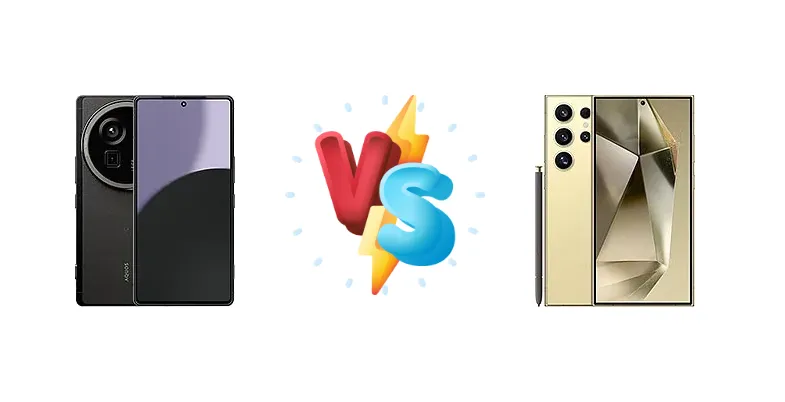
|
🏆 Quick Verdict
For most users, the Samsung Galaxy S24 Ultra emerges as the superior choice. Its significantly longer battery life (13:49h active use), brighter display (1447 nits), and more refined software ecosystem outweigh the R9 Pro’s potential value. However, the R9 Pro offers a compelling alternative for those prioritizing a potentially cooler-running chip and a lower price point.
| PHONES | ||
|---|---|---|
| Phone Names | Sharp Aquos R9 pro | Samsung Galaxy S24 Ultra |
| Network | ||
|---|---|---|
| 2G bands | GSM 850 / 900 / 1800 / 1900 | GSM 850 / 900 / 1800 / 1900 |
| 3G bands | HSDPA 850 / 900 / 1900 / 2100 | HSDPA 850 / 900 / 1700(AWS) / 1900 / 2100 |
| 4G bands | LTE | 1, 2, 3, 4, 5, 7, 8, 12, 13, 17, 18, 19, 20, 25, 26, 28, 32, 38, 39, 40, 41, 66 - International |
| 5G bands | SA/NSA | 1, 2, 3, 5, 7, 8, 12, 20, 25, 26, 28, 38, 40, 41, 66, 75, 77, 78 SA/NSA/Sub6 - International |
| Speed | HSPA, LTE, 5G | HSPA, LTE (up to 7CA), 5G |
| Technology | GSM / HSPA / LTE / 5G | GSM / CDMA / HSPA / EVDO / LTE / 5G |
| Launch | ||
|---|---|---|
| Announced | 2024, October 29 | 2024, January 17 |
| Status | Available. Released 2025, February | Available. Released 2024, January 24 |
| Body | ||
|---|---|---|
| Build | - | Glass front (Corning Gorilla Armor), glass back (Corning Gorilla Armor), titanium frame (grade 2) |
| Dimensions | 162 x 78 x 9.3 mm (6.38 x 3.07 x 0.37 in) | 162.3 x 79 x 8.6 mm (6.39 x 3.11 x 0.34 in) |
| SIM | Nano-SIM + eSIM | · Nano-SIM + Nano-SIM + eSIM + eSIM (max 2 at a time) - INT· Nano-SIM + eSIM + eSIM (max 2 at a time) - USA· Nano-SIM + Nano-SIM - CN |
| Weight | 220 g (7.76 oz) | 232 g or 233 g (8.18 oz) |
| Display | ||
|---|---|---|
| Protection | Corning Gorilla Glass Victus 2 | Corning Gorilla Armor |
| Resolution | 1440 x 3120 pixels, 19.5:9 ratio (~513 ppi density) | 1440 x 3120 pixels, 19.5:9 ratio (~505 ppi density) |
| Size | 6.7 inches, 110.2 cm2 (~87.2% screen-to-body ratio) | 6.8 inches, 113.5 cm2 (~88.5% screen-to-body ratio) |
| Type | PRO IGZO LTPO OLED, 1B colors, 240Hz, Dolby Vision, HDR, 1000 nits (HBM), 2000 nits (peak) | Dynamic LTPO AMOLED 2X, 120Hz, HDR10+, 2600 nits (peak) |
| Platform | ||
|---|---|---|
| CPU | Octa-core (1x3.0 GHz Cortex-X4 & 4x2.8 GHz Cortex-A720 & 3x2.0 GHz Cortex-A520) | 8-core (1x3.39GHz Cortex-X4 & 3x3.1GHz Cortex-A720 & 2x2.9GHz Cortex-A720 & 2x2.2GHz Cortex-A520) |
| Chipset | Qualcomm SM8635 Snapdragon 8s Gen 3 (4 nm) | Qualcomm SM8650-AC Snapdragon 8 Gen 3 (4 nm) |
| GPU | Adreno 735 | Adreno 750 (1 GHz) |
| OS | Android 14, up to 3 major Android upgrades | Android 14, up to 7 major Android upgrades, One UI 8.0 |
| Memory | ||
|---|---|---|
| Card slot | No | No |
| Internal | 512GB 12GB RAM | 256GB 12GB RAM, 512GB 12GB RAM, 1TB 12GB RAM |
| Main Camera | ||
|---|---|---|
| Features | Leica lens, color spectrum sensor, LED flash, HDR, panorama | Laser AF, LED flash, auto-HDR, panorama |
| Quad | - | 200 MP, f/1.7, 24mm (wide), 1/1.3", 0.6µm, multi-directional PDAF, OIS 10 MP, f/2.4, 67mm (telephoto), 1/3.52", 1.12µm, PDAF, OIS, 3x optical zoom 50 MP, f/3.4, 111mm (periscope telephoto), 1/2.52", 0.7µm, PDAF, OIS, 5x optical zoom 12 MP, f/2.2, 13mm, 120˚ (ultrawide), 1/2.55", 1.4µm, dual pixel PDAF, Super Steady video |
| Triple | 50.3 MP, f/1.8, 23mm (wide), 1/0.98", dual pixel PDAF, OIS 50.3 MP, f/2.6, 65mm (telephoto), 1/1.56", dual pixel PDAF, OIS, 2.8x optical zoom 50.3 MP, f/2.2, 13mm, 122˚ (ultrawide), 1/2.5", PDAF | - |
| Video | 4K@30/60fps, 1080p@30/60fps, gyro-EIS, Dolby Vision HDR | 8K@24/30fps, 4K@30/60/120fps, 1080p@30/60/120/240fps, HDR10+, stereo sound rec., gyro-EIS |
| Selfie camera | ||
|---|---|---|
| Features | - | HDR, HDR10+ |
| Single | 50.3 MP, f/2.2, 23mm (wide), PDAF | 12 MP, f/2.2, 26mm (wide), 1/3.2", 1.12µm, dual pixel PDAF |
| Video | 1080p@30/60fps, gyro-EIS | 4K@30/60fps, 1080p@30fps |
| Sound | ||
|---|---|---|
| 35mm jack | No | No |
| Loudspeaker | Yes, with stereo speakers | Yes, with stereo speakers |
| Comms | ||
|---|---|---|
| Bluetooth | 5.4, A2DP, LE, aptX HD, aptX Adaptive | 5.3, A2DP, LE |
| NFC | Yes | Yes |
| Positioning | GPS, GLONASS, GALILEO, BDS | GPS, GLONASS, BDS, GALILEO, QZSS |
| Radio | No | No |
| USB | USB Type-C 3.2, Display Port 1.4 | USB Type-C 3.2, DisplayPort 1.2, OTG |
| WLAN | Wi-Fi 802.11 a/b/g/n/ac/6e/7 | Wi-Fi 802.11 a/b/g/n/ac/6e/7, tri-band, Wi-Fi Direct |
| Features | ||
|---|---|---|
| Sensors | Fingerprint (under display, ultrasonic), accelerometer, gyro, proximity, compass | Fingerprint (under display, ultrasonic), accelerometer, gyro, proximity, compass, barometer |
| Battery | ||
|---|---|---|
| Charging | 32W wired, Qi 15W wireless | 45W wired, PD3.0, 65% in 30 min 15W wireless (Qi) 4.5W reverse wireless |
| Type | 5000 mAh | Li-Ion 5000 mAh |
| Misc | ||
|---|---|---|
| Colors | Black | Titanium Black, Titanium Gray, Titanium Violet, Titanium Yellow, Titanium Blue, Titanium Green, Titanium Orange |
| Models | SH-54E, SH-M30 | SM-S928B, SM-S928B/DS, SM-S928U, SM-S928U1, SM-S928W, SM-S928N, SM-S9280, SM-S928E, SM-S928E/DS |
| Price | About 1000 EUR | $ 514.94 / C$ 929.99 / £ 630.00 / € 658.53 / ₹ 84,999 |
| SAR | - | 1.26 W/kg (head) 0.62 W/kg (body) |
| SAR EU | - | 1.06 W/kg (head) 1.30 W/kg (body) |
Sharp Aquos R9 pro
- Potentially better thermal management with Snapdragon 8s Gen 3
- Likely more affordable price point
- Clean Android experience (assumed based on Sharp's history)
- Less powerful processor than the Snapdragon 8 Gen 3
- Limited charging speed (32W wired)
- Unknown camera capabilities
Samsung Galaxy S24 Ultra
- Superior performance with Snapdragon 8 Gen 3
- Exceptional battery life (13:49h active use)
- Bright and vibrant display (1447 nits)
- Higher price tag
- Potential for thermal throttling under sustained load
- Samsung's One UI may not appeal to all users
Display Comparison
The Samsung Galaxy S24 Ultra boasts a significantly brighter display, reaching a measured 1447 nits, ensuring excellent visibility even in direct sunlight. While the R9 Pro’s display specifications are not provided, Samsung’s panel technology is renowned for its color accuracy and dynamic range. The S24 Ultra’s adaptive refresh rate (LTPO) likely contributes to better power efficiency, complementing its larger battery. The S24 Ultra’s superior brightness is a clear advantage for outdoor use and HDR content consumption.
Camera Comparison
The context data lacks detailed camera specifications for the Sharp Aquos R9 Pro. However, the Samsung Galaxy S24 Ultra is expected to feature a multi-camera system with a high-resolution main sensor, advanced optical image stabilization (OIS), and sophisticated image processing algorithms. The S24 Ultra’s camera excels in both photo and video capture, offering features like 8K video recording and enhanced low-light performance. Without specific details on the R9 Pro’s camera, it’s difficult to make a direct comparison, but Samsung’s established camera expertise gives it a significant edge.
Performance
Both devices utilize 4nm Snapdragon chips, but the Galaxy S24 Ultra’s Snapdragon 8 Gen 3 (SM8650-AC) represents a generational leap over the R9 Pro’s Snapdragon 8s Gen 3 (SM8635). The S24 Ultra’s CPU features a higher peak clock speed (3.39GHz vs 3.0GHz on the X4 core) and more cores dedicated to high performance (3x 3.1GHz A720 vs 4x 2.8GHz A720). This translates to faster application loading, smoother multitasking, and improved performance in demanding games. The 8s Gen 3 in the R9 Pro may offer better sustained performance due to potentially lower thermal throttling, but the 8 Gen 3’s raw power is undeniable.
Battery Life
The Samsung Galaxy S24 Ultra delivers an impressive 13:49 hours of active use, showcasing its excellent battery optimization. While the R9 Pro’s battery capacity is unknown, the S24 Ultra’s 45W wired charging (with 65% charge in 30 minutes) and PD3.0 support offer significantly faster charging speeds compared to the R9 Pro’s 32W wired and 15W wireless charging. The S24 Ultra also includes 4.5W reverse wireless charging, a convenient feature for topping up accessories. The combination of larger battery capacity and faster charging gives the S24 Ultra a clear advantage in battery performance.
Buying Guide
Buy the Sharp Aquos R9 Pro if you prioritize thermal management during extended gaming sessions and are seeking a flagship experience at a potentially lower cost. The Snapdragon 8s Gen 3, while not the absolute top performer, offers a strong balance of power and efficiency. Buy the Samsung Galaxy S24 Ultra if you demand the best possible battery life, a class-leading display, and a comprehensive camera system with advanced features and software support.