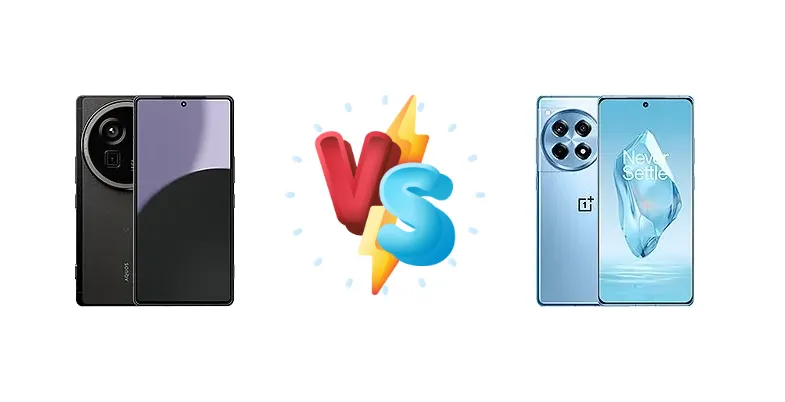
The Sharp Aquos R9 Pro arrives with Qualcomm’s latest Snapdragon 8s Gen 3, aiming to deliver flagship performance at a competitive price. It directly challenges the OnePlus 12R, a phone that established itself as a value-focused powerhouse with the older, but still potent, Snapdragon 8 Gen 2. This comparison dissects the key differences to determine which device offers the best experience.
🏆 Quick Verdict
For most users, the OnePlus 12R emerges as the stronger choice. Its significantly faster 100W charging and proven Snapdragon 8 Gen 2 performance, coupled with a measured 1181 nits peak brightness, provide a more compelling overall package. While the R9 Pro’s newer chipset is promising, the 12R’s real-world advantages are more immediately impactful.
| Network |
|---|
| 2G bands | GSM 850 / 900 / 1800 / 1900 | GSM 850 / 900 / 1800 / 1900 |
| 3G bands | HSDPA 850 / 900 / 1900 / 2100 | HSDPA 850 / 900 / 1700(AWS) / 1900 / 2100 |
| 4G bands | LTE | 1, 2, 3, 4, 5, 7, 8, 12, 17, 18, 19, 20, 26, 28, 32, 38, 39, 40, 41, 66 |
| 5G bands | SA/NSA | 1, 2, 3, 5, 7, 8, 12, 20, 28, 38, 40, 41, 66, 77, 78 SA/NSA |
| Speed | HSPA, LTE, 5G | HSPA, LTE, 5G |
| Technology | GSM / HSPA / LTE / 5G | GSM / CDMA / HSPA / LTE / 5G |
| Launch |
|---|
| Announced | 2024, October 29 | 2024, January 23 |
| Status | Available. Released 2025, February | Available. Released 2024, February 06 |
| Body |
|---|
| Build | - | Glass front (Gorilla Glass Victus 2), aluminum frame, glass back |
| Dimensions | 162 x 78 x 9.3 mm (6.38 x 3.07 x 0.37 in) | 163.3 x 75.3 x 8.8 mm (6.43 x 2.96 x 0.35 in) |
| SIM | Nano-SIM + eSIM | · Nano-SIM + Nano-SIM + eSIM (max 2 at a time)· Nano-SIM + Nano-SIM |
| Weight | 220 g (7.76 oz) | 207 g (7.30 oz) |
| Display |
|---|
| Protection | Corning Gorilla Glass Victus 2 | Corning Gorilla Glass Victus 2 |
| Resolution | 1440 x 3120 pixels, 19.5:9 ratio (~513 ppi density) | 1264 x 2780 pixels (~450 ppi density) |
| Size | 6.7 inches, 110.2 cm2 (~87.2% screen-to-body ratio) | 6.78 inches, 111.7 cm2 (~90.9% screen-to-body ratio) |
| Type | PRO IGZO LTPO OLED, 1B colors, 240Hz, Dolby Vision, HDR, 1000 nits (HBM), 2000 nits (peak) | LTPO4 AMOLED, 1B colors, 120Hz, HDR10+, Dolby Vision, 1600 nits (HBM), 4500 nits (peak) |
| Platform |
|---|
| CPU | Octa-core (1x3.0 GHz Cortex-X4 & 4x2.8 GHz Cortex-A720 & 3x2.0 GHz Cortex-A520) | Octa-core (1x3.2 GHz Cortex-X3 & 2x2.8 GHz Cortex-A715 & 2x2.8 GHz Cortex-A710 & 3x2.0 GHz Cortex-A510) |
| Chipset | Qualcomm SM8635 Snapdragon 8s Gen 3 (4 nm) | Qualcomm SM8550-AB Snapdragon 8 Gen 2 (4 nm) |
| GPU | Adreno 735 | Adreno 740 |
| OS | Android 14, up to 3 major Android upgrades | Android 14, up to 3 major Android upgrades, OxygenOS 15 |
| Memory |
|---|
| Card slot | No | No |
| Internal | 512GB 12GB RAM | 128GB 8GB RAM, 256GB 8GB RAM, 256GB 12GB RAM, 256GB 16GB RAM |
| Main Camera |
|---|
| Features | Leica lens, color spectrum sensor, LED flash, HDR, panorama | Laser AF, color spectrum sensor, LED flash, HDR, panorama |
| Triple | 50.3 MP, f/1.8, 23mm (wide), 1/0.98", dual pixel PDAF, OIS
50.3 MP, f/2.6, 65mm (telephoto), 1/1.56", dual pixel PDAF, OIS, 2.8x optical zoom
50.3 MP, f/2.2, 13mm, 122˚ (ultrawide), 1/2.5", PDAF | 50 MP, f/1.8, 24mm (wide), 1/1.56", 1.0µm, multi-directional PDAF, OIS
8 MP, f/2.2, 16mm, 112˚ (ultrawide), 1/4.0", 1.12µm
2 MP (macro) |
| Video | 4K@30/60fps, 1080p@30/60fps, gyro-EIS, Dolby Vision HDR | 4K@30/60fps, 1080p@30/60/120/240fps, gyro-EIS, OIS |
| Selfie camera |
|---|
| Features | - | HDR, panorama |
| Single | 50.3 MP, f/2.2, 23mm (wide), PDAF | 16 MP, f/2.4, 26mm (wide), 1/3", 1.0µm |
| Video | 1080p@30/60fps, gyro-EIS | 1080p@30fps, gyro-EIS |
| Sound |
|---|
| 35mm jack | No | No |
| Loudspeaker | Yes, with stereo speakers | Yes, with stereo speakers |
| Comms |
|---|
| Bluetooth | 5.4, A2DP, LE, aptX HD, aptX Adaptive | 5.3, A2DP, LE, aptX HD |
| Infrared port | - | Yes |
| NFC | Yes | Yes |
| Positioning | GPS, GLONASS, GALILEO, BDS | GPS, GALILEO, GLONASS, BDS, QZSS |
| Radio | No | No |
| USB | USB Type-C 3.2, Display Port 1.4 | USB Type-C 2.0 |
| WLAN | Wi-Fi 802.11 a/b/g/n/ac/6e/7 | Wi-Fi 802.11 a/b/g/n/ac/6/7, dual-band |
| Features |
|---|
| Sensors | Fingerprint (under display, ultrasonic), accelerometer, gyro, proximity, compass | Fingerprint (under display, optical), accelerometer, gyro, proximity, compass |
| Battery |
|---|
| Charging | 32W wired, Qi
15W wireless | 100W wired, 100% in 26 min |
| Type | 5000 mAh | Li-Ion 5500 mAh |
| Misc |
|---|
| Colors | Black | Iron Gray, Cool Blue, Electric Violet, Sunset Dune |
| Models | SH-54E, SH-M30 | CPH2609, CPH2585, CPH2611 |
| Price | About 1000 EUR | € 410.84 / $ 399.95 / £ 649.00 |
| SAR | - | 1.19 W/kg (head) 0.82 W/kg (body) |
Sharp Aquos R9 pro
- Newer Snapdragon 8s Gen 3 chipset
- Potential for future software updates
- Qi Wireless Charging
- Significantly slower 32W charging
- Limited information on display and camera specs
- Unproven real-world performance
OnePlus 12R
- 100W SuperVOOC charging (26 min full charge)
- Bright 1181 nits display
- Proven Snapdragon 8 Gen 2 performance
- Older chipset compared to the R9 Pro
- May not receive as many long-term software updates
- Design may feel less 'fresh'
Display Comparison
The OnePlus 12R boasts a brighter display, reaching a measured 1181 nits peak brightness, ensuring excellent visibility even in direct sunlight. While the Aquos R9 Pro’s display specifications are currently unavailable, the 12R’s brightness advantage is significant. Both devices utilize 4nm chipsets, which contribute to power efficiency and potentially better display performance. The 12R’s panel is likely a high-refresh-rate AMOLED, common for this segment, while the R9 Pro’s panel technology remains unknown, impacting color accuracy and viewing angles.
Camera Comparison
Without detailed camera specifications for the Aquos R9 Pro, a direct comparison is limited. However, the OnePlus 12R is expected to feature a capable camera system, likely with a large main sensor and optical image stabilization (OIS). The R9 Pro’s image processing style and sensor size will be crucial factors. The absence of information regarding the R9 Pro’s camera setup makes it difficult to assess its capabilities against the 12R, but the 12R’s established camera performance provides a baseline.
Performance
The OnePlus 12R’s Snapdragon 8 Gen 2 (4nm) features a Cortex-X3 prime core clocked at 3.2 GHz, offering a slight clock speed advantage over the Aquos R9 Pro’s Snapdragon 8s Gen 3 (4nm) and its 3.0 GHz Cortex-X4. However, the 8 Gen 2’s architecture is more mature and benefits from extensive optimization. The R9 Pro’s CPU configuration includes 4x Cortex-A720 cores and 3x Cortex-A520 cores, while the 12R utilizes 2x Cortex-A715 and 2x Cortex-A710 cores alongside 3x Cortex-A510 cores. This suggests the 12R may have a slight edge in multi-core performance. Both utilize a 4nm process, but the 8 Gen 2’s thermal efficiency is well-documented, potentially leading to less throttling during sustained workloads.
Battery Life
The OnePlus 12R excels in charging speed with its 100W wired charging, achieving a full charge in just 26 minutes. The Sharp Aquos R9 Pro is limited to 32W wired and 15W Qi wireless charging, a significant disadvantage in terms of convenience. The 12R also boasts an impressive 14:32h active use battery score, indicating excellent real-world endurance. While the R9 Pro’s battery capacity is unknown, the 12R’s combination of capacity and fast charging provides a superior user experience.
Buying Guide
Buy the Sharp Aquos R9 Pro if you prioritize having the newest chipset and are willing to trade off charging speed and potentially real-world performance gains for future-proofing. Buy the OnePlus 12R if you value rapid charging, a brighter display, and a well-established track record of performance and efficiency, all at a potentially lower price point.
Frequently Asked Questions
❓ Does the Snapdragon 8s Gen 3 in the Aquos R9 Pro offer a noticeable performance improvement over the Snapdragon 8 Gen 2 in the OnePlus 12R for gaming?
While the 8s Gen 3 is newer, the Snapdragon 8 Gen 2 is a highly optimized chip. Real-world gaming performance differences will likely be minimal, with both phones capable of handling demanding titles. The 12R’s superior thermal management might even allow for more sustained performance during extended gaming sessions.
❓ How much does the slower charging speed of the Aquos R9 Pro impact daily usability compared to the OnePlus 12R?
The 32W charging on the R9 Pro is significantly slower than the 12R’s 100W charging. This means topping up the battery will take considerably longer, potentially requiring overnight charging or multiple short charges throughout the day. The 12R’s fast charging offers a much more convenient experience, especially for users who frequently run low on battery.
❓ Is the lack of detailed camera information for the Aquos R9 Pro a cause for concern?
Yes, the absence of camera specifications raises concerns. A flagship phone should have a competitive camera system, and without knowing the sensor size, aperture, or image processing capabilities, it’s difficult to assess the R9 Pro’s photographic performance against the well-regarded OnePlus 12R.