
Sharp Aquos R5G vs Sony Xperia 1 II: A Flagship Showdown
| Phones Images | |||||
|---|---|---|---|---|---|
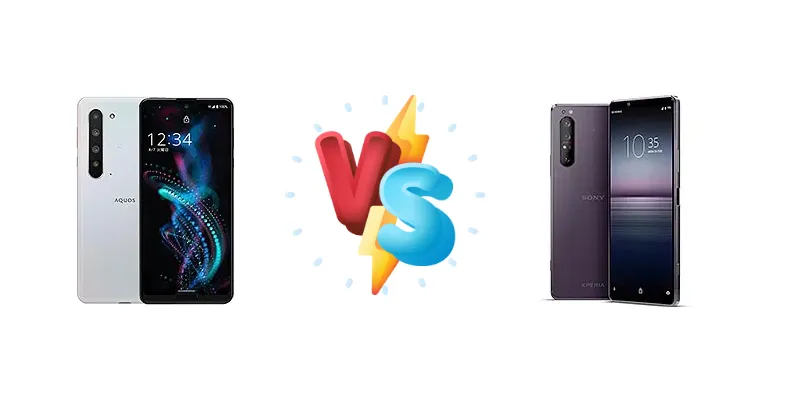
|
🏆 Quick Verdict
The Xperia 1 II offers a more polished and consistent experience, particularly for photography enthusiasts. The Aquos R5G boasts a truly unique and impressive display, but its software and availability might be limiting factors. Ultimately, the Xperia 1 II provides better overall value and broader appeal.
| PHONES | ||
|---|---|---|
| Phone Names | Sharp Aquos R5G | Sony Xperia 1 II |
| Network | ||
|---|---|---|
| 2G bands | GSM 850 / 900 / 1800 / 1900 | GSM 850 / 900 / 1800 / 1900 |
| 3G bands | HSDPA 850 / 900 / 1900 / 2100 | HSDPA 800 / 850 / 900 / 1700(AWS) / 1900 / 2100 |
| 4G bands | 1, 3, 7, 8, 20, 28, 38, 41 | 1, 2, 3, 4, 5, 7, 8, 12, 13, 17, 19, 20, 25, 26, 28, 29, 32, 34, 38, 39, 40, 41, 46, 66 |
| 5G bands | 1, 3, 28, 78 SA/NSA | 1, 3, 28, 77, 78 NSA/Sub6 |
| Speed | HSPA, LTE, 5G | HSPA 42.2/5.76 Mbps, LTE (6CA) Cat19 1600/150 Mbps, 5G (2+ Gbps DL) |
| Technology | GSM / HSPA / LTE / 5G | GSM / HSPA / LTE / 5G |
| Launch | ||
|---|---|---|
| Announced | 2020, February. Released 2020, February | 2020, February 24 |
| Status | Discontinued | Available. Released 2020, May 22 |
| Body | ||
|---|---|---|
| Build | - | Glass front (Gorilla Glass 6), glass back (Gorilla Glass 6), aluminum frame |
| Dimensions | 162 x 75 x 8.9 mm (6.38 x 2.95 x 0.35 in) | 165.1 x 71.1 x 7.6 mm (6.5 x 2.80 x 0.30 in) |
| SIM | Nano-SIM | Nano-SIM + Nano-SIM |
| Weight | 189 g (6.67 oz) | 181.4 g (6.38 oz) |
| IPX5/IP6X/IPX8 water/dust resistant (up to 1.5m for 30 min) | IP65/IP68 dust/water resistant (up to 1.5m for 30 mins) | |
| Display | ||
|---|---|---|
| Protection | - | Corning Gorilla Glass 6 |
| Resolution | 1440 x 3168 pixels (~544 ppi density) | 1644 x 3840 pixels, 21:9 ratio (~643 ppi density) |
| Size | 6.4 inches, 99.5 cm2 (~81.9% screen-to-body ratio) | 6.5 inches, 98.6 cm2 (~84.0% screen-to-body ratio) |
| Type | IGZO IPS LCD, 1B colors, 120Hz, Dolby Vision | OLED, 1B colors, HDR BT.2020 |
| - | Runs at 1096 x 2560 pixels except for select use cases | |
| Platform | ||
|---|---|---|
| CPU | Octa-core (1x2.84 GHz Cortex-A77 & 3x2.42 GHz Cortex-A77 & 4x1.80 GHz Cortex-A55) | Octa-core (1x2.84 GHz Cortex-A77 & 3x2.42 GHz Cortex-A77 & 4x1.80 GHz Cortex-A55) |
| Chipset | Qualcomm SM8250 Snapdragon 865 5G (7 nm+) | Qualcomm SM8250 Snapdragon 865 5G (7 nm+) |
| GPU | Adreno 650 | Adreno 650 |
| OS | Android 10 | Android 10, upgradable to Android 12 |
| Memory | ||
|---|---|---|
| Card slot | No | microSDXC (uses shared SIM slot) |
| Internal | 256GB 12GB RAM | 256GB 8GB RAM, 256GB 12GB RAM |
| UFS 3.0 | UFS 3.0 | |
| Main Camera | ||
|---|---|---|
| Features | LED flash, panorama | Zeiss optics, color spectrum sensor, LED flash, panorama, HDR, eye tracking |
| Triple | 12 MP, f/1.7, 26mm (wide), 1.4µm, dual pixel PDAF, OIS 12 MP, f/2.7, 52mm (telephoto), 1.0µm, PDAF, 2x optical zoom, OIS 48 MP, f/2.9, 19mm (ultrawide), 0.8µm TOF 3D (depth) | 12 MP, f/1.7, 24mm (wide), 1/1.7", 1.8µm, dual pixel PDAF, OIS 12 MP, f/2.4, 70mm (telephoto), 1/3.4", 1.0µm, PDAF, 3x optical zoom, OIS 12 MP, f/2.2, 124˚, 16mm (ultrawide), 1/2.55", dual pixel PDAF 0.3 MP, TOF 3D, (depth) |
| Video | 8K@30fps, 1080p@30fps | 4K@24/25/30/60/120fps HDR, 1080p@30/60/120fps; 5-axis gyro-EIS, OIS |
| Selfie camera | ||
|---|---|---|
| Features | - | HDR |
| Single | 16 MP, f/2.0, 26mm (wide), 0.7µm | 8 MP, f/2.0, 24mm (wide), 1/4.0", 1.12µm |
| Video | 1080p@30fps | 1080p@30fps (5-axis gyro-EIS) |
| Sound | ||
|---|---|---|
| 3.5mm jack | No | Yes |
| 35mm jack | No | Yes |
| Loudspeaker | Yes, with stereo speakers | Yes, with stereo speakers |
| 24-bit/192kHz audio | 24-bit/192kHz audio Dynamic vibration system | |
| Comms | ||
|---|---|---|
| Bluetooth | 5.1, A2DP, LE, aptX HD, aptX Adaptive | 5.1, A2DP, aptX HD, LE |
| NFC | Yes | Yes |
| Positioning | GPS (L1+L5), GLONASS, BDS, GALILEO, QZSS | GPS, GLONASS, BDS, GALILEO |
| Radio | No | No |
| USB | USB Type-C 3.1 | USB Type-C 3.1, OTG |
| WLAN | Wi-Fi 802.11 a/b/g/n/ac/ax/6, dual-band, Wi-Fi Direct | Wi-Fi 802.11 a/b/g/n/ac/6, dual-band, Wi-Fi Direct, DLNA |
| Features | ||
|---|---|---|
| Sensors | Fingerprint (front-mounted), accelerometer, gyro, proximity, compass | Fingerprint (side-mounted), accelerometer, gyro, proximity, barometer, compass |
| Battery | ||
|---|---|---|
| Charging | - | 21W wired, PD 11W wireless |
| Type | Li-Ion 3730 mAh | Li-Po 4000 mAh |
| Misc | ||
|---|---|---|
| Colors | Glare Black, Aurora White | Black, Purple, Mirror Lake Green |
| Models | SH-51A, SHG01, SH-R50 | XQ-AT51, XQ-AT52, SOG01, XQ-AT42 |
| Price | About 700 EUR | About 700 EUR |
| Tests | ||
|---|---|---|
| Battery life | - | Endurance rating 83h |
| Camera | - | Photo / Video |
| Display | - | Contrast ratio: Infinite (nominal) |
| Loudspeaker | - | -27.3 LUFS (Good) |
| Performance | - | AnTuTu: 534701 (v8) GeekBench: 3295 (v5.1) GFXBench: 39fps (ES 3.1 onscreen) |
Sharp Aquos R5G
- Unmatched IGZO display
- High refresh rate
- Snapdragon 865 5G chipset
- Potentially good value (depending on region)
- Limited availability
- Less refined software
- Camera performance not as strong as Xperia 1 II
- Less established brand recognition
Sony Xperia 1 II
- Excellent camera system with manual controls
- Clean and refined Android experience
- Good battery life
- Professional features for photography and videography
- Dedicated shutter button
- Higher price point
- Design can feel dated
- Charging speed could be faster
Display Comparison
The Aquos R5G's standout feature is its 6.5-inch IGZO display with a 120Hz refresh rate and a remarkable 2520 x 1080 resolution. This results in exceptional brightness, color accuracy, and clarity. The Xperia 1 II features a 6.5-inch OLED display with a 120Hz refresh rate and a 3200 x 1440 resolution. While the Xperia 1 II's OLED offers excellent contrast, the Aquos R5G's IGZO technology provides superior brightness and potentially better outdoor visibility. The Xperia 1 II's contrast ratio is technically 'infinite' due to its OLED nature, but real-world performance is comparable.
Camera Comparison
The Xperia 1 II boasts a triple-lens rear camera system (12MP main, 12MP ultrawide, 12MP telephoto) with a focus on photography features like manual controls and RAW image capture. It also features a dedicated shutter button. The Aquos R5G's camera system (likely a 64MP main, ultrawide, and telephoto) is less emphasized, and its image processing may not be as refined as the Xperia 1 II's. The Xperia 1 II's video recording capabilities are also generally considered superior.
Performance
Both phones are powered by the Snapdragon 865 5G chipset, ensuring smooth performance for demanding tasks and gaming. The octa-core CPU and ample RAM (likely 8GB or 12GB in both) provide plenty of power. Real-world performance differences are likely minimal, with both devices handling everyday tasks and graphically intensive games with ease. Software optimization might be the differentiating factor here, with Sony's more refined Android experience potentially offering a slight edge.
Battery Life
Both phones have a similar battery capacity, but the Xperia 1 II has a reported endurance rating of 83 hours, suggesting potentially better power efficiency or software optimization. The Aquos R5G's battery life is likely respectable, but may not match the Xperia 1 II's longevity. Both support 21W wired charging and 11W wireless charging.
Buying Guide
The Sharp Aquos R5G is ideal for users who prioritize display quality above all else and are comfortable with a less mainstream software experience. The Sony Xperia 1 II is perfect for photography and videography enthusiasts who appreciate a clean Android experience and professional-grade camera features.