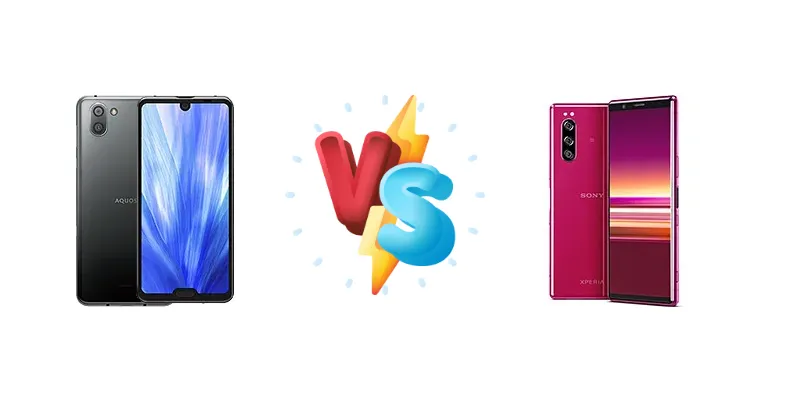
The Sharp Aquos R3 and Sony Xperia 5 both pack powerful Snapdragon 855 processors, but cater to different audiences. The Aquos R3 is known for its exceptional display, while the Xperia 5 emphasizes battery life and a more compact form factor. Let's dive into a comprehensive comparison to help you decide which phone is right for you.
🏆 Quick Verdict
The Sony Xperia 5 edges out the Aquos R3 thanks to its exceptional battery life and more competitive pricing. While the Aquos R3 boasts a stunning display, the Xperia 5 offers a more well-rounded package for most users, especially those prioritizing longevity and value.
| Network |
|---|
| 2G bands | GSM 850 / 900 / 1800 / 1900 | GSM 850 / 900 / 1800 / 1900 |
| 3G bands | HSDPA 900 / 2100 | HSDPA 800 / 850 / 900 / 1700(AWS) / 1900 / 2100 |
| 4G bands | 1, 3, 7, 8, 28, 38 | 1, 2, 3, 4, 5, 7, 8, 12, 13, 17, 19, 20, 25, 26, 28, 29, 32, 34, 38, 39, 40, 41, 46, 66 |
| Speed | HSPA 42.2/5.76 Mbps, LTE (3CA) Cat15 1024/50 Mbps | HSPA 42.2/5.76 Mbps, LTE Cat19 1600/150 Mbps |
| Technology | GSM / HSPA / LTE | GSM / HSPA / LTE |
| Launch |
|---|
| Announced | 2019, August. Released 2019, August | 2019, September 05. Released 2019, October 05 |
| Status | Discontinued | Discontinued |
| Body |
|---|
| Build | - | Glass front (Gorilla Glass 6), glass back (Gorilla Glass 6), aluminum frame |
| Dimensions | 156 x 74 x 8.9 mm (6.14 x 2.91 x 0.35 in) | 158 x 68 x 8.2 mm (6.22 x 2.68 x 0.32 in) |
| SIM | Nano-SIM + Nano-SIM | · Nano-SIM· Nano-SIM + Nano-SIM |
| Weight | 185 g (6.53 oz) | 164 g (5.78 oz) |
| | IPX5/IP6X/IPX8 water/dust resistant (up to 1.5m for 30 min) | IP65/IP68 dust/water resistant (up to 1.5m for 30 mins) |
| Display |
|---|
| Protection | Corning Gorilla Glass 5 | Corning Gorilla Glass 6 |
| Resolution | 1440 x 3120 pixels, 19.5:9 ratio (~554 ppi density) | 1080 x 2520 pixels, 21:9 ratio (~449 ppi density) |
| Size | 6.2 inches, 94.4 cm2 (~81.7% screen-to-body ratio) | 6.1 inches, 86.9 cm2 (~80.9% screen-to-body ratio) |
| Type | IGZO IPS LCD, 1B colors, 120Hz, HDR10, Dolby Vision | OLED, HDR BT.2020 |
| | - | Triluminos display
X-Reality Engine |
| Platform |
|---|
| CPU | Octa-core (1x2.84 GHz Kryo 485 & 3x2.42 GHz Kryo 485 & 4x1.78 GHz Kryo 485) | Octa-core (1x2.84 GHz Kryo 485 & 3x2.42 GHz Kryo 485 & 4x1.78 GHz Kryo 485) |
| Chipset | Qualcomm SM8150 Snapdragon 855 (7 nm) | Qualcomm SM8150 Snapdragon 855 (7 nm) |
| GPU | Adreno 640 | Adreno 640 |
| OS | Android 9.0 (Pie), upgradable to Android 10 | Android 9.0 (Pie), upgradable to Android 11 |
| Memory |
|---|
| Card slot | microSDXC (uses shared SIM slot) | microSDXC (uses shared SIM slot) |
| Internal | 128GB 6GB RAM | 128GB 6GB RAM |
| | UFS | UFS 2.1 |
| Main Camera |
|---|
| Dual | 12.2 MP, f/1.7, (wide), 1/2.55", 1.4µm, dual pixel PDAF, OIS
20 MP, f/2.4, 125˚ (ultrawide), AF, OIS | - |
| Features | Dual-LED flash, HDR, panorama | Color spectrum sensor, LED flash, panorama, HDR, eye tracking |
| Triple | - | 12 MP, f/1.6, 26mm (wide), 1/2.55", 1.4µm, predictive dual pixel PDAF, 5-axis OIS
12 MP, f/2.4, 52mm (telephoto), 1/3.4", 1.0µm, predictive PDAF, 2x optical zoom, 5-axis OIS
12 MP, f/2.4, 16mm (ultrawide), 1/3.4", 1.0µm |
| Video | 1080p@30fps | 4K@24/30fps HDR, 1080p@60fps, 1080p@30fps (5-axis gyro-EIS) |
| Selfie camera |
|---|
| Features | - | HDR |
| Single | 16 MP, f/2.0 | 8 MP, f/2.0, 24mm (wide), 1/4.0", 1.12µm |
| Video | 1080p@30fps | 1080p@30fps (5-axis gyro-EIS) |
| Sound |
|---|
| 3.5mm jack | Yes | No |
| 35mm jack | Yes | No |
| Loudspeaker | Yes, with stereo speakers | Yes, with stereo speakers |
| | 24-bit/192kHz audio | 24-bit/192kHz audio
Dynamic vibration system |
| Comms |
|---|
| Bluetooth | 5.0, A2DP, LE | 5.0, A2DP, aptX HD, LE |
| NFC | Yes | Yes |
| Positioning | GPS, GLONASS | GPS, GLONASS, BDS, GALILEO |
| Radio | No | No |
| USB | USB Type-C 3.0 | USB Type-C 3.1, OTG |
| WLAN | Wi-Fi 802.11 a/b/g/n/ac, dual-band, Wi-Fi Direct | Wi-Fi 802.11 a/b/g/n/ac, dual-band, Wi-Fi Direct, DLNA |
| Features |
|---|
| Sensors | Fingerprint (front-mounted), accelerometer, gyro, proximity, compass | Fingerprint (side-mounted), accelerometer, gyro, proximity, barometer, compass |
| Battery |
|---|
| Charging | Wired, PD
Wireless | 18W wired, PD2.0 |
| Type | Li-Po 3200 mAh | Li-Ion 3140 mAh, non-removable |
| Misc |
|---|
| Colors | Classic Black | Blue, Red, Black, Grey |
| Models | - | J8210, J8270, J9210, SOV41, SO-01M |
| Price | About 750 EUR | About 500 EUR |
| Pricing |
|---|
| 128GB 6GB RAM | - | $ 409.99 |
| RENEWED | - | $ 674.00 |
| Tests |
|---|
| Audio quality | - |
Noise -93.0dB / Crosstalk -89.4dB |
| Battery life | - |
Endurance rating 96h
|
| Display | - |
Contrast ratio: Infinite (nominal) |
| Loudspeaker | - |
-27.1 LUFS (Good)
|
| Performance | - |
AnTuTu: 334809 (v7), 416601 (v8)
GeekBench: 10941 (v4.4), 2825 (v5.1)
GFXBench: 33fps (ES 3.1 onscreen) |
Sharp Aquos R3
- Exceptional Display
- Powerful Snapdragon 855
- PD Charging (Wired & Wireless)
- Potentially Shorter Battery Life
- Higher Price
- Camera Not as Versatile as Xperia 5
Sony Xperia 5
- Excellent Battery Life
- Compact Design
- Versatile Camera System
- Competitive Price
- Display Not as Impressive as Aquos R3
- 18W Wired Charging (Slower)
Display Comparison
The Sharp Aquos R3 is the clear winner here. It's renowned for its incredibly bright and vibrant display, often cited as one of the best in the smartphone market. While the Xperia 5 has a respectable 630 nits brightness and infinite contrast ratio, it doesn't match the Aquos R3's visual fidelity. The Aquos R3's display technology is a significant selling point.
Camera Comparison
The Xperia 5 generally has a more versatile camera system. While the Aquos R3's camera is capable, the Xperia 5 often receives praise for its image processing and wider range of shooting options. Sony's camera expertise shines through, offering better low-light performance and more natural-looking photos. The Xperia 5 also typically offers more manual controls.
Performance
Both phones utilize the Snapdragon 855 chipset, meaning performance will be very similar in everyday tasks and gaming. Expect smooth multitasking and responsive app loading on both devices. There might be slight differences in thermal management depending on the device's design, but overall, performance is a draw.
Battery Life
The Xperia 5's endurance rating of 96 hours is a significant advantage. The Aquos R3's battery capacity is unknown, but it's likely smaller, resulting in shorter battery life. For users who need their phone to last through multiple days, the Xperia 5 is the clear choice.
Buying Guide
Who should buy the Sharp Aquos R3? Users prioritizing a top-tier display experience and are willing to pay a premium. Who should buy the Sony Xperia 5? Users seeking excellent battery life, a compact design, and a more affordable flagship experience.
Frequently Asked Questions
❓ Which phone is better for gaming?
Both phones offer excellent gaming performance thanks to the Snapdragon 855. The Xperia 5's potentially better thermal management might give it a slight edge in sustained gaming sessions.
❓ Is the Sharp Aquos R3 worth the extra cost?
If you prioritize display quality above all else, then yes. However, for most users, the Xperia 5 offers a more compelling value proposition with its longer battery life and more versatile camera.