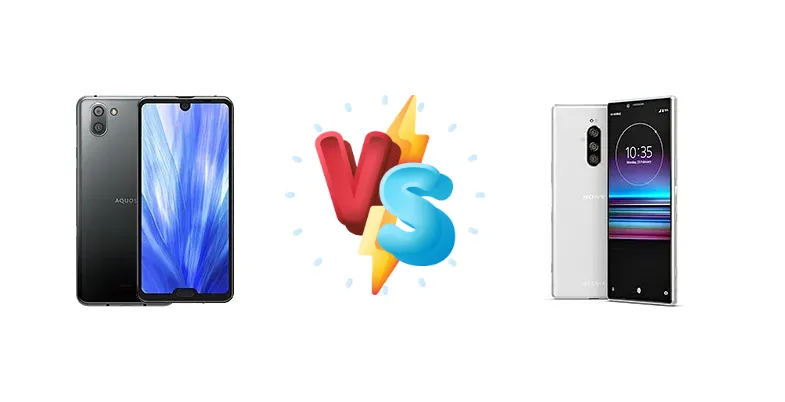
The Sharp Aquos R3 and Sony Xperia 1 are both premium Android devices targeting discerning users. Both boast powerful Snapdragon 855 processors, but their approaches to design, camera, and features differ significantly. Let's dive into a detailed comparison to help you decide which one deserves your money.
🏆 Quick Verdict
The Xperia 1 shines with its exceptional display and robust software experience, while the Aquos R3 prioritizes a unique, high-refresh-rate display and potentially a more compact form factor. For multimedia enthusiasts, the Xperia 1 is the clear winner; for those seeking a different display experience, the Aquos R3 is worth considering.
| Network |
|---|
| 2G bands | GSM 850 / 900 / 1800 / 1900 | GSM 850 / 900 / 1800 / 1900 |
| 3G bands | HSDPA 900 / 2100 | HSDPA 800 / 850 / 900 / 1700(AWS) / 1900 / 2100 |
| 4G bands | 1, 3, 7, 8, 28, 38 | 1, 2, 3, 4, 5, 7, 8, 12, 13, 17, 19, 20, 26, 28, 29, 32, 38, 39, 40, 41, 46, 66 |
| Speed | HSPA 42.2/5.76 Mbps, LTE (3CA) Cat15 1024/50 Mbps | HSPA 42.2/5.76 Mbps, LTE Cat19 1600/150 Mbps |
| Technology | GSM / HSPA / LTE | GSM / HSPA / LTE |
| Launch |
|---|
| Announced | 2019, August. Released 2019, August | 2019, February 25. Released 2019, May 30 |
| Status | Discontinued | Discontinued |
| Body |
|---|
| Build | - | Glass front (Gorilla Glass 6), glass back (Gorilla Glass 6), aluminum frame |
| Dimensions | 156 x 74 x 8.9 mm (6.14 x 2.91 x 0.35 in) | 167 x 72 x 8.2 mm (6.57 x 2.83 x 0.32 in) |
| SIM | Nano-SIM + Nano-SIM | · Nano-SIM· Nano-SIM + Nano-SIM |
| Weight | 185 g (6.53 oz) | 178 g (6.28 oz) |
| | IPX5/IP6X/IPX8 water/dust resistant (up to 1.5m for 30 min) | IP65/IP68 dust/water resistant (up to 1.5m for 30 mins) |
| Display |
|---|
| Protection | Corning Gorilla Glass 5 | Corning Gorilla Glass 6 |
| Resolution | 1440 x 3120 pixels, 19.5:9 ratio (~554 ppi density) | 1644 x 3840 pixels, 21:9 ratio (~643 ppi density) |
| Size | 6.2 inches, 94.4 cm2 (~81.7% screen-to-body ratio) | 6.5 inches, 98.6 cm2 (~82.0% screen-to-body ratio) |
| Type | IGZO IPS LCD, 1B colors, 120Hz, HDR10, Dolby Vision | OLED, HDR BT.2020 |
| | - | Runs at 1096 x 2560 pixels except for select use cases
Triluminos display
X-Reality Engine |
| Platform |
|---|
| CPU | Octa-core (1x2.84 GHz Kryo 485 & 3x2.42 GHz Kryo 485 & 4x1.78 GHz Kryo 485) | Octa-core (1x2.84 GHz Kryo 485 & 3x2.42 GHz Kryo 485 & 4x1.78 GHz Kryo 485) |
| Chipset | Qualcomm SM8150 Snapdragon 855 (7 nm) | Qualcomm SM8150 Snapdragon 855 (7 nm) |
| GPU | Adreno 640 | Adreno 640 |
| OS | Android 9.0 (Pie), upgradable to Android 10 | Android 9.0 (Pie), upgradable to Android 11 |
| Memory |
|---|
| Card slot | microSDXC (uses shared SIM slot) | microSDXC (uses shared SIM slot) - dual SIM model only |
| Internal | 128GB 6GB RAM | 64GB 6GB RAM, 128GB 6GB RAM |
| | UFS | UFS 2.1 |
| Main Camera |
|---|
| Dual | 12.2 MP, f/1.7, (wide), 1/2.55", 1.4µm, dual pixel PDAF, OIS
20 MP, f/2.4, 125˚ (ultrawide), AF, OIS | - |
| Features | Dual-LED flash, HDR, panorama | Color spectrum sensor, LED flash, panorama, HDR, eye tracking |
| Triple | - | 12 MP, f/1.6, 26mm (wide), 1/2.55", 1.4µm, predictive dual pixel PDAF, 5-axis OIS
12 MP, f/2.4, 52mm (telephoto), 1/3.4", 1.0µm, predictive PDAF, 2x optical zoom, 5-axis OIS
12 MP, f/2.4, 16mm (ultrawide), 1/3.4", 1.0µm |
| Video | 1080p@30fps | 4K@24/25/30fps HDR, 1080p@60fps, 1080p@30fps (5-axis gyro-EIS), 1080p@960fps |
| Selfie camera |
|---|
| Features | - | HDR |
| Single | 16 MP, f/2.0 | 8 MP, f/2.0, 24mm (wide), 1/4.0", 1.12µm |
| Video | 1080p@30fps | 1080p@30fps (5-axis gyro-EIS) |
| Sound |
|---|
| 3.5mm jack | Yes | No |
| 35mm jack | Yes | No |
| Loudspeaker | Yes, with stereo speakers | Yes, with stereo speakers |
| | 24-bit/192kHz audio | 24-bit/192kHz audio
Dynamic vibration system |
| Comms |
|---|
| Bluetooth | 5.0, A2DP, LE | 5.0, A2DP, aptX HD, LE |
| NFC | Yes | Yes |
| Positioning | GPS, GLONASS | GPS, GLONASS, BDS, GALILEO |
| Radio | No | No |
| USB | USB Type-C 3.0 | USB Type-C 3.1, OTG |
| WLAN | Wi-Fi 802.11 a/b/g/n/ac, dual-band, Wi-Fi Direct | Wi-Fi 802.11 a/b/g/n/ac, dual-band, Wi-Fi Direct, DLNA |
| Features |
|---|
| Sensors | Fingerprint (front-mounted), accelerometer, gyro, proximity, compass | Fingerprint (side-mounted), accelerometer, gyro, proximity, barometer, compass |
| Battery |
|---|
| Charging | Wired, PD
Wireless | 18W wired, PD2.0 |
| Type | Li-Po 3200 mAh | Li-Ion 3330 mAh, non-removable |
| Misc |
|---|
| Colors | Classic Black | Black, Gray, Purple, White |
| Models | - | J8110, J8170, J9110, J9150, SOV40, SO-03L |
| Price | About 750 EUR | About 500 EUR |
| Tests |
|---|
| Audio quality | - |
Noise -93.6dB / Crosstalk -85.2dB |
| Battery life | - | Endurance rating 79h |
| Camera | - |
Photo / Video |
| Display | - |
Contrast ratio: Infinite (nominal) |
| Loudspeaker | - |
-26.7 LUFS (Good) |
| Performance | - |
AnTuTu: 356734 (v7), 418206 (v8)
GeekBench: 10985 (v4.4), 2753 (v5.1)
GFXBench: 33fps (ES 3.1 onscreen) |
Sharp Aquos R3
- Unique IGZO display technology
- Potentially more compact design
- Fast charging (PD & Wireless)
- Snapdragon 855 performance
- Limited availability outside of Japan
- Camera specs less detailed
- Software support potentially less robust than Sony
Sony Xperia 1
- Stunning 4K OLED display with 120Hz refresh rate
- Excellent camera system with manual controls
- Clean and optimized Android experience
- Strong battery life (79h endurance rating)
- Design can feel dated
- Charging speed could be faster
- Pricey
Display Comparison
Both phones feature excellent displays powered by the Snapdragon 855. The Xperia 1 boasts a 6.5-inch 4K OLED panel with a 120Hz refresh rate and an impressive contrast ratio (effectively infinite). The Aquos R3 is known for its unique IGZO display technology, offering vibrant colors and potentially better power efficiency, though specific resolution details are less readily available. The Xperia 1's brightness (665 nits) gives it an edge in outdoor visibility.
Camera Comparison
The Xperia 1 features a triple-lens rear camera system (12MP main, 12MP ultrawide, 12MP telephoto) with a focus on manual controls and professional-grade photography. The Aquos R3 is expected to have a high-resolution main sensor, but detailed camera specifications are less readily available. The Xperia 1's video recording capabilities are also generally considered superior.
Performance
Both devices are powered by the same Qualcomm Snapdragon 855 chipset and Octa-core CPU. Real-world performance should be very similar, handling demanding games and applications with ease. Software optimization and RAM management will be key differentiators in daily usage.
Battery Life
Both phones have similar battery capacities, but the Xperia 1 boasts an endurance rating of 79 hours, suggesting potentially better power efficiency or software optimization. The Aquos R3's IGZO display *could* contribute to better efficiency, but real-world usage will determine the winner.
Buying Guide
Who should buy the Sharp Aquos R3? Users prioritizing a unique, high-refresh-rate display and a potentially more compact design. Who should buy the Sony Xperia 1? Users who value a stunning OLED display, a clean Android experience, and a focus on photography and videography.
Frequently Asked Questions
❓ Is the Sharp Aquos R3 available outside of Japan?
Availability is limited. It's primarily sold in Japan, making it difficult to obtain elsewhere.
❓ Which phone has better software support?
Sony generally provides more consistent and longer-term software updates for its Xperia devices.
❓ Which phone is better for mobile gaming?
Both phones offer excellent performance thanks to the Snapdragon 855. The Xperia 1's 120Hz display gives it a slight edge for smoother gameplay.