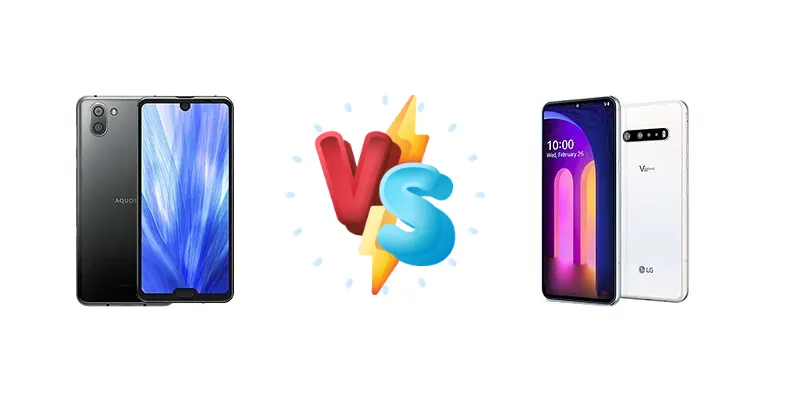
The Sharp Aquos R3 and LG V60 ThinQ 5G UW were both flagship contenders, offering premium features and performance. But with different strengths and weaknesses, which phone ultimately delivers the better experience? This comprehensive comparison dives deep into their specs, features, and overall value.
🏆 Quick Verdict
The LG V60 ThinQ 5G UW edges out the Aquos R3 thanks to its slightly more powerful Snapdragon 865, PD2.0/QC4 charging, and generally more robust software support. However, the Aquos R3 boasts a stunning display and a unique design, making it a compelling alternative for those prioritizing screen quality.
| Network |
|---|
| 2G bands | GSM 850 / 900 / 1800 / 1900 | GSM 850 / 900 / 1800 / 1900 |
| 3G bands | HSDPA 900 / 2100 | HSDPA 850 / 900 / 1700(AWS) / 1900 / 2100 |
| 4G bands | 1, 3, 7, 8, 28, 38 | 2, 3, 4, 5, 7, 12, 13, 20, 28, 46, 48, 66 |
| 5G bands | - | 260, 261 mmWave |
| Speed | HSPA 42.2/5.76 Mbps, LTE (3CA) Cat15 1024/50 Mbps | HSPA 42.2/5.76 Mbps, LTE (7CA) Cat22, 5G |
| Technology | GSM / HSPA / LTE | GSM / CDMA / HSPA / EVDO / LTE / 5G |
| | - | CDMA2000 1xEV-DO |
| Launch |
|---|
| Announced | 2019, August. Released 2019, August | 2020, February 26. Released 2020, April 02 |
| Status | Discontinued | Discontinued |
| Body |
|---|
| Build | - | Glass front (Gorilla Glass 5), glass back (Gorilla Glass 6), aluminum frame |
| Dimensions | 156 x 74 x 8.9 mm (6.14 x 2.91 x 0.35 in) | 169.3 x 77.6 x 8.9 mm (6.67 x 3.06 x 0.35 in) |
| SIM | Nano-SIM + Nano-SIM | Nano-SIM (pre-installed) |
| Weight | 185 g (6.53 oz) | 218 g (7.69 oz) |
| | IPX5/IP6X/IPX8 water/dust resistant (up to 1.5m for 30 min) | IP68 dust/water resistant (up to 1.5m for 30 min)
MIL-STD-810G compliant*
Method 516.6, Procedure IV "Transit Drop"
*does not guarantee ruggedness or use in extreme conditions |
| Display |
|---|
| Protection | Corning Gorilla Glass 5 | Corning Gorilla Glass 5 |
| Resolution | 1440 x 3120 pixels, 19.5:9 ratio (~554 ppi density) | 1080 x 2460 pixels (~395 ppi density) |
| Size | 6.2 inches, 94.4 cm2 (~81.7% screen-to-body ratio) | 6.8 inches, 109.8 cm2 (~83.6% screen-to-body ratio) |
| Type | IGZO IPS LCD, 1B colors, 120Hz, HDR10, Dolby Vision | P-OLED, HDR10+ |
| | - | Always-on display |
| Platform |
|---|
| CPU | Octa-core (1x2.84 GHz Kryo 485 & 3x2.42 GHz Kryo 485 & 4x1.78 GHz Kryo 485) | Octa-core (1x2.84 GHz Cortex-A77 & 3x2.42 GHz Cortex-A77 & 4x1.80 GHz Cortex-A55) |
| Chipset | Qualcomm SM8150 Snapdragon 855 (7 nm) | Qualcomm SM8250 Snapdragon 865 5G (7 nm+) |
| GPU | Adreno 640 | Adreno 650 |
| OS | Android 9.0 (Pie), upgradable to Android 10 | Android 10, upgradable to Android 13 |
| Memory |
|---|
| Card slot | microSDXC (uses shared SIM slot) | microSDXC (uses shared SIM slot) - dual-SIM model |
| Internal | 128GB 6GB RAM | 128GB 8GB RAM |
| | UFS | UFS 2.1 |
| Main Camera |
|---|
| Dual | 12.2 MP, f/1.7, (wide), 1/2.55", 1.4µm, dual pixel PDAF, OIS
20 MP, f/2.4, 125˚ (ultrawide), AF, OIS | 64 MP, f/1.8, 27mm (standard), 1/1.72", 0.8µm, dual pixel PDAF, OIS
13 MP, f/1.9, 12mm (ultrawide), 1/3.4", 1.0µm
0.3 MP, TOF 3D, f/1.4, (depth) |
| Features | Dual-LED flash, HDR, panorama | Dual-LED dual-tone flash, HDR, panorama |
| Video | 1080p@30fps | 8K@30fps, 4K@30/60fps, 1080p, HDR10+, 24-bit/192kHz stereo sound rec., gyro-EIS |
| Selfie camera |
|---|
| Features | - | HDR |
| Single | 16 MP, f/2.0 | 10 MP, f/1.9, 30mm (standard), 1/3.1", 1.22µm |
| Video | 1080p@30fps | 4K@30fps, gyro-EIS |
| Sound |
|---|
| 3.5mm jack | Yes | Yes |
| 35mm jack | Yes | Yes |
| Loudspeaker | Yes, with stereo speakers | Yes, with stereo speakers |
| | 24-bit/192kHz audio | 32-bit/192kHz audio
24-bit/192kHz audio recording |
| Comms |
|---|
| Bluetooth | 5.0, A2DP, LE | 5.1, A2DP, LE, aptX HD |
| NFC | Yes | Yes |
| Positioning | GPS, GLONASS | GPS, GLONASS, GALILEO, BDS |
| Radio | No | FM radio (USA model only) |
| USB | USB Type-C 3.0 | USB Type-C 3.1, OTG |
| WLAN | Wi-Fi 802.11 a/b/g/n/ac, dual-band, Wi-Fi Direct | Wi-Fi 802.11 a/b/g/n/ac/6, dual-band, Wi-Fi Direct, DLNA |
| Features |
|---|
| Sensors | Fingerprint (front-mounted), accelerometer, gyro, proximity, compass | Fingerprint (under display, optical), accelerometer, gyro, proximity, compass, barometer |
| Battery |
|---|
| Charging | Wired, PD
Wireless | Wired, PD2.0, QC4
Wireless |
| Type | Li-Po 3200 mAh | Li-Po 5000 mAh |
| Misc |
|---|
| Colors | Classic Black | Classy Blue, Classy White |
| Models | - | LM-V600VML, LMV600VML |
| Price | About 750 EUR | About 870 EUR |
| SAR | - | 0.85 W/kg (head) 1.12 W/kg (body) |
Sharp Aquos R3
- Exceptional IGZO display
- Compact and unique design
- 120Hz refresh rate
- Good camera performance
- Older Snapdragon 855 chipset
- Slower charging
- Limited software updates
LG V60 ThinQ 5G UW
- More powerful Snapdragon 865 chipset
- Faster charging (PD2.0, QC4)
- Versatile camera system
- Good software support (at the time)
- Larger size
- OLED display can be less efficient
- Design is less distinctive
Display Comparison
The Aquos R3's standout feature is its 6.5-inch IGZO display with a 20:9 aspect ratio and a 120Hz refresh rate. It's known for its exceptional brightness, color accuracy, and low power consumption. The V60 ThinQ features a 6.8-inch OLED display with a 20:9 aspect ratio and a 120Hz refresh rate, offering vibrant colors and deep blacks, but potentially less efficient power usage. The Aquos R3's IGZO technology gives it a noticeable edge in outdoor visibility.
Camera Comparison
The LG V60 ThinQ 5G UW features a triple-lens rear camera system (64MP main, 13MP ultrawide, 2MP depth sensor) and a 10MP front camera. It's known for its versatility and excellent video recording capabilities. The Aquos R3 has a triple-lens rear camera system (12MP main, 12MP ultrawide, 8MP telephoto) and a 16MP front camera. While the Aquos R3's camera is capable, the V60 ThinQ generally produces more consistent and detailed images, especially in challenging lighting conditions.
Performance
The LG V60 ThinQ 5G UW holds a slight advantage in performance thanks to its Snapdragon 865 chipset. While the Aquos R3's Snapdragon 855 is still capable, the 865 offers a modest performance boost, particularly in 5G connectivity and certain demanding tasks. Both phones handle everyday tasks and gaming with ease.
Battery Life
Both phones feature a 4500mAh battery. The LG V60 ThinQ 5G UW's more efficient Snapdragon 865 and support for PD2.0/QC4 fast charging give it a slight edge in battery life and charging speed compared to the Aquos R3's PD charging.
Buying Guide
The Sharp Aquos R3 is ideal for users who prioritize a top-tier display experience and a unique, compact design. The LG V60 ThinQ 5G UW is a better choice for those seeking a more powerful processor, faster charging, and a more versatile camera system with broader software support.
Frequently Asked Questions
❓ Is the Sharp Aquos R3 still worth buying?
If you prioritize a stunning display and a compact design, the Aquos R3 can still be a good option, especially if you find it at a discounted price. However, be aware of its older chipset and limited software updates.
❓ Which phone has better 5G connectivity?
The LG V60 ThinQ 5G UW has a slight advantage due to its Snapdragon 865 chipset, which includes a more advanced 5G modem.