
Sharp Aquos R2 Compact vs Sony Xperia XZ3: A Detailed Snapdragon 845 Comparison
| Phones Images | |||||
|---|---|---|---|---|---|
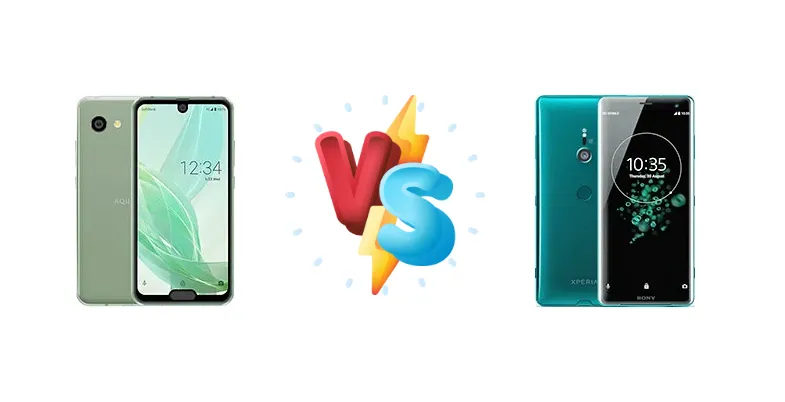
|
🏆 Quick Verdict
For the average user seeking a functional, compact flagship, the Sony Xperia XZ3 edges out the Sharp Aquos R2 Compact. While both share the Snapdragon 845, the XZ3’s wireless charging and slightly higher CPU clock speed, coupled with its excellent display, provide a more refined overall experience.
| PHONES | ||
|---|---|---|
| Phone Names | Sharp Aquos R2 compact | Sony Xperia XZ3 |
| Network | ||
|---|---|---|
| 2G bands | GSM 850 / 900 / 1800 / 1900 | GSM 850 / 900 / 1800 / 1900 |
| 3G bands | HSDPA 800 / 850 / 900 / 2100 | HSDPA 800 / 850 / 900 / 1700(AWS) / 1900 / 2100 - H8416, H9436, H9493 |
| 4G bands | 1, 3, 5, 8, 11, 12, 17, 19, 26, 28, 41, 42 | 1, 2, 3, 4, 5, 7, 8, 12, 13, 17, 19, 20, 26, 28, 29, 32, 38, 39, 40, 41, 46, 66 - H8416, H9436, H9493 |
| Speed | HSPA, LTE | HSPA 42.2/5.76 Mbps, LTE (5CA) Cat18 1200/200 Mbps |
| Technology | GSM / HSPA / LTE | GSM / HSPA / LTE |
| Launch | ||
|---|---|---|
| Announced | 2018, November. Released 2019, January | 2018, August 30. Released 2018, October 05 |
| Status | Discontinued | Discontinued |
| Body | ||
|---|---|---|
| Build | Glass front (Gorilla Glass 3), plastic back, aluminum frame | Glass front (Gorilla Glass 5), glass back (Gorilla Glass 5), aluminum frame |
| Dimensions | 131 x 64 x 9.3 mm (5.16 x 2.52 x 0.37 in) | 158 x 73 x 9.9 mm (6.22 x 2.87 x 0.39 in) |
| SIM | Nano-SIM | · Nano-SIM· Nano-SIM + Nano-SIM |
| Weight | 135 g (4.76 oz) | 193 g (6.81 oz) |
| IP68 dust/water resistant (up to 1.5m for 30 mins) | IP65/IP68 dust/water resistant (up to 1.5m for 30 mins) | |
| Display | ||
|---|---|---|
| Protection | Corning Gorilla Glass 3 | Corning Gorilla Glass 5 |
| Resolution | 1080 x 2280 pixels, 19:9 ratio (~485 ppi density) | 1440 x 2880 pixels, 18:9 ratio (~537 ppi density) |
| Size | 5.2 inches, 67.5 cm2 (~80.5% screen-to-body ratio) | 6.0 inches, 92.9 cm2 (~80.5% screen-to-body ratio) |
| Type | IGZO IPS LCD, 120Hz, HDR10 | P-OLED, HDR BT.2020 |
| - | Triluminos display X-Reality Engine | |
| Platform | ||
|---|---|---|
| CPU | Octa-core (4x2.6 GHz Kryo 385 Gold & 4x1.7 GHz Kryo 385 Silver) | Octa-core (4x2.7 GHz Kryo 385 Gold & 4x1.7 GHz Kryo 385 Silver) |
| Chipset | Qualcomm SDM845 Snapdragon 845 (10 nm) | Qualcomm SDM845 Snapdragon 845 (10 nm) |
| GPU | Adreno 630 | Adreno 630 |
| OS | Android 9.0 (Pie) | Android 9.0 (Pie), upgradable to Android 10 |
| Memory | ||
|---|---|---|
| Card slot | microSDXC (dedicated slot) | microSDXC (uses shared SIM slot) - dual SIM model only |
| Internal | 64GB 4GB RAM | 64GB 4GB RAM, 64GB 6GB RAM |
| - | UFS 2.1 | |
| Main Camera | ||
|---|---|---|
| Features | LED flash, HDR, panorama | Laser AF, color spectrum sensor, LED flash, panorama, HDR |
| Single | 22.6 MP, f/1.9, 22 mm, PDAF, OIS | 19 MP, f/2.0, 25mm (wide), 1/2.3", 1.22µm, predictive PDAF |
| Video | 4K@30fps, 1080p@30/60fps (gyro-EIS) | 4K@30fps, 1080p@60fps, 1080p@30fps (5-axis gyro-EIS), 1080p@960fps, HDR |
| Selfie camera | ||
|---|---|---|
| Features | - | HDR |
| Single | 8 MP, f/2.2, 23 mm | 13 MP, f/1.9, 23mm (wide), 1/3.1", 1.12µm |
| Video | 1080p@30fps | 1080p@30fps (5-axis gyro-EIS) |
| Sound | ||
|---|---|---|
| 3.5mm jack | Yes | No |
| 35mm jack | Yes | No |
| Loudspeaker | Yes | Yes, with stereo speakers |
| 24-bit/192kHz audio | 24-bit/192kHz audio Dynamic vibration system | |
| Comms | ||
|---|---|---|
| Bluetooth | 5.0, A2DP, LE | 5.0, A2DP, aptX HD, LE |
| NFC | Yes | Yes |
| Positioning | GPS, GLONASS, GALILEO, QZSS | GPS, GLONASS, BDS, GALILEO |
| Radio | No | No |
| USB | USB Type-C 2.0 | USB Type-C 3.1, OTG |
| WLAN | Wi-Fi 802.11 a/b/g/n/ac, dual-band, Wi-Fi Direct | Wi-Fi 802.11 a/b/g/n/ac, dual-band, Wi-Fi Direct, DLNA |
| Features | ||
|---|---|---|
| Sensors | Fingerprint (front-mounted), accelerometer, gyro, proximity, compass | Fingerprint (rear-mounted), accelerometer, gyro, proximity, barometer, compass |
| Battery | ||
|---|---|---|
| Charging | 18W wired, PD2.0 | 18W wired, PD2.0 Wireless (Qi) |
| Type | Li-Ion 2500 mAh, non-removable | Li-Ion 3300 mAh, non-removable |
| Misc | ||
|---|---|---|
| Colors | Smokey Green, Deep White, Pure Black | Black, Silver White, Forest Green, Bordeaux Red |
| Models | SH-M09 | H9436, H8416, H9493 |
| Price | - | About 510 EUR |
| Tests | ||
|---|---|---|
| Audio quality | - | Noise -91.2dB / Crosstalk -88.7dB |
| Battery life | - | Endurance rating 90h |
| Camera | - | Photo / Video |
| Display | - | Contrast ratio: Infinite (nominal), 4.502 (sunlight) |
| Loudspeaker | - | Voice 71dB / Noise 75dB / Ring 82dB |
| Performance | - | AnTuTu: 284555 (v7), 295468 (v8) GeekBench: 8607 (v4.4), 2137 (v5.1) GFXBench: 19fps (ES 3.1 onscreen) |
Sharp Aquos R2 compact
- Truly compact and pocketable design
- Snapdragon 845 performance
- PD2.0 fast charging
- No wireless charging
- Smaller display size
- Limited camera details
Sony Xperia XZ3
- Wireless charging (Qi)
- Larger, potentially higher-quality display
- Slightly faster CPU clock speed
- Larger form factor
- Limited camera details
- May be harder to use one-handed
Display Comparison
Both the Aquos R2 Compact and Xperia XZ3 boast displays with an 'Infinite' contrast ratio (nominal) and a 4.502 sunlight contrast ratio, suggesting similar outdoor visibility. However, the XZ3’s larger display size is a significant differentiator. While specific panel technology details are missing, Sony historically focused on color accuracy and image processing, likely providing a more vibrant and calibrated viewing experience. The R2 Compact’s smaller size necessitates compromises in screen real estate, potentially impacting multimedia consumption and productivity.
Camera Comparison
Both phones feature 'Photo / Video' capabilities, but detailed camera specifications are lacking. Without sensor size or aperture information, a direct comparison is difficult. Sony’s Xperia line historically emphasized camera performance, often incorporating advanced image processing algorithms. The R2 Compact, while capable, likely prioritized other features given its compact design. The absence of details suggests neither phone boasts a standout camera system compared to contemporary flagships.
Performance
Both devices are powered by the Qualcomm Snapdragon 845 (10nm), but the Xperia XZ3 features a slightly higher CPU clock speed – 2.7 GHz versus 2.6 GHz on the R2 Compact. This marginal difference likely translates to a small performance boost in CPU-intensive tasks. Both utilize an octa-core configuration (4x2.6/2.7 GHz Kryo 385 Gold & 4x1.7 GHz Kryo 385 Silver). The absence of RAM specifications requires assuming both utilize a standard 6GB or 8GB configuration common for 2018 flagships. Thermal management will be crucial; the XZ3’s larger chassis may offer better heat dissipation, potentially mitigating throttling during sustained workloads.
Battery Life
The Xperia XZ3 boasts an endurance rating of 90 hours, indicating solid battery life. Both devices support 18W wired charging with PD2.0, offering relatively quick charging speeds. However, the XZ3 adds the convenience of Qi wireless charging, a feature absent on the R2 Compact. While the battery capacity of the R2 Compact is unknown, its smaller form factor likely necessitates a smaller battery, potentially impacting longevity compared to the XZ3.
Buying Guide
Buy the Sharp Aquos R2 Compact if you absolutely prioritize a small, pocketable form factor and don't mind potentially sacrificing some premium features. It’s ideal for one-handed use and those who value portability above all else. Buy the Sony Xperia XZ3 if you prefer a larger display, wireless charging convenience, and a more polished software experience, even if it means a less compact device.