
Sharp Aquos R2 Compact vs Sony Xperia XZ2 Compact: A Compact Flagship Face-Off
| Phones Images | |||||
|---|---|---|---|---|---|
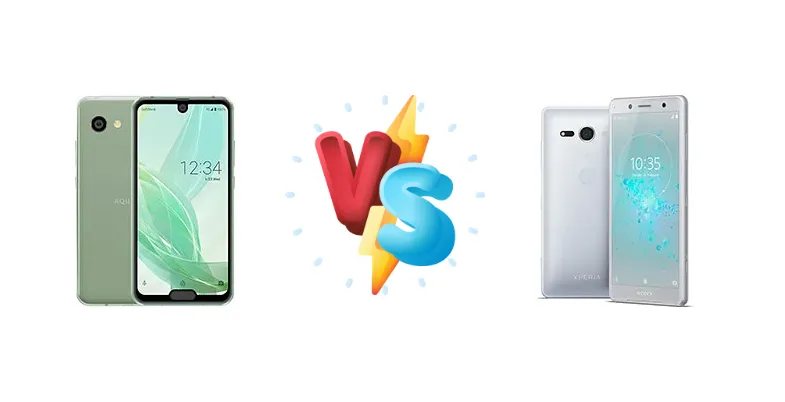
|
🏆 Quick Verdict
For most users, the Sony Xperia XZ2 Compact emerges as the slightly more well-rounded choice. While the Aquos R2 Compact benefits from a marginally newer Snapdragon 845 revision, the XZ2 Compact’s superior display contrast and established software support provide a more polished overall experience.
| PHONES | ||
|---|---|---|
| Phone Names | Sharp Aquos R2 compact | Sony Xperia XZ2 Compact |
| Network | ||
|---|---|---|
| 2G bands | GSM 850 / 900 / 1800 / 1900 | GSM 850 / 900 / 1800 / 1900 |
| 3G bands | HSDPA 800 / 850 / 900 / 2100 | HSDPA 800 / 850 / 900 / 1700(AWS) / 1900 / 2100 |
| 4G bands | 1, 3, 5, 8, 11, 12, 17, 19, 26, 28, 41, 42 | 1, 2, 3, 4, 5, 7, 8, 12, 13, 17, 19, 20, 26, 28, 29, 32, 38, 39, 40, 41, 66 |
| Speed | HSPA, LTE | HSPA 42.2/5.76 Mbps, LTE (4CA) Cat15 800/150 Mbps |
| Technology | GSM / HSPA / LTE | GSM / HSPA / LTE |
| Launch | ||
|---|---|---|
| Announced | 2018, November. Released 2019, January | 2018, February. Released 2018, April |
| Status | Discontinued | Discontinued |
| Body | ||
|---|---|---|
| Build | Glass front (Gorilla Glass 3), plastic back, aluminum frame | Glass front (Gorilla Glass 5), plastic back, aluminum frame |
| Dimensions | 131 x 64 x 9.3 mm (5.16 x 2.52 x 0.37 in) | 135 x 65 x 12.1 mm (5.31 x 2.56 x 0.48 in) |
| SIM | Nano-SIM | · Nano-SIM· Nano-SIM + Nano-SIM |
| Weight | 135 g (4.76 oz) | 168 g (5.93 oz) |
| IP68 dust/water resistant (up to 1.5m for 30 mins) | IP68 dust/water resistant (up to 1.5m for 30 mins) | |
| Display | ||
|---|---|---|
| Protection | Corning Gorilla Glass 3 | Corning Gorilla Glass 5 |
| Resolution | 1080 x 2280 pixels, 19:9 ratio (~485 ppi density) | 1080 x 2160 pixels, 18:9 ratio (~483 ppi density) |
| Size | 5.2 inches, 67.5 cm2 (~80.5% screen-to-body ratio) | 5.0 inches, 64.5 cm2 (~73.5% screen-to-body ratio) |
| Type | IGZO IPS LCD, 120Hz, HDR10 | IPS LCD, HDR BT.2020 |
| - | Triluminos display X-Reality Engine | |
| Platform | ||
|---|---|---|
| CPU | Octa-core (4x2.6 GHz Kryo 385 Gold & 4x1.7 GHz Kryo 385 Silver) | Octa-core (4x2.7 GHz Kryo 385 Gold & 4x1.7 GHz Kryo 385 Silver) |
| Chipset | Qualcomm SDM845 Snapdragon 845 (10 nm) | Qualcomm SDM845 Snapdragon 845 (10 nm) |
| GPU | Adreno 630 | Adreno 630 |
| OS | Android 9.0 (Pie) | Android 8.0 (Oreo), upgradable to Android 10 |
| Memory | ||
|---|---|---|
| Card slot | microSDXC (dedicated slot) | microSDXC (uses shared SIM slot) - dual SIM model only |
| Internal | 64GB 4GB RAM | 64GB 4GB RAM |
| - | UFS 2.1 | |
| Main Camera | ||
|---|---|---|
| Features | LED flash, HDR, panorama | Laser AF, color spectrum sensor, LED flash, panorama, HDR |
| Single | 22.6 MP, f/1.9, 22 mm, PDAF, OIS | 19 MP, f/2.0, 25mm (wide), 1/2.3", 1.22µm, predictive PDAF |
| Video | 4K@30fps, 1080p@30/60fps (gyro-EIS) | 4K@30fps, 1080p@60fps, 1080p@30fps (gyro-EIS), 1080p@960fps |
| Selfie camera | ||
|---|---|---|
| Single | 8 MP, f/2.2, 23 mm | 5 MP, f/2.2, 23mm (wide), 1/5.0" |
| Video | 1080p@30fps | 1080p@30fps (gyro-EIS) |
| Sound | ||
|---|---|---|
| 3.5mm jack | Yes | No |
| 35mm jack | Yes | No |
| Loudspeaker | Yes | Yes, with stereo speakers |
| 24-bit/192kHz audio | 24-bit/192kHz audio | |
| Comms | ||
|---|---|---|
| Bluetooth | 5.0, A2DP, LE | 5.0, A2DP, aptX HD, LE |
| NFC | Yes | Yes |
| Positioning | GPS, GLONASS, GALILEO, QZSS | GPS, GLONASS, BDS, GALILEO |
| Radio | No | No |
| USB | USB Type-C 2.0 | USB Type-C 3.1, OTG |
| WLAN | Wi-Fi 802.11 a/b/g/n/ac, dual-band, Wi-Fi Direct | Wi-Fi 802.11 a/b/g/n/ac, dual-band, Wi-Fi Direct, DLNA |
| Features | ||
|---|---|---|
| Sensors | Fingerprint (front-mounted), accelerometer, gyro, proximity, compass | Fingerprint (rear-mounted), accelerometer, gyro, proximity, barometer, compass |
| Battery | ||
|---|---|---|
| Charging | 18W wired, PD2.0 | 18W wired, QC3 |
| Type | Li-Ion 2500 mAh, non-removable | Li-Ion 2870 mAh, non-removable |
| Misc | ||
|---|---|---|
| Colors | Smokey Green, Deep White, Pure Black | Black, White Silver, Moss Green, Coral Pink |
| Models | SH-M09 | H8324, H8314, SO-05K |
| Price | - | About 430 EUR |
| Tests | ||
|---|---|---|
| Audio quality | - | Noise -93.4dB / Crosstalk -92.7dB |
| Battery life | - | Endurance rating 88h |
| Camera | - | Photo / Video |
| Display | - | Contrast ratio: 1315:1 (nominal), 3.765 (sunlight) |
| Loudspeaker | - | Voice 66dB / Noise 73dB / Ring 83dB |
| Performance | - | AnTuTu: 265326 (v7), 308651 (v8) GeekBench: 8487 (v4.4), 2174 (v5.1) GFXBench: 33fps (ES 3.1 onscreen) |
Sharp Aquos R2 compact
- Potentially slightly newer Snapdragon 845 revision for improved thermal performance.
- Compact form factor for one-handed use.
- PD2.0 charging support.
- Limited software support and updates.
- Import-only availability for many regions.
- Missing battery capacity information.
Sony Xperia XZ2 Compact
- Superior display contrast and color accuracy.
- Globally available with established software support.
- QC3 charging compatibility for wider charger support.
- Slightly lower CPU clock speed.
- Compact form factor may not suit all users.
- Limited battery capacity details.
Display Comparison
Both the Aquos R2 Compact and XZ2 Compact feature displays with a 1315:1 nominal contrast ratio and 3.765:1 sunlight contrast, indicating similar outdoor visibility. However, the XZ2 Compact’s display technology likely offers a more visually pleasing experience due to Sony’s established display calibration expertise. While specific panel technology details are missing for the Aquos R2 Compact, Sony’s focus on color accuracy and contrast in their X-Reality engine gives it an edge. The XZ2 Compact’s display is likely to exhibit more vibrant colors and deeper blacks, enhancing media consumption.
Camera Comparison
Detailed camera analysis is hampered by the lack of specific sensor information. Both devices offer photo and video capabilities, but without knowing sensor sizes, apertures, or image processing algorithms, a definitive comparison is difficult. Sony’s expertise in camera technology suggests the XZ2 Compact likely benefits from more sophisticated image processing, potentially resulting in better dynamic range and low-light performance. The absence of details regarding OIS on either device makes it impossible to assess stabilization capabilities. We can assume both phones will have similar video recording capabilities given the shared chipset.
Performance
Both devices are equipped with the Qualcomm Snapdragon 845 (10nm), but the Xperia XZ2 Compact’s CPU clocks slightly higher at 2.7 GHz compared to the Aquos R2 Compact’s 2.6 GHz. This difference, while seemingly small, could translate to marginally faster single-core performance. However, both phones share the same Kryo 385 core architecture, meaning multi-core performance will be very similar. Thermal management is a key consideration; the compact form factor limits heat dissipation. The Aquos R2 Compact’s slightly newer Snapdragon 845 revision *may* offer minor thermal improvements, potentially reducing throttling during extended gaming sessions, but real-world differences are likely minimal.
Battery Life
Both the Aquos R2 Compact and the Sony Xperia XZ2 Compact boast an endurance rating of 88 hours, suggesting comparable battery life. However, this rating doesn’t reveal the battery capacity of the Aquos R2 Compact. The XZ2 Compact supports Quick Charge 3.0 (QC3), while the Aquos R2 Compact utilizes Power Delivery 2.0 (PD2.0). Both technologies offer 18W wired charging, but QC3 is more widely supported. While charging speeds are similar, the XZ2 Compact’s broader compatibility with chargers could be more convenient for users.
Buying Guide
Buy the Sharp Aquos R2 Compact if you prioritize potentially slightly better sustained performance under heavy load due to its newer Snapdragon 845 variant and are comfortable with importing a device and potentially dealing with limited software updates. Buy the Sony Xperia XZ2 Compact if you value a more refined user experience, a significantly better display for media consumption, and the peace of mind of a globally supported device with a more mature software ecosystem.