
Sharp Aquos R2 Compact vs Sony Xperia XZ1 Compact: A Battle of Compact Flagships
| Phones Images | |||||
|---|---|---|---|---|---|
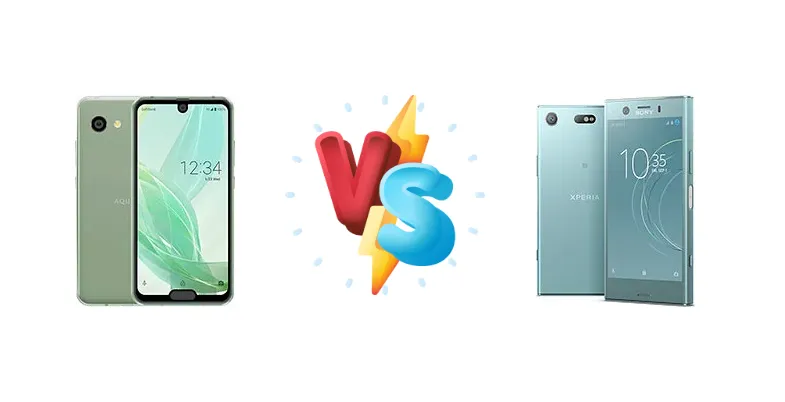
|
🏆 Quick Verdict
For the average user seeking a balance of performance and longevity, the Sharp Aquos R2 Compact emerges as the better choice. The Snapdragon 845 offers a noticeable performance uplift over the 835, and the inclusion of PD2.0 charging provides more modern power delivery standards. While battery endurance is rated identically, the newer chipset’s efficiency provides a slight edge.
| PHONES | ||
|---|---|---|
| Phone Names | Sharp Aquos R2 compact | Sony Xperia XZ1 Compact |
| Network | ||
|---|---|---|
| 2G bands | GSM 850 / 900 / 1800 / 1900 | GSM 850 / 900 / 1800 / 1900 |
| 3G bands | HSDPA 800 / 850 / 900 / 2100 | HSDPA 800 / 850 / 900 / 1700(AWS) / 1900 / 2100 |
| 4G bands | 1, 3, 5, 8, 11, 12, 17, 19, 26, 28, 41, 42 | 1, 2, 3, 4, 5, 7, 8, 12, 13, 17, 19, 20, 25, 26, 28, 29, 32, 38, 39, 40, 41, 66 |
| Speed | HSPA, LTE | HSPA 42.2/5.76 Mbps, LTE (4CA) Cat15 800/75 Mbps |
| Technology | GSM / HSPA / LTE | GSM / HSPA / LTE |
| Launch | ||
|---|---|---|
| Announced | 2018, November. Released 2019, January | 2017, August. Released 2017, October |
| Status | Discontinued | Discontinued |
| Body | ||
|---|---|---|
| Build | Glass front (Gorilla Glass 3), plastic back, aluminum frame | Glass front (Gorilla Glass 4), plastic back, plastic frame |
| Dimensions | 131 x 64 x 9.3 mm (5.16 x 2.52 x 0.37 in) | 129 x 65 x 9.3 mm (5.08 x 2.56 x 0.37 in) |
| SIM | Nano-SIM | Nano-SIM |
| Weight | 135 g (4.76 oz) | 140 g (4.94 oz) |
| IP68 dust/water resistant (up to 1.5m for 30 mins) | IP68 dust/water resistant (up to 1.5m for 30 mins) | |
| Display | ||
|---|---|---|
| Protection | Corning Gorilla Glass 3 | Corning Gorilla Glass 5 |
| Resolution | 1080 x 2280 pixels, 19:9 ratio (~485 ppi density) | 720 x 1280 pixels, 16:9 ratio (~319 ppi density) |
| Size | 5.2 inches, 67.5 cm2 (~80.5% screen-to-body ratio) | 4.6 inches, 58.3 cm2 (~69.6% screen-to-body ratio) |
| Type | IGZO IPS LCD, 120Hz, HDR10 | IPS LCD |
| - | Triluminos display X-Reality Engine | |
| Platform | ||
|---|---|---|
| CPU | Octa-core (4x2.6 GHz Kryo 385 Gold & 4x1.7 GHz Kryo 385 Silver) | Octa-core (4x2.45 GHz Kryo & 4x1.9 GHz Kryo) |
| Chipset | Qualcomm SDM845 Snapdragon 845 (10 nm) | Qualcomm MSM8998 Snapdragon 835 (10 nm) |
| GPU | Adreno 630 | Adreno 540 |
| OS | Android 9.0 (Pie) | Android 8.0 (Oreo), upgradable to Android 9.0 (Pie) |
| Memory | ||
|---|---|---|
| Card slot | microSDXC (dedicated slot) | microSDXC (dedicated slot) |
| Internal | 64GB 4GB RAM | 32GB 4GB RAM |
| - | UFS 2.0 | |
| Main Camera | ||
|---|---|---|
| Features | LED flash, HDR, panorama | Laser AF, color spectrum sensor, LED flash, panorama, HDR |
| Single | 22.6 MP, f/1.9, 22 mm, PDAF, OIS | 19 MP, f/2.0, 25mm (wide), 1/2.3", 1.22µm, predictive PDAF |
| Video | 4K@30fps, 1080p@30/60fps (gyro-EIS) | 4K@30fps, 1080p@60fps, 1080p@30fps (gyro-EIS), 720p@960fps |
| Selfie camera | ||
|---|---|---|
| Single | 8 MP, f/2.2, 23 mm | 8 MP, f/2.4, 18mm, 1/4.0" |
| Video | 1080p@30fps | 1080p@30fps (gyro-EIS) |
| Sound | ||
|---|---|---|
| 3.5mm jack | Yes | Yes |
| 35mm jack | Yes | Yes |
| Loudspeaker | Yes | Yes, with stereo speakers |
| 24-bit/192kHz audio | 24-bit/192kHz audio | |
| Comms | ||
|---|---|---|
| Bluetooth | 5.0, A2DP, LE | 5.0, A2DP, aptX HD, LE |
| NFC | Yes | Yes |
| Positioning | GPS, GLONASS, GALILEO, QZSS | GPS, GLONASS, BDS, GALILEO |
| Radio | No | No |
| USB | USB Type-C 2.0 | USB Type-C 2.0, OTG |
| WLAN | Wi-Fi 802.11 a/b/g/n/ac, dual-band, Wi-Fi Direct | Wi-Fi 802.11 a/b/g/n/ac, dual-band, Wi-Fi Direct, DLNA |
| Features | ||
|---|---|---|
| Sensors | Fingerprint (front-mounted), accelerometer, gyro, proximity, compass | Fingerprint (side-mounted), accelerometer, gyro, proximity, barometer, compass |
| Battery | ||
|---|---|---|
| Charging | 18W wired, PD2.0 | 18W wired, QC3 |
| Type | Li-Ion 2500 mAh, non-removable | Li-Ion 2700 mAh, non-removable |
| Misc | ||
|---|---|---|
| Colors | Smokey Green, Deep White, Pure Black | Black, White Silver, Horizon Blue, Twilight Pink |
| Models | SH-M09 | G8441, SO-02K |
| Price | - | About 300 EUR |
| Tests | ||
|---|---|---|
| Audio quality | - | Noise -93.7dB / Crosstalk -85.5dB |
| Battery life | - | Endurance rating 108h |
| Camera | - | Photo / Video |
| Display | - | Contrast ratio: 1243:1 (nominal), 3.729 (sunlight) |
| Loudspeaker | - | Voice 65dB / Noise 70dB / Ring 76dB |
| Performance | - | AnTuTu: 204581 (v7), 255140 (v8) GeekBench: 5596 (v4.4), 1681 (v5.1) GFXBench: 50fps (ES 3.1 onscreen) |
Sharp Aquos R2 compact
- More powerful Snapdragon 845 processor
- Faster and more efficient PD2.0 charging
- Potentially better thermal management
- Modern chipset architecture
- Potentially less readily available depending on region
- Camera software may not be as refined as Sony’s
Sony Xperia XZ1 Compact
- Sony’s renowned camera image processing
- Proven software stability within the Sony ecosystem
- Potentially wider availability
- Compact and ergonomic design
- Older Snapdragon 835 processor
- QC3 charging is less efficient than PD2.0
- May exhibit more throttling under sustained load
Display Comparison
Both the Aquos R2 Compact and Xperia XZ1 Compact share a similar display contrast ratio of 1243:1 (nominal) and 3.729 (sunlight), suggesting comparable outdoor visibility. However, detailed panel specifications like peak brightness (in nits) and color gamut coverage are missing. Given Sharp’s history with IGZO displays, the R2 Compact *may* benefit from superior color accuracy and power efficiency, but this is speculative without further data. Bezels are likely comparable, reflecting the design trends of the time, focusing on maximizing screen real estate within a compact footprint.
Camera Comparison
Both devices feature capable camera systems, but detailed sensor specifications are lacking. The context data only mentions 'Photo / Video' capabilities. Sony’s Xperia line is known for its image processing prowess, often prioritizing color accuracy and detail. Sharp, while capable, typically focuses on delivering vibrant, eye-catching images. Without knowing sensor sizes, apertures, or the presence of OIS, it’s difficult to definitively declare a winner. However, the newer image signal processor (ISP) within the Snapdragon 845 of the R2 Compact likely offers improved noise reduction and dynamic range. The absence of any mention of dedicated macro lenses suggests neither phone heavily prioritized this feature.
Performance
The core difference lies in the chipsets. The Sharp Aquos R2 Compact boasts the Qualcomm Snapdragon 845 (10nm), featuring an octa-core CPU with 4x2.6 GHz Kryo 385 Gold and 4x1.7 GHz Kryo 385 Silver cores. The Sony Xperia XZ1 Compact utilizes the older Snapdragon 835 (10nm) with 4x2.45 GHz Kryo cores and 4x1.9 GHz Kryo cores. The 845 represents a significant architectural improvement, offering approximately 25-30% better CPU and GPU performance. This translates to smoother multitasking, faster app loading times, and a more enjoyable gaming experience on the R2 Compact. While both are 10nm chips, the 845’s refinements lead to improved thermal efficiency, potentially reducing throttling during sustained workloads.
Battery Life
Interestingly, both phones are listed with an identical endurance rating of 108 hours. However, this rating doesn’t tell the whole story. The Aquos R2 Compact supports 18W wired charging with PD2.0, a more modern and efficient standard. The Xperia XZ1 Compact also supports 18W charging, but utilizes Quick Charge 3.0 (QC3). PD2.0 generally offers better negotiation with chargers and can potentially deliver a slightly faster and more consistent charging experience. While the battery capacity isn’t specified, the Snapdragon 845’s improved efficiency in the R2 Compact could translate to slightly longer real-world battery life despite the identical endurance rating.
Buying Guide
Buy the Sharp Aquos R2 Compact if you prioritize raw processing power for demanding applications, benefit from faster charging speeds with PD2.0, and appreciate a more modern chipset architecture. Buy the Sony Xperia XZ1 Compact if you value Sony’s refined camera software and image processing, prefer a potentially more readily available device depending on your region, and prioritize a proven track record of software stability within the Sony ecosystem.