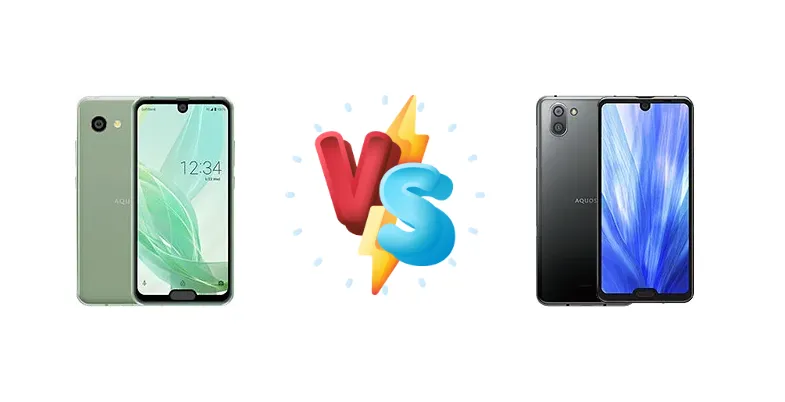
The Sharp Aquos R2 Compact and R3 represent a fascinating evolution within Sharp’s compact flagship strategy. The R2 Compact, powered by the Snapdragon 845, aimed to deliver high-end performance in a pocketable form factor. The R3, arriving later, leverages the Snapdragon 855, promising improvements in efficiency and power. This comparison dissects the key differences to help you determine which device best suits your needs.
🏆 Quick Verdict
For most users, the Sharp Aquos R3 is the superior choice. The Snapdragon 855 offers a noticeable performance uplift and improved power efficiency over the 845, coupled with the convenience of wireless charging. While the R2 Compact remains a capable device, the R3’s advancements justify the likely price premium.
| Network |
|---|
| 2G bands | GSM 850 / 900 / 1800 / 1900 | GSM 850 / 900 / 1800 / 1900 |
| 3G bands | HSDPA 800 / 850 / 900 / 2100 | HSDPA 900 / 2100 |
| 4G bands | 1, 3, 5, 8, 11, 12, 17, 19, 26, 28, 41, 42 | 1, 3, 7, 8, 28, 38 |
| Speed | HSPA, LTE | HSPA 42.2/5.76 Mbps, LTE (3CA) Cat15 1024/50 Mbps |
| Technology | GSM / HSPA / LTE | GSM / HSPA / LTE |
| Launch |
|---|
| Announced | 2018, November. Released 2019, January | 2019, August. Released 2019, August |
| Status | Discontinued | Discontinued |
| Body |
|---|
| Build | Glass front (Gorilla Glass 3), plastic back, aluminum frame | - |
| Dimensions | 131 x 64 x 9.3 mm (5.16 x 2.52 x 0.37 in) | 156 x 74 x 8.9 mm (6.14 x 2.91 x 0.35 in) |
| SIM | Nano-SIM | Nano-SIM + Nano-SIM |
| Weight | 135 g (4.76 oz) | 185 g (6.53 oz) |
| | IP68 dust/water resistant (up to 1.5m for 30 mins) | IPX5/IP6X/IPX8 water/dust resistant (up to 1.5m for 30 min) |
| Display |
|---|
| Protection | Corning Gorilla Glass 3 | Corning Gorilla Glass 5 |
| Resolution | 1080 x 2280 pixels, 19:9 ratio (~485 ppi density) | 1440 x 3120 pixels, 19.5:9 ratio (~554 ppi density) |
| Size | 5.2 inches, 67.5 cm2 (~80.5% screen-to-body ratio) | 6.2 inches, 94.4 cm2 (~81.7% screen-to-body ratio) |
| Type | IGZO IPS LCD, 120Hz, HDR10 | IGZO IPS LCD, 1B colors, 120Hz, HDR10, Dolby Vision |
| Platform |
|---|
| CPU | Octa-core (4x2.6 GHz Kryo 385 Gold & 4x1.7 GHz Kryo 385 Silver) | Octa-core (1x2.84 GHz Kryo 485 & 3x2.42 GHz Kryo 485 & 4x1.78 GHz Kryo 485) |
| Chipset | Qualcomm SDM845 Snapdragon 845 (10 nm) | Qualcomm SM8150 Snapdragon 855 (7 nm) |
| GPU | Adreno 630 | Adreno 640 |
| OS | Android 9.0 (Pie) | Android 9.0 (Pie), upgradable to Android 10 |
| Memory |
|---|
| Card slot | microSDXC (dedicated slot) | microSDXC (uses shared SIM slot) |
| Internal | 64GB 4GB RAM | 128GB 6GB RAM |
| | - | UFS |
| Main Camera |
|---|
| Dual | - | 12.2 MP, f/1.7, (wide), 1/2.55", 1.4µm, dual pixel PDAF, OIS
20 MP, f/2.4, 125˚ (ultrawide), AF, OIS |
| Features | LED flash, HDR, panorama | Dual-LED flash, HDR, panorama |
| Single | 22.6 MP, f/1.9, 22 mm, PDAF, OIS | - |
| Video | 4K@30fps, 1080p@30/60fps (gyro-EIS) | 1080p@30fps |
| Selfie camera |
|---|
| Single | 8 MP, f/2.2, 23 mm | 16 MP, f/2.0 |
| Video | 1080p@30fps | 1080p@30fps |
| Sound |
|---|
| 3.5mm jack | Yes | Yes |
| 35mm jack | Yes | Yes |
| Loudspeaker | Yes | Yes, with stereo speakers |
| |
24-bit/192kHz audio | 24-bit/192kHz audio |
| Comms |
|---|
| Bluetooth | 5.0, A2DP, LE | 5.0, A2DP, LE |
| NFC | Yes | Yes |
| Positioning | GPS, GLONASS, GALILEO, QZSS | GPS, GLONASS |
| Radio | No | No |
| USB | USB Type-C 2.0 | USB Type-C 3.0 |
| WLAN | Wi-Fi 802.11 a/b/g/n/ac, dual-band, Wi-Fi Direct | Wi-Fi 802.11 a/b/g/n/ac, dual-band, Wi-Fi Direct |
| Features |
|---|
| Sensors | Fingerprint (front-mounted), accelerometer, gyro, proximity, compass | Fingerprint (front-mounted), accelerometer, gyro, proximity, compass |
| Battery |
|---|
| Charging | 18W wired, PD2.0 | Wired, PD
Wireless |
| Type | Li-Ion 2500 mAh, non-removable | Li-Po 3200 mAh |
| Misc |
|---|
| Colors | Smokey Green, Deep White, Pure Black | Classic Black |
| Models | SH-M09 | - |
| Price | - | About 750 EUR |
Sharp Aquos R2 compact
- Potentially lower price point due to age
- Compact form factor for one-handed use
- Capable Snapdragon 845 performance
- Older Snapdragon 845 chipset
- No wireless charging support
- Less efficient power consumption
Sharp Aquos R3
- More powerful Snapdragon 855 chipset
- Wireless charging support for added convenience
- Improved power efficiency for longer battery life
- Likely higher price point
- Compact form factor may not suit all users
- May be harder to find in stock
Display Comparison
Unfortunately, detailed display specs are unavailable. However, both devices likely feature high-quality LCD panels typical of Sharp’s Aquos line. The R3’s later release suggests potential improvements in color accuracy and brightness, but without specific nit ratings, it’s difficult to quantify. Both devices prioritize maximizing screen real estate within their compact form factors, minimizing bezel size.
Camera Comparison
Detailed camera specs are unavailable. However, given Sharp’s history, both devices likely feature capable camera systems. The R3 benefits from the improved image signal processor (ISP) within the Snapdragon 855, enabling faster image processing and potentially better low-light performance. The R3’s ISP also supports more advanced features like improved HDR processing. Without sensor size or aperture information, a definitive camera comparison is impossible, but the R3’s chipset advantage is a strong indicator of superior image quality.
Performance
The core difference lies in the chipsets. The Aquos R3’s Snapdragon 855 (7nm process) represents a significant architectural leap over the R2 Compact’s Snapdragon 845 (10nm). The 855 features a Kryo 485 CPU with a prime core clocked at 2.84 GHz, compared to the 845’s 2.6 GHz Kryo 385 Gold core. This translates to faster single-core performance and improved multi-core efficiency. The 7nm process also contributes to better thermal management, reducing the likelihood of throttling during prolonged gaming or intensive tasks. The R3’s Adreno 640 GPU is also a substantial upgrade over the 845’s Adreno 630, offering a more fluid gaming experience.
Battery Life
Battery capacity details are missing. The R3’s inclusion of wireless charging is a key advantage, offering flexibility in charging options. While the R2 Compact supports 18W wired charging with PD2.0, the R3 adds wireless charging support alongside wired PD charging. The 7nm process of the Snapdragon 855 also contributes to improved power efficiency, potentially offsetting any difference in battery capacity. The R3’s more efficient chipset will likely result in longer real-world battery life, especially during demanding usage.
Buying Guide
Buy the Sharp Aquos R2 Compact if you prioritize finding the absolute lowest price for a still-capable Snapdragon 845 flagship and are willing to forgo wireless charging and the latest performance optimizations. Buy the Sharp Aquos R3 if you value a smoother user experience, better sustained performance during demanding tasks, and the added convenience of wireless charging, even if it means spending a bit more.
Frequently Asked Questions
❓ Will the Snapdragon 855 in the Aquos R3 handle demanding games like Genshin Impact at high settings?
Yes, the Snapdragon 855 is well-equipped to handle Genshin Impact and other demanding games at high settings. The Adreno 640 GPU provides a significant performance boost over the 845’s Adreno 630, allowing for smoother frame rates and a more enjoyable gaming experience. The improved thermal management of the 7nm process also helps prevent throttling during extended gaming sessions.
❓ Does the Aquos R3 support Quick Charge 4.0, or is it limited to the PD standard?
The Aquos R3 supports Power Delivery (PD) charging, which is a modern and versatile charging standard. While it may not explicitly advertise Quick Charge 4.0 compatibility, PD is often compatible with devices that support Quick Charge. However, for optimal charging speeds, it’s recommended to use a PD-compatible charger.
❓ Is the difference in performance between the Snapdragon 845 and 855 noticeable in everyday tasks like browsing and social media?
While the difference may not be immediately apparent in basic tasks like browsing and social media, the Snapdragon 855 offers a smoother and more responsive experience overall. App launch times are faster, multitasking is more fluid, and the phone feels more snappy. The benefits become more noticeable when switching between apps or performing more demanding tasks.