
Sharp Aquos R2 Compact vs. iPhone 12 Mini: A Battle of Compact Flagships
| Phones Images | |||||
|---|---|---|---|---|---|
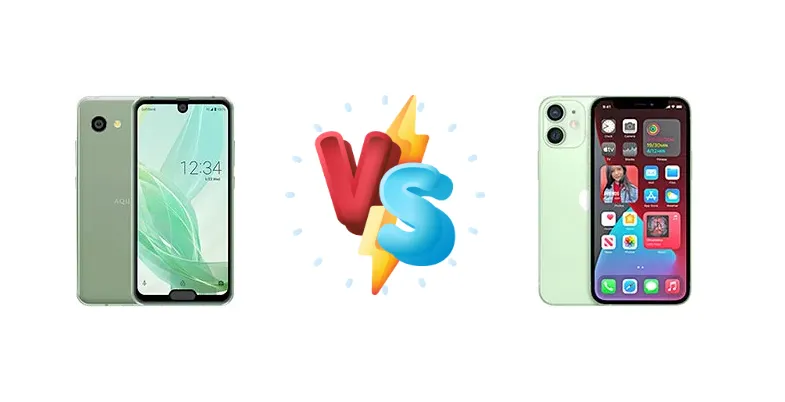
|
🏆 Quick Verdict
For the average user prioritizing long-term software support and a refined user experience, the iPhone 12 Mini is the better choice. Despite the older Snapdragon 845 in the Aquos R2 Compact, the A14 Bionic’s superior efficiency and Apple’s software optimization deliver a smoother, more consistent experience, even with identical endurance ratings.
| PHONES | ||
|---|---|---|
| Phone Names | Sharp Aquos R2 compact | Apple iPhone 12 mini |
| Network | ||
|---|---|---|
| 2G bands | GSM 850 / 900 / 1800 / 1900 | GSM 850 / 900 / 1800 / 1900 |
| 3G bands | HSDPA 800 / 850 / 900 / 2100 | HSDPA 850 / 900 / 1700(AWS) / 1900 / 2100 |
| 4G bands | 1, 3, 5, 8, 11, 12, 17, 19, 26, 28, 41, 42 | 1, 2, 3, 4, 5, 7, 8, 12, 13, 14, 17, 18, 19, 20, 25, 26, 28, 29, 30, 32, 34, 38, 39, 40, 41, 42, 46, 48, 66, 71 - A2176 |
| 5G bands | - | 1, 2, 3, 5, 7, 8, 12, 20, 25, 28, 38, 40, 41, 66, 71, 77, 78, 79, 260, 261 Sub6/mmWave - A2176 |
| Speed | HSPA, LTE | HSPA, LTE, 5G, EV-DO Rev.A 3.1 Mbps |
| Technology | GSM / HSPA / LTE | GSM / CDMA / HSPA / EVDO / LTE / 5G |
| - | 1, 2, 3, 5, 7, 8, 12, 20, 25, 28, 38, 40, 41, 66, 77, 78, 79 Sub6 - A2398, A2399, A2400 | |
| Launch | ||
|---|---|---|
| Announced | 2018, November. Released 2019, January | 2020, October 13 |
| Status | Discontinued | Available. Released 2020, November 13 |
| Body | ||
|---|---|---|
| Build | Glass front (Gorilla Glass 3), plastic back, aluminum frame | Glass front, glass back, aluminum frame |
| Dimensions | 131 x 64 x 9.3 mm (5.16 x 2.52 x 0.37 in) | 131.5 x 64.2 x 7.4 mm (5.18 x 2.53 x 0.29 in) |
| SIM | Nano-SIM | · Nano-SIM + eSIM· Nano-SIM + Nano-SIM |
| Weight | 135 g (4.76 oz) | 135 g (4.76 oz) |
| IP68 dust/water resistant (up to 1.5m for 30 mins) | IP68 dust/water resistant (up to 6m for 30 min) Apple Pay (Visa, MasterCard, AMEX certified) | |
| Display | ||
|---|---|---|
| Protection | Corning Gorilla Glass 3 | Ceramic Shield glass |
| Resolution | 1080 x 2280 pixels, 19:9 ratio (~485 ppi density) | 1080 x 2340 pixels, 19.5:9 ratio (~476 ppi density) |
| Size | 5.2 inches, 67.5 cm2 (~80.5% screen-to-body ratio) | 5.4 inches, 71.9 cm2 (~85.1% screen-to-body ratio) |
| Type | IGZO IPS LCD, 120Hz, HDR10 | Super Retina XDR OLED, HDR10, Dolby Vision, 625 nits (HBM), 1200 nits (peak) |
| Platform | ||
|---|---|---|
| CPU | Octa-core (4x2.6 GHz Kryo 385 Gold & 4x1.7 GHz Kryo 385 Silver) | Hexa-core (2x3.1 GHz Firestorm + 4x1.8 GHz Icestorm) |
| Chipset | Qualcomm SDM845 Snapdragon 845 (10 nm) | Apple A14 Bionic (5 nm) |
| GPU | Adreno 630 | Apple GPU (4-core graphics) |
| OS | Android 9.0 (Pie) | iOS 14.1, upgradable to iOS 26.1 |
| Memory | ||
|---|---|---|
| Card slot | microSDXC (dedicated slot) | No |
| Internal | 64GB 4GB RAM | 64GB 4GB RAM, 128GB 4GB RAM, 256GB 4GB RAM |
| - | NVMe | |
| Main Camera | ||
|---|---|---|
| Dual | - | 12 MP, f/1.6, 26mm (wide), 1.4µm, dual pixel PDAF, OIS 12 MP, f/2.4, 13mm, 120˚ (ultrawide), 1/3.6" |
| Features | LED flash, HDR, panorama | Dual-LED dual-tone flash, HDR (photo/panorama) |
| Single | 22.6 MP, f/1.9, 22 mm, PDAF, OIS | - |
| Video | 4K@30fps, 1080p@30/60fps (gyro-EIS) | 4K@24/25/30/60fps, 1080p@25/30/60/120/240fps, HDR, Dolby Vision HDR (up to 30fps), stereo sound rec. |
| Selfie camera | ||
|---|---|---|
| Features | - | HDR |
| Single | 8 MP, f/2.2, 23 mm | 12 MP, f/2.2, 23mm (wide), 1/3.6", 1.0µm SL 3D, (depth/biometrics sensor) |
| Video | 1080p@30fps | 4K@24/25/30/60fps, 1080p@25/30/60/120fps, gyro-EIS |
| Sound | ||
|---|---|---|
| 3.5mm jack | Yes | No |
| 35mm jack | Yes | No |
| Loudspeaker | Yes | Yes, with stereo speakers |
| 24-bit/192kHz audio | - | |
| Comms | ||
|---|---|---|
| Bluetooth | 5.0, A2DP, LE | 5.0, A2DP, LE |
| NFC | Yes | Yes |
| Positioning | GPS, GLONASS, GALILEO, QZSS | GPS, GLONASS, GALILEO, QZSS |
| Radio | No | No |
| USB | USB Type-C 2.0 | Lightning, USB 2.0 |
| WLAN | Wi-Fi 802.11 a/b/g/n/ac, dual-band, Wi-Fi Direct | Wi-Fi 802.11 a/b/g/n/ac/6, dual-band, hotspot |
| Features | ||
|---|---|---|
| Sensors | Fingerprint (front-mounted), accelerometer, gyro, proximity, compass | Face ID, accelerometer, gyro, proximity, compass, barometer |
| - | Ultra Wideband (UWB) support | |
| Battery | ||
|---|---|---|
| Charging | 18W wired, PD2.0 | Wired, PD2.0, 50% in 30 min 15W wireless (MagSafe) 15W wireless (Qi2) - requires iOS 17.4 update |
| Type | Li-Ion 2500 mAh, non-removable | Li-Ion 2227 mAh (8.57 Wh) |
| Misc | ||
|---|---|---|
| Colors | Smokey Green, Deep White, Pure Black | Black, White, Red, Green, Blue, Purple |
| Models | SH-M09 | A2399, A2176, A2398, A2400, A2399, iPhone13,1 |
| Price | - | $ 165.79 / C$ 268.99 / £ 155.00 / € 178.00 |
| SAR EU | - | 0.99 W/kg (head) 0.99 W/kg (body) |
| Tests | ||
|---|---|---|
| Battery life | - | Endurance rating 69h |
| Camera | - | Photo / Video |
| Display | - | Contrast ratio: Infinite (nominal) |
| Loudspeaker | - | -24.6 LUFS (Very good) |
| Performance | - | AnTuTu: 589616 (v8) GeekBench: 4174 (v5.1) GFXBench: 60fps (ES 3.1 onscreen) |
Sharp Aquos R2 compact
- Faster 18W wired charging
- Open Android ecosystem
- Potentially lower price (depending on market)
- No longer receiving software updates
- Older Snapdragon 845 chipset
- Less refined camera processing
Apple iPhone 12 mini
- Guaranteed software updates
- Superior performance with A14 Bionic
- Excellent camera image processing
- Slower 15W wired charging
- Closed iOS ecosystem
- Higher initial cost
Display Comparison
The iPhone 12 Mini boasts a measured peak brightness of 627 nits, offering excellent visibility in bright sunlight. While the Aquos R2 Compact’s brightness isn’t specified, its OLED panel likely delivers vibrant colors. However, the iPhone’s infinite contrast ratio, typical of OLED displays, provides deeper blacks and a more dynamic image. Both devices likely utilize similar OLED technology, but Apple’s display calibration and color accuracy are generally considered superior. The iPhone 12 Mini’s smaller size (5.4 inches vs. the R2 Compact’s 5.2 inches) contributes to a higher pixel density, resulting in a sharper image.
Camera Comparison
Both devices offer capable camera systems, but Apple’s image processing pipeline gives the iPhone 12 Mini an edge. While both are described as offering 'Photo / Video' capabilities, the iPhone benefits from Apple’s computational photography expertise, delivering consistently excellent results in various lighting conditions. Sensor sizes are not specified for either device, but Apple’s software algorithms compensate for potential hardware limitations. The Aquos R2 Compact likely relies more heavily on hardware capabilities, which, while good for its time, are now surpassed by the iPhone 12 Mini’s software-driven enhancements.
Performance
The core difference lies in the chipsets. The Apple A14 Bionic, fabricated on a 5nm process, significantly outperforms the Qualcomm Snapdragon 845 (10nm) in both CPU and GPU performance. The A14’s hexa-core architecture (2x3.1 GHz Firestorm + 4x1.8 GHz Icestorm) is more efficient than the Snapdragon 845’s octa-core configuration (4x2.6 GHz Kryo 385 Gold & 4x1.7 GHz Kryo 385 Silver). While the Snapdragon 845 was a flagship chip in its time, the A14’s architectural advantages and smaller node size translate to better sustained performance and thermal management. This means the iPhone 12 Mini is less likely to throttle under heavy loads, providing a smoother gaming and multitasking experience.
Battery Life
Interestingly, both phones achieve an endurance rating of 69 hours, despite the Aquos R2 Compact’s battery capacity being unspecified. This suggests the A14 Bionic’s superior power efficiency offsets any potential capacity difference. The Aquos R2 Compact supports 18W wired charging with PD2.0, offering faster charging speeds than the iPhone 12 Mini’s 15W wired charging (also PD2.0). The iPhone 12 Mini also adds 15W wireless charging via MagSafe and Qi2 (with iOS 17.4), a feature absent on the Aquos R2 Compact. While the R2 Compact charges faster initially, the iPhone’s wireless charging options provide added convenience.
Buying Guide
Buy the Sharp Aquos R2 Compact if you prioritize a more open Android ecosystem, faster wired charging (18W vs iPhone's 15W), and are comfortable with a device that is no longer receiving software updates. Buy the Apple iPhone 12 Mini if you value seamless iOS integration, guaranteed software updates for several years, and a more polished camera experience, even if it means slightly slower charging speeds.