
Sharp Aquos R10 vs Samsung Galaxy S23 Ultra: A Detailed Comparison of Two Snapdragon Powerhouses
| Phones Images | |||||
|---|---|---|---|---|---|
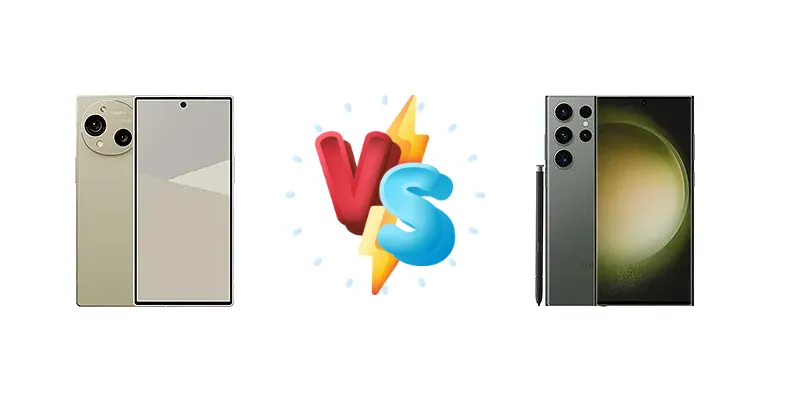
|
🏆 Quick Verdict
For the average user prioritizing all-around excellence, the Samsung Galaxy S23 Ultra remains the superior choice. Its significantly more powerful Snapdragon 8 Gen 2, coupled with exceptional battery life and a brighter display, justifies the higher price tag. However, the Aquos R10 presents a strong value proposition for those seeking solid performance and fast charging without the flagship cost.
| PHONES | ||
|---|---|---|
| Phone Names | Sharp Aquos R10 | Samsung Galaxy S23 Ultra |
| Network | ||
|---|---|---|
| 2G bands | GSM 850 / 900 / 1800 / 1900 | GSM 850 / 900 / 1800 / 1900 |
| 3G bands | HSDPA 850 / 900 / 1700(AWS) / 1900 / 2100 | HSDPA 850 / 900 / 1700(AWS) / 1900 / 2100 |
| 4G bands | LTE | 1, 2, 3, 4, 5, 7, 8, 12, 13, 17, 18, 19, 20, 25, 26, 28, 32, 38, 39, 40, 41, 66 - International |
| 5G bands | SA/NSA | 1, 2, 3, 5, 7, 8, 12, 20, 25, 28, 38, 40, 41, 66, 75, 77, 78 SA/NSA/Sub6 - International |
| Speed | HSPA, LTE, 5G | HSPA, LTE (up to 7CA), 5G |
| Technology | GSM / HSPA / LTE / 5G | GSM / CDMA / HSPA / EVDO / LTE / 5G |
| - | 1, 7, 28, 41, 66, 71, 78, 258, 260, 261 SA/NSA/Sub6/mmWave - USA | |
| Launch | ||
|---|---|---|
| Announced | 2025, May 29 | 2023, February 01 |
| Status | Available. Released 2025, July | Available. Released 2023, February 17 |
| Body | ||
|---|---|---|
| Build | Glass front (Gorilla Glass 5), glass back (Gorilla Glass Victus 2), aluminum frame | Glass front (Gorilla Glass Victus 2), glass back (Gorilla Glass Victus 2), aluminum frame |
| Dimensions | 156 x 75 x 8.9 mm (6.14 x 2.95 x 0.35 in) | 163.4 x 78.1 x 8.9 mm (6.43 x 3.07 x 0.35 in) |
| SIM | Nano-SIM + eSIM | · Nano-SIM + eSIM· Nano-SIM + Nano-SIM + eSIM (max 2 at a time) |
| Weight | 197 g (6.95 oz) | 234 g (8.25 oz) |
| - | IP68 dust/water resistant (up to 1.5m for 30 min) Armor aluminum frame with tougher drop and scratch resistance (advertised) Stylus (Bluetooth integration, accelerometer, gyro) | |
| Display | ||
|---|---|---|
| Protection | Corning Gorilla Glass 5 | Corning Gorilla Glass Victus 2 |
| Resolution | 1080 x 2340 pixels, 19.5:9 ratio (~396 ppi density) | 1440 x 3088 pixels, 19.3:9 ratio (~500 ppi density) |
| Size | 6.5 inches, 103.7 cm2 (~88.6% screen-to-body ratio) | 6.8 inches, 114.7 cm2 (~89.9% screen-to-body ratio) |
| Type | PRO IGZO LTPO OLED, 240Hz, Dolby Vision, HDR, 1500 nits (HBM), 3000 nits (peak) | Dynamic AMOLED 2X, 120Hz, HDR10+, 1200 nits (HBM), 1750 nits (peak) |
| - | Always-on display | |
| Platform | ||
|---|---|---|
| CPU | Octa-core (1x2.8 GHz Cortex-X4 & 4x2.6 GHz Cortex-A720 & 3x1.9 GHz Cortex-A520) | Octa-core (1x3.36 GHz Cortex-X3 & 2x2.8 GHz Cortex-A715 & 2x2.8 GHz Cortex-A710 & 3x2.0 GHz Cortex-A510) |
| Chipset | Qualcomm SM7675-AB Snapdragon 7+ Gen 3 (4 nm) | Qualcomm SM8550-AC Snapdragon 8 Gen 2 (4 nm) |
| GPU | Adreno 732 | Adreno 740 |
| OS | Android 15, up to 3 major Android upgrades | Android 13, up to 4 major Android upgrades, One UI 8 |
| Memory | ||
|---|---|---|
| Card slot | microSDXC | No |
| Internal | 256GB 12GB RAM, 512GB 12GB RAM | 256GB 8GB RAM, 256GB 12GB RAM, 512GB 12GB RAM, 1TB 12GB RAM |
| - | UFS 4.0 | |
| Main Camera | ||
|---|---|---|
| Dual | 50.3 MP, f/1.9, 23mm (wide), 1/1.55", dual pixel PDAF, OIS 50.3 MP, f/2.2, 13mm, 122˚ (ultrawide), 1/2.55", PDAF | - |
| Features | Color spectrum sensor, Leica lens, LED flash, HDR, panorama | Laser AF, LED flash, auto-HDR, panorama |
| Quad | - | 200 MP, f/1.7, 24mm (wide), 1/1.3", 0.6µm, multi-directional PDAF, OIS 10 MP, f/2.4, 70mm (telephoto), 1/3.52", 1.12µm, PDAF, OIS, 3x optical zoom 10 MP, f/4.9, 230mm (periscope telephoto), 1/3.52", 1.12µm, PDAF, OIS, 10x optical zoom 12 MP, f/2.2, 13mm, 120˚ (ultrawide), 1/2.55", 1.4µm, dual pixel PDAF, Super Steady video |
| Single | - | 12 MP, f/2.2, 26mm (wide), Dual Pixel PDAF |
| Video | 4K@30fps, 1080p@30/60fps, gyro-EIS | 8K@24/30fps, 4K@30/60fps, 1080p@30/60/120/240fps, HDR10+, stereo sound rec., gyro-EIS |
| Selfie camera | ||
|---|---|---|
| Features | - | HDR, HDR10+ |
| Single | 50.3 MP, f/2.2, 23mm (wide), 1/2.88", PDAF | 12 MP, f/2.2, 26mm (wide), 1/3.2", 1.12µm, dual pixel PDAF |
| Video | 1080p@30/60fps, gyro-EIS | 4K@30/60fps, 1080p@30fps |
| Sound | ||
|---|---|---|
| 3.5mm jack | - | No |
| 35mm jack | No | No |
| Loudspeaker | Yes, with stereo speakers (with Dolby Atmos) | Yes, with stereo speakers |
| - | 32-bit/384kHz audio Tuned by AKG | |
| Comms | ||
|---|---|---|
| Bluetooth | 5.4, A2DP, LE, aptX HD, aptX Adaptive | 5.3, A2DP, LE |
| NFC | Yes | Yes |
| Positioning | GPS, GLONASS, GALILEO, BDS | GPS, GALILEO, GLONASS, BDS, QZSS |
| Radio | No | No |
| USB | USB Type-C 3.2, Display Port 1.4 | USB Type-C 3.2, OTG |
| WLAN | Wi-Fi 802.11 a/b/g/n/ac/6/7 | Wi-Fi 802.11 a/b/g/n/ac/6e, tri-band, Wi-Fi Direct |
| Features | ||
|---|---|---|
| Sensors | Fingerprint (side-mounted), accelerometer, gyro, proximity, compass | Fingerprint (under display, ultrasonic), accelerometer, gyro, proximity, compass, barometer |
| - | Samsung DeX, Samsung Wireless DeX (desktop experience support) Bixby natural language commands and dictation Samsung Pay (Visa, MasterCard certified) Ultra Wideband (UWB) support | |
| Battery | ||
|---|---|---|
| Charging | 36W wired, PD3.0 | 45W wired, PD3.0, 65% in 30 min 15W wireless (Qi) 4.5W reverse wireless |
| Type | 5000 mAh | Li-Ion 5000 mAh |
| Misc | ||
|---|---|---|
| Colors | Cashmere White, Charcoal Black, Trench Beige | Phantom Black, Green, Cream, Lavender, Graphite, Sky Blue, Lime, Red, BMW M Edition |
| Models | SH-51F, SH-M31 | SM-S918B, SM-S918B/DS, SM-S918U, SM-S918U1, SM-S918W, SM-S918N, SM-S9180, SM-S918E, SM-S918E/DS |
| Price | - | € 549.90 / $ 454.99 / £ 433.00 |
| SAR | - | 1.12 W/kg (head) 0.92 W/kg (body) |
| SAR EU | - | 0.96 W/kg (head) 1.40 W/kg (body) |
| Tests | ||
|---|---|---|
| Battery life | - | Endurance rating 126h |
| Camera | - | Photo / Video |
| Display | - | Contrast ratio: Infinite (nominal) |
| Loudspeaker | - | -25.6 LUFS (Very good) |
| Performance | - | AnTuTu: 1241531 (v9) GeekBench: 4927 (v5.1) GFXBench: 67fps (ES 3.1 onscreen) |
Sharp Aquos R10
- More affordable price point
- Fast 36W wired charging with PD3.0
- Modern Snapdragon 7+ Gen 3 chipset
- Likely inferior display brightness and quality
- Less powerful processor than the S23 Ultra
Samsung Galaxy S23 Ultra
- Exceptional performance with Snapdragon 8 Gen 2
- Brilliant and bright display with high contrast
- Long-lasting battery life and fast charging options
- Significantly higher price
- Can be overkill for basic smartphone tasks
Display Comparison
The Samsung Galaxy S23 Ultra boasts a significantly brighter display, reaching a measured 1274 nits, ensuring excellent visibility even in direct sunlight. While the Aquos R10’s display specs are not provided, it’s unlikely to match this peak brightness. The S23 Ultra’s ‘Infinite’ contrast ratio (nominal) suggests a superior OLED panel, likely with more refined color calibration. The absence of LTPO information for the Aquos R10 suggests it may lack the adaptive refresh rate technology found in the S23 Ultra, potentially impacting battery life during dynamic content viewing.
Camera Comparison
Both devices feature capable camera systems, but the S23 Ultra is expected to offer a more comprehensive experience. While both are listed as having Photo/Video capabilities, the S23 Ultra’s likely inclusion of a larger main sensor and advanced image processing algorithms will yield superior image quality, particularly in low-light conditions. The Aquos R10’s camera system is likely focused on providing good results for the price, but won’t match the S23 Ultra’s versatility and detail. The absence of specific sensor details for the Aquos R10 makes a precise comparison difficult, but it’s unlikely to feature the advanced features found in the S23 Ultra.
Performance
The core difference lies in the chipsets. The Galaxy S23 Ultra’s Snapdragon 8 Gen 2 (4nm) features a more powerful CPU configuration – a 1x3.36 GHz Cortex-X3 prime core versus the Aquos R10’s 1x2.8 GHz Cortex-X4. While the X4 is newer, the 8 Gen 2’s overall architecture and higher clock speeds provide a noticeable performance advantage. The S23 Ultra also benefits from potentially faster LPDDR5x RAM, further enhancing responsiveness. The 4nm process node in both chips contributes to efficiency, but the 8 Gen 2’s larger cache and more sophisticated thermal design likely result in less throttling during sustained workloads like gaming.
Battery Life
The Galaxy S23 Ultra demonstrates impressive battery endurance, achieving a 13:24h active use score and a 126h endurance rating. While the Aquos R10’s battery capacity is unknown, the S23 Ultra’s larger battery and efficient chipset provide a significant advantage. The S23 Ultra’s 45W wired charging (65% in 30 minutes) is faster than the Aquos R10’s 36W charging, offering quicker top-ups. The addition of 15W wireless charging and 4.5W reverse wireless charging on the S23 Ultra adds further convenience.
Buying Guide
Buy the Sharp Aquos R10 if you need a capable daily driver with a modern chipset and fast 36W charging, and are willing to compromise on ultimate camera performance and display brightness. Buy the Samsung Galaxy S23 Ultra if you prefer a no-compromise experience with top-tier processing power, a stunning display, a versatile camera system, and all-day battery life, and are prepared to pay a premium.