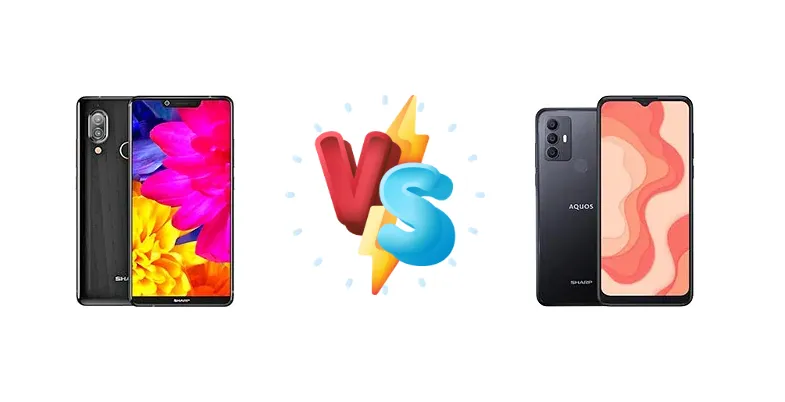
The Sharp Aquos D10 and V6 represent distinct approaches to the budget smartphone market. The D10, leveraging Qualcomm’s Snapdragon 630, aims for a balance of efficiency and performance. The V6, powered by MediaTek’s Helio G25, focuses on modern connectivity features like USB Power Delivery, but at what cost to raw processing power? This comparison dissects the key differences to help you choose.
🏆 Quick Verdict
For the average user prioritizing consistent performance and a slightly more established platform, the Sharp Aquos D10 is the better choice. While the V6’s USB Power Delivery is a welcome addition, the Snapdragon 630’s architecture and clock speeds provide a noticeable advantage in everyday tasks and light gaming.
| Network |
|---|
| 2G bands | GSM 850 / 900 / 1800 / 1900 | GSM 850 / 900 / 1800 / 1900 |
| 3G bands | HSDPA 850 / 900 / 1900 / 2100 | HSDPA 900 / 2100 |
| 4G bands | 1, 3, 5, 7, 8, 20 | LTE |
| Speed | HSPA 14.4/5.76 Mbps, LTE Cat4 150/50 Mbps | HSPA, LTE |
| Technology | GSM / HSPA / LTE | GSM / HSPA / LTE |
| Launch |
|---|
| Announced | 2018, August. Released 2018, October | 2022, February 16 |
| Status | Discontinued | Available. Released 2022, February 16 |
| Body |
|---|
| Build | - | Glass front, plastic frame, plastic back |
| Dimensions | 148.2 x 74.2 x 8 mm (5.83 x 2.92 x 0.31 in) | 165.2 x 75.5 x 8.9 mm (6.50 x 2.97 x 0.35 in) |
| SIM | Nano-SIM + Nano-SIM | Nano-SIM + Nano-SIM |
| Weight | 165 g (5.82 oz) | 190 g (6.70 oz) |
| Display |
|---|
| Protection | Corning Gorilla Glass 3 | - |
| Resolution | 1080 x 2160 pixels, 18:9 ratio (~403 ppi density) | 720 x 1600 pixels, 20:9 ratio (~269 ppi density) |
| Size | 5.99 inches, 92.6 cm2 (~84.2% screen-to-body ratio) | 6.52 inches, 102.6 cm2 (~82.3% screen-to-body ratio) |
| Type | IPS LCD | IPS LCD |
| Platform |
|---|
| CPU | Octa-core (4x2.6 GHz Cortex-A53 & 4x1.8 GHz Cortex A53) | Octa-core (4x2.0 GHz Cortex-A53 & 4x1.5 GHz Cortex-A53) |
| Chipset | Qualcomm SDM630 Snapdragon 630 (14 nm) | Mediatek MT6762G Helio G25 (12 nm) |
| GPU | Adreno 508 | PowerVR GE8320 |
| OS | Android 8.0 (Oreo), Sharp UI | Android 12 |
| Memory |
|---|
| Card slot | microSDXC (uses shared SIM slot) | microSDXC |
| Internal | 64GB 4GB RAM | 32GB 3GB RAM |
| Main Camera |
|---|
| Dual | 12 MP, f/1.8, 1/2.55", 1.4µm, PDAF
13 MP, 1/3.4", 1.0µm | - |
| Features | Dual-LED dual-tone flash, panorama, HDR | LED flash |
| Triple | - | 13 MP, (wide)
2 MP (macro)
Auxiliary lens |
| Video | 4K@30fps, 1080p@30fps | 1080p@30fps |
| Selfie camera |
|---|
| Single | 16 MP, f/2.0, (wide), 1/3.06", 1.0µm | 5 MP |
| Video | 1080p@30fps | Yes |
| Sound |
|---|
| 3.5mm jack | Yes | Yes |
| 35mm jack | Yes | Yes |
| Loudspeaker | Yes | Yes |
| Comms |
|---|
| Bluetooth | 4.0, A2DP, LE | 5.0, A2DP, LE, aptX HD, aptX Adaptive |
| NFC | Yes | Yes |
| Positioning | GPS, GLONASS, GALILEO | GPS |
| Radio | FM radio | No |
| USB | USB Type-C 2.0, OTG | USB Type-C 3.0 |
| WLAN | Wi-Fi 802.11 a/b/g/n/ac, dual-band, Wi-Fi Direct | Wi-Fi 802.11 a/b/g/n/ac, dual-band |
| Features |
|---|
| Sensors | Fingerprint (front-mounted), accelerometer, gyro, proximity, compass | Fingerprint (rear-mounted), accelerometer, gyro, proximity, compass |
| Battery |
|---|
| Charging | - | USB Power Delivery 3.0 |
| Type | Li-Ion 2900 mAh, non-removable | Li-Ion 5000 mAh |
| Misc |
|---|
| Colors | Black | Grey Sand, Deep Blue Sea |
| Models | SH-D01 | - |
| Price | About 400 EUR | About 130 EUR |
Sharp Aquos D10
- Stronger CPU performance due to higher clock speeds.
- Proven Snapdragon platform with established software support.
- Potentially better ISP for image processing.
- Lacks modern charging standards like USB Power Delivery.
- Older 14nm manufacturing process.
Sharp Aquos V6
- USB Power Delivery 3.0 for faster and versatile charging.
- More modern 12nm manufacturing process.
- Potentially better power efficiency.
- Lower CPU clock speeds resulting in reduced performance.
- Helio G25 chipset may have limited software support compared to Snapdragon.
Display Comparison
Display specifications are not provided, so a direct comparison is limited. However, given the target market, both likely utilize IPS LCD panels. The V6’s inclusion of USB Power Delivery suggests a potentially more modern design, which *could* translate to slightly slimmer bezels. Color accuracy is likely similar across both devices, leaning towards standard smartphone calibration rather than professional-grade accuracy.
Camera Comparison
Camera details are absent beyond the devices themselves. Given the price point, both likely feature modest camera setups. The absence of any mention of high-resolution sensors or advanced features suggests a focus on basic photography. Image processing will likely be the differentiating factor, with the Snapdragon 630 potentially offering slightly better ISP capabilities. The lack of information prevents a meaningful comparison of image quality.
Performance
The core difference lies in the chipsets. The Aquos D10’s Snapdragon 630 (14nm) features an octa-core CPU with a split configuration: 4x2.6 GHz Cortex-A53 and 4x1.8 GHz Cortex-A53. This contrasts with the Aquos V6’s MediaTek Helio G25 (12nm) with a uniform octa-core setup of 4x2.0 GHz Cortex-A53 and 4x1.5 GHz Cortex-A53. While the G25 benefits from a smaller 12nm process, the Snapdragon 630’s higher clock speeds on its performance cores provide a tangible advantage in CPU-intensive tasks. The 14nm process of the SD630, while older, is a mature node, offering good efficiency. The G25’s lower clock speeds suggest it’s geared towards efficiency over outright speed. This translates to potentially smoother multitasking and faster app loading times on the D10.
Battery Life
Battery capacity is not specified. However, the Aquos V6’s inclusion of USB Power Delivery 3.0 is a significant advantage. PD 3.0 allows for faster charging speeds and compatibility with a wider range of chargers. While the D10 likely supports standard USB charging, the V6’s PD support could translate to a quicker 0-100% charge time, even with a similar battery capacity. The 12nm process of the Helio G25 *could* offer slightly better power efficiency, but the Snapdragon 630’s optimized power management features may mitigate this difference.
Buying Guide
Buy the Sharp Aquos D10 if you need a reliably performing device for daily tasks, social media, and occasional light gaming, and value a proven chipset. Buy the Sharp Aquos V6 if you prioritize modern charging standards (USB Power Delivery 3.0) and are willing to accept a slight performance trade-off for the convenience of faster, more versatile charging options.
Frequently Asked Questions
❓ Will the Helio G25 in the Aquos V6 struggle with demanding apps like PUBG Mobile?
The Helio G25 is an entry-level chipset. While it can run PUBG Mobile, expect to use lower graphics settings and potentially experience frame drops during intense gameplay. The Snapdragon 630 in the Aquos D10 will offer a smoother experience, even if it's not a high-end gaming phone.
❓ How much faster is USB Power Delivery 3.0 on the Aquos V6 compared to standard charging?
USB Power Delivery 3.0 can deliver significantly more power than standard USB charging, potentially reducing charging times by 30-50% depending on the charger and cable used. This means you can get a substantial charge in a shorter amount of time, which is particularly useful for users on the go.
❓ Is the difference in CPU clock speeds between the Snapdragon 630 and Helio G25 noticeable in everyday use?
Yes, the higher clock speeds of the Snapdragon 630’s performance cores will result in snappier app launches, smoother multitasking, and a more responsive user experience overall. While the difference may not be dramatic, it’s noticeable when switching between apps or performing CPU-intensive tasks.