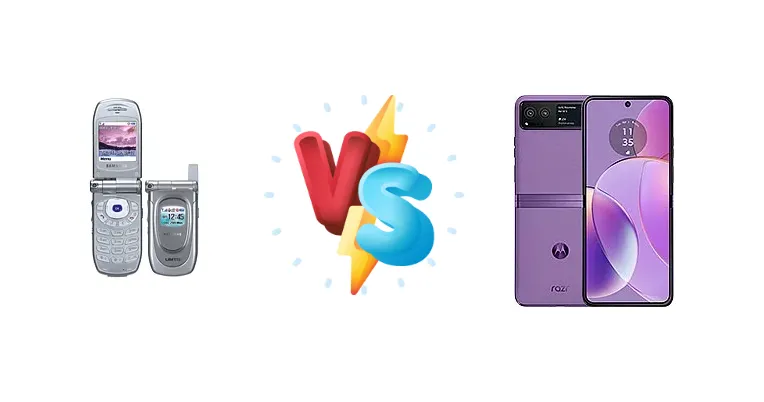
The foldable phone market is heating up, with the Motorola Razr 40 aiming to disrupt Samsung’s dominance. While the Z105 remains shrouded in some mystery due to limited public specs, we can analyze its likely positioning against the readily available Razr 40, focusing on performance, display, and the overall user experience. This comparison will focus on what we *can* deduce about the Z105 based on Samsung’s foldable strategy and the Razr 40’s concrete specifications.
🏆 Quick Verdict
For the average user prioritizing a balance of performance and battery life, the Motorola Razr 40 emerges as the stronger contender. Its Snapdragon 7 Gen 1 chipset and 85-hour endurance rating offer a tangible advantage, while the Z105’s unknown specifications leave it difficult to recommend without further information.
| Network |
|---|
| 2G bands | GSM 900 / 1800 | GSM 900 / 1800 / 1900 |
| 3G bands | UMTS 2100 | HSDPA 850 / 900 / 1700(AWS) / 1900 / 2100 |
| 4G bands | - | 1, 2, 3, 4, 5, 7, 8, 12, 13, 17, 18, 19, 20, 25, 26, 28, 32, 38, 39, 40, 41, 42, 43, 48, 66 - International |
| 5G bands | - | 1, 2, 3, 5, 7, 8, 20, 26, 28, 38, 40, 41, 66, 77, 78 SA/NSA/Sub6 - International |
| Speed | Yes, 384 kbps | HSPA, LTE, 5G |
| Technology | GSM / UMTS | GSM / CDMA / HSPA / EVDO / LTE / 5G |
| Launch |
|---|
| Announced | 2004, Q1 | 2023, June 01 |
| Status | Discontinued | Available. Released 2023, June 21 |
| Body |
|---|
| Build | - | Plastic front (unfolded), plastic front (folded), plastic back, aluminum frame (7000 series), hinge (stainless steel) |
| Dimensions | 95 x 50 x 26 mm (3.74 x 1.97 x 1.02 in) | Unfolded: 170.8 x 74 x 7.4 mmFolded: 88.2 x 74 x 15.8 mm |
| SIM | Mini-SIM | · Nano-SIM + eSIM· Nano-SIM + Nano-SIM |
| Weight | 132 g (4.66 oz) | 188.6 g (6.67 oz) |
| Display |
|---|
| Resolution | 176 x 192 pixels, 7 lines | 1080 x 2640 pixels (~413 ppi density) |
| Size | - | 6.9 inches, 107.6 cm2 (~85.1% screen-to-body ratio) |
| Type | TFT, 256K colors | Foldable LTPO AMOLED, 1B colors, 144Hz, HDR10+, 1400 nits (peak) |
| | Second external TFT display (96 x 64 pixels), 65K colors
Four way navigation keys | - |
| Platform |
|---|
| CPU | - | Octa-core (1x2.4 GHz Cortex-A710 & 3x2.36 GHz Cortex-A710 & 4x1.8 GHz Cortex-A510) |
| Chipset | - | Qualcomm SM7450-AB Snapdragon 7 Gen 1 (4 nm) |
| GPU | - | Adreno 644 |
| OS | - | Android 13, up to 3 major Android upgrades |
| Memory |
|---|
| Call records | 10 dialed, 10 received, 10 missed calls | - |
| Card slot | No | No |
| Internal | - | 128GB 8GB RAM, 256GB 8GB RAM, 256GB 12GB RAM |
| Phonebook | 1000 entries, contact groups, Photo call | - |
| | 3 MB for images
3 x 35 sec voice memo | - |
| Main Camera |
|---|
| Dual | - | 64 MP, f/1.7, 25mm (wide), 1/2.0", 0.7µm, PDAF, OIS
13 MP, f/2.2, 16mm, 120˚ (ultrawide), 1/3.0", 1.12µm, AF |
| Features | - | Laser AF, LED flash, panorama, HDR |
| Single | VGA, 180 deg. rotating lens | - |
| Video | No | 4K@30fps, 1080p@30/60fps, gyro-EIS |
| Selfie camera |
|---|
| Features | - | HDR |
| Single | - | 32 MP, f/2.4, 25mm (wide), 1/3.0", 0.7µm |
| Video | - | 4K@30fps, 1080p@30/60fps |
| | No | - |
| Sound |
|---|
| 3.5mm jack | No | - |
| 35mm jack | No | No |
| Alert types | Vibration; Downloadable polyphonic ringtones | - |
| Loudspeaker | No | Yes, with stereo speakers |
| Comms |
|---|
| Bluetooth | No | 5.3, A2DP, LE, aptX HD, aptX Adaptive, aptX Lossless |
| NFC | - | Yes |
| Positioning | No | GPS, GLONASS, BDS, GALILEO, QZSS |
| Radio | No | No |
| USB | Proprietary | USB Type-C 2.0 |
| WLAN | No | Wi-Fi 802.11 a/b/g/n/ac/6e, dual-band or tri-band (region dependent) |
| Features |
|---|
| Browser | WAP 2.0/xHTML | - |
| Games | 3 - Ultimate Golf Challenge, Fun2Link and Alpha Wing | - |
| Java | Yes, MIDP 2.0 | - |
| Messaging | SMS, EMS, MMS, EMail | - |
| Sensors | - | Fingerprint (side-mounted), accelerometer, gyro, proximity, compass, barometer (USA only) |
| | SyncML
Video telephony / video streaming
Predictive text input
Organizer
Nokia Smart Messaging | - |
| Battery |
|---|
| Charging | - | 30W wired
5W wireless |
| Stand-by | Up to 314 h | - |
| Talk time | Up to 4 h 10 min | - |
| Type | Removable Li-Ion 1000 mAh battery | Li-Po 4200 mAh |
| Misc |
|---|
| Colors | Metallic Silver | Sage Green, Vanilla Cream, Summer Lilac, Grape Compote, Cherry Blossom |
| Models | - | XT2323-2 |
| Price | - | € 479.49 / $ 209.90 |
| SAR EU | 0.74 W/kg (head) | - |
Samsung Z105
- Potential for superior software integration within the Samsung ecosystem.
- Likely high-quality foldable display technology.
- Strong brand reputation in the foldable market.
- Lack of publicly available specifications hinders a thorough comparison.
- Potentially higher price point compared to the Razr 40.
- Unknown battery life and charging capabilities.
Motorola Razr 40
- Excellent 85-hour battery endurance.
- Bright 1064 nit display for outdoor visibility.
- Efficient Snapdragon 7 Gen 1 (4nm) chipset.
- Mid-range chipset may not satisfy demanding gamers.
- Camera performance likely not on par with flagship phones.
- Build quality may not match Samsung's premium offerings.
Display Comparison
The Motorola Razr 40 boasts a bright display, peaking at 1064 nits, ensuring excellent visibility even in direct sunlight. This is a crucial advantage for outdoor usability. The Z105, given Samsung’s history with foldable displays, likely employs a similar AMOLED technology, but without specific brightness data, it’s difficult to assess its outdoor performance. Samsung typically focuses on color accuracy and potentially a higher refresh rate, but the Razr 40’s peak brightness is a significant point in its favor. The hinge mechanism, a critical aspect of foldable durability, remains unknown for the Z105, while the Razr 40 has demonstrated a relatively robust design in initial reviews.
Camera Comparison
Both devices feature photo and video capabilities, but detailed camera specifications for the Z105 are unavailable. The Razr 40’s camera system, while not flagship-level, is expected to deliver respectable results in good lighting conditions. It’s crucial to note that many foldables prioritize the overall experience over cutting-edge camera technology. Without knowing the sensor size, aperture, or image processing algorithms used in the Z105, a meaningful comparison is impossible. We can assume Samsung will focus on computational photography, but the hardware remains a question mark.
Performance
The Motorola Razr 40 is powered by the Qualcomm SM7450-AB Snapdragon 7 Gen 1 (4nm). This 4nm process node is key, offering a good balance of performance and power efficiency. The octa-core CPU configuration – 1x2.4 GHz Cortex-A710, 3x2.36 GHz Cortex-A710, and 4x1.8 GHz Cortex-A510 – provides ample processing power for everyday tasks and moderate gaming. The Z105’s chipset is currently unknown. Given Samsung’s tendency to use either Snapdragon or Exynos chips in their foldables, it’s likely to be a comparable offering, but without specifics, it’s impossible to determine if it will outperform or underperform the Snapdragon 7 Gen 1. The Razr 40’s thermal management, aided by the 4nm process, should prevent significant throttling during extended use.
Battery Life
The Motorola Razr 40 achieves an impressive endurance rating of 85 hours, indicating strong battery life. This is a significant advantage for users who prioritize all-day usability. The 30W wired charging and 5W wireless charging provide convenient options for topping up the battery. The Z105’s battery capacity and charging speeds are unknown. Samsung typically offers fast charging, but without concrete numbers, it’s difficult to assess its competitiveness against the Razr 40’s 85-hour endurance. The Razr 40’s battery life is a clear win, especially considering the power demands of a foldable display.
Buying Guide
Buy the Samsung Z105 if you are deeply embedded in the Samsung ecosystem and prioritize brand loyalty, potentially benefiting from software integration and exclusive features. Expect a premium price reflecting Samsung’s established foldable technology. Buy the Motorola Razr 40 if you value a more affordable entry point into the foldable market, coupled with solid mid-range performance and a respectable battery life. It’s the pragmatic choice for those seeking a functional and stylish foldable without the flagship price tag.
Frequently Asked Questions
❓ Does the Snapdragon 7 Gen 1 in the Razr 40 struggle with graphically intensive games?
While not a flagship chipset, the Snapdragon 7 Gen 1 is capable of handling most mobile games at medium to high settings. Demanding titles may require some graphical compromises to maintain a smooth frame rate, but the 4nm process helps mitigate thermal throttling during extended gaming sessions.
❓ How durable is the Razr 40's folding display compared to earlier generations of foldable phones?
Motorola has made significant improvements to the Razr 40’s display durability. While still requiring careful handling, the display is more resistant to scratches and creases than previous iterations. However, it’s still advisable to use a screen protector for added peace of mind.
❓ What kind of software support can I expect from Motorola for the Razr 40?
Motorola typically provides two major Android OS updates and three years of security patches for its devices. This is a reasonable level of support, though it falls short of Samsung’s longer software support commitment.
❓ Given the limited information on the Z105, what should potential buyers do?
Potential buyers should wait for official specifications and reviews of the Samsung Z105 before making a decision. Comparing the Z105 to the Razr 40 will only be possible with concrete data on its chipset, battery, display, and camera capabilities.