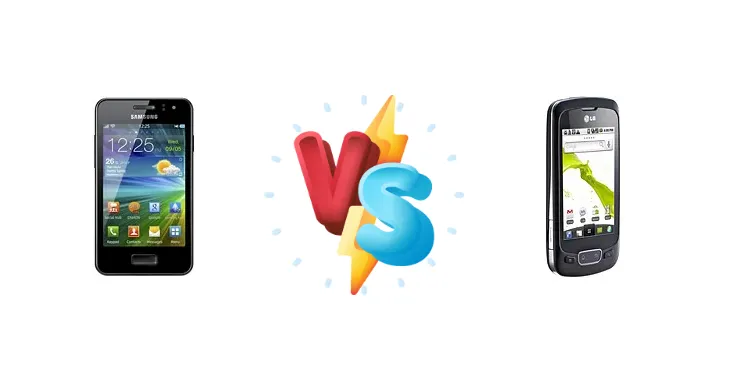
The Samsung Wave M S7250 and LG Optimus One P500 represent a pivotal moment in smartphone history – the transition from feature phones to the burgeoning Android ecosystem, and Samsung’s attempt to carve its own path with Bada. Both devices aimed for affordability, but took distinctly different approaches to hardware and software, making a direct comparison insightful even today.
🏆 Quick Verdict
For the average user seeking a functional, albeit limited, smartphone experience, the Samsung Wave M S7250 edges out the LG Optimus One P500. Its faster 832 MHz processor provides a noticeably smoother user experience, particularly within the Bada OS environment, despite the Optimus One’s access to the wider Android app ecosystem.
| Network |
|---|
| 2G bands | GSM 850 / 900 / 1800 / 1900 | GSM 850 / 900 / 1800 / 1900 |
| 3G bands | HSDPA 900 / 2100 | HSDPA 900 / 2100 |
| Speed | HSPA 7.2/0.384 Mbps | HSPA 7.2/0.384 Mbps |
| Technology | GSM / HSPA | GSM / HSPA |
| Launch |
|---|
| Announced | 2011, August. Released 2011, December | 2010, July. Released 2010, October |
| Status | Discontinued | Discontinued |
| Body |
|---|
| Dimensions | 113.8 x 63.3 x 12.2 mm (4.48 x 2.49 x 0.48 in) | 113.5 x 59 x 13.3 mm (4.47 x 2.32 x 0.52 in) |
| SIM | Mini-SIM | Mini-SIM |
| Weight | 121 g (4.27 oz) | 129 g (4.55 oz) |
| Display |
|---|
| Resolution | 320 x 480 pixels, 3:2 ratio (~158 ppi density) | 320 x 480 pixels, 3:2 ratio (~180 ppi density) |
| Size | 3.65 inches, 39.7 cm2 (~55.1% screen-to-body ratio) | 3.2 inches, 30.5 cm2 (~45.5% screen-to-body ratio) |
| Type | TFT | TFT, 256K colors |
| | TouchWiz UI | - |
| Platform |
|---|
| CPU | 832 MHz | 600 MHz ARM 11 |
| Chipset | - | Qualcomm MSM7227 Snapdragon S1 |
| GPU | - | Adreno 200 |
| OS | bada 2.0 | Android 2.2 (Froyo), upgradable to 2.3 (Gingerbread) |
| Memory |
|---|
| Card slot | microSDHC (dedicated slot), 2 GB included | microSDHC (dedicated slot), 2 GB included |
| Internal | 150MB | 170MB 512MB RAM |
| Main Camera |
|---|
| Features | LED flash | - |
| Single | 5 MP, AF | 3.15 MP, AF |
| Video | w480p@30fps | 480p@18fps |
| Selfie camera |
|---|
| Single | VGA | - |
| | - | No |
| Sound |
|---|
| 3.5mm jack | Yes | Yes |
| 35mm jack | Yes | Yes |
| Loudspeaker | Yes | Yes |
| Comms |
|---|
| Bluetooth | 3.0, A2DP | 2.1, A2DP |
| NFC | Carrier dependent | - |
| Positioning | GPS, A-GPS | GPS, A-GPS |
| Radio | Stereo FM radio, RDS | Stereo FM radio |
| USB | microUSB 2.0 | microUSB |
| WLAN | Wi-Fi 802.11 b/g/n, Wi-Fi Direct, hotspot | Wi-Fi 802.11 b/g, hotspot |
| Features |
|---|
| Browser | - | HTML |
| Sensors | Accelerometer, proximity | Accelerometer, proximity, compass |
| | Samsung ChatON
MP3/WAV/eAAC+ player
MP4/DivX/H.264 player
Organizer
Photo editor
Voice memo
Predictive text input | DivX/Xvid/MP4/H.264/WMV player
MP3/WAV/WMA/eAAC+ player
Document viewer/editor
Organizer
Voice memo
Predictive text input |
| Battery |
|---|
| Stand-by | Up to 480 h | Up to 700 h (2G) / Up to 550 h (3G) |
| Talk time | Up to 6 h 30 min | Up to 8 h (2G) / Up to 7 h 30 min (3G) |
| Type | Removable Li-Ion 1350 mAh battery | Removable Li-Ion 1500 mAh battery |
| Misc |
|---|
| Colors | Black | Black, wine, titan, blue, silver, purple |
| Price | About 120 EUR | About 100 EUR |
| SAR | 0.96 W/kg (head) 0.93 W/kg (body) | 0.45 W/kg (head) 0.37 W/kg (body) |
| SAR EU | 0.66 W/kg (head) | 0.93 W/kg (head) 0.70 W/kg (body) |
| Tests |
|---|
| Audio quality | - |
Noise -85.6dB / Crosstalk -86.2dB |
| Camera | - |
Photo |
| Loudspeaker | - |
Voice 77dB / Noise 74dB / Ring 77dB |
Samsung Wave M S7250
- Faster 832 MHz processor for smoother performance
- Potentially more responsive Bada OS experience
- Snapdragon chipset may offer some GPU benefits
- Limited app ecosystem compared to Android
- Bada OS is no longer supported
LG Optimus One P500
- Access to the Android app ecosystem
- Qualcomm Snapdragon S1 chipset with dedicated GPU
- Wider community support for Android
- Slower 600 MHz ARM 11 processor
- Potential for lag and stuttering in Android UI
Display Comparison
Neither device boasts a standout display. Given the era, details like panel type and resolution are scarce. However, the focus here is on the processing power needed to drive the UI. The Wave M’s faster processor likely translates to smoother scrolling and transitions, even if the underlying display technology is comparable. Bezels were substantial on both, typical of the time.
Camera Comparison
Both devices feature a 'Photo' camera, but specific details are lacking. Without megapixel counts or sensor sizes, a direct comparison is difficult. However, the image processing capabilities are likely tied to the CPU. The Wave M’s faster processor could potentially deliver slightly faster image capture and processing times. The LG Optimus One’s Snapdragon chipset *might* offer some hardware acceleration for camera tasks, but the slower CPU would likely negate much of that benefit. The absence of detailed camera specs suggests neither phone was a photography powerhouse.
Performance
The core difference lies in the CPUs. The Samsung Wave M S7250’s 832 MHz processor represents a significant 38% clock speed increase over the LG Optimus One P500’s 600 MHz ARM 11. This difference is crucial. While both ran relatively lightweight operating systems, the Wave M would have handled multitasking and app loading more efficiently. The LG Optimus One utilizes the Qualcomm MSM7227 Snapdragon S1 chipset, which, while offering a dedicated GPU, is hampered by the slower CPU. The Snapdragon S1’s GPU would have been beneficial for basic 3D graphics, but the CPU bottleneck would have limited its potential.
Battery Life
Battery capacity details are unavailable for either device. However, given the lower processing demands of early smartphones and the relatively small screen sizes, battery life was likely comparable. The LG Optimus One’s Snapdragon chipset *could* offer some power efficiency advantages, but the slower CPU might mean tasks take longer, ultimately consuming similar amounts of energy. Charging speeds were slow by modern standards on both devices, likely taking several hours for a full charge.
Buying Guide
Buy the Samsung Wave M S7250 if you prioritize a slightly more responsive user interface and are comfortable within the constraints of the Bada OS. This phone is for users who valued a clean, if limited, software experience. Buy the LG Optimus One P500 if you absolutely require access to the broader Android app library and are willing to accept some performance compromises due to its slower 600 MHz ARM 11 processor and the demands of early Android versions.
Frequently Asked Questions
❓ Is the Bada OS on the Samsung Wave M still receiving updates?
No, Samsung discontinued support for Bada OS several years ago. The Wave M S7250 will not receive any further software updates, leaving it vulnerable to security risks and limiting its functionality over time.
❓ Can I install a custom ROM like LineageOS on the LG Optimus One P500?
Yes, the LG Optimus One P500 has a relatively active custom ROM development community. You can find various custom ROMs, including versions of Android, available for installation, which can significantly improve performance and extend the phone's lifespan. However, installing a custom ROM requires technical expertise and carries inherent risks.
❓ How does the Qualcomm Snapdragon S1 chipset in the LG Optimus One impact gaming performance?
While the Snapdragon S1 includes a GPU, the 600 MHz ARM 11 CPU is a significant bottleneck. Expect limited gaming performance, suitable only for very basic 2D games or older 3D titles at low settings. The CPU will struggle to keep up with the GPU, resulting in frame rate drops and stuttering.