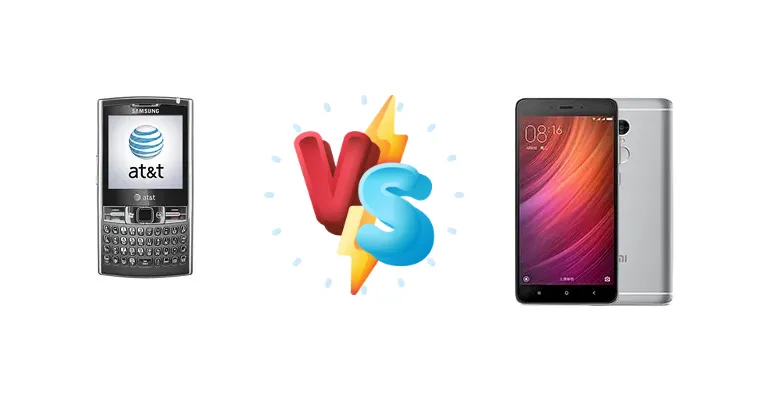
Reliving the past and embracing the present, we pit the Samsung i907 Epix, a device from a bygone era, against the Xiaomi Redmi Note 4, a popular budget phone. This comparison explores how these phones stack up in terms of display, performance, camera, and battery, offering insights for those seeking a nostalgic experience or a value-packed device.
🏆 Quick Verdict
The Xiaomi Redmi Note 4 decisively wins this comparison. While the Epix holds nostalgic appeal, the Redmi Note 4's significantly superior processor, camera, and battery life make it the clear choice for modern usability and performance. It's a champion of value.
| Network |
|---|
| 2G bands | GSM 850 / 900 / 1800 / 1900 | GSM 900 / 1800 / 1900 - SIM 1 & SIM 2 |
| 3G bands | HSDPA 850 / 1900 / 2100 | HSDPA 850 / 900 / 1900 / 2100 |
| 4G bands | - | 1, 3, 5, 7, 8, 38, 39, 40, 41 |
| Speed | HSPA 3.6/0.384 Mbps | HSPA, LTE |
| Technology | GSM / HSPA | GSM / CDMA / HSPA / LTE |
| | - | CDMA 800 & TD-SCDMA |
| Launch |
|---|
| Announced | 2008, October. Released 2008, October | 2016, August. Released 2016, August |
| Status | Discontinued | Discontinued |
| Body |
|---|
| Build | - | Glass front, aluminum back, aluminum frame |
| Dimensions | 116 x 61 x 13 mm (4.57 x 2.40 x 0.51 in) | 151 x 76 x 8.4 mm (5.94 x 2.99 x 0.33 in) |
| Keyboard | QWERTY | - |
| SIM | Mini-SIM | Nano-SIM + Micro-SIM |
| Weight | 125 g (4.41 oz) | 175 g (6.17 oz) |
| | Optical trackpad | - |
| Display |
|---|
| Resolution | 320 x 320 pixels, 1:1 ratio (~181 ppi density) | 1080 x 1920 pixels, 16:9 ratio (~401 ppi density) |
| Size | 2.5 inches, 20.2 cm2 (~28.5% screen-to-body ratio) | 5.5 inches, 83.4 cm2 (~72.7% screen-to-body ratio) |
| Type | TFT resistive touchscreen, 65K colors | IPS LCD |
| | Handwriting recognition | - |
| Platform |
|---|
| CPU | 624 MHz | Deca-core 2.1 GHz |
| Chipset | - | Mediatek MT6797 Helio X20 (20 nm) |
| GPU | - | Mali-T880 MP4 |
| OS | Microsoft Windows Mobile 6.1 Professional | Android 6.0 (Marshmallow), MIUI 10 |
| Memory |
|---|
| Card slot | microSDHC (dedicated slot) | microSDXC (uses shared SIM slot) |
| Internal | 150MB RAM, 256MB ROM | 16GB 2GB RAM (Standard), 64GB 3GB RAM (High), 64GB 4GB RAM (Exclusive) |
| Main Camera |
|---|
| Features | - | Dual-LED dual-tone flash, HDR, panorama |
| Single | 2 MP | 13 MP, f/2.0, PDAF |
| Video | Yes | 1080p@30fps, 720p@120fps |
| Selfie camera |
|---|
| Single | - | 5 MP, f/2.0 |
| Video | Yes | 720p |
| | No | - |
| Sound |
|---|
| 3.5mm jack | No | Yes |
| 35mm jack | No | Yes |
| Loudspeaker | Yes | Yes |
| | - | 24-bit/192kHz audio
|
| Comms |
|---|
| Bluetooth | 2.0, A2DP | 4.2, A2DP, LE |
| Infrared port | - | Yes |
| NFC | - | No |
| Positioning | GPS, A-GPS | GPS, GLONASS, BDS |
| Radio | No | FM radio |
| USB | 2.0 | microUSB 2.0, OTG |
| WLAN | Wi-Fi 802.11 b/g | Wi-Fi 802.11 a/b/g/n/ac, dual-band, Wi-Fi Direct |
| Features |
|---|
| Browser | WAP 2.0 / HTML | - |
| Sensors | - | Fingerprint (rear-mounted), accelerometer, gyro, proximity, compass |
| | AT&T Navigator
Pocket Office
Voice memo/dial
MP3/AAC/AAC+/WMA/OGG/AMR player
WMV/MP4 player
Predictive text input | - |
| Battery |
|---|
| Stand-by | Up to 340 h | - |
| Talk time | Up to 7 h | - |
| Type | Removable Li-Ion 1800 mAh battery | Li-Po 4100 mAh, non-removable |
| Misc |
|---|
| Colors | Black | Silver, Gray, Gold, Blue, Black |
| Price | About 90 EUR | About 170 EUR |
| SAR | 1.30 W/kg (head) 0.91 W/kg (body) | - |
| SAR EU | 0.64 W/kg (head) | - |
| Tests |
|---|
| Battery life | - | Endurance rating 83h |
| Camera | - |
Photo / Video |
| Display | - |
Contrast ratio: 1158 (nominal), 2.145 (sunlight) |
| Loudspeaker | - |
Voice 64dB / Noise 67dB / Ring 76dB |
| Performance | - |
Basemark OS II 2.0: 1728Basemark X: 13666 |
Samsung i907 Epix
- Nostalgic appeal
- Compact size (likely)
- Potentially durable (depending on build)
- Extremely outdated processor
- Low resolution display (likely)
- Poor camera quality
- Short battery life (likely)
- Limited app compatibility
Xiaomi Redmi Note 4 (MediaTek)
- Excellent battery life
- Powerful processor
- Decent camera
- Good value for money
- Modern features
- Design may be less appealing to some
- MediaTek chipset (performance can vary compared to Snapdragon)
Display Comparison
Both phones boast a surprisingly good contrast ratio of 1158 (nominal) and 2.145 (sunlight), indicating excellent visibility even in bright conditions. However, the Redmi Note 4 likely has a higher resolution display, offering sharper visuals compared to the Epix's likely lower resolution screen. The Epix's screen technology is likely older, potentially lacking features like IPS or AMOLED.
Camera Comparison
While both phones have 'Photo / Video' capabilities listed, the Redmi Note 4's camera is expected to be considerably better. The Helio X20 chipset typically includes a more advanced image signal processor (ISP), resulting in better image quality, dynamic range, and low-light performance. The Epix's camera is likely limited by its older hardware and software.
Performance
This is where the Redmi Note 4 truly shines. Its Deca-core 2.1 GHz Mediatek Helio X20 chipset is vastly more powerful than the Epix's 624 MHz CPU. Expect significantly faster app loading, smoother multitasking, and better gaming performance on the Redmi Note 4. The Epix will likely struggle with modern apps and demanding tasks.
Battery Life
The Redmi Note 4's endurance rating of 83 hours is exceptional. The Epix's battery life is unknown, but given its older technology and less efficient processor, it's highly unlikely to match the Redmi Note 4's longevity. Expect significantly longer usage times with the Redmi Note 4.
Buying Guide
The Samsung i907 Epix is for collectors or those seeking a very specific, retro mobile experience. The Xiaomi Redmi Note 4 is ideal for budget-conscious users who need a reliable phone with good battery life and a decent camera.
Frequently Asked Questions
❓ Is the Samsung Epix worth buying in 2024?
Only if you're a collector or specifically seeking a retro mobile experience. It's not a practical choice for everyday use.
❓ What is the Redmi Note 4's biggest strength?
Its exceptional battery life and impressive performance for its price point.
❓ Can the Epix run modern apps?
It's highly unlikely. The Epix's outdated processor and operating system will struggle with most modern apps.