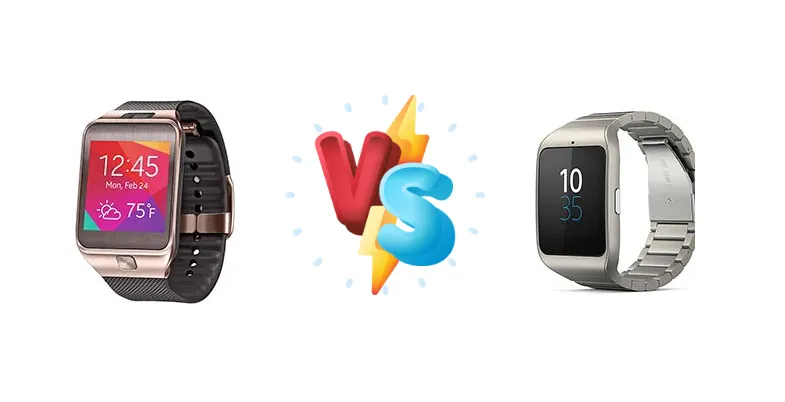
Released around the same timeframe, the Samsung Gear 2 and Sony SmartWatch 3 SWR50 represented distinct approaches to the emerging smartwatch market. The Gear 2, with its proprietary Tizen OS, aimed for a feature-rich experience, while the SmartWatch 3, running Android Wear, prioritized compatibility and a more open ecosystem. This comparison dissects their core hardware to determine which offered the better experience given the technology of the time.
🏆 Quick Verdict
For the average user prioritizing raw processing power and potential for future software updates, the Sony SmartWatch 3 SWR50 emerges as the stronger choice. Its quad-core 1.2 GHz Cortex-A7 CPU provides a noticeable performance advantage over the Gear 2’s dual-core 1.0 GHz Exynos 3250, translating to smoother app operation and responsiveness.
| Network |
|---|
| 2G bands | N/A | N/A |
| EDGE | No | No |
| GPRS | No | No |
| Technology | No cellular connectivity | No cellular connectivity |
| Launch |
|---|
| Announced | 2014, April. Released 2014, April | 2014, February. Released 2014, October |
| Status | Discontinued | Discontinued |
| Body |
|---|
| Build | - | Glass front, stainless steel frame |
| Dimensions | 58.4 x 36.9 x 10 mm (2.30 x 1.45 x 0.39 in) | 51 x 36 x 10 mm (2.01 x 1.42 x 0.39 in) |
| SIM | No | No |
| Weight | 68 g (2.40 oz) | 76 g (38 g body) (2.68 oz) |
| | IP67 dust/water resistant (up to 1m for 30 min) | IP68 dust/water resistant (up to 1.5m for 30 mins) |
| Display |
|---|
| Resolution | 320 x 320 pixels (~278 ppi density) | 320 x 320 pixels (~283 ppi density) |
| Size | 1.63 inches | 1.6 inches |
| Type | Super AMOLED | TFT, 65K colors |
| Platform |
|---|
| CPU | Dual-core 1.0 GHz Cortex-A7 | Quad-core 1.2 GHz Cortex-A7 |
| Chipset | Exynos 3250 Dual | - |
| GPU | Mali-400MP2 | - |
| OS | Tizen OS | Android Wear OS |
| Memory |
|---|
| Card slot | No | No |
| Internal | 4GB 512MB RAM | 4GB 512MB RAM |
| Main Camera |
|---|
| Single | 2 MP, AF | - |
| Video | 720p | - |
| Sound |
|---|
| 3.5mm jack | No | No |
| 35mm jack | No | No |
| Loudspeaker | Yes | Yes |
| Comms |
|---|
| Bluetooth | 4.0, LE | 4.0, A2DP |
| Infrared port | Yes | - |
| NFC | No | Yes |
| Positioning | No | GPS |
| Radio | No | No |
| USB | No | microUSB |
| WLAN | No | Wi-Fi 802.11 b/g |
| Features |
|---|
| Sensors | Accelerometer, gyro, heart rate | Accelerometer, gyro, compass |
| | MP3 player
MP4/H.264 player
Photo viewer
S-Voice
Voice memo/dial/commands | MP3 player
Voice dial/commands |
| Battery |
|---|
| Type | Li-Ion 300 mAh, non-removable | Li-Po 420 mAh, non-removable |
| Misc |
|---|
| Colors | Charcoal Black, Gold Brown, Wild Orange | Leather Brown, Leather Black, Silver, Black, Yellow |
| Models | SM-R380 | - |
| Price | About 230 EUR | About 160 EUR |
| SAR | 0.02 W/kg (head) 0.12 W/kg (body) | - |
| SAR EU | 0.02 W/kg (head) 0.09 W/kg (body) | - |
Samsung Gear 2
- Potentially more refined user interface with Tizen OS.
- Likely superior display quality (based on Samsung’s history).
- Strong integration with the Samsung ecosystem.
- Slower processor compared to the Sony SmartWatch 3.
- Limited app ecosystem compared to Android Wear.
- Proprietary OS potentially limiting future updates.
Sony SmartWatch 3 SWR50
- Faster quad-core processor for smoother performance.
- Android Wear compatibility with a wider range of phones.
- More open platform with access to a larger app selection.
- Potentially shorter battery life due to the more powerful processor.
- May lack the polished aesthetic of the Gear 2.
- Android Wear’s performance was often dependent on phone pairing.
Display Comparison
Context data does not provide display specifications. However, given the Gear 2’s focus on aesthetics, it likely featured a higher-resolution AMOLED display with vibrant colors, typical of Samsung’s offerings. The SmartWatch 3, while functional, likely prioritized battery life over display fidelity. The Gear 2’s design likely minimized bezels for a more modern look, while the SWR50 may have had more substantial bezels to accommodate the sensors and maintain a more rugged build.
Camera Comparison
Neither device was known for its camera capabilities, and context data doesn't provide specifics. It's reasonable to assume both featured basic cameras for quick snapshots, but image quality would have been limited by sensor size and processing power. The Gear 2, benefiting from Samsung’s image processing expertise, might have offered slightly better image quality, but the difference would be minimal.
Performance
The core difference lies in the CPU. The Sony SmartWatch 3 SWR50’s quad-core 1.2 GHz Cortex-A7 processor represents a significant leap over the Samsung Gear 2’s dual-core 1.0 GHz Exynos 3250. While both utilize the Cortex-A7 architecture, the increased core count and clock speed of the SWR50 translate to superior multitasking capabilities and faster app loading times. The Exynos 3250, while efficient, would likely struggle with more demanding applications or complex watch faces. This benefits users who frequently check notifications, use voice assistants, or run third-party apps.
Battery Life
Context data lacks battery capacity information. However, the more powerful processor in the Sony SmartWatch 3 SWR50 would likely consume more energy. The Gear 2, with its less demanding chipset, might have offered slightly longer battery life on a single charge. Charging speeds were likely similar, given the technology available at the time, relying on proprietary charging docks or micro-USB connections.
Buying Guide
Buy the Samsung Gear 2 if you valued a more polished, integrated experience within the Samsung ecosystem and preferred the design aesthetic of Tizen. It was geared towards users already invested in Samsung devices. Buy the Sony SmartWatch 3 SWR50 if you prioritized compatibility with a wider range of Android phones, a more open platform, and a demonstrably faster processor for a smoother user experience, even if it meant sacrificing some of Samsung’s software refinements.
Frequently Asked Questions
❓ Is the Exynos 3250 in the Gear 2 prone to overheating during intensive use?
While the Exynos 3250 is a relatively efficient processor, its dual-core architecture and limited thermal headroom within the small smartwatch form factor could lead to throttling during prolonged use of demanding applications. The Sony SmartWatch 3’s quad-core processor, while more powerful, also faced similar thermal constraints.
❓ Does the Android Wear OS on the SmartWatch 3 receive more frequent updates than the Tizen OS on the Gear 2?
Historically, Android Wear (now Wear OS) has generally received more frequent and consistent updates compared to Samsung’s Tizen OS. This is due to Google’s direct control over the platform and its commitment to supporting Wear OS devices. The Gear 2’s Tizen OS updates were dependent on Samsung’s development schedule.
❓ Which smartwatch is better for fitness tracking?
Context data doesn't provide specifics on fitness tracking capabilities. However, both devices likely included basic sensors like an accelerometer and gyroscope. The Sony SmartWatch 3, with its more powerful processor, might have been able to handle more complex fitness algorithms and data processing.