
Samsung Galaxy Z TriFold vs. Google Pixel Fold: A Head-to-Head Showdown
| Phones Images | |||||
|---|---|---|---|---|---|
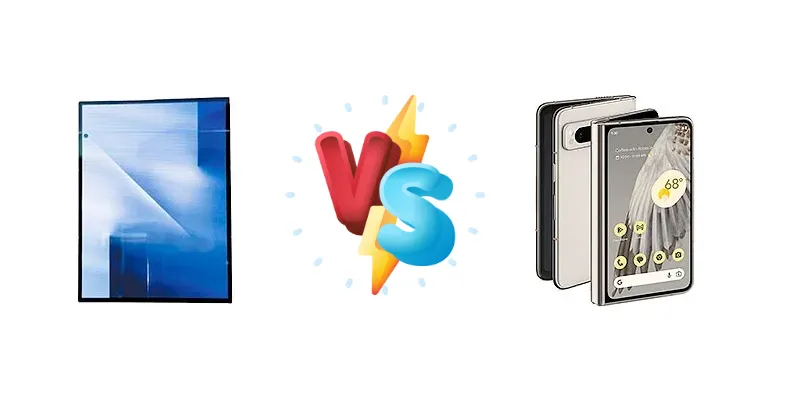
|
🏆 Quick Verdict
For users prioritizing raw performance and multitasking, the Samsung Galaxy Z TriFold is the clear winner. Its Snapdragon 8 Elite Gen 5, with its Oryon CPU cores, delivers significantly faster processing speeds. However, the Pixel Fold’s optimized software and potentially better camera processing make it a compelling choice for those valuing a seamless Google experience.
| PHONES | ||
|---|---|---|
| Phone Names | Samsung Galaxy Z TriFold | Google Pixel Fold |
| Network | ||
|---|---|---|
| 2G bands | GSM 850 / 900 / 1800 / 1900 | GSM 850 / 900 / 1800 / 1900 |
| 3G bands | HSDPA 850 / 900 / 1700(AWS) / 1900 / 2100 | HSDPA 800 / 850 / 900 / 1700(AWS) / 1900 / 2100 |
| 4G bands | LTE | 1, 2, 3, 4, 5, 7, 8, 12, 13, 14, 17, 18, 19, 20, 21, 25, 26, 28, 29, 30, 32, 38, 39, 40, 41, 42, 46, 48, 66, 71 |
| 5G bands | SA/NSA/Sub6 | 1, 2, 3, 5, 7, 8, 12, 14, 20, 25, 28, 30, 38, 40, 41, 48, 66, 71, 75, 76, 77, 78, 79, 257, 258, 260, 261 SA/NSA/Sub6/mmWave |
| Speed | HSPA, LTE, 5G | HSPA, LTE, 5G |
| Technology | GSM / CDMA / HSPA / EVDO / LTE / 5G | GSM / CDMA / HSPA / EVDO / LTE / 5G |
| - | CDMA2000 1xEV-DO | |
| Launch | ||
|---|---|---|
| Announced | Not announced yet | 2023, May 10 |
| Status | Rumored | Available. Released 2023, June 27 |
| Body | ||
|---|---|---|
| Build | - | Glass front (Gorilla Glass Victus) (folded), plastic front (unfolded), glass back (Gorilla Glass Victus), aluminum frame |
| Dimensions | Unfolded thickness: 4.2 mm Folded thickness: 14 mm | Unfolded: 139.7 x 158.7 x 5.8 mmFolded: 139.7 x 79.5 x 12.1 mm |
| SIM | Nano-SIM + eSIM | Nano-SIM + eSIM |
| Weight | - | 283 g (9.98 oz) |
| - | IPX8 water resistant | |
| Display | ||
|---|---|---|
| Resolution | 2232 x 3184 pixels (~389 ppi density) | 1840 x 2208 pixels (~378 ppi density) |
| Size | 10.0 inches, 303.2 cm2 | 7.6 inches, 183.3 cm2 (~82.7% screen-to-body ratio) |
| Type | Foldable LTPO OLED, 120Hz, HDR10+, 1600 nits (peak) | Foldable OLED, 120Hz, HDR10+, 1000 nits (HBM), 1450 nits (peak) |
| - | Cover display: OLED, 120Hz, HDR, Corning Gorilla Glass Victus 5.8 inches, 1080 x 2092 pixels, 17.4:9 ratio, 408 ppi 1200 nits (HBM), 1550 nits (peak) | |
| Platform | ||
|---|---|---|
| CPU | Octa-core (2x4.6 GHz Oryon V3 Phoenix L + 6x3.62 GHz Oryon V3 Phoenix M) | Octa-core (2x2.85 GHz Cortex-X1 & 2x2.35 GHz Cortex-A78 & 4x1.80 GHz Cortex-A55) |
| Chipset | Qualcomm SM8850-AC Snapdragon 8 Elite Gen 5 (3 nm) | Google Tensor G2 (5 nm) |
| GPU | Adreno 840 | Mali-G710 MP7 |
| OS | Android 16 | Android 13, upgradable to Android 15, up to 5 major Android upgrades |
| Memory | ||
|---|---|---|
| Card slot | No | No |
| Internal | 512GB 16GB RAM, 1TB 16GB RAM | 256GB 12GB RAM, 512GB 12GB RAM |
| - | UFS 3.1 | |
| Main Camera | ||
|---|---|---|
| Features | LED flash, HDR, panorama | Laser AF, Dual-LED flash, HDR, panorama |
| Triple | 200 MP, f/1.7, 24mm (wide), 1/1.3", 0.6µm, multi-directional PDAF, OIS 50 MP (ultrawide) third unspecified camera | 48 MP, f/1.7, 25mm (wide), 1/2.0", 0.8µm, dual pixel PDAF, OIS 10.8 MP, f/3.1, 112mm (telephoto), 1/3.1", 1.22µm, dual pixel PDAF, OIS, 5x optical zoom 10.8 MP, f/2.2, 121˚, (ultrawide), 1/3.0", 1.25µm |
| Video | 8K@30fps, 4K@60fps, 1080p@60/120/240fps (gyro-EIS), 10-bit HDR, HDR10+ | 4K@30/60fps, 1080p@30/60/120/240fps, 10-bit HDR |
| Selfie camera | ||
|---|---|---|
| Features | HDR | HDR, panorama |
| Single | Yes | 8 MP, f/2.0, 24mm (wide), 1/4.0", 1.12µm Cover camera: 9.5 MP, f/2.2, 24mm (wide), 1.22µm, dual pixel PDAF |
| Video | 4K@30/60fps, 1080p@30/60fps, gyro-EIS | 4K@30/60fps, 1080p@30/60fps |
| Sound | ||
|---|---|---|
| 3.5mm jack | - | No |
| 35mm jack | No | No |
| Loudspeaker | Yes, with stereo speakers | Yes, with stereo speakers |
| Comms | ||
|---|---|---|
| Bluetooth | 6.0, A2DP, LE, aptX HD | 5.2, A2DP, LE, aptX HD |
| NFC | Yes | Yes |
| Positioning | GPS, GALILEO, GLONASS, BDS, QZSS | GPS, GLONASS, GALILEO, BDS |
| Radio | No | No |
| USB | USB Type-C 3.2, OTG | USB Type-C 3.2, OTG |
| WLAN | Wi-Fi 802.11 a/b/g/n/ac/6e/7, tri-band, Wi-Fi Direct | Wi-Fi 802.11 a/b/g/n/ac/6e, tri-band, Wi-Fi Direct |
| Features | ||
|---|---|---|
| Sensors | Fingerprint, accelerometer, gyro, proximity, compass | Fingerprint (side-mounted), accelerometer, gyro, proximity, compass, barometer |
| - | Ultra Wideband (UWB) support | |
| Battery | ||
|---|---|---|
| Charging | 45W wired | Wired, PD3.0 Wireless |
| Type | 5600 mAh | Li-Po 4821 mAh |
| Misc | ||
|---|---|---|
| Colors | Black; other colors | Porcelain, Obsidian |
| Models | - | G9FPL |
| Price | - | € 670.87 / $ 389.26 / £ 899.99 |
Samsung Galaxy Z TriFold
- Unmatched processing power with Snapdragon 8 Elite Gen 5
- Faster 45W wired charging
- Unique and potentially more productive tri-fold design
- Potential display calibration challenges due to multiple panels
- Tri-fold design may be less durable than a traditional fold
Google Pixel Fold
- Optimized software experience with Google’s AI features
- Potentially superior camera image processing
- More conventional and refined foldable design
- Significantly slower processing performance compared to Snapdragon
- Slower charging speeds
Display Comparison
While specific display specs are missing, the Z TriFold’s tri-fold design inherently presents challenges in maintaining consistent color accuracy across all panels. The Pixel Fold, with its single folding display, likely benefits from tighter quality control. The Snapdragon 8 Elite Gen 5’s ISP will be crucial in calibrating the Z TriFold’s multiple displays. Both devices will likely utilize LTPO technology for variable refresh rates, but the Pixel Fold’s panel may benefit from Google’s advanced display algorithms for improved power efficiency. Bezels are a key area to watch, as minimizing them is crucial for maximizing screen real estate in a foldable form factor.
Camera Comparison
Without detailed camera specs, it’s difficult to make a definitive judgment. However, Google’s computational photography prowess is well-established. The Pixel Fold will likely leverage the Tensor G2’s AI capabilities for superior image processing, particularly in low-light conditions. The Z TriFold will rely on the Snapdragon 8 Elite Gen 5’s ISP and potentially larger sensors to capture detailed images. The absence of a dedicated telephoto lens on either device (based on typical foldable designs) could be a limitation. Image stabilization (OIS) will be critical for both devices, especially when shooting video.
Performance
The performance gap between the Snapdragon 8 Elite Gen 5 and the Google Tensor G2 is substantial. The Snapdragon’s 3nm process node and Oryon V3 Phoenix CPU architecture (2x4.6 GHz + 6x3.62 GHz) offer a significant advantage in both single-core and multi-core performance compared to the Tensor G2’s 5nm process and Cortex-X1/A78/A55 configuration (2x2.85 GHz + 2x2.35 GHz + 4x1.80 GHz). This translates to faster app loading times, smoother multitasking, and superior gaming performance on the Z TriFold. The Z TriFold’s LPDDR5x RAM will further enhance memory bandwidth. While the Tensor G2 excels in AI and machine learning tasks, the Snapdragon 8 Elite Gen 5’s raw processing power will be more noticeable in everyday use.
Battery Life
The Z TriFold’s 45W wired charging is a clear advantage over the Pixel Fold’s unspecified charging speeds. While battery capacity is unknown for both devices, the Snapdragon 8 Elite Gen 5’s improved power efficiency could offset a potentially smaller battery in the Z TriFold. The Pixel Fold’s wireless charging support offers added convenience, but wired charging remains the fastest method. Real-world battery life will depend heavily on usage patterns and display settings.
Buying Guide
Buy the Samsung Galaxy Z TriFold if you need uncompromising performance for demanding tasks like gaming, video editing, or running multiple apps simultaneously, and if the tri-fold form factor enhances your productivity. Buy the Google Pixel Fold if you prefer a more polished software experience, prioritize Google’s AI features, and value a more traditional foldable design with a focus on camera quality and ease of use.