
Samsung Galaxy Z Fold Special vs. Xiaomi Mix Fold 3: A Comprehensive Comparison
| Phones Images | |||||
|---|---|---|---|---|---|
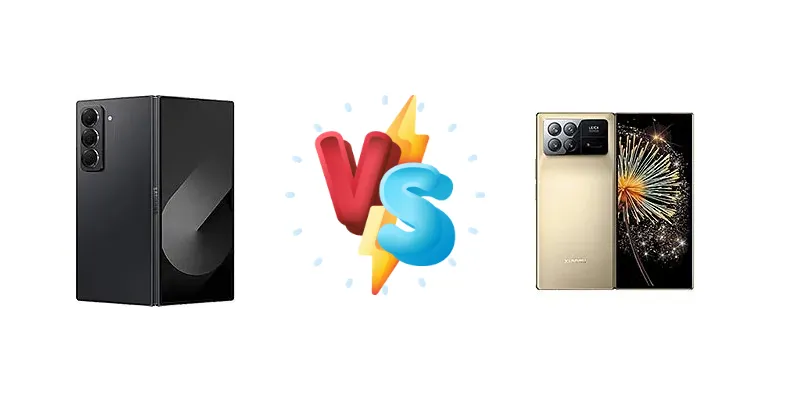
|
🏆 Quick Verdict
For users prioritizing raw power and future-proofing, the Samsung Galaxy Z Fold Special is the clear winner. Its Snapdragon 8 Gen 3 chipset offers a significant performance leap over the Mix Fold 3’s Snapdragon 8 Gen 2. However, the Xiaomi Mix Fold 3 excels in charging speed and offers a competitive experience for those less concerned with having the absolute latest processor.
| PHONES | ||
|---|---|---|
| Phone Names | Samsung Galaxy Z Fold Special | Xiaomi Mix Fold 3 |
| Network | ||
|---|---|---|
| 2G bands | GSM 850 / 900 / 1800 / 1900 | GSM 850 / 900 / 1800 / 1900 |
| 3G bands | HSDPA 850 / 900 / 1700(AWS) / 1900 / 2100 | HSDPA 800 / 850 / 900 / 1700(AWS) / 1900 / 2100 |
| 4G bands | 1, 2, 3, 4, 5, 7, 8, 12, 13, 17, 18, 19, 20, 25, 26, 28, 38, 39, 40, 41, 66 | 1, 2, 3, 4, 5, 7, 8, 12, 17, 18, 19, 26, 34, 38, 39, 40, 41, 42 |
| 5G bands | 1, 2, 3, 5, 7, 8, 12, 20, 25, 26, 28, 38, 40, 41, 66, 77, 78 SA/NSA/Sub6 | 1, 3, 5, 8, 28, 38, 40, 41, 77, 78, 79 SA/NSA |
| Speed | HSPA, LTE, 5G | HSPA, LTE, 5G |
| Technology | GSM / HSPA / LTE / 5G | GSM / CDMA / HSPA / EVDO / LTE / 5G |
| Launch | ||
|---|---|---|
| Announced | 2024, October 21 | 2023, August 14 |
| Status | Available. Released 2024, October 24 | Available. Released 2023, August 14 |
| Body | ||
|---|---|---|
| Build | Glass front (Gorilla Glass Victus 2) (folded), plastic front (unfolded), glass back (Gorilla Glass Victus 2), aluminum frame | Glass front (folded), plastic front (unfolded), glass back or aramid fiber back, aluminum frame |
| Dimensions | Unfolded: 157.9 x 142.6 x 4.9 mmFolded: 157.9 x 72.8 x 10.6 mm | Unfolded: 161.2 x 143.3 x 5.3 mm Folded: 161.2 x 73.5 x 10.9 mm |
| SIM | Nano-SIM + eSIM + eSIM (max 2 at a time) | Nano-SIM + Nano-SIM |
| Weight | 236 g (8.32 oz) | 255 g or 259 g (8.99 oz) |
| Display | ||
|---|---|---|
| Resolution | 1968 x 2184 pixels (~367 ppi density) | 1916 x 2160 pixels (~360 ppi density) |
| Size | 8.0 inches, 205.3 cm2 (~91.2% screen-to-body ratio) | 8.03 inches, 206.5 cm2 (~89.4% screen-to-body ratio) |
| Type | Foldable Dynamic LTPO AMOLED 2X, 120Hz, HDR10+, 2600 nits (peak) | Foldable LTPO OLED+, 1B colors, 120Hz, HDR10+, Dolby Vision, 1300 nits (peak) |
| Platform | ||
|---|---|---|
| CPU | 8-core (1x3.39GHz Cortex-X4 & 3x3.1GHz Cortex-A720 & 2x2.9GHz Cortex-A720 & 2x2.2GHz Cortex-A520) | Octa-core (1x3.36 GHz Cortex-X3 & 2x2.8 GHz Cortex-A715 & 2x2.8 GHz Cortex-A710 & 3x2.0 GHz Cortex-A510) |
| Chipset | Qualcomm SM8650-AC Snapdragon 8 Gen 3 (4 nm) | Qualcomm SM8550-AC Snapdragon 8 Gen 2 (4 nm) |
| GPU | Adreno 750 (1 GHz) | Adreno 740 |
| OS | Android 14, up to 7 major Android upgrades, One UI 6.1.1 | Android 13, upgradable to Android 14, HyperOS |
| Memory | ||
|---|---|---|
| Card slot | No | No |
| Internal | 512GB 16GB RAM | 256GB 12GB RAM, 512GB 16GB RAM, 1TB 16GB RAM |
| Main Camera | ||
|---|---|---|
| Features | LED flash, HDR, panorama | Color spectrum sensor, LED flash, HDR, panorama, Leica lenses |
| Quad | - | 50 MP, f/1.8, 23mm (wide), 1/1.49", 1.0µm, PDAF, OIS 10 MP, f/2.0, 75mm (telephoto), 1/3.94", 1.0µm, PDAF, OIS, 3.2x optical zoom 10 MP, f/2.9, 115mm (telephoto), 1/3.94", 1.0µm, PDAF, OIS, 5x optical zoom 12 MP, f/2.2, 15mm, 120˚ (ultrawide), 1/3.1", 1.12µm |
| Triple | 200 MP, f/1.8, (wide), PDAF, OIS 10 MP, f/2.4, 66mm (telephoto), 1.0µm, PDAF, OIS, 3x optical zoom 12 MP, f/2.2, 123˚, 12mm (ultrawide), 1.12µm, AF | - |
| Video | 8K@30fps, 4K@60fps, 1080p@60/120/240fps (gyro-EIS), 720p@960fps (gyro-EIS), HDR10+ | 8K@24fps, 4K@24/30/60fps, 1080p@30/60/120/240/960/1920fps, Dolby Vision HDR |
| Selfie camera | ||
|---|---|---|
| Features | HDR | HDR, panorama |
| Single | 4 MP, f/1.8, 26mm (wide), 2.0µm Cover camera: 10 MP, f/2.2, 24mm (wide), 1/3", 1.22µm | 20 MP, f/2.3, 23mm (wide), 1/4.0", 0.8µm Cover camera: 20 MP, f/2.3, 23mm (wide), 1/4.0", 0.8µm |
| Video | 4K@30/60fps, 1080p@30/60fps, gyro-EIS | 1080p@30/60fps |
| Sound | ||
|---|---|---|
| 35mm jack | No | No |
| Loudspeaker | Yes, with stereo speakers | Yes, with stereo speakers |
| Comms | ||
|---|---|---|
| Bluetooth | 5.3, A2DP, LE | 5.3, A2DP, LE |
| Infrared port | - | Yes |
| NFC | Yes | Yes |
| Positioning | GPS, GALILEO, GLONASS, BDS, QZSS | GPS (L1+L5), GLONASS (G1), BDS (B1I+B1c+B2a), GALILEO (E1+E5a), QZSS (L1+L5), NavIC (L5) |
| Radio | No | No |
| USB | USB Type-C 3.2, OTG | USB Type-C 3.2, OTG |
| WLAN | Wi-Fi 802.11 a/b/g/n/ac/6e/7, tri-band, Wi-Fi Direct | Wi-Fi 802.11 a/b/g/n/ac/6e/7, dual-band (tri-band after future SW update) |
| Features | ||
|---|---|---|
| Sensors | Fingerprint (side-mounted), accelerometer, gyro, proximity, compass, barometer | Fingerprint (side-mounted), accelerometer, gyro, proximity, compass, barometer |
| Battery | ||
|---|---|---|
| Charging | 25W wired, QC2.0, 50% in 30 min 15W wireless 4.5W reverse wireless | 67W wired, PD3.0, QC4, 100% in 40 min 50W wireless, 100% in 55 min |
| Type | Li-Po 4400 mAh | Li-Po 4800 mAh |
| Misc | ||
|---|---|---|
| Colors | Black | Black, Gold |
| Models | SM-F958N | 2308CPXD0C |
| Price | About 1870 EUR | About 1150 EUR |
| SAR | 0.66 W/kg (head) 1.13 W/kg (body) | - |
Samsung Galaxy Z Fold Special
- Significantly faster processor (Snapdragon 8 Gen 3)
- Potential for longer software support
- Likely superior camera system with advanced image processing
- Slower charging speed (25W)
- Potentially higher price
Xiaomi Mix Fold 3
- Much faster charging (67W wired, 50W wireless)
- Excellent battery endurance (117h rating)
- Potentially more streamlined software experience
- Older processor (Snapdragon 8 Gen 2)
- May lag behind in demanding gaming scenarios
Display Comparison
The Xiaomi Mix Fold 3 boasts a peak brightness of 1277 nits, a strong figure ensuring excellent visibility even outdoors. While the Z Fold Special’s display specs aren’t provided, Samsung typically employs Dynamic AMOLED 2X panels with comparable or superior brightness. Both devices likely utilize LTPO technology for adaptive refresh rates, conserving battery life. The key difference will likely lie in Samsung’s color calibration and potentially a higher PWM dimming rate, which could benefit users sensitive to flicker. Bezels are a critical area; Xiaomi has historically focused on minimizing these, and the Mix Fold 3 likely continues this trend.
Camera Comparison
Detailed camera specs are missing for both devices, making a direct comparison challenging. However, given Samsung’s history, the Z Fold Special is likely to feature a more versatile camera system with a larger main sensor and more advanced image processing algorithms. Xiaomi has been improving its camera capabilities, but typically focuses on computational photography rather than raw sensor size. The Mix Fold 3’s camera performance will likely be strong in well-lit conditions, but may struggle more in low-light scenarios compared to a flagship Samsung device. We can assume both will offer capable video recording, but Samsung often leads in video stabilization and dynamic range.
Performance
The Samsung Galaxy Z Fold Special’s Snapdragon 8 Gen 3 (4nm) represents a substantial upgrade over the Xiaomi Mix Fold 3’s Snapdragon 8 Gen 2 (4nm). The Gen 3 features a new CPU architecture – Cortex-X4 prime core clocked at 3.39GHz versus the Gen 2’s Cortex-X3 at 3.36GHz – promising a 10-15% performance increase in CPU-bound tasks. The Gen 3 also boasts a significantly improved GPU, translating to higher frame rates in demanding games. While both chips are built on a 4nm process, the architectural improvements in the Gen 3 provide a clear advantage. The Z Fold Special’s CPU configuration (1x3.39GHz, 3x3.1GHz, 2x2.9GHz, 2x2.2GHz) is optimized for sustained performance, while the Mix Fold 3’s (1x3.36 GHz, 2x2.8 GHz, 2x2.8 GHz, 3x2.0 GHz) is slightly less aggressive. The Z Fold Special will likely exhibit less thermal throttling during extended gaming sessions.
Battery Life
The Xiaomi Mix Fold 3’s 67W wired charging, capable of a 100% charge in 40 minutes, is significantly faster than the Samsung Galaxy Z Fold Special’s 25W charging (50% in 30 minutes). The Mix Fold 3 also offers 50W wireless charging, a substantial advantage over the Z Fold Special’s 15W wireless charging. While the Z Fold Special’s battery capacity isn’t specified, the Mix Fold 3’s endurance rating of 117 hours suggests a reasonably sized battery. The faster charging of the Mix Fold 3 mitigates any potential capacity disadvantage, making it a more convenient option for users who frequently need to top up their battery.
Buying Guide
Buy the Samsung Galaxy Z Fold Special if you demand the fastest possible performance for demanding tasks like gaming, video editing, or heavy multitasking. Its newer chipset and potential for longer software support make it a future-proof investment. Buy the Xiaomi Mix Fold 3 if you prioritize rapid charging, a potentially more streamlined software experience, and value a faster path to a full battery, even if it means sacrificing some peak processing power.