
Samsung Galaxy Z Fold Special vs. Huawei Mate X3: A Deep Dive into Foldable Flagships
| Phones Images | |||||
|---|---|---|---|---|---|
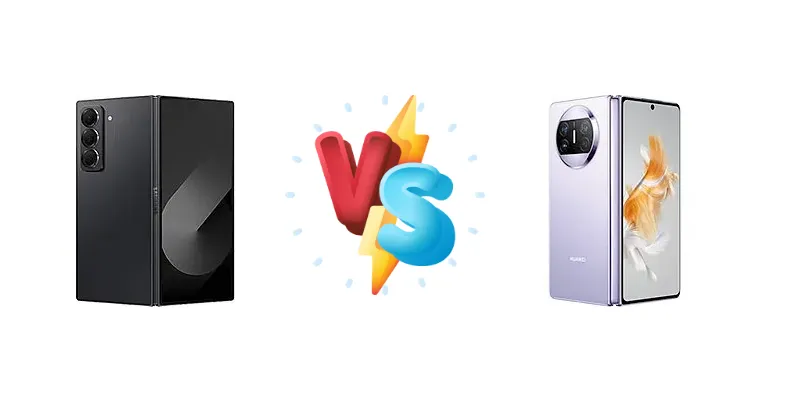
|
🏆 Quick Verdict
For most users, the Samsung Galaxy Z Fold Special emerges as the superior choice. The Snapdragon 8 Gen 3 delivers a significant performance leap over the Mate X3’s Snapdragon 8+ Gen 1, offering smoother multitasking and superior gaming. While the Mate X3 boasts comparable battery endurance, the Z Fold Special’s faster charging and newer chipset provide a more future-proof experience.
| PHONES | ||
|---|---|---|
| Phone Names | Samsung Galaxy Z Fold Special | Huawei Mate X3 |
| Network | ||
|---|---|---|
| 2G bands | GSM 850 / 900 / 1800 / 1900 | GSM 850 / 900 / 1800 / 1900 |
| 3G bands | HSDPA 850 / 900 / 1700(AWS) / 1900 / 2100 | HSDPA 800 / 850 / 900 / 1700(AWS) / 1900 / 2100 |
| 4G bands | 1, 2, 3, 4, 5, 7, 8, 12, 13, 17, 18, 19, 20, 25, 26, 28, 38, 39, 40, 41, 66 | 1, 2, 3, 4, 5, 7, 8, 12, 17, 18, 19, 20, 26, 28, 34, 38, 39, 40, 41 |
| 5G bands | 1, 2, 3, 5, 7, 8, 12, 20, 25, 26, 28, 38, 40, 41, 66, 77, 78 SA/NSA/Sub6 | - |
| Speed | HSPA, LTE, 5G | HSPA, LTE |
| Technology | GSM / HSPA / LTE / 5G | GSM / CDMA / HSPA / EVDO / LTE |
| - | CDMA2000 1xEV-DO | |
| Launch | ||
|---|---|---|
| Announced | 2024, October 21 | 2023, March 23 |
| Status | Available. Released 2024, October 24 | Available. Released 2023, April 08 |
| Body | ||
|---|---|---|
| Build | Glass front (Gorilla Glass Victus 2) (folded), plastic front (unfolded), glass back (Gorilla Glass Victus 2), aluminum frame | Glass front, glass back or eco leather back, aluminum frame |
| Dimensions | Unfolded: 157.9 x 142.6 x 4.9 mmFolded: 157.9 x 72.8 x 10.6 mm | Unfolded: 156.9 x 141.5 x 5.3 mmFolded: 156.9 x 72.4 x 11.1 mm |
| SIM | Nano-SIM + eSIM + eSIM (max 2 at a time) | Nano-SIM + Nano-SIM |
| Weight | 236 g (8.32 oz) | 239 g or 241 g (8.43 oz) |
| - | IPX8 dust/water resistant (up to 1.5m for 30 min) | |
| Display | ||
|---|---|---|
| Protection | - | Kunlun Glass (cover display only) |
| Resolution | 1968 x 2184 pixels (~367 ppi density) | 2224 x 2496 pixels (~426 ppi density) |
| Size | 8.0 inches, 205.3 cm2 (~91.2% screen-to-body ratio) | 7.85 inches, 197.5 cm2 (~88.9% screen-to-body ratio) |
| Type | Foldable Dynamic LTPO AMOLED 2X, 120Hz, HDR10+, 2600 nits (peak) | Foldable OLED, 1B colors, 120Hz |
| - | Cover display: OLED, 120Hz, 6.4 inches, 1080 x 2504 pixels | |
| Platform | ||
|---|---|---|
| CPU | 8-core (1x3.39GHz Cortex-X4 & 3x3.1GHz Cortex-A720 & 2x2.9GHz Cortex-A720 & 2x2.2GHz Cortex-A520) | Octa-core (1x3.19 GHz Cortex-X2 & 3x2.75 GHz Cortex-A710 & 4x2.0 GHz Cortex-A510) |
| Chipset | Qualcomm SM8650-AC Snapdragon 8 Gen 3 (4 nm) | Qualcomm SM8475 Snapdragon 8+ Gen 1 4G (4 nm) |
| GPU | Adreno 750 (1 GHz) | Adreno 730 |
| OS | Android 14, up to 7 major Android upgrades, One UI 6.1.1 | HarmonyOS 3.1 (China), EMUI 13.1 (Europe), no Google Play Services |
| Memory | ||
|---|---|---|
| Card slot | No | Nano Memory (uses shared SIM slot) |
| Internal | 512GB 16GB RAM | 256GB 12GB RAM, 512GB 12GB RAM, 1TB 12GB RAM |
| - | UFS | |
| Main Camera | ||
|---|---|---|
| Features | LED flash, HDR, panorama | Laser AF, color spectrum sensor, LED flash, panorama, HDR |
| Triple | 200 MP, f/1.8, (wide), PDAF, OIS 10 MP, f/2.4, 66mm (telephoto), 1.0µm, PDAF, OIS, 3x optical zoom 12 MP, f/2.2, 123˚, 12mm (ultrawide), 1.12µm, AF | 50 MP, f/1.8, 23mm (wide), PDAF, OIS 12 MP, f/3.4, 125mm (periscope telephoto), PDAF, OIS, 5x optical zoom 13 MP, f/2.2, 13mm (ultrawide), AF |
| Video | 8K@30fps, 4K@60fps, 1080p@60/120/240fps (gyro-EIS), 720p@960fps (gyro-EIS), HDR10+ | 4K@30/60fps, 1080p@30/60fps, gyro-EIS |
| Selfie camera | ||
|---|---|---|
| Features | HDR | HDR, panorama |
| Single | 4 MP, f/1.8, 26mm (wide), 2.0µm Cover camera: 10 MP, f/2.2, 24mm (wide), 1/3", 1.22µm | 8 MP, f/2.4, (wide) Cover camera: 8 MP, f/2.4, (wide) |
| Video | 4K@30/60fps, 1080p@30/60fps, gyro-EIS | 4K@30fps, 1080p@30fps |
| Sound | ||
|---|---|---|
| 3.5mm jack | - | No |
| 35mm jack | No | No |
| Loudspeaker | Yes, with stereo speakers | Yes, with stereo speakers |
| Comms | ||
|---|---|---|
| Bluetooth | 5.3, A2DP, LE | 5.2, A2DP, LE |
| Infrared port | - | Yes |
| NFC | Yes | Yes |
| Positioning | GPS, GALILEO, GLONASS, BDS, QZSS | GPS (L1+L5), GLONASS (B1I+B1c+B2a), BDS (B1I+B1c+B2a), GALILEO (E1+E5a), QZSS (L1+L5), NavIC |
| Radio | No | No |
| USB | USB Type-C 3.2, OTG | USB Type-C 3.1, DisplayPort 1.2, OTG |
| WLAN | Wi-Fi 802.11 a/b/g/n/ac/6e/7, tri-band, Wi-Fi Direct | Wi-Fi 802.11 a/b/g/n/ac/6, dual-band, Wi-Fi Direct |
| Features | ||
|---|---|---|
| Sensors | Fingerprint (side-mounted), accelerometer, gyro, proximity, compass, barometer | Fingerprint (side-mounted), accelerometer, gyro, proximity, compass, barometer, altimeter |
| - | BDS Satellite Message | |
| Battery | ||
|---|---|---|
| Charging | 25W wired, QC2.0, 50% in 30 min 15W wireless 4.5W reverse wireless | 66W wired 50W wireless 7.5W reverse wireless |
| Type | Li-Po 4400 mAh | Market-dependent versions:· Li-Po 4800 mAh (Global)· Si/C Li-Ion 5060 mAh (China only) |
| Misc | ||
|---|---|---|
| Colors | Black | Black, White, Violet, Dark Green, Gold |
| Models | SM-F958N | ALT-AL00, ALT-L29 |
| Price | About 1870 EUR | About 1500 EUR |
| SAR | 0.66 W/kg (head) 1.13 W/kg (body) | - |
| Tests | ||
|---|---|---|
| Battery life | - | Endurance rating 81h |
| Camera | - | Photo / Video |
| Display | - | Contrast ratio: Infinite (nominal) |
| Loudspeaker | - | -26.3 LUFS (Good) |
| Performance | - | AnTuTu: 993592 (v9) GeekBench: 4283 (v5.5), 4512 (v6) GFXBench: 41fps (ES 3.1 onscreen) |
Samsung Galaxy Z Fold Special
- Significantly faster processor with Snapdragon 8 Gen 3
- Likely superior display technology with LTPO
- Faster charging speeds (0-50% in 30 mins)
- Charging speed is slower than Mate X3's peak wired charging
- Potential for software update delays compared to other Samsung flagships
Huawei Mate X3
- Excellent battery endurance (81h rating)
- Faster wired and wireless charging speeds
- Proven reliability of the Snapdragon 8+ Gen 1
- Older Snapdragon 8+ Gen 1 chipset limits performance
- 4G connectivity only
- Potential software ecosystem limitations
Display Comparison
The Huawei Mate X3’s display achieves a measured peak brightness of 926 nits, a respectable figure, but the Z Fold Special, while lacking a published nit value, likely surpasses this due to the advancements in panel technology associated with its newer generation. Both feature foldable displays, but the Z Fold Special benefits from the latest LTPO technology, potentially offering more dynamic refresh rate control for improved power efficiency. The infinite contrast ratio claimed by Huawei is typical of OLED panels, but real-world viewing experience will depend on color calibration and panel uniformity, areas where Samsung typically excels.
Camera Comparison
Both devices are listed as having Photo/Video capabilities, but detailed camera specifications are absent. Given Samsung’s history, the Z Fold Special likely features a more versatile camera system with advanced image processing algorithms. The Mate X3’s camera performance will likely be solid, but without sensor size or aperture information, it’s difficult to assess its low-light capabilities. The absence of detail suggests neither phone prioritizes camera innovation as a primary selling point.
Performance
The Samsung Galaxy Z Fold Special’s Qualcomm SM8650-AC Snapdragon 8 Gen 3 (4nm) represents a substantial upgrade over the Huawei Mate X3’s Snapdragon 8+ Gen 1 (4nm). The Z Fold Special’s CPU configuration – 1x3.39GHz Cortex-X4, 3x3.1GHz Cortex-A720, 2x2.9GHz Cortex-A720, and 2x2.2GHz Cortex-A520 – offers significantly improved single-core and multi-core performance compared to the Mate X3’s Octa-core (1x3.19 GHz Cortex-X2, 3x2.75 GHz Cortex-A710, 4x2.0 GHz Cortex-A510). The newer Cortex-X4 core in the Z Fold Special provides a noticeable boost in peak performance. While both are 4nm chips, the architectural improvements in the Gen 3 translate to better thermal efficiency, reducing the likelihood of throttling during sustained workloads.
Battery Life
Both the Samsung Galaxy Z Fold Special and the Huawei Mate X3 achieve an endurance rating of 81 hours, indicating comparable battery life under similar usage conditions. However, the charging capabilities differ significantly. The Z Fold Special supports 25W wired charging with QC2.0, reaching 50% in 30 minutes, alongside 15W wireless and 4.5W reverse wireless. The Mate X3 boasts a faster 66W wired charging and 50W wireless charging, with 7.5W reverse wireless. This means the Mate X3 can fully charge much faster, but the Z Fold Special’s more efficient chipset may offset this advantage in real-world usage.
Buying Guide
Buy the Samsung Galaxy Z Fold Special if you prioritize raw performance, future software updates, and the latest mobile technology. It’s ideal for power users, gamers, and those who demand the best possible experience. Buy the Huawei Mate X3 if you value a proven, long-lasting battery life and are comfortable with the limitations of the 4G Snapdragon 8+ Gen 1 chipset and potential software ecosystem constraints.