
Samsung Galaxy XCover7 vs. Ulefone Armor 17 Pro: A Rugged Smartphone Showdown
| Phones Images | |||||
|---|---|---|---|---|---|
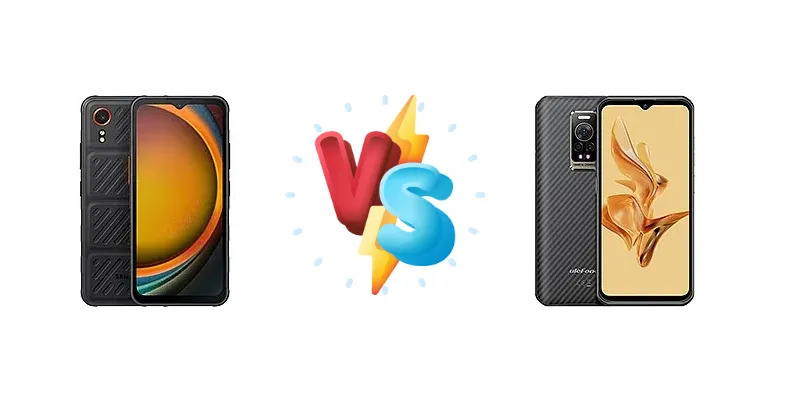
|
🏆 Quick Verdict
For the average user prioritizing a balanced experience and brand trust, the Samsung Galaxy XCover7 is the better choice. While the Ulefone Armor 17 Pro’s 66W charging is a significant advantage, the XCover7’s more refined software experience and potentially better long-term support outweigh this benefit.
| PHONES | ||
|---|---|---|
| Phone Names | Samsung Galaxy XCover7 | Ulefone Armor 17 Pro |
| Network | ||
|---|---|---|
| 2G bands | GSM 850 / 900 / 1800 / 1900 | GSM 850 / 900 / 1800 / 1900 |
| 3G bands | HSDPA 850 / 900 / 1700(AWS) / 1900 / 2100 | HSDPA 800 / 850 / 900 / 1700(AWS) / 1900 / 2100 |
| 4G bands | 1, 2, 3, 4, 5, 7, 8, 12, 13, 17, 20, 26, 28, 32, 38, 40, 41, 66 | 1, 2, 3, 4, 5, 7, 8, 12, 13, 17, 18, 19, 20, 25, 26, 28, 34, 38, 39, 40, 41, 66 |
| 5G bands | 1, 3, 5, 7, 8, 20, 26, 28, 38, 40, 41, 66, 71, 77, 78 SA/NSA | - |
| Speed | HSPA, LTE, 5G | HSPA, LTE |
| Technology | GSM / HSPA / LTE / 5G | GSM / HSPA / LTE |
| Launch | ||
|---|---|---|
| Announced | 2024, January 10 | 2022, October 31 |
| Status | Available. Released 2024, January 23 | Available. Released 2022, October 31 |
| Body | ||
|---|---|---|
| Dimensions | 169 x 80.1 x 10.2 mm (6.65 x 3.15 x 0.40 in) | 172.7 x 80.4 x 12.5 mm (6.80 x 3.17 x 0.49 in) |
| SIM | · Nano-SIM + eSIM· Nano-SIM + Nano-SIM | Nano-SIM + Nano-SIM |
| Weight | 240 g (8.47 oz) | 290 g (10.23 oz) |
| - | IP68/IP69K dust/water resistant (up to 1.5m for 30 min) Drop-to-concrete resistance from up to 1.5m MIL-STD-810G compliant | |
| Display | ||
|---|---|---|
| Protection | Corning Gorilla Glass Victus+ | Corning Gorilla Glass 5 |
| Resolution | 1080 x 2408 pixels, 20:9 ratio (~400 ppi density) | 1080 x 2408 pixels, 20:9 ratio (~401 ppi density) |
| Size | 6.6 inches, 104.9 cm2 (~77.5% screen-to-body ratio) | 6.58 inches, 104.3 cm2 (~75.1% screen-to-body ratio) |
| Type | PLS LCD, 600 nits (HBM) | IPS LCD, 120Hz |
| Platform | ||
|---|---|---|
| CPU | Octa-core (2x2.2 GHz Cortex-A76 & 6x2.0 GHz Cortex-A55) | Octa-core (2x2.2 GHz Cortex-A76 & 6x2.0 GHz Cortex-A55) |
| Chipset | Mediatek Dimensity 6100+ (6 nm) | Mediatek Helio G99 (6 nm) |
| GPU | Mali-G57 MC2 | Mali-G57 MC2 |
| OS | Android 14, upgradable to Android 16, One UI 8 | Android 12 |
| Memory | ||
|---|---|---|
| Card slot | microSDXC (dedicated slot) | microSDXC (dedicated slot) |
| Internal | 64GB 4GB RAM, 128GB 6GB RAM | 256GB 8GB RAM |
| Main Camera | ||
|---|---|---|
| Features | Dual-LED flash, HDR, panorama | Triple-LED flash, HDR, panorama |
| Single | 50 MP, f/1.8, (wide), 1/2.76", 0.64µm, PDAF | 16 MP, f/2.2, (wide), 1.0µm |
| Triple | - | 108 MP, f/1.9, (wide), 1/1.52”, 0.7µm, PDAF 8 MP, f/2.2, 119˚, (ultrawide), 1/4.0", 1.12µm 8 MP, (night vision), 2 infrared night vision lights |
| Video | 1080p@30fps | 1440p@30fps, 1080p@30fps |
| Selfie camera | ||
|---|---|---|
| Single | 5 MP, f/2.0, (wide) | 16 MP, f/2.2, (wide), 1.0µm |
| Video | Yes | 1080p@30fps |
| Sound | ||
|---|---|---|
| 3.5mm jack | - | Yes |
| 35mm jack | Yes | Yes |
| Loudspeaker | Yes | Yes |
| Comms | ||
|---|---|---|
| Bluetooth | 5.3, A2DP, LE | 5.2, A2DP, LE |
| NFC | Yes | Yes |
| Positioning | GPS, GLONASS, BDS, GALILEO, QZSS | GPS, GLONASS, GALILEO, BDS |
| Radio | No | Wireless FM radio, RDS, recording |
| USB | USB Type-C 2.0, charging connector pins | USB Type-C 2.0, OTG |
| WLAN | Wi-Fi 802.11 a/b/g/n/ac, dual-band, Wi-Fi Direct | Wi-Fi 802.11 a/b/g/n/ac, dual-band |
| Features | ||
|---|---|---|
| Sensors | Accelerometer, gyro, proximity, compass | Fingerprint (side-mounted), accelerometer, gyro, proximity, compass |
| - | MagSafe compatible accessories | |
| Battery | ||
|---|---|---|
| Charging | 15W wired | 66W wired, 53% in 15 min 15W wireless Wireless reversed |
| Type | Li-Po 4050 mAh, removable | Li-Po 5380 mAh |
| Misc | ||
|---|---|---|
| Colors | Black | Black |
| Models | SM-G556B, SM-G556BU1, SM-G556B/DS | - |
| Price | € 225.00 / $ 289.99 | About 260 EUR |
| SAR EU | 1.08 W/kg (head) 1.10 W/kg (body) | - |
Samsung Galaxy XCover7
- Samsung Brand Reliability
- Potentially better GPU performance with Dimensity 6100+
- Likely better software support and updates
- Slow 15W charging
- No wireless charging
- Limited detailed specifications
Ulefone Armor 17 Pro
- 66W fast charging (53% in 15 min)
- 15W wireless charging and reverse wireless charging
- Competitive price point
- Less established brand
- Potentially less refined software experience
- Helio G99 GPU may be less capable than Dimensity 6100+
Display Comparison
Neither Samsung nor Ulefone provide detailed display specifications beyond the basic panel type. However, given the XCover7’s positioning, it likely utilizes a standard LCD panel optimized for outdoor visibility. The Armor 17 Pro’s display details are similarly sparse. The lack of information regarding peak brightness, color accuracy, or refresh rate makes a direct comparison difficult. Both will likely prioritize durability over display fidelity, meaning expect functional, rather than stunning, visuals.
Camera Comparison
Detailed camera specifications are unavailable for either device. Given the rugged nature of both phones, expect a focus on practicality over photographic excellence. The absence of high-resolution sensors or advanced features suggests both will deliver adequate, but not exceptional, image quality. The Ulefone Armor 17 Pro may benefit from software optimizations geared towards outdoor photography, but without sample images, this remains conjecture. The inclusion of a 2MP macro camera on the Armor 17 Pro is a common, but often underwhelming, feature in this price segment.
Performance
Both the Samsung Galaxy XCover7 and the Ulefone Armor 17 Pro are powered by Mediatek’s 6nm octa-core processors, featuring the same CPU configuration: 2x2.2 GHz Cortex-A76 and 6x2.0 GHz Cortex-A55 cores. This suggests similar CPU performance in day-to-day tasks. However, the XCover7 utilizes the Dimensity 6100+, while the Armor 17 Pro uses the Helio G99. The Dimensity 6100+ generally offers a more modern GPU architecture, potentially leading to better graphics performance in gaming and demanding applications. The Armor 17 Pro’s advantage lies in its potentially more aggressive thermal design, allowing it to sustain peak performance for longer periods, though this is speculative without testing. RAM configurations are not specified, but LPDDR4X is likely on both devices, limiting memory bandwidth.
Battery Life
The Ulefone Armor 17 Pro significantly differentiates itself with its 66W wired charging, capable of delivering 53% charge in just 15 minutes. This is a substantial advantage over the Samsung Galaxy XCover7’s slow 15W wired charging. The Armor 17 Pro also includes 15W wireless charging and reverse wireless charging, features absent on the XCover7. While battery capacity isn’t specified, the faster charging speeds of the Ulefone Armor 17 Pro will likely translate to less downtime, even with a potentially smaller battery. This makes the Armor 17 Pro ideal for users who frequently need to top up their battery quickly.
Buying Guide
Buy the Samsung Galaxy XCover7 if you need a reliable, well-supported rugged phone with a familiar Android experience and prioritize software updates. It’s ideal for field workers who rely on Samsung’s ecosystem. Buy the Ulefone Armor 17 Pro if you prioritize extremely fast charging, need wireless charging capabilities, and are comfortable with a less polished software experience, making it a strong contender for outdoor enthusiasts on a tighter budget.