
Samsung Galaxy XCover7 vs. Doogee S100 Pro: A Deep Dive into Rugged Performance
| Phones Images | |||||
|---|---|---|---|---|---|
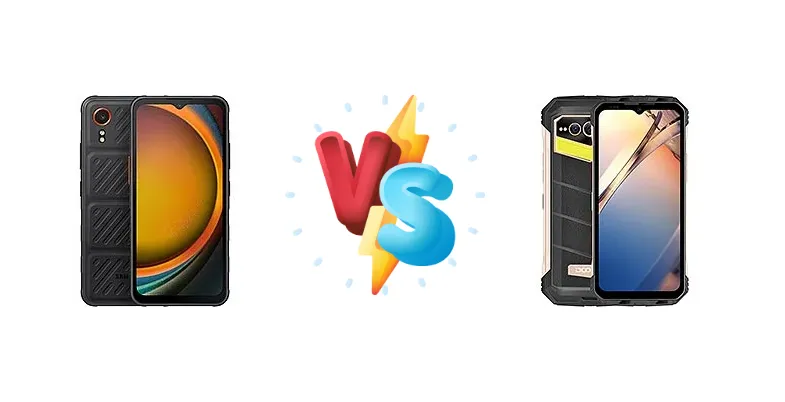
|
🏆 Quick Verdict
For the average user prioritizing long-term software support and a familiar interface, the Samsung Galaxy XCover7 is the safer bet. However, the Doogee S100 Pro offers a compelling value proposition with significantly faster 33W charging, making it ideal for those who frequently work in the field and need quick power-ups.
| PHONES | ||
|---|---|---|
| Phone Names | Samsung Galaxy XCover7 | Doogee S100 Pro |
| Network | ||
|---|---|---|
| 2G bands | GSM 850 / 900 / 1800 / 1900 | GSM 850 / 900 / 1800 / 1900 |
| 3G bands | HSDPA 850 / 900 / 1700(AWS) / 1900 / 2100 | HSDPA 800 / 850 / 900 / 1700(AWS) / 1900 / 2100 |
| 4G bands | 1, 2, 3, 4, 5, 7, 8, 12, 13, 17, 20, 26, 28, 32, 38, 40, 41, 66 | 1, 2, 3, 4, 5, 7, 8, 12, 13, 17, 18, 19, 20, 25, 26, 28, 34, 38, 39, 40, 41, 66, 71 |
| 5G bands | 1, 3, 5, 7, 8, 20, 26, 28, 38, 40, 41, 66, 71, 77, 78 SA/NSA | - |
| Speed | HSPA, LTE, 5G | HSPA, LTE |
| Technology | GSM / HSPA / LTE / 5G | GSM / CDMA / HSPA / LTE |
| Launch | ||
|---|---|---|
| Announced | 2024, January 10 | 2023, May 28 |
| Status | Available. Released 2024, January 23 | Available. Released 2023, June 01 |
| Body | ||
|---|---|---|
| Dimensions | 169 x 80.1 x 10.2 mm (6.65 x 3.15 x 0.40 in) | 178.5 x 83.1 x 27.3 mm (7.03 x 3.27 x 1.07 in) |
| SIM | · Nano-SIM + eSIM· Nano-SIM + Nano-SIM | Nano-SIM + Nano-SIM |
| Weight | 240 g (8.47 oz) | - |
| Display | ||
|---|---|---|
| Protection | Corning Gorilla Glass Victus+ | Corning Gorilla Glass 5 |
| Resolution | 1080 x 2408 pixels, 20:9 ratio (~400 ppi density) | 1080 x 2408 pixels, 20:9 ratio (~401 ppi density) |
| Size | 6.6 inches, 104.9 cm2 (~77.5% screen-to-body ratio) | 6.58 inches, 104.3 cm2 (~70.3% screen-to-body ratio) |
| Type | PLS LCD, 600 nits (HBM) | IPS LCD |
| Platform | ||
|---|---|---|
| CPU | Octa-core (2x2.2 GHz Cortex-A76 & 6x2.0 GHz Cortex-A55) | Octa-core (2x2.2 GHz Cortex-A76 & 6x2.0 GHz Cortex-A55) |
| Chipset | Mediatek Dimensity 6100+ (6 nm) | Mediatek Helio G99 (6 nm) |
| GPU | Mali-G57 MC2 | Mali-G57 MC2 |
| OS | Android 14, upgradable to Android 16, One UI 8 | Android 12 |
| Memory | ||
|---|---|---|
| Card slot | microSDXC (dedicated slot) | microSDXC (uses shared SIM slot) |
| Internal | 64GB 4GB RAM, 128GB 6GB RAM | 256GB 12GB RAM |
| Main Camera | ||
|---|---|---|
| Features | Dual-LED flash, HDR, panorama | Dual-LED flash, HDR, panorama |
| Single | 50 MP, f/1.8, (wide), 1/2.76", 0.64µm, PDAF | - |
| Triple | - | 108 MP, f/1.8, (wide), 1/1.52", 0.7µm, PDAF 20 MP, f/1.8, (night vision), 2 infrared night vision lights 16 MP, f/2.2, 130˚ (ultrawide) |
| Video | 1080p@30fps | 1440p, 1080p |
| Selfie camera | ||
|---|---|---|
| Single | 5 MP, f/2.0, (wide) | 32 MP, f/2.0, (wide), 1/2.8", 0.8µm |
| Video | Yes | 1440p, 1080p |
| Sound | ||
|---|---|---|
| 35mm jack | Yes | No |
| Loudspeaker | Yes | Yes, with stereo speakers |
| Comms | ||
|---|---|---|
| Bluetooth | 5.3, A2DP, LE | 5.0, A2DP, LE |
| NFC | Yes | Yes (market/region dependent) |
| Positioning | GPS, GLONASS, BDS, GALILEO, QZSS | GPS (L1+L5), GLONASS, BDS, GALILEO |
| Radio | No | FM radio |
| USB | USB Type-C 2.0, charging connector pins | USB Type-C 2.0, OTG |
| WLAN | Wi-Fi 802.11 a/b/g/n/ac, dual-band, Wi-Fi Direct | Wi-Fi 802.11 a/b/g/n/ac, dual-band |
| Features | ||
|---|---|---|
| Sensors | Accelerometer, gyro, proximity, compass | Fingerprint (side-mounted), accelerometer, gyro, proximity, compass |
| Battery | ||
|---|---|---|
| Charging | 15W wired | 33W wired |
| Type | Li-Po 4050 mAh, removable | 22000 mAh |
| Misc | ||
|---|---|---|
| Colors | Black | Black, Black/Silver, Black/Gold |
| Models | SM-G556B, SM-G556BU1, SM-G556B/DS | - |
| Price | € 225.00 / $ 289.99 | About 300 EUR |
| SAR EU | 1.08 W/kg (head) 1.10 W/kg (body) | - |
Samsung Galaxy XCover7
- Samsung Brand Reputation & Support
- Potential for Optimized Software
- Likely Better Long-Term Updates
- Slower 15W Charging
- Potentially Higher Price
- Limited Detailed Specs
Doogee S100 Pro
- Faster 33W Charging
- More Aggressive Pricing
- Good Value for Money
- Less Certain Software Support
- Doogee Brand Recognition
- Potentially Lower Build Quality
Display Comparison
Neither Samsung nor Doogee provide detailed display specifications beyond the basic panel type. However, both devices utilize 6nm chipsets, suggesting a similar level of graphical processing capability. The lack of high refresh rate panels on either device indicates a focus on power efficiency rather than visual fluidity. Bezels are likely to be substantial on both, given the ruggedized design prioritizing impact resistance over slim aesthetics. Color accuracy is likely to be tuned for practicality rather than color-critical work.
Camera Comparison
Detailed camera specifications are absent, but the focus on ruggedness suggests both phones prioritize durability over cutting-edge camera technology. We can assume both will feature a primary rear camera, but image quality will likely be adequate rather than exceptional. The absence of information regarding sensor size and optical image stabilization (OIS) suggests neither phone will excel in low-light photography. Any 2MP macro or depth sensors included are likely to offer limited practical benefit, serving primarily as marketing features. Image processing will likely differ, with Samsung leaning towards more saturated and contrast-rich images, while Doogee may opt for a more natural look.
Performance
Both the Samsung Galaxy XCover7 and the Doogee S100 Pro are powered by Mediatek’s 6nm octa-core processors, featuring the same CPU core configuration: 2x2.2 GHz Cortex-A76 and 6x2.0 GHz Cortex-A55. This means raw CPU performance will be nearly identical. The difference lies in the chipset itself – the Dimensity 6100+ in the XCover7 versus the Helio G99 in the S100 Pro. While the CPU is the same, the Dimensity 6100+ generally offers a more efficient GPU and improved AI processing capabilities. However, the real-world impact on typical rugged phone tasks (communication, navigation, basic apps) will be minimal. Thermal management will be crucial; the XCover7’s Samsung optimizations may provide slightly better sustained performance under heavy load, but neither phone is designed for intensive gaming.
Battery Life
The battery capacity for both devices is not specified. However, the Doogee S100 Pro’s 33W wired charging is a significant advantage over the Samsung Galaxy XCover7’s 15W charging. This translates to substantially faster recharge times, a critical benefit for users who rely on their phones throughout the day in remote locations. Even with a similar battery capacity, the S100 Pro will minimize downtime. The slower charging speed of the XCover7 means users will need to plan their charging around access to power for longer periods.
Buying Guide
Buy the Samsung Galaxy XCover7 if you need a rugged phone with guaranteed software updates, a well-established ecosystem, and a brand known for reliability. It’s ideal for enterprise deployments and users who value long-term support. Buy the Doogee S100 Pro if you prioritize fast charging, a lower price point, and aren’t as concerned about long-term software commitments. This phone is perfect for outdoor enthusiasts and those needing a durable device without breaking the bank.