
Samsung Galaxy XCover7 vs. Cat S75: A Deep Dive into Rugged Smartphone Performance
| Phones Images | |||||
|---|---|---|---|---|---|
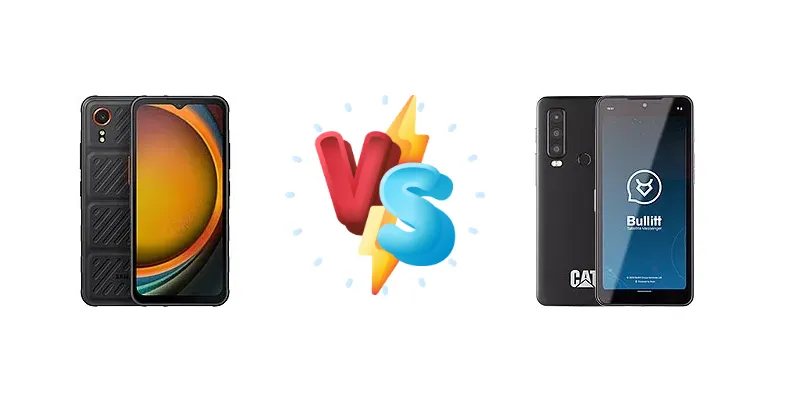
|
🏆 Quick Verdict
For most users prioritizing raw performance and future-proofing, the Cat S75 emerges as the stronger choice thanks to its superior Mediatek Dimensity 930 chipset. However, the XCover7 offers a compelling value proposition for those needing a reliable, rugged device without demanding peak processing power.
| PHONES | ||
|---|---|---|
| Phone Names | Samsung Galaxy XCover7 | Cat S75 |
| Network | ||
|---|---|---|
| 2G bands | GSM 850 / 900 / 1800 / 1900 | GSM 850 / 900 / 1800 / 1900 |
| 3G bands | HSDPA 850 / 900 / 1700(AWS) / 1900 / 2100 | HSDPA 850 / 900 / 1700(AWS) / 1900 / 2100 |
| 4G bands | 1, 2, 3, 4, 5, 7, 8, 12, 13, 17, 20, 26, 28, 32, 38, 40, 41, 66 | 1, 2, 3, 4, 5, 7, 8, 20, 28, 32, 38, 39, 40, 41 |
| 5G bands | 1, 3, 5, 7, 8, 20, 26, 28, 38, 40, 41, 66, 71, 77, 78 SA/NSA | 1, 2, 3, 5, 7, 8, 20, 23, 28, 38, 40, 41, 75, 77, 78, 255, 256 SA/NSA/Sub6/mmWave |
| Speed | HSPA, LTE, 5G | HSPA, LTE, 5G |
| Technology | GSM / HSPA / LTE / 5G | GSM / HSPA / LTE / 5G |
| Launch | ||
|---|---|---|
| Announced | 2024, January 10 | 2023, February 24 |
| Status | Available. Released 2024, January 23 | Available. Released 2023, July |
| Body | ||
|---|---|---|
| Build | - | Glass front (Gorilla Glass Victus), plastic back, aluminum frame |
| Dimensions | 169 x 80.1 x 10.2 mm (6.65 x 3.15 x 0.40 in) | 171 x 80 x 11.9 mm (6.73 x 3.15 x 0.47 in) |
| SIM | · Nano-SIM + eSIM· Nano-SIM + Nano-SIM | Nano-SIM + Nano-SIM |
| Weight | 240 g (8.47 oz) | 268 g (9.45 oz) |
| - | IP68/IP69 dust/water resistant (up to 5m for 35 min) Drop-to-concrete resistance from up to 1.8m MIL-STD-810H compliant | |
| Display | ||
|---|---|---|
| Protection | Corning Gorilla Glass Victus+ | Corning Gorilla Glass Victus |
| Resolution | 1080 x 2408 pixels, 20:9 ratio (~400 ppi density) | 1080 x 2408 pixels, 20:9 ratio (~400 ppi density) |
| Size | 6.6 inches, 104.9 cm2 (~77.5% screen-to-body ratio) | 6.6 inches, 104.9 cm2 (~76.7% screen-to-body ratio) |
| Type | PLS LCD, 600 nits (HBM) | IPS LCD, 120Hz |
| Platform | ||
|---|---|---|
| CPU | Octa-core (2x2.2 GHz Cortex-A76 & 6x2.0 GHz Cortex-A55) | Octa-core (2x2.2 GHz Cortex-A78 & 6x2.0 GHz Cortex-A55) |
| Chipset | Mediatek Dimensity 6100+ (6 nm) | Mediatek Dimensity 930 (6 nm) |
| GPU | Mali-G57 MC2 | IMG BXM-8-256 |
| OS | Android 14, upgradable to Android 16, One UI 8 | Android 12 |
| Memory | ||
|---|---|---|
| Card slot | microSDXC (dedicated slot) | microSDXC (uses shared SIM slot) |
| Internal | 64GB 4GB RAM, 128GB 6GB RAM | 128GB 6GB RAM |
| Main Camera | ||
|---|---|---|
| Features | Dual-LED flash, HDR, panorama | Dual-LED flash, HDR, panorama |
| Single | 50 MP, f/1.8, (wide), 1/2.76", 0.64µm, PDAF | 8 MP, f/2.0, (wide) |
| Triple | - | 50 MP, f/1.8, (wide), PDAF 8 MP, f/2.2, (ultrawide) 2 MP (macro) |
| Video | 1080p@30fps | 1080p@30fps |
| Selfie camera | ||
|---|---|---|
| Single | 5 MP, f/2.0, (wide) | 8 MP, f/2.0, (wide) |
| Video | Yes | 1080p@30fps |
| Sound | ||
|---|---|---|
| 3.5mm jack | - | No |
| 35mm jack | Yes | No |
| Loudspeaker | Yes | Yes |
| Comms | ||
|---|---|---|
| Bluetooth | 5.3, A2DP, LE | 5.1, A2DP, LE |
| NFC | Yes | Yes |
| Positioning | GPS, GLONASS, BDS, GALILEO, QZSS | GPS (L1+L5), GALILEO, GLONASS, BDS |
| Radio | No | Unspecified |
| USB | USB Type-C 2.0, charging connector pins | USB Type-C 2.0, OTG |
| WLAN | Wi-Fi 802.11 a/b/g/n/ac, dual-band, Wi-Fi Direct | Wi-Fi 802.11 a/b/g/n/ac, dual-band |
| Features | ||
|---|---|---|
| Sensors | Accelerometer, gyro, proximity, compass | Fingerprint (rear-mounted), accelerometer, gyro, proximity, compass |
| - | Emergency SOS via satellite (Bullitt Satellite Connect service) | |
| Battery | ||
|---|---|---|
| Charging | 15W wired | 15W wireless |
| Type | Li-Po 4050 mAh, removable | Li-Po 5000 mAh |
| Misc | ||
|---|---|---|
| Colors | Black | Black |
| Models | SM-G556B, SM-G556BU1, SM-G556B/DS | BM1S1B |
| Price | € 225.00 / $ 289.99 | About 600 EUR |
| SAR EU | 1.08 W/kg (head) 1.10 W/kg (body) | - |
Samsung Galaxy XCover7
- Potentially lower price point
- Samsung Knox security platform
- Efficient processor for extended battery life during basic tasks
- Less powerful processor for demanding applications
- No wireless charging
- Slower app loading times
Cat S75
- More powerful processor for smoother multitasking
- Wireless charging convenience
- Superior ISP for potentially better image quality
- Potentially higher price
- Dimensity 930 may generate more heat under sustained load
- Battery life may be comparable despite efficiency gains
Display Comparison
Neither Samsung nor Cat provide detailed display specs beyond resolution. However, both likely utilize IPS LCD panels given the rugged focus – OLEDs are more susceptible to damage. The key difference lies elsewhere. The XCover7’s performance is geared towards efficiency, while the S75’s Dimensity 930 suggests a potentially higher refresh rate capability, though unconfirmed. Bezels are expected to be substantial on both for impact protection, and color accuracy will likely be tuned for outdoor visibility rather than color-critical work.
Camera Comparison
Detailed camera specs are lacking for both devices. However, the focus on ruggedness suggests a prioritization of durability over cutting-edge camera technology. The S75’s Dimensity 930 includes a more powerful ISP (Image Signal Processor) than the 6100+, potentially leading to better image processing, especially in low-light conditions. While both likely feature a standard wide and potentially ultrawide lens, the S75’s superior processing power will likely result in more detailed and dynamic range-rich photos. The presence of OIS (Optical Image Stabilization) is unknown for both, but would be a significant advantage for video recording.
Performance
The core distinction here is the chipset. The Cat S75’s Mediatek Dimensity 930, built on a 6nm process, features Cortex-A78 cores, a step up in architecture from the XCover7’s Dimensity 6100+ and its Cortex-A76 cores. While both are 6nm, the A78 offers improved single-core performance, translating to snappier app launches and smoother multitasking. The XCover7’s Dimensity 6100+ prioritizes efficiency, making it suitable for sustained tasks but falling behind in peak performance. Both share 6x Cortex-A55 efficiency cores, but the S75’s overall CPU architecture provides a noticeable advantage. RAM configurations are unknown, but faster LPDDR5x RAM would further benefit the S75.
Battery Life
Both devices offer 15W charging, a relatively slow rate by modern standards. The Cat S75 differentiates itself with 15W *wireless* charging, a convenience the XCover7 lacks. Battery capacity is unspecified for both, but the Dimensity 930 is generally more power-efficient than the 6100+ under heavy load. This means the S75 could potentially offer comparable or even better battery life despite a similar or smaller capacity. The wireless charging capability of the S75 provides flexibility, especially in environments where a cable connection is inconvenient.
Buying Guide
Buy the Samsung Galaxy XCover7 if you need a cost-effective, dependable rugged phone for basic communication, field work requiring Samsung’s Knox security platform, and aren’t heavily reliant on demanding applications. Buy the Cat S75 if you prioritize smoother multitasking, faster app loading times, and the convenience of wireless charging, making it ideal for users who frequently use resource-intensive apps or rely on on-the-go power solutions.