
Samsung Galaxy XCover7 Pro vs. Ulefone Armor 11 5G: Which Rugged Phone Reigns Supreme?
| Phones Images | |||||
|---|---|---|---|---|---|
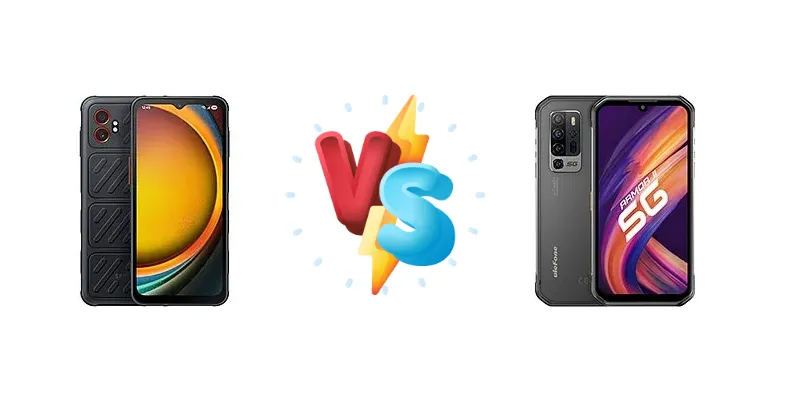
|
🏆 Quick Verdict
For most users prioritizing long-term software support, a smoother user experience, and superior battery endurance, the Samsung Galaxy XCover7 Pro is the better choice. While the Ulefone Armor 11 5G offers faster charging and a lower price point, it compromises on chipset efficiency and software updates.
| PHONES | ||
|---|---|---|
| Phone Names | Samsung Galaxy XCover7 Pro | Ulefone Armor 11 5G |
| Network | ||
|---|---|---|
| 2G bands | GSM 850 / 900 / 1800 / 1900 | GSM 850 / 900 / 1800 / 1900 |
| 3G bands | HSDPA 850 / 900 / 1700(AWS) / 1900 / 2100 | HSDPA 850 / 900 / 1700(AWS) / 1900 / 2100 |
| 4G bands | 1, 2, 3, 4, 5, 7, 8, 12, 13, 17, 20, 25, 26, 28, 32, 38, 40, 41, 66, 68 | 1, 2, 3, 4, 5, 7, 8, 12, 13, 17, 18, 19, 20, 25, 26, 28, 34, 38, 39, 40, 41, 66 |
| 5G bands | 1, 3, 5, 7, 8, 20, 28, 38, 40, 41, 66, 77, 78 SA/NSA | 1, 3, 5, 8, 20, 28, 38, 41, 77, 78, 79 SA/NSA |
| Speed | HSPA, LTE, 5G | HSPA, LTE, 5G |
| Technology | GSM / HSPA / LTE / 5G | GSM / CDMA / HSPA / EVDO / LTE / 5G |
| - | CDMA2000 1xEV-DO | |
| Launch | ||
|---|---|---|
| Announced | 2025, April 14 | 2021, February 18 |
| Status | Available. Released 2025, May 07 | Available. Released 2021, March 08 |
| Body | ||
|---|---|---|
| Build | - | Front glass, aluminum back with rubber, aluminum frame |
| Dimensions | 168.6 x 79.9 x 10.2 mm (6.64 x 3.15 x 0.40 in) | 163.8 x 81.6 x 14.2 mm (6.45 x 3.21 x 0.56 in) |
| SIM | · Nano-SIM + eSIM· Nano-SIM + Nano-SIM | Nano-SIM + Nano-SIM |
| Weight | 240 g (8.47 oz) | 295 g (10.41 oz) |
| - | IP68 dust/water resistant (up to 1.5m for 30 min) Drop-to-concrete resistance from up to 1.2m MIL-STD-810G compliant | |
| Display | ||
|---|---|---|
| Protection | Corning Gorilla Glass Victus+, Mohs level 5 | Oleophobic coating |
| Resolution | 1080 x 2408 pixels, 20:9 ratio (~400 ppi density) | 720 x 1560 pixels, 19.5:9 ratio (~282 ppi density) |
| Size | 6.6 inches, 104.9 cm2 (~77.9% screen-to-body ratio) | 6.1 inches, 91.3 cm2 (~68.3% screen-to-body ratio) |
| Type | PLS LCD, 120Hz | IPS LCD |
| Platform | ||
|---|---|---|
| CPU | Octa-core (1x2.5 GHz Cortex-A720 & 3x2.4 GHz Cortex-A720 & 4x1.8 GHz Cortex-A520) | Octa-core (4x2.0 GHz Cortex-A76 & 4x2.0 GHz Cortex-A55) |
| Chipset | Qualcomm SM7635 Snapdragon 7s Gen 3 (4 nm) | Mediatek Dimensity 800 (7 nm) |
| GPU | Adreno 810 | Mali-G57 MP4 |
| OS | Android 15, upgradable to Android 16, One UI 8 | Android 10, planned upgrade to Android 11 |
| Memory | ||
|---|---|---|
| Card slot | microSDXC (dedicated slot) | No |
| Internal | 128GB 6GB RAM, 256GB 8GB RAM | 256GB 8GB RAM |
| - | UFS 2.1 | |
| Main Camera | ||
|---|---|---|
| Dual | 50 MP, f/1.8, (wide), 1/2.76", 0.64µm, PDAF 8 MP, f/2.2, (ultrawide) | - |
| Features | Dual-LED flash, HDR, panorama | Dual-LED dual-tone flash, HDR, panorama |
| Penta | - | 48 MP, f/1.8, 26mm (wide), 1/2.0", 0.8µm, PDAF 13 MP, f/2.4, 125˚ (ultrawide) 20 MP, f/1.8, (night vision), 1/2.78", 1.0µm 2 MP (macro) Auxiliary lens |
| Single | - | 16 MP, f/2.0 |
| Video | 4K@30fps, 1080p@30fps | 4K@30fps, 1080p@30fps |
| Selfie camera | ||
|---|---|---|
| Features | - | HDR, panorama |
| Single | 13 MP, f/2.2, (wide) | 16 MP, f/2.0 |
| Video | 1080p@30fps | 1080p@30fps |
| Sound | ||
|---|---|---|
| 3.5mm jack | - | Yes |
| 35mm jack | No | Yes |
| Loudspeaker | Yes, with stereo speakers (with Dolby Atmos) | Yes |
| Comms | ||
|---|---|---|
| Bluetooth | 5.4, A2DP, LE | 5.0, A2DP, LE |
| NFC | Yes | Yes |
| Positioning | GPS, GLONASS, BDS, GALILEO, QZSS | GPS, GLONASS, GALILEO, BDS |
| Radio | No | FM radio, RDS, recording |
| USB | USB Type-C 3.2, charging connector pins | USB Type-C 2.0, OTG |
| WLAN | Wi-Fi 802.11 a/b/g/n/ac/6e, tri-band, Wi-Fi Direct | Wi-Fi 802.11 a/b/g/n/ac, Wi-Fi Direct |
| Features | ||
|---|---|---|
| Sensors | Fingerprint (side-mounted), accelerometer, gyro, proximity, compass | Fingerprint (side-mounted), accelerometer, gyro, proximity, compass, baroceptor |
| Battery | ||
|---|---|---|
| Charging | 15W wired | 18W wired 10W wireless |
| Type | Li-Po 4350 mAh, removable | Li-Po 5200 mAh |
| Misc | ||
|---|---|---|
| Colors | Black | Black |
| Models | SM-G766B, SM-G766BU1, SM-G766B/DS | - |
| Price | $ 576.99 / € 437.99 | About 480 EUR |
| SAR EU | 0.81 W/kg (head) 1.03 W/kg (body) | - |
| EU LABEL | ||
|---|---|---|
| Battery | 38:15h endurance, 2000 cycles | - |
| Energy | Class B | - |
| Free fall | Class A (270 falls) | - |
| Repairability | Class B | - |
Samsung Galaxy XCover7 Pro
- Superior chipset efficiency (Snapdragon 7s Gen 3)
- Longer battery endurance (38:15h)
- Guaranteed software updates from Samsung
- Slower charging speed (15W)
- Potentially higher price point
Ulefone Armor 11 5G
- Faster wired charging (18W)
- Wireless charging support (10W)
- More affordable price
- Less efficient chipset (Dimensity 800)
- Shorter battery life
- Potentially limited software updates
Display Comparison
Display specifications are absent from the provided data, but considering the XCover7 Pro’s positioning, it likely features an LCD panel optimized for outdoor visibility. The Armor 11 5G, typical of Ulefone, may prioritize a larger screen size. The key difference will likely be in panel quality and color accuracy, where Samsung typically excels. The XCover7 Pro’s potential for a higher peak brightness, coupled with Samsung’s display calibration, would be advantageous for users working in direct sunlight. The Armor 11 5G may offer a slightly larger canvas, but at the expense of color fidelity.
Camera Comparison
Camera details are limited, but the focus should be on the main sensor capabilities. Without specific sensor sizes, it’s difficult to make a definitive statement. However, Samsung generally prioritizes image processing and software optimization, potentially giving the XCover7 Pro an edge in image quality, particularly in challenging lighting conditions. The absence of details regarding Optical Image Stabilization (OIS) on either device makes it difficult to assess low-light performance. The 2MP macro cameras found on many rugged phones, including likely the Armor 11 5G, are often of limited practical use.
Performance
The Samsung Galaxy XCover7 Pro’s Qualcomm SM7635 Snapdragon 7s Gen 3 (4nm) represents a significant architectural advantage over the Ulefone Armor 11 5G’s Mediatek Dimensity 800 (7nm). The 4nm process node of the Snapdragon chip translates to superior power efficiency and thermal management. While both are octa-core CPUs, the Snapdragon’s Cortex-A720 cores are more modern and efficient than the Armor 11 5G’s Cortex-A76 cores. This means the XCover7 Pro will likely deliver smoother multitasking, faster app loading times, and less throttling during sustained workloads. The Armor 11 5G’s Dimensity 800 is still capable, but it will struggle to match the Snapdragon’s sustained performance.
Battery Life
The Samsung Galaxy XCover7 Pro boasts an impressive 38:15h endurance rating, indicating exceptional battery life. While the Ulefone Armor 11 5G offers 18W wired and 10W wireless charging, the XCover7 Pro’s superior chipset efficiency and potentially larger battery capacity (not specified) contribute to its longer runtime. The 15W charging on the XCover7 Pro is slower than the Armor 11 5G’s 18W wired, but the difference is offset by the XCover7 Pro’s significantly longer battery life. The Armor 11 5G’s wireless charging is a convenience feature, but the slower charging speed makes it less practical for quick top-ups.
Buying Guide
Buy the Samsung Galaxy XCover7 Pro if you need a rugged phone with guaranteed software updates, a refined user experience, and exceptional battery life for extended fieldwork. It’s ideal for professionals relying on consistent performance and a trusted brand. Buy the Ulefone Armor 11 5G if you prioritize value and faster charging speeds, and are comfortable with a less polished software experience and potentially shorter update cycles. It’s a strong contender for users on a tighter budget who still require a durable device.