
Samsung Galaxy XCover FieldPro vs. Ulefone Armor 9E: Which Rugged Phone Reigns Supreme?
| Phones Images | |||||
|---|---|---|---|---|---|
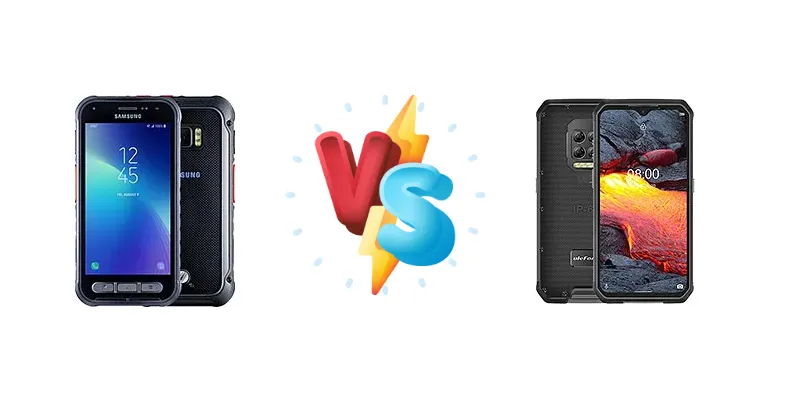
|
🏆 Quick Verdict
For users prioritizing sustained performance and a more refined software experience, the Samsung Galaxy XCover FieldPro is the better choice, despite its age. The Exynos 9810 offers a performance edge, particularly in demanding tasks. However, the Ulefone Armor 9E presents a compelling value proposition for budget-conscious buyers who need a durable phone and don't require top-tier processing power.
| PHONES | ||
|---|---|---|
| Phone Names | Samsung Galaxy XCover FieldPro | Ulefone Armor 9E |
| Network | ||
|---|---|---|
| 2G bands | GSM 850 / 900 / 1800 / 1900 | GSM 850 / 900 / 1800 / 1900 |
| 3G bands | HSDPA 850 / 900 / 1700(AWS) / 1900 / 2100 - USA | HSDPA 850 / 900 / 1700(AWS) / 1900 / 2100 |
| 4G bands | 1, 2, 3, 4, 5, 7, 12, 14, 20, 29, 30, 38, 39, 40, 41, 66 - USA | 1, 2, 3, 4, 5, 7, 8, 12, 13, 17, 18, 19, 20, 25, 26, 28, 34, 38, 39, 40, 41, 66 |
| Speed | HSPA 42.2/5.76 Mbps, LTE (3CA) Cat11 600/75 Mbps | HSPA 42.2/11.5 Mbps, LTE Cat12 600/150 Mbps |
| Technology | GSM / HSPA / LTE | GSM / CDMA / HSPA / EVDO / LTE |
| - | CDMA2000 1xEV-DO | |
| Launch | ||
|---|---|---|
| Announced | 2019, October. Released 2020, April 06 | 2020, September 08. Released 2020, September 08 |
| Status | Discontinued | Discontinued |
| Body | ||
|---|---|---|
| Build | - | Front glass, aluminum back with rubber, aluminum frame |
| Dimensions | 158.5 x 80.7 x 14.2 mm (6.24 x 3.18 x 0.56 in) | 168.2 x 82 x 15 mm (6.62 x 3.23 x 0.59 in) |
| SIM | Single SIM (Micro-SIM) or Dual SIM (Micro-SIM, dual stand-by) | Nano-SIM + Nano-SIM |
| Weight | 256 g (9.03 oz) | 324 g (11.43 oz) |
| IP68 dust/water resistant (up to 1.5m for 30 mins) MIL-STD-810G compliant DGUV112-139 certified Emergency PTT key | IP68/IP69K dust/water resistant (up to 1.5m for 30 min) Drop-to-concrete resistance from up to 1.2m MIL-STD-810G compliant | |
| Display | ||
|---|---|---|
| Protection | - | Scratch-resistant glass, oleophobic coating |
| Resolution | 1440 x 2560 pixels, 16:9 ratio (~576 ppi density) | 1080 x 2340 pixels, 19.5:9 ratio (~409 ppi density) |
| Size | 5.1 inches, 71.7 cm2 (~56.1% screen-to-body ratio) | 6.3 inches, 97.4 cm2 (~70.6% screen-to-body ratio) |
| Type | IPS LCD | IPS LCD |
| Platform | ||
|---|---|---|
| CPU | Octa-core (4x2.7 GHz Mongoose M3 & 4x1.8 GHz Cortex-A55) | Octa-core (2x2.2 GHz Cortex-A75 & 6x2.0 GHz Cortex-A55) |
| Chipset | Exynos 9810 (10 nm) | Mediatek MT6779 Helio P90 (12 nm) |
| GPU | Mali-G72 MP18 | PowerVR GM9446 |
| OS | Android 8.0 (Oreo) | Android 10 |
| Memory | ||
|---|---|---|
| Card slot | microSDXC (dedicated slot) | microSDXC (uses shared SIM slot) |
| Internal | 64GB 4GB RAM | 128GB 8GB RAM |
| UFS 2.1 | UFS 2.1 | |
| Main Camera | ||
|---|---|---|
| Features | Triple-LED flash, HDR, panorama | Quad-LED flash, HDR, panorama |
| Quad | - | 64 MP, f/1.9, 26mm (wide), 1/1.72", 0.8µm, PDAF 8 MP, f/2.4, 100˚ (ultrawide), 1/4.0", 1.12µm 2 MP (macro) Auxiliary lens |
| Single | 12 MP, f/1.5-2.4, (wide), 1/2.55", 1.4µm, PDAF | - |
| Video | 1080p@30fps | 4K@30fps, 1080p@30fps |
| Selfie camera | ||
|---|---|---|
| Features | HDR | HDR, panorama |
| Single | 8 MP, f/1.7 | 8 MP, f/2.2 |
| Video | 1080p@30fps | 1080p@30fps |
| Sound | ||
|---|---|---|
| 3.5mm jack | Yes | Yes |
| 35mm jack | Yes | Yes |
| Loudspeaker | Yes, with dual speakers | Yes |
| Comms | ||
|---|---|---|
| Bluetooth | 5.0, A2DP, LE | 5.0, A2DP, LE |
| NFC | Yes | Yes |
| Positioning | GPS, GLONASS, GALILEO | GPS, GLONASS, GALILEO, BDS |
| Radio | FM radio | FM radio, RDS, recording |
| USB | USB Type-C 2.0 | USB Type-C 2.0, OTG, accessory connector |
| WLAN | Wi-Fi 802.11 a/b/g/n/ac/6/i/r, dual-band, Wi-Fi Direct | Wi-Fi 802.11 a/b/g/n/ac, Wi-Fi Direct |
| Features | ||
|---|---|---|
| Sensors | Fingerprint (rear-mounted), accelerometer, gyro, proximity, compass, barometer | Fingerprint (side-mounted), accelerometer, gyro, proximity, compass, coulombmeter |
| - | Endoscope mount (camera sold separately) | |
| Battery | ||
|---|---|---|
| Charging | - | 18W wired |
| Type | Li-Po 4500 mAh, removable | Li-Po 6600 mAh |
| Misc | ||
|---|---|---|
| Colors | Black | Black |
| Models | SM-G889F, SM-G889A | - |
| Price | About 1020 EUR | About 290 EUR |
| SAR | 1.20 W/kg (head) 0.67 W/kg (body) | - |
| SAR EU | 0.80 W/kg (head) 1.37 W/kg (body) | - |
Samsung Galaxy XCover FieldPro
- More powerful processor (Exynos 9810)
- Likely superior camera image quality
- Samsung’s brand reputation and software support
- Potentially higher price
- Unknown battery capacity and charging speed
Ulefone Armor 9E
- More affordable price point
- 18W fast charging
- Potentially better battery life due to efficient chipset
- Less powerful processor (Helio P90)
- Likely lower camera quality
- Less refined software experience
Display Comparison
Neither Samsung nor Ulefone provide detailed display specifications beyond basic resolution. However, the FieldPro, being a Samsung product, likely benefits from the company’s display expertise, potentially offering better color accuracy and viewing angles. The Armor 9E’s display is likely a standard IPS LCD. The lack of high refresh rate support on either device is typical for rugged phones, prioritizing battery life. The FieldPro’s panel, while likely similar in resolution, may have a slight edge in brightness and outdoor visibility due to Samsung’s display technology.
Camera Comparison
Detailed camera specs are unavailable for both devices. However, given the market positioning, the FieldPro likely features a more sophisticated camera system with better image processing. The Armor 9E likely relies on software enhancements to compensate for potentially lower-quality sensors. The presence of a 2MP macro camera on the Armor 9E is largely a marketing gimmick, offering limited practical benefit. The FieldPro’s camera, while not flagship-level by today’s standards, will likely deliver more consistent and detailed images, especially in challenging lighting conditions.
Performance
The core difference lies in the chipsets. The Samsung Galaxy XCover FieldPro’s Exynos 9810, fabricated on a 10nm process, features a custom Mongoose M3 core alongside Cortex-A55 cores, offering strong multi-core performance. The Ulefone Armor 9E’s MediaTek Helio P90 (12nm) utilizes a dual-core Cortex-A75 setup and six Cortex-A55 cores. While the Helio P90’s 12nm process is more efficient, the Exynos 9810’s architecture and higher clock speeds (2.7GHz vs 2.2GHz) give it a significant advantage in CPU-intensive tasks. The Exynos 9810 also boasts a more powerful GPU, translating to better gaming performance. The Armor 9E’s Helio P90 is adequate for everyday tasks, but will struggle with demanding games or applications.
Battery Life
Battery capacity is not specified for either device. However, the Ulefone Armor 9E’s inclusion of 18W wired charging is a notable advantage. The FieldPro’s charging speed is unknown, but likely slower. While a larger battery capacity is always preferable, the Helio P90’s more efficient 12nm process in the Armor 9E could translate to comparable or even better real-world battery life, especially with moderate usage. The 18W charging will also allow the Armor 9E to top up faster when needed.
Buying Guide
Buy the Samsung Galaxy XCover FieldPro if you need a rugged phone with a proven track record of performance, a more polished user interface, and are willing to pay a premium for it. This phone is ideal for professionals in field services, construction management, or anyone who frequently works in harsh environments and relies on consistent application performance. Buy the Ulefone Armor 9E if you prefer a significantly more affordable rugged option, prioritize battery life with its 18W charging, and are comfortable with a less refined software experience. This is a great choice for outdoor enthusiasts, hikers, or those needing a durable backup phone.