
Samsung Galaxy XCover FieldPro vs. Doogee S96 Pro: A Rugged Smartphone Showdown
| Phones Images | |||||
|---|---|---|---|---|---|
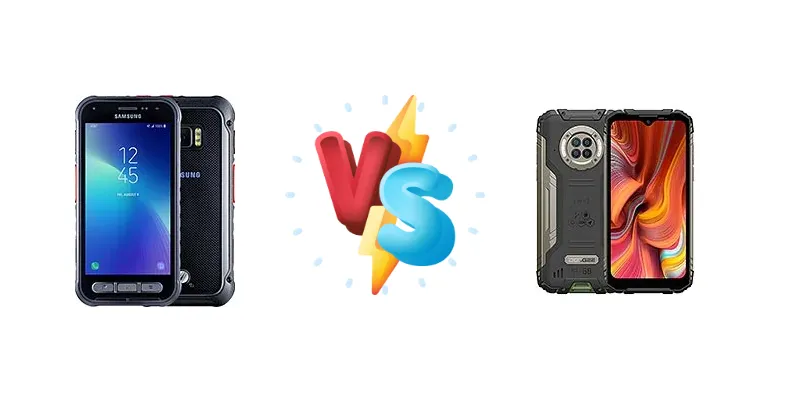
|
🏆 Quick Verdict
For users prioritizing sustained performance and a more established brand reputation, the Samsung Galaxy XCover FieldPro is the better choice. While the Exynos 9810 is older, its architecture offers a more balanced experience than the Doogee S96 Pro’s Helio G90, especially under prolonged load. However, the Doogee S96 Pro offers faster charging and a potentially lower price point.
| PHONES | ||
|---|---|---|
| Phone Names | Samsung Galaxy XCover FieldPro | Doogee S96 Pro |
| Network | ||
|---|---|---|
| 2G bands | GSM 850 / 900 / 1800 / 1900 | GSM 850 / 900 / 1800 / 1900 |
| 3G bands | HSDPA 850 / 900 / 1700(AWS) / 1900 / 2100 - USA | HSDPA 800 / 850 / 900 / 1700(AWS) / 1900 / 2100 |
| 4G bands | 1, 2, 3, 4, 5, 7, 12, 14, 20, 29, 30, 38, 39, 40, 41, 66 - USA | 1, 2, 3, 4, 5, 7, 8, 12, 13, 17, 18, 19, 20, 25, 26, 28, 38, 40, 66 |
| Speed | HSPA 42.2/5.76 Mbps, LTE (3CA) Cat11 600/75 Mbps | HSPA, LTE |
| Technology | GSM / HSPA / LTE | GSM / CDMA / HSPA / LTE |
| Launch | ||
|---|---|---|
| Announced | 2019, October. Released 2020, April 06 | 2020, October 26. Released 2020, November |
| Status | Discontinued | Discontinued |
| Body | ||
|---|---|---|
| Dimensions | 158.5 x 80.7 x 14.2 mm (6.24 x 3.18 x 0.56 in) | 167 x 81.4 x 15.5 mm (6.57 x 3.20 x 0.61 in) |
| SIM | Single SIM (Micro-SIM) or Dual SIM (Micro-SIM, dual stand-by) | Nano-SIM + Nano-SIM |
| Weight | 256 g (9.03 oz) | 310 g (10.93 oz) |
| IP68 dust/water resistant (up to 1.5m for 30 mins) MIL-STD-810G compliant DGUV112-139 certified Emergency PTT key | - | |
| Display | ||
|---|---|---|
| Protection | - | Corning Gorilla Glass |
| Resolution | 1440 x 2560 pixels, 16:9 ratio (~576 ppi density) | 720 x 1520 pixels, 19:9 ratio (~270 ppi density) |
| Size | 5.1 inches, 71.7 cm2 (~56.1% screen-to-body ratio) | 6.22 inches, 96.6 cm2 (~71.0% screen-to-body ratio) |
| Type | IPS LCD | IPS LCD |
| Platform | ||
|---|---|---|
| CPU | Octa-core (4x2.7 GHz Mongoose M3 & 4x1.8 GHz Cortex-A55) | Octa-core (2x2.0 GHz Cortex-A76 & 6x2.0 GHz Cortex-A55) |
| Chipset | Exynos 9810 (10 nm) | Mediatek MT6785 Helio G90 (12 nm) |
| GPU | Mali-G72 MP18 | Mali-G76 MC4 |
| OS | Android 8.0 (Oreo) | Android 10 |
| Memory | ||
|---|---|---|
| Card slot | microSDXC (dedicated slot) | microSDXC (dedicated slot) |
| Internal | 64GB 4GB RAM | 128GB 8GB RAM |
| UFS 2.1 | - | |
| Main Camera | ||
|---|---|---|
| Features | Triple-LED flash, HDR, panorama | Quad-LED flash, HDR, panorama |
| Quad | - | 48 MP, f/1.8, (wide), PDAF 8 MP, f/2.2, 130˚, (ultrawide) 20 MP, f/2.8, (night vision), 4 infrared night vision lights 2 MP (macro) |
| Single | 12 MP, f/1.5-2.4, (wide), 1/2.55", 1.4µm, PDAF | - |
| Video | 1080p@30fps | 1080p |
| Selfie camera | ||
|---|---|---|
| Features | HDR | - |
| Single | 8 MP, f/1.7 | 16 MP, f/2.0, (wide) |
| Video | 1080p@30fps | 1080p |
| Sound | ||
|---|---|---|
| 3.5mm jack | Yes | - |
| 35mm jack | Yes | Yes |
| Loudspeaker | Yes, with dual speakers | Yes |
| Comms | ||
|---|---|---|
| Bluetooth | 5.0, A2DP, LE | 5.0, A2DP, LE |
| NFC | Yes | Yes |
| Positioning | GPS, GLONASS, GALILEO | GPS, GLONASS, BDS, GALILEO |
| Radio | FM radio | FM radio |
| USB | USB Type-C 2.0 | USB Type-C 2.0, OTG |
| WLAN | Wi-Fi 802.11 a/b/g/n/ac/6/i/r, dual-band, Wi-Fi Direct | Wi-Fi 802.11 a/b/g/n/ac, dual-band |
| Features | ||
|---|---|---|
| Sensors | Fingerprint (rear-mounted), accelerometer, gyro, proximity, compass, barometer | Fingerprint (side-mounted), accelerometer, gyro, proximity, compass |
| Battery | ||
|---|---|---|
| Charging | - | 24W wired 10W wireless |
| Type | Li-Po 4500 mAh, removable | 6350 mAh |
| Misc | ||
|---|---|---|
| Colors | Black | Black, Orange, Green |
| Models | SM-G889F, SM-G889A | - |
| Price | About 1020 EUR | About 280 EUR |
| SAR | 1.20 W/kg (head) 0.67 W/kg (body) | - |
| SAR EU | 0.80 W/kg (head) 1.37 W/kg (body) | - |
Samsung Galaxy XCover FieldPro
- Potentially more sustained performance due to Exynos 9810 architecture.
- Established brand reputation and software support.
- Likely superior image processing capabilities.
- Slower charging speeds.
- No wireless charging support.
Doogee S96 Pro
- Faster 24W wired and 10W wireless charging.
- Helio G90 offers strong burst performance for gaming.
- Potentially lower price point.
- Helio G90 may throttle under sustained load.
- Less established brand and potentially limited software updates.
Display Comparison
Context data lacks display specifics for both devices. However, given the XCover FieldPro’s focus on outdoor visibility, it likely features a higher peak brightness than the S96 Pro. The S96 Pro, being a newer device, *may* benefit from a more modern panel with improved color accuracy. Both are likely to utilize durable glass, given their rugged nature, but specifics like Gorilla Glass version are unknown. The absence of high refresh rate panels is expected in this segment, prioritizing battery life and durability.
Camera Comparison
Without detailed camera specs, a direct comparison is difficult. However, the XCover FieldPro, being a Samsung device, likely benefits from superior image processing algorithms. The S96 Pro may offer more megapixels, but sensor size and lens quality are crucial. The absence of information regarding OIS on either device suggests a reliance on software stabilization. The inclusion of a 2MP macro camera on the S96 Pro is likely a marketing feature with limited practical benefit, given its small sensor size and low resolution.
Performance
The Samsung Galaxy XCover FieldPro’s Exynos 9810 (10nm) utilizes a custom Mongoose M3 core alongside Cortex-A55s, offering a complex architecture designed for high performance. The Doogee S96 Pro’s Helio G90 (12nm) employs a more conventional Cortex-A76/A55 configuration. While the G90’s 12nm process is technically more advanced, the Exynos 9810’s architecture and potentially superior thermal design (given Samsung’s experience) likely result in more sustained performance. The G90 excels in burst performance, beneficial for gaming, but may throttle more quickly under prolonged stress. The Exynos 9810's 4x2.7 GHz cores provide a significant clock speed advantage over the G90's 2x2.0 GHz cores.
Battery Life
The Doogee S96 Pro’s 24W wired and 10W wireless charging capabilities provide a significant advantage over the XCover FieldPro, which lacks wireless charging and likely has slower wired charging speeds. While battery capacity is unknown for both, the Helio G90’s 12nm process *could* translate to slightly better power efficiency. However, the Exynos 9810’s architectural optimizations may offset this advantage. The S96 Pro’s faster charging is particularly valuable for users who need to quickly replenish their battery in the field.
Buying Guide
Buy the Samsung Galaxy XCover FieldPro if you need a phone that can handle demanding tasks like data logging, remote access, or extended navigation without significant performance drops. Its established ecosystem and potentially better software support are also key advantages. Buy the Doogee S96 Pro if you prioritize fast charging, enjoy mobile gaming, and are comfortable with a less-known brand offering a more aggressive price-to-performance ratio.