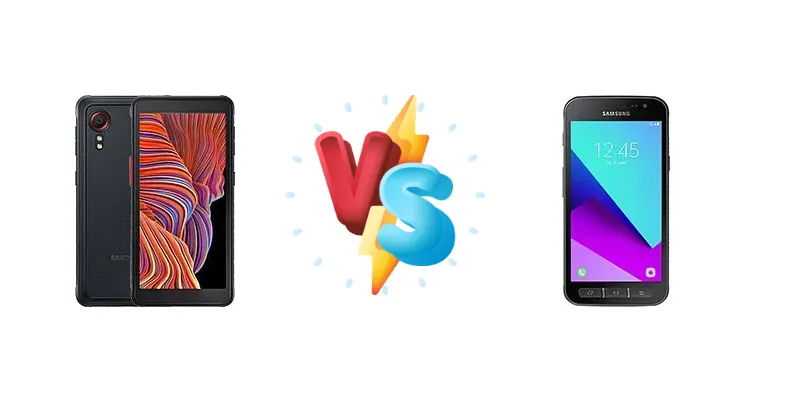
The Samsung Galaxy XCover line caters to a specific niche: users needing a durable, reliable smartphone for demanding environments. The XCover 4 has been a stalwart in this space, but the XCover 5 introduces a newer chipset and subtle refinements. This comparison dissects the differences to determine which device offers the best value for those prioritizing robustness and longevity.
🏆 Quick Verdict
For most users, the Samsung Galaxy XCover 5 is the superior choice. The Exynos 850 chipset delivers a significant performance boost over the XCover 4’s Exynos 7570, enabling smoother multitasking and app usage. While both prioritize durability, the XCover 5’s improved processing power justifies the price difference.
| Network |
|---|
| 2G bands | GSM 850 / 900 / 1800 / 1900 | GSM 850 / 900 / 1800 / 1900 |
| 3G bands | HSDPA 850 / 900 / 1700(AWS) / 1900 / 2100 | HSDPA 850 / 900 / 1900 / 2100 |
| 4G bands | 1, 2, 3, 4, 5, 7, 8, 12, 17, 20, 26, 28, 38, 40, 41, 66 | 1, 3, 5, 7, 8, 20, 38, 40 |
| Speed | HSPA, LTE | HSPA 42.2/5.76 Mbps, LTE Cat4 150/50 Mbps |
| Technology | GSM / HSPA / LTE | GSM / HSPA / LTE |
| Launch |
|---|
| Announced | 2021, March 04 | 2017, March. Released 2017, April |
| Status | Available. Released 2021, March 12 | Discontinued |
| Body |
|---|
| Dimensions | 147.1 x 71.6 x 9.2 mm (5.79 x 2.82 x 0.36 in) | 146.2 x 73.3 x 9.7 mm (5.76 x 2.89 x 0.38 in) |
| SIM | · Nano-SIM· Nano-SIM + Nano-SIM | Micro-SIM |
| Weight | 172 g (6.07 oz) | 172 g (6.07 oz) |
| | IP68 dust/water resistant (up to 1.5m for 30 min)
MIL-STD-810H compliant | IP68 dust/water resistant (up to 1.5m for 30 mins)
MIL-STD-810G compliant |
| Display |
|---|
| Resolution | 720 x 1480 pixels, 18.5:9 ratio (~311 ppi density) | 720 x 1280 pixels, 16:9 ratio (~294 ppi density) |
| Size | 5.3 inches, 71.3 cm2 (~67.7% screen-to-body ratio) | 5.0 inches, 68.9 cm2 (~64.3% screen-to-body ratio) |
| Type | PLS LCD | IPS LCD |
| Platform |
|---|
| CPU | Octa-core (4x2.0 GHz Cortex-A55 & 4x2.0 GHz Cortex-A55) | Quad-core 1.4 GHz Cortex-A53 |
| Chipset | Exynos 850 (8 nm) | Exynos 7570 Quad (14 nm) |
| GPU | Mali-G52 | Mali-T720 MP2 |
| OS | Android 11, upgradable to Android 14, One UI 6.1 | Android 7.0 (Nougat), upgradable to Android 9.0 (Pie) |
| Memory |
|---|
| Card slot | microSDXC (dedicated slot) | microSDXC (dedicated slot) |
| Internal | 64GB 4GB RAM | 16GB 2GB RAM |
| | eMMC 5.1 | eMMC 5.0 |
| Main Camera |
|---|
| Features | Dual LED flash, HDR, panorama | LED flash, HDR, panorama |
| Single | 16 MP, f/1.8, PDAF | 13 MP, f/1.9, AF |
| Video | 1080p@30fps | 1080p@30fps |
| Selfie camera |
|---|
| Single | 5 MP, f/2.2 | 5 MP, f/2.2 |
| Sound |
|---|
| 3.5mm jack | Yes | Yes |
| 35mm jack | Yes | Yes |
| Loudspeaker | Yes | Yes |
| Comms |
|---|
| Bluetooth | 5.0, A2DP, LE | 4.2, A2DP, LE |
| NFC | Yes | Yes |
| Positioning | GPS, GLONASS, GALILEO, BDS | GPS, GLONASS, BDS |
| Radio | Unspecified | FM radio |
| USB | USB Type-C 2.0, charging connector pins | microUSB 2.0 |
| WLAN | Wi-Fi 802.11 a/b/g/n/ac, dual-band, Wi-Fi Direct | Wi-Fi 802.11 a/b/g/n, dual-band, Wi-Fi Direct |
| Features |
|---|
| Sensors | Accelerometer, gyro, proximity, compass | Accelerometer, proximity, compass |
| Battery |
|---|
| Charging | 15W wired | - |
| Music play | - | Up to 77 h |
| Talk time | - | Up to 17 h (3G) |
| Type | Li-Ion 3000 mAh, removable | Li-Ion 2800 mAh, removable |
| Misc |
|---|
| Colors | Black | Gray |
| Models | SM-G525F, SM-G525F/DS, SM-G525N | SM-G390F, SM-G390Y, SM-G390W |
| Price | £ 61.49 / € 74.89 | About 240 EUR |
| SAR EU | 0.70 W/kg (head) 1.27 W/kg (body) | 0.61 W/kg (head) 1.24 W/kg (body) |
Samsung Galaxy XCover 5
- Significantly faster processor (Exynos 850)
- More efficient 8nm process node
- Improved multitasking capabilities
- 15W charging is relatively slow
- May be more expensive than the XCover 4
Samsung Galaxy XCover 4
- Lower price point
- Rugged design for demanding environments
- Simple and reliable operation
- Slow and outdated processor (Exynos 7570)
- Less efficient 14nm process node
Display Comparison
Both the XCover 5 and XCover 4 feature displays designed for visibility in bright conditions, though specific details like peak brightness are not provided. The XCover 5 benefits from a more modern processor which *could* translate to better image processing for display quality. However, without knowing the panel technology (LCD, IPS) or resolution of either device, a definitive comparison is difficult. The XCover 4’s older chipset may struggle with smoother animations or faster refresh rates, if supported at all.
Camera Comparison
Details regarding camera sensors are limited. However, the XCover line isn’t known for photographic excellence, focusing instead on durability. The XCover 5’s newer image signal processor (ISP) within the Exynos 850 will likely offer improved image processing capabilities compared to the XCover 4, potentially resulting in better dynamic range and noise reduction. Without knowing sensor sizes or apertures, it’s difficult to assess the actual image quality difference. The presence of a 2MP macro camera on either device is unlikely to be a significant selling point, as image quality from such sensors is typically limited.
Performance
The core difference lies in the chipsets. The XCover 5’s Exynos 850 (8nm) is a substantial upgrade over the XCover 4’s Exynos 7570 Quad (14nm). The 8nm process node allows for greater transistor density and improved power efficiency, meaning the XCover 5 will likely run cooler and offer longer battery life under load. The octa-core configuration of the XCover 5’s CPU (4x2.0 GHz Cortex-A55 & 4x2.0 GHz Cortex-A55) provides significantly more processing power than the XCover 4’s quad-core 1.4 GHz Cortex-A53. This translates to faster app launch times, smoother multitasking, and a more responsive user experience. The XCover 4 will feel noticeably sluggish in comparison, especially with multiple apps open.
Battery Life
Battery capacity isn’t specified, but the XCover 5’s more efficient Exynos 850 (8nm) will undoubtedly contribute to longer battery life compared to the XCover 4’s power-hungry Exynos 7570 (14nm). The XCover 5 supports 15W wired charging, which is a modest speed but sufficient for overnight charging. The XCover 4’s charging speed is unknown, but likely slower. The improved power efficiency of the XCover 5 means it can achieve a similar or better battery life with a potentially smaller battery capacity.
Buying Guide
Buy the Samsung Galaxy XCover 5 if you need a phone capable of handling demanding work applications, frequent multitasking, or occasional gaming while maintaining rugged durability. Its newer chipset provides a noticeable performance uplift. Buy the Samsung Galaxy XCover 4 if you prioritize absolute cost savings and only require basic smartphone functionality – calls, texts, and light app usage – in a rugged package. It remains a viable option for those on a tight budget.
Frequently Asked Questions
❓ Does the Exynos 850 in the XCover 5 overheat during prolonged use, like extended navigation or video recording?
The Exynos 850’s 8nm process node is designed for efficiency, minimizing heat generation. While it can get warm during intensive tasks, it’s unlikely to overheat to the point of performance throttling, unlike the older 14nm Exynos 7570 in the XCover 4 which is more prone to thermal limitations.
❓ Is the performance difference between the XCover 5 and XCover 4 noticeable for everyday tasks like browsing and social media?
Yes, the difference is quite noticeable. The XCover 5’s octa-core processor and more efficient architecture result in significantly faster app launch times, smoother scrolling, and a more responsive overall experience. The XCover 4 will feel sluggish in comparison, especially when switching between apps.
❓ What type of ruggedization certifications do both phones have (IP rating, MIL-STD)?
While specific certification details aren't provided, both the XCover 5 and XCover 4 are built to withstand harsh conditions. They both likely meet MIL-STD-810H standards for shock, vibration, and temperature extremes, and feature an IP68 rating for dust and water resistance. However, the XCover 5 may have slightly improved protection due to design refinements.