
Samsung Galaxy S7 vs S7 Edge: A Head-to-Head Showdown
| Phones Images | |||||
|---|---|---|---|---|---|
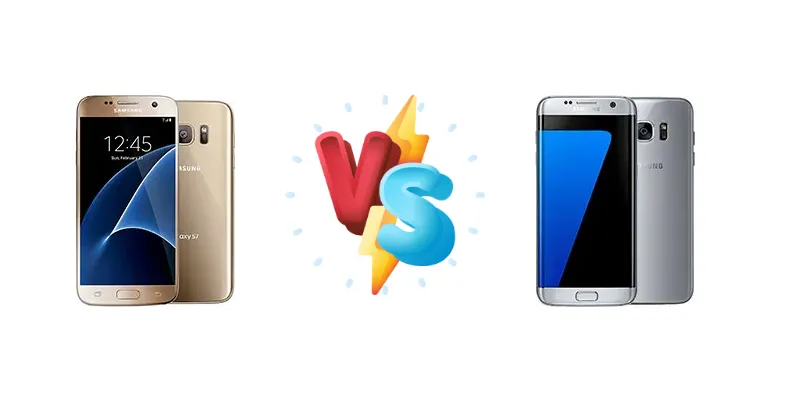
|
🏆 Quick Verdict
The S7 Edge offers a more immersive display and potentially better battery life (depending on region/chipset). However, the standard S7 is more compact and arguably easier to handle. Ultimately, the Edge's curved screen is the defining factor, appealing to those prioritizing aesthetics and a larger screen in a similar footprint.
| PHONES | ||
|---|---|---|
| Phone Names | Samsung Galaxy S7 (USA) | Samsung Galaxy S7 edge |
| Network | ||
|---|---|---|
| 2G bands | GSM 850 / 900 / 1800 / 1900 | GSM 850 / 900 / 1800 / 1900 - SIM 1 & SIM 2 - G935FD, G9350 |
| 3G bands | HSDPA 850 / 900 / 1900 / 2100 - G930A, G930V | HSDPA 850 / 900 / 1700(AWS) / 1900 / 2100 - G935F, G935FD, G935W8 |
| 4G bands | 1, 2, 3, 4, 5, 7, 8, 12, 20, 29, 30, 38, 39, 40, 41 - G930A | 1, 2, 3, 4, 5, 7, 8, 12, 13, 17, 18, 19, 20, 25, 26, 28, 38, 39, 40, 41 - G935F, G935FD |
| Speed | HSPA 42.2/5.76 Mbps, LTE (3CA) Cat9 450/50 Mbps, EV-DO Rev.A 3.1 Mbps | HSPA 42.2/5.76 Mbps, LTE (3CA) Cat9 450/50 Mbps |
| Technology | GSM / CDMA / HSPA / EVDO / LTE | GSM / HSPA / LTE |
| 2, 4, 5, 12, 13, 17, 25 - G930R | - | |
| Launch | ||
|---|---|---|
| Announced | 2016, February. Released 2016, March | 2016, February 21. Released 2016, March 11 |
| Status | Discontinued | Discontinued |
| Body | ||
|---|---|---|
| Build | Glass front (Gorilla Glass 4), glass back (Gorilla Glass 4), aluminum frame | Glass front (Gorilla Glass 4), glass back (Gorilla Glass 4), aluminum frame |
| Dimensions | 142.4 x 69.6 x 7.9 mm (5.61 x 2.74 x 0.31 in) | 150.9 x 72.6 x 7.7 mm (5.94 x 2.86 x 0.30 in) |
| SIM | Nano-SIM | · Nano-SIM (G935F, G935W8)· Nano-SIM + Nano-SIM (G935FD) |
| Weight | 152 g (5.36 oz) | 157 g (5.54 oz) |
| IP68 dust/water resistant (up to 1.5m for 30 min) | - | |
| Display | ||
|---|---|---|
| Protection | Corning Gorilla Glass 4 | Corning Gorilla Glass 4 |
| Resolution | 1440 x 2560 pixels, 16:9 ratio (~576 ppi density) | 1440 x 2560 pixels, 16:9 ratio (~534 ppi density) |
| Size | 5.1 inches, 71.7 cm2 (~72.3% screen-to-body ratio) | 5.5 inches, 83.4 cm2 (~76.1% screen-to-body ratio) |
| Type | Super AMOLED | Super AMOLED |
| Always-on display | - | |
| Platform | ||
|---|---|---|
| CPU | Quad-core (2x2.15 GHz Kryo & 2x1.6 GHz Kryo) | Quad-core (2x2.15 GHz Kryo & 2x1.6 GHz Kryo) - G9350Octa-core (4x2.3 GHz Mongoose & 4x1.6 GHz Cortex-A53) - G935FD, G935F, G935W8 |
| Chipset | Qualcomm MSM8996 Snapdragon 820 (14 nm) | Qualcomm MSM8996 Snapdragon 820 (14 nm) - G9350Exynos 8890 Octa (14 nm) - G935FD, G935F, G935W8 |
| GPU | Adreno 530 | Adreno 530 - G9350Mali-T880 MP12 - G935FD, G935F, G935W8 |
| OS | Android 6.0 (Marshmallow), upgradable to Android 8.0 (Oreo), TouchWiz UI | Android 6.0 (Marshmallow), upgradable to Android 8.0 (Oreo), TouchWiz UI |
| Memory | ||
|---|---|---|
| Card slot | microSDXC (dedicated slot) | microSDXC (uses shared SIM slot) - dual SIM model only |
| Internal | 32GB 4GB RAM | 32GB 4GB RAM, 64GB 4GB RAM, 128GB 4GB RAM |
| Main Camera | ||
|---|---|---|
| Features | LED flash, auto-HDR, panorama | LED flash, auto-HDR, panorama |
| Single | 12 MP, f/1.7, 26mm (wide), 1/2.55", 1.4µm, dual pixel PDAF, OIS | 12 MP, f/1.7, 26mm (wide), 1/2.55", 1.4µm, dual pixel PDAF, OIS |
| Video | 4K@30fps, 1080p@30fps (gyro-EIS), 1080p@60fps, 720p@240fps, HDR, stereo sound rec., OIS | 4K@30fps, 1080p@30fps (gyro-EIS), 1080p@60fps, 720p@240fps, HDR, stereo sound rec., OIS |
| Selfie camera | ||
|---|---|---|
| Features | HDR | HDR |
| Single | 5 MP, f/1.7, 22mm (wide), 1/4.1", 1.34µm | 5 MP, f/1.7, 22mm (wide), 1/4.1", 1.34µm |
| Sound | ||
|---|---|---|
| 3.5mm jack | Yes | Yes |
| 35mm jack | Yes | Yes |
| Loudspeaker | Yes | Yes |
| 24-bit/192kHz audio | - | |
| Comms | ||
|---|---|---|
| Bluetooth | 4.2, A2DP, LE, aptX | 4.2, A2DP, LE, aptX |
| NFC | Yes | Yes |
| Positioning | GPS, GLONASS | GPS, GLONASS, BDS |
| Radio | No | No |
| USB | microUSB 2.0, OTG | microUSB 2.0, OTG |
| WLAN | Wi-Fi 802.11 a/b/g/n/ac, dual-band, Wi-Fi Direct | Wi-Fi 802.11 a/b/g/n/ac, dual-band, Wi-Fi Direct |
| Features | ||
|---|---|---|
| Sensors | Fingerprint (front-mounted), accelerometer, gyro, proximity, compass, barometer, heart rate, SpO2 | Fingerprint (front-mounted), accelerometer, gyro, proximity, compass, barometer, heart rate, SpO2 |
| ANT+ S-Voice natural language commands and dictation Samsung Pay (Visa, MasterCard certified) | - | |
| Battery | ||
|---|---|---|
| Charging | 15W wired, QC2 Wireless | 15W wired, QC2 Wireless (Qi) (market dependent) |
| Music play | - | Up to 74 h |
| Talk time | - | Up to 27 h (3G) |
| Type | Li-Ion 3000 mAh, non-removable | Li-Ion 3600 mAh, non-removable |
| Misc | ||
|---|---|---|
| Colors | Black Onyx, Silver Titanium, Gold Platinum | Black, White, Gold, Silver, Pink Gold, Black Pearl, Coral Blue |
| Models | SM-G930A, SM-G930P, SM-G930V, SM-G930T, SM-G930R, SM-G930F, SM-G930U, SM-G930R4, SM-G930T1, SM-G930VL, SM-G930AZ, SM-G930R6, SM-G930R7 | SM-G935F, SM-G935FD, SM-G935W8, SM-G9350, SM-G935S, SC-02H, SM-G935K, SM-G935L, SM-G935R4, SCV33, SM-G935X, SM-G935VC, SM-G935D |
| Price | About 320 EUR | About 330 EUR |
| SAR | 1.24 W/kg (head) 1.59 W/kg (body) | 0.56 W/kg (head) 0.66 W/kg (body) |
| SAR EU | - | 0.26 W/kg (head) 1.43 W/kg (body) |
| Tests | ||
|---|---|---|
| Audio quality | - | Noise -92.5dB / Crosstalk -92.2dB |
| Battery life | - | Endurance rating 92h |
| Camera | - | Photo / Video |
| Display | - | Contrast ratio: Infinite (nominal), 4.439 (sunlight) |
| Loudspeaker | - | Voice 70dB / Noise 69dB / Ring 71dB |
| Performance | - | GFXBench: 8.3fps (ES 3.1 onscreen) |
Samsung Galaxy S7 (USA)
- Compact and ergonomic design
- Excellent performance
- Vibrant Super AMOLED display
- Good camera quality
- Smaller battery compared to S7 Edge
- Less visually striking design
Samsung Galaxy S7 edge
- Immersive curved display
- Larger battery for longer battery life
- Unique Edge functionalities
- Slightly better performance (Exynos variants)
- Less ergonomic due to curved edges
- Wider than the standard S7
- Potentially more fragile due to curved glass
Display Comparison
The S7 Edge's defining feature is its curved 'Edge' display, offering a more immersive viewing experience and unique edge functionalities. Both phones feature a 5.1-inch Super AMOLED display with QHD resolution (2560 x 1440), delivering vibrant colors and sharp details. The S7 Edge's curved edges do make it slightly wider, impacting one-handed usability for some.
Camera Comparison
Both phones feature a 12MP rear camera with optical image stabilization (OIS) and a 5MP front-facing camera. Image quality is excellent on both, with vibrant colors and good low-light performance. The S7 Edge's camera software offered slightly more features and customization options. Video recording capabilities are comparable on both devices.
Performance
Both devices are powered by the Qualcomm Snapdragon 820 chipset (USA S7) or Exynos 8890 (S7 Edge, region dependent). The Snapdragon 820 in the USA S7 offers excellent performance for everyday tasks and demanding games. The Exynos 8890 in some S7 Edge variants provides a slight performance edge, particularly in multi-core workloads, but the difference is often negligible in real-world usage. Both phones have 4GB of RAM.
Battery Life
The S7 Edge generally boasts better battery life due to its larger 3600mAh battery compared to the S7's 3000mAh battery. While endurance ratings can vary, the S7 Edge consistently outperformed the S7 in battery tests. However, usage patterns significantly impact battery life.
Buying Guide
The Samsung Galaxy S7 (USA) is ideal for users who prefer a more traditional, compact smartphone experience. It's a great choice for those who value ease of use and a comfortable grip. The Samsung Galaxy S7 Edge is best suited for users who appreciate a visually striking design, a larger display for media consumption, and don't mind the slightly less ergonomic feel of the curved edges.