
Samsung Galaxy S7 edge vs Sony Xperia XZ Premium: A Detailed Comparison of Flagship Power
| Phones Images | |||||
|---|---|---|---|---|---|
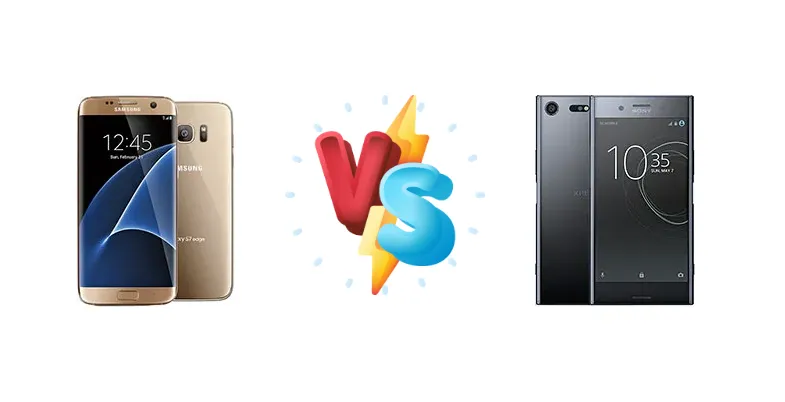
|
🏆 Quick Verdict
For the average user prioritizing battery life and a proven track record, the Samsung Galaxy S7 edge remains a compelling choice. However, the Sony Xperia XZ Premium’s Snapdragon 835 chipset provides a noticeable performance boost and faster charging, making it ideal for power users and multimedia enthusiasts.
| PHONES | ||
|---|---|---|
| Phone Names | Samsung Galaxy S7 edge (USA) | Sony Xperia XZ Premium |
| Network | ||
|---|---|---|
| 2G bands | GSM 850 / 900 / 1800 / 1900 | GSM 850 / 900 / 1800 / 1900 - SIM 1 & SIM 2 - G8142 |
| 3G bands | HSDPA 850 / 900 / 1900 / 2100 - G935A, G935P, G935R | HSDPA 800 / 850 / 900 / 1700(AWS) / 1900 / 2100 - G8141, G8142 |
| 4G bands | 1, 2, 3, 4, 5, 7, 8, 12, 20, 29, 30, 38, 39, 40, 41 - G935A | 1, 2, 3, 4, 5, 7, 8, 12, 13, 17, 19, 20, 26, 28, 29, 32, 38, 39, 40, 41 - G8141, G8142 |
| Speed | HSPA 42.2/5.76 Mbps, LTE (3CA) Cat9 450/50 Mbps, EV-DO Rev.A 3.1 Mbps | HSPA 42.2/5.76 Mbps, LTE (2CA) Cat16 1024/150 Mbps |
| Technology | GSM / CDMA / HSPA / EVDO / LTE | GSM / HSPA / LTE |
| Launch | ||
|---|---|---|
| Announced | 2016, February. Released 2016, March | 2017, February 27. Released 2017, June 18 |
| Status | Discontinued | Discontinued |
| Body | ||
|---|---|---|
| Build | Glass front (Gorilla Glass 4), glass back (Gorilla Glass 4), aluminum frame | Glass front (Gorilla Glass 5), glass back (Gorilla Glass 5), aluminum/plastic frame |
| Dimensions | 150.9 x 72.6 x 7.7 mm (5.94 x 2.86 x 0.30 in) | 156 x 77 x 7.9 mm (6.14 x 3.03 x 0.31 in) |
| SIM | Nano-SIM | · Nano-SIM (G8141)· Nano-SIM + Nano-SIM (G8142) |
| Weight | 157 g (5.54 oz) | 195 g (6.88 oz) |
| - | IP68 dust/water resistant (up to 1.5m for 30 mins) | |
| Display | ||
|---|---|---|
| Protection | Corning Gorilla Glass 4 | Corning Gorilla Glass 5 |
| Resolution | 1440 x 2560 pixels, 16:9 ratio (~534 ppi density) | 3840 x 2160 pixels, 16:9 ratio (~807 ppi density) |
| Size | 5.5 inches, 83.4 cm2 (~76.1% screen-to-body ratio) | 5.46 inches, 82.2 cm2 (~68.4% screen-to-body ratio) |
| Type | Super AMOLED | IPS LCD, HDR10 |
| - | Runs at 1080 x 1920 pixels except for select use cases Triluminos display X-Reality Engine | |
| Platform | ||
|---|---|---|
| CPU | Quad-core (2x2.15 GHz Kryo & 2x1.6 GHz Kryo) | Octa-core (4x2.45 GHz Kryo & 4x1.9 GHz Kryo) |
| Chipset | Qualcomm MSM8996 Snapdragon 820 (14 nm) | Qualcomm MSM8998 Snapdragon 835 (10 nm) |
| GPU | Adreno 530 | Adreno 540 |
| OS | Android 6.0 (Marshmallow), upgradable to Android 8.0 (Oreo), TouchWiz UI | Android 7.1 (Nougat), upgradable to Android 9.0 (Pie) |
| Memory | ||
|---|---|---|
| Card slot | microSDXC (dedicated slot) | microSDXC (uses shared SIM slot) - dual SIM model only |
| Internal | 32GB 4GB RAM | 64GB 4GB RAM |
| - | UFS 2.1 | |
| Main Camera | ||
|---|---|---|
| Features | LED flash, auto-HDR, panorama | Laser AF, color spectrum sensor, LED flash, panorama, HDR |
| Single | 12 MP, f/1.7, 26mm (wide), 1/2.55", 1.4µm, dual pixel PDAF, OIS | 19 MP, f/2.0, 25mm (wide), 1/2.3", predictive PDAF |
| Video | 4K@30fps, 1080p@30fps (gyro-EIS), 1080p@60fps, 720p@240fps, HDR, stereo sound rec., OIS | 4K@30fps, 1080p@30fps (gyro-EIS), 720p@960fps, HDR |
| Selfie camera | ||
|---|---|---|
| Features | HDR | - |
| Single | 5 MP, f/1.7, 22mm (wide), 1/4.1", 1.34µm | 13 MP, f/2.0, 22mm (wide), 1/3.1", 1.12µm |
| Video | - | 1080p@30fps |
| Sound | ||
|---|---|---|
| 3.5mm jack | - | Yes |
| 35mm jack | Yes | Yes |
| Loudspeaker | Yes | Yes, with stereo speakers |
| - | 24-bit/192kHz audio | |
| Comms | ||
|---|---|---|
| Bluetooth | 4.2, A2DP, LE, aptX | 5.0, A2DP, aptX HD, LE |
| NFC | Yes | Yes |
| Positioning | GPS, GLONASS | GPS, GLONASS, BDS, GALILEO |
| Radio | FM radio (after SW update; operator dependent) | No |
| USB | microUSB 2.0, OTG | USB Type-C 3.1, OTG |
| WLAN | Wi-Fi 802.11 a/b/g/n/ac, dual-band, Wi-Fi Direct | Wi-Fi 802.11 a/b/g/n/ac, dual-band, Wi-Fi Direct, DLNA |
| Features | ||
|---|---|---|
| Sensors | Fingerprint (front-mounted), accelerometer, gyro, proximity, compass, barometer, heart rate, SpO2 | Fingerprint (side-mounted, region dependent), accelerometer, gyro, proximity, barometer, compass |
| Battery | ||
|---|---|---|
| Charging | 15W wired, QC2 Wireless | 18W wired, QC3 |
| Type | Li-Ion 3600 mAh, non-removable | Li-Ion 3230 mAh, non-removable |
| Misc | ||
|---|---|---|
| Colors | Black Onyx, Silver Titanium, Gold Platinum, Coral Blue | Luminous Chrome, Deepsea Black, Bronze Pink, Rosso |
| Models | SM-G935A, SM-G935P, SM-G935V, SM-G935T, SM-G935R, SM-G935U, SM-G935L, SAMSUNG-SM-G935A | G8142, G8141, SO-04K, SO-04J |
| Price | About 350 EUR | About 320 EUR |
| SAR | 0.64 W/kg (head) 1.59 W/kg (body) | - |
| Tests | ||
|---|---|---|
| Audio quality | - | Noise -90.6dB / Crosstalk -92.6dB |
| Battery life | - | Endurance rating 72h |
| Camera | - | Photo / Video |
| Display | - | Contrast ratio: 1238:1 (nominal), 2.877 (sunlight) |
| Loudspeaker | - | Voice 62dB / Noise 65dB / Ring 71dB |
| Performance | - | GeekBench: 5460 (v4.4), 1603 (v5.1) GFXBench: 25fps (ES 3.1 onscreen) |
Samsung Galaxy S7 edge (USA)
- Superior battery endurance (87h rating)
- More affordable price point (post-launch)
- Mature and refined software experience
- Older Snapdragon 820 chipset
- Slower charging speed (15W QC2)
Sony Xperia XZ Premium
- Latest Snapdragon 835 chipset for faster performance
- Faster charging with Quick Charge 3.0 (18W)
- Superior display contrast in sunlight
- Lower battery endurance (72h rating)
- Potentially higher price (at launch)
Display Comparison
Both devices feature displays with a nominal contrast ratio of 1238:1, but the Xperia XZ Premium significantly improves upon this with a sunlight contrast ratio of 2.877:1, indicating superior visibility outdoors. While both likely utilize IPS LCD technology (given the era), the XZ Premium’s higher contrast suggests enhanced polarization or backlighting. The S7 edge’s curved display, while aesthetically pleasing, doesn’t offer a quantifiable advantage in image quality over the XZ Premium’s flat panel. Neither specification details resolution, but both were flagship devices and likely featured QHD displays.
Camera Comparison
Both devices are described as having photo/video capabilities, but detailed sensor information is absent. Given Sony’s expertise in image sensors, the XZ Premium likely benefits from a more advanced sensor and image processing pipeline. The XZ Premium’s inclusion of Sony’s SteadyShot technology (not explicitly stated, but a brand hallmark) suggests superior video stabilization. The S7 edge’s camera was highly regarded in its time, but the XZ Premium’s newer hardware and software likely provide better low-light performance and dynamic range. The lack of detail regarding megapixel counts or aperture values makes a precise comparison impossible.
Performance
The Sony Xperia XZ Premium’s Qualcomm MSM8998 Snapdragon 835, built on a 10nm process, represents a significant architectural leap over the Samsung Galaxy S7 edge’s Qualcomm MSM8996 Snapdragon 820 (14nm). The 835’s octa-core CPU (4x2.45 GHz Kryo & 4x1.9 GHz Kryo) offers a substantial performance increase over the S7 edge’s quad-core configuration (2x2.15 GHz Kryo & 2x1.6 GHz Kryo). The smaller 10nm node also translates to improved thermal efficiency, potentially reducing throttling during sustained workloads. While the S7 edge remains capable, the XZ Premium delivers a smoother, more responsive experience, particularly in demanding applications.
Battery Life
Despite having a smaller battery capacity, the Sony Xperia XZ Premium’s 18W wired charging with Quick Charge 3.0 support offers a faster charging experience than the S7 edge’s 15W Quick Charge 2.0. However, the S7 edge boasts a significantly higher endurance rating of 87 hours compared to the XZ Premium’s 72 hours. This suggests that, despite the faster charging, the S7 edge provides longer overall usage between charges, likely due to the more efficient Snapdragon 820 and optimized software.
Buying Guide
Buy the Samsung Galaxy S7 edge (USA) if you need exceptional battery endurance, a mature software experience, and a device that’s readily available at a lower price point. Buy the Sony Xperia XZ Premium if you prioritize the latest processor technology, faster charging speeds, and a display optimized for high contrast viewing, even in direct sunlight.