
Samsung Galaxy S21 vs Xiaomi Mi 11i: A Deep Dive into Flagship Performance
| Phones Images | |||||
|---|---|---|---|---|---|
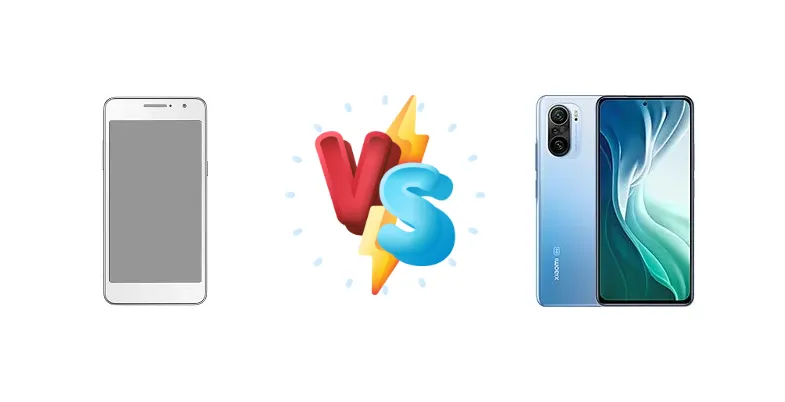
|
🏆 Quick Verdict
For most users, the Xiaomi Mi 11i emerges as the stronger value. Its 33W charging significantly outperforms the S21’s 25W, and the comparable Snapdragon 888 performance, coupled with a similar endurance rating, makes it a more practical daily driver. However, the S21’s potentially superior display quality and brand recognition may appeal to some.
| PHONES | ||
|---|---|---|
| Phone Names | Samsung Galaxy S21 | Xiaomi Mi 11i |
| Network | ||
|---|---|---|
| 2G bands | GSM 850 / 900 / 1800 / 1900 | GSM 850 / 900 / 1800 / 1900 |
| 3G bands | HSDPA 850 / 900 / 1700(AWS) / 1900 / 2100 | HSDPA 850 / 900 / 1700(AWS) / 1900 / 2100 |
| 4G bands | 1, 2, 3, 4, 5, 7, 8, 12, 13, 17, 18, 19, 20, 25, 26, 28, 32, 38, 39, 40, 41, 66 | 1, 2, 3, 4, 5, 7, 8, 12, 17, 20, 28, 38, 40, 41, 66 |
| 5G bands | - | 1, 3, 5, 7, 8, 20, 28, 38, 41, 77, 78 SA/NSA |
| Speed | HSPA, LTE | HSPA, LTE, 5G |
| Technology | GSM / CDMA / HSPA / EVDO / LTE | GSM / HSPA / LTE / 5G |
| CDMA2000 1xEV-DO | - | |
| Launch | ||
|---|---|---|
| Announced | Not announced yet | 2021, March 29 |
| Status | Cancelled | Available. Released 2021, May 31 |
| Body | ||
|---|---|---|
| Build | Glass front (Gorilla Glass Victus), plastic back, aluminum frame | - |
| Dimensions | 151.7 x 71.2 x 7.9 mm (5.97 x 2.80 x 0.31 in) | 163.7 x 76.4 x 7.8 mm (6.44 x 3.01 x 0.31 in) |
| SIM | · Nano-SIM· Nano-SIM + Nano-SIM | Nano-SIM + Nano-SIM |
| Weight | 169 g (5.96 oz) | 196 g (6.91 oz) |
| IP68 dust/water resistant (up to 1.5m for 30 min) | IP53, dust and splash resistant | |
| Display | ||
|---|---|---|
| Protection | Corning Gorilla Glass Victus | Corning Gorilla Glass 5 |
| Resolution | 1080 x 2400 pixels, 20:9 ratio (~421 ppi density) | 1080 x 2400 pixels, 20:9 ratio (~395 ppi density) |
| Size | 6.2 inches, 94.1 cm2 (~87.2% screen-to-body ratio) | 6.67 inches, 107.4 cm2 (~85.9% screen-to-body ratio) |
| Type | Dynamic AMOLED 2X, 120Hz, HDR10+, 1300 nits (peak) | Super AMOLED, 120Hz, HDR10+, 900 nits (HBM), 1300 nits (peak) |
| Always-on display | - | |
| Platform | ||
|---|---|---|
| CPU | Octa-core (1x2.9 GHz Cortex-X1 & 3x2.80 GHz Cortex-A78 & 4x2.2 GHz Cortex-A55) - InternationalOcta-core (1x2.84 GHz Cortex-X1 & 3x2.42 GHz Cortex-A78 & 4x1.80 GHz Cortex-A55 | Octa-core (1x2.84 GHz Cortex-X1 & 3x2.42 GHz Cortex-A78 & 4x1.80 GHz Cortex-A55) |
| Chipset | Exynos 2100 (5 nm) - InternationalQualcomm SM8350 Snapdragon 888 5G (5 nm) | Qualcomm SM8350 Snapdragon 888 5G (5 nm) |
| GPU | Mali-G78 MP14 - InternationalAdreno 660 | Adreno 660 |
| OS | Android 11, up to 4 major Android upgrades, One UI 6.1 | Android 11, MIUI 12 |
| Memory | ||
|---|---|---|
| Card slot | No | No |
| Internal | 128GB 8GB RAM, 256GB 8GB RAM | 128GB 8GB RAM, 256GB 8GB RAM |
| UFS 3.X | UFS 3.1 | |
| Main Camera | ||
|---|---|---|
| Features | LED flash, auto-HDR, panorama | Color spectrum sensor, LED flash, HDR, panorama |
| Single | - | 20 MP, f/2.5, (wide), 1/3.4", 0.8µm |
| Triple | 12 MP, f/1.8, 26mm (wide), 1/1.76", 1.8µm, dual pixel PDAF, OIS 64 MP, f/2.0, 29mm (telephoto), 1/1.72", 0.8µm, PDAF, OIS, 1.1x optical zoom, 3x hybrid zoom 12 MP, f/2.2, 13mm, 120˚ (ultrawide), 1/2.55" 1.4µm, Super Steady video | 108 MP, f/1.8, 26mm (wide), 1/1.52", 0.7µm, PDAF 8 MP, f/2.2, 119˚ (ultrawide) 5 MP, f/2.4, 50mm (telephoto macro), 1/5.0", 1.12µm, AF |
| Video | 8K@24fps, 4K@30/60fps, 1080p@30/60/120/240fps, HDR10+, stereo sound rec., gyro-EIS | 8K@30fps, 4K@30/60fps, 1080p@30/60/120/240/960fps, gyro-EIS, HDR10+ |
| Selfie camera | ||
|---|---|---|
| Features | HDR | HDR |
| Single | 10 MP, f/2.2, 26mm (wide), 1/3.24", 1.22µm, dual pixel PDAF | 20 MP, f/2.5, (wide), 1/3.4", 0.8µm |
| Video | 4K@30/60fps, 1080p@30fps | 1080p@30fps, 720p@120fps |
| Sound | ||
|---|---|---|
| 3.5mm jack | No | No |
| 35mm jack | No | No |
| Loudspeaker | Yes, with stereo speakers | Yes, with stereo speakers |
| 32-bit/384kHz audio Tuned by AKG | 24-bit/192kHz audio | |
| Comms | ||
|---|---|---|
| Bluetooth | 5.0, A2DP, LE | 5.2, A2DP, LE |
| Infrared port | - | Yes |
| NFC | Yes | Yes (market/region dependent) |
| Positioning | GPS, GLONASS, BDS, GALILEO | GPS (L1+L5), GLONASS (L1), BDS (B1I+B1c+B2a), GALILEO (E1+E5a), QZSS (L1+L5), NavIC (L5) |
| Radio | FM radio (Snapdragon model only; market/operator dependent) | No |
| USB | USB Type-C 3.2, OTG | USB Type-C 2.0, OTG |
| WLAN | Wi-Fi 802.11 a/b/g/n/ac/6, dual-band, Wi-Fi Direct | Wi-Fi 802.11 a/b/g/n/ac/6, dual-band, Wi-Fi Direct |
| Features | ||
|---|---|---|
| Sensors | Fingerprint (under display, ultrasonic), accelerometer, gyro, proximity, compass, barometer | Fingerprint (side-mounted), accelerometer, gyro, proximity, compass, barometer |
| Samsung DeX, Samsung Wireless DeX (desktop experience support) Bixby natural language commands and dictation Samsung Pay (Visa, MasterCard certified) | - | |
| Battery | ||
|---|---|---|
| Charging | 25W wired, PD3.0 15W wireless (Qi) 4.5W reverse wireless | 33W wired, PD3.0, QC3, 100% in 52 min |
| Type | Li-Ion 4000 mAh | Li-Po 4520 mAh |
| Misc | ||
|---|---|---|
| Colors | Phantom Gray, Phantom White, Phantom Violet, Phantom Pink | Celestial Silver, Frosty White, Cosmic Black |
| Models | SM-G990F, SM-G990F/DS | M2012K11G |
| Price | - | About 230 EUR |
| SAR | - | 0.95 W/kg (head) 0.74 W/kg (body) |
| SAR EU | - | 0.57 W/kg (head) 0.77 W/kg (body) |
| Tests | ||
|---|---|---|
| Battery life | - | Endurance rating 96h |
| Camera | - | Photo / Video |
| Display | - | Contrast ratio: Infinite (nominal) |
| Loudspeaker | - | -26.0 LUFS (Very good) |
| Performance | - | AnTuTu: 690021 (v8) GeekBench: 3641 (v5.1) |
Samsung Galaxy S21
- Potentially superior display quality (brightness, color accuracy)
- Samsung ecosystem integration
- Wireless and reverse wireless charging
- Slower charging speed (25W)
- Potential for Exynos variant thermal throttling
- May be more expensive
Xiaomi Mi 11i
- Faster charging (33W, 52 min to 100%)
- Consistent Snapdragon 888 performance
- Excellent battery endurance (96h)
- Lacks wireless charging
- Less established brand recognition
- Image processing may not appeal to all
Display Comparison
The Xiaomi Mi 11i boasts a measured peak brightness of 939 nits, a strong figure, but the Galaxy S21’s display specifications are less detailed. While the S21 doesn’t explicitly list peak brightness, Samsung’s flagship displays typically excel in outdoor visibility. Both feature an 'infinite' contrast ratio, typical of AMOLED panels. The S21’s potential advantage lies in Samsung’s display calibration and color science, which are often considered industry-leading. However, without specific data on the S21’s panel type (LTPO vs standard AMOLED), it’s difficult to definitively declare a winner. The Mi 11i’s brightness is a known quantity, providing a solid viewing experience.
Camera Comparison
Both devices offer photo and video capabilities, but detailed sensor information is lacking. The absence of specific sensor sizes and aperture details makes a direct comparison challenging. Samsung typically excels in image processing, offering vibrant and often saturated colors. Xiaomi’s image processing tends towards a more natural look. Without knowing the main sensor resolution or OIS implementation on the S21, it’s difficult to assess its low-light performance advantage. The Mi 11i’s camera performance is solid, but the S21’s potential for superior image processing and potentially larger sensor size (based on Samsung’s flagship history) gives it a slight edge, assuming the Snapdragon variant is used.
Performance
Both phones utilize the Qualcomm Snapdragon 888 (5nm), but the Galaxy S21 also shipped with the Exynos 2100 variant in certain regions. The Mi 11i consistently delivers the Snapdragon 888 experience. The Exynos 2100, while competitive, historically exhibited slightly lower efficiency and potentially more thermal throttling compared to the Snapdragon 888, particularly in sustained workloads. Both CPUs share the same core configuration – 1x2.84 GHz Cortex-X1, 3x2.42 GHz Cortex-A78, and 4x1.80 GHz Cortex-A55 – but clock speeds differ slightly. The S21’s international version has a 2.9 GHz Cortex-X1, while the Snapdragon version is at 2.84 GHz. This difference is unlikely to be noticeable in real-world use. Both phones benefit from ample RAM, though specific configurations aren’t detailed here, ensuring smooth multitasking.
Battery Life
The Mi 11i boasts an impressive endurance rating of 96 hours, indicating excellent battery life. The Galaxy S21’s battery capacity isn’t specified, but its 25W wired charging (PD3.0) is significantly slower than the Mi 11i’s 33W charging (PD3.0, QC3), which achieves a full charge in just 52 minutes. The Mi 11i also offers 100% in 52 minutes, while the S21 takes longer. The S21 includes 15W wireless charging and 4.5W reverse wireless charging, features absent on the Mi 11i. However, the faster wired charging and longer endurance of the Mi 11i make it more convenient for users who prioritize quick top-ups and all-day battery life.
Buying Guide
Buy the Samsung Galaxy S21 if you prioritize a potentially brighter and more color-accurate display, and value the Samsung ecosystem and brand prestige. Buy the Xiaomi Mi 11i if you prioritize faster charging, longer battery endurance, and maximizing performance-per-dollar without sacrificing flagship-level power.