
Google Pixel 6 Pro vs. Samsung Galaxy S21: A Deep Dive Comparison
| Phones Images | |||||
|---|---|---|---|---|---|
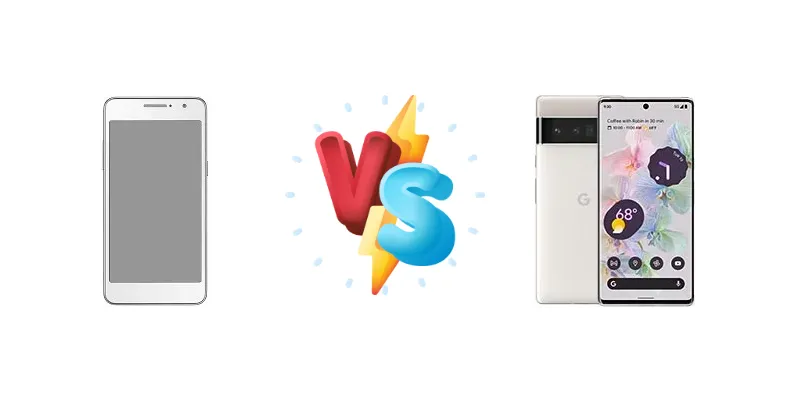
|
🏆 Quick Verdict
For most users, the Google Pixel 6 Pro emerges as the stronger choice. Its superior camera system, powered by the Tensor chip’s AI capabilities, and comparable battery life outweigh the S21’s slightly more efficient chipset. However, the S21’s more compact form factor and potentially lower price point make it a viable option for those prioritizing portability and budget.
| PHONES | ||
|---|---|---|
| Phone Names | Samsung Galaxy S21 | Google Pixel 6 Pro |
| Network | ||
|---|---|---|
| 2G bands | GSM 850 / 900 / 1800 / 1900 | GSM 850 / 900 / 1800 / 1900 |
| 3G bands | HSDPA 850 / 900 / 1700(AWS) / 1900 / 2100 | HSDPA 800 / 850 / 900 / 1700(AWS) / 1900 / 2100 |
| 4G bands | 1, 2, 3, 4, 5, 7, 8, 12, 13, 17, 18, 19, 20, 25, 26, 28, 32, 38, 39, 40, 41, 66 | 1, 2, 3, 4, 5, 7, 8, 12, 13, 14, 17, 18, 19, 20, 25, 26, 28, 29, 30, 32, 38, 39, 40, 41, 42, 46, 48, 66, 71 - GLUOG, G8VOU |
| 5G bands | - | 1, 2, 3, 5, 7, 8, 12, 14, 20, 25, 28, 30, 38, 40, 41, 48, 66, 71, 77, 78, 257, 258, 260, 261 SA/NSA/Sub6/mmWave - G8VOU |
| Speed | HSPA, LTE | HSPA, LTE, 5G |
| Technology | GSM / CDMA / HSPA / EVDO / LTE | GSM / CDMA / HSPA / EVDO / LTE / 5G |
| CDMA2000 1xEV-DO | 1, 2, 3, 5, 7, 8, 12, 14, 20, 25, 28, 30, 38, 40, 41, 48, 66, 71, 77, 78 SA/NSA/Sub6 - GLUOG | |
| Launch | ||
|---|---|---|
| Announced | Not announced yet | 2021, October 19 |
| Status | Cancelled | Available. Released 2021, October 28 |
| Body | ||
|---|---|---|
| Build | Glass front (Gorilla Glass Victus), plastic back, aluminum frame | Glass front (Gorilla Glass Victus), glass back (Gorilla Glass Victus), aluminum frame |
| Dimensions | 151.7 x 71.2 x 7.9 mm (5.97 x 2.80 x 0.31 in) | 163.9 x 75.9 x 8.9 mm (6.45 x 2.99 x 0.35 in) |
| SIM | · Nano-SIM· Nano-SIM + Nano-SIM | Nano-SIM + eSIM |
| Weight | 169 g (5.96 oz) | 210 g (7.41 oz) |
| IP68 dust/water resistant (up to 1.5m for 30 min) | IP68 dust/water resistant (up to 1.5m for 30 min) | |
| Display | ||
|---|---|---|
| Protection | Corning Gorilla Glass Victus | Corning Gorilla Glass Victus |
| Resolution | 1080 x 2400 pixels, 20:9 ratio (~421 ppi density) | 1440 x 3120 pixels, 19.5:9 ratio (~512 ppi density) |
| Size | 6.2 inches, 94.1 cm2 (~87.2% screen-to-body ratio) | 6.7 inches, 110.6 cm2 (~88.9% screen-to-body ratio) |
| Type | Dynamic AMOLED 2X, 120Hz, HDR10+, 1300 nits (peak) | LTPO AMOLED, 120Hz, HDR10+ |
| Always-on display | Always-on display | |
| Platform | ||
|---|---|---|
| CPU | Octa-core (1x2.9 GHz Cortex-X1 & 3x2.80 GHz Cortex-A78 & 4x2.2 GHz Cortex-A55) - InternationalOcta-core (1x2.84 GHz Cortex-X1 & 3x2.42 GHz Cortex-A78 & 4x1.80 GHz Cortex-A55 | Octa-core (2x2.80 GHz Cortex-X1 & 2x2.25 GHz Cortex-A76 & 4x1.80 GHz Cortex-A55) |
| Chipset | Exynos 2100 (5 nm) - InternationalQualcomm SM8350 Snapdragon 888 5G (5 nm) | Google Tensor (5 nm) |
| GPU | Mali-G78 MP14 - InternationalAdreno 660 | Mali-G78 MP20 |
| OS | Android 11, up to 4 major Android upgrades, One UI 6.1 | Android 12, upgradable to Android 15, up to 5 major Android upgrades |
| Memory | ||
|---|---|---|
| Card slot | No | No |
| Internal | 128GB 8GB RAM, 256GB 8GB RAM | 128GB 12GB RAM, 256GB 12GB RAM, 512GB 12GB RAM |
| UFS 3.X | UFS 3.1 | |
| Main Camera | ||
|---|---|---|
| Features | LED flash, auto-HDR, panorama | Laser AF, Dual-LED flash, Pixel Shift, Auto-HDR, panorama |
| Single | - | 11.1 MP, f/2.2, 20mm (ultrawide), 1.22µm |
| Triple | 12 MP, f/1.8, 26mm (wide), 1/1.76", 1.8µm, dual pixel PDAF, OIS 64 MP, f/2.0, 29mm (telephoto), 1/1.72", 0.8µm, PDAF, OIS, 1.1x optical zoom, 3x hybrid zoom 12 MP, f/2.2, 13mm, 120˚ (ultrawide), 1/2.55" 1.4µm, Super Steady video | 50 MP, f/1.9, 25mm (wide), 1/1.31", 1.2µm, dual pixel PDAF, OIS 48 MP, f/3.5, 104mm (periscope telephoto), 1/2.0", 0.8µm, PDAF, OIS, 4x optical zoom 12 MP, f/2.2, 17mm, 114˚ (ultrawide), 1.25µm |
| Video | 8K@24fps, 4K@30/60fps, 1080p@30/60/120/240fps, HDR10+, stereo sound rec., gyro-EIS | 4K@30/60fps, 1080p@30/60/120/240fps; gyro-EIS, OIS |
| Selfie camera | ||
|---|---|---|
| Features | HDR | HDR, panorama |
| Single | 10 MP, f/2.2, 26mm (wide), 1/3.24", 1.22µm, dual pixel PDAF | 11.1 MP, f/2.2, 20mm (ultrawide), 1.22µm |
| Video | 4K@30/60fps, 1080p@30fps | 4K@30fps, 1080p@30/60fps |
| Sound | ||
|---|---|---|
| 3.5mm jack | No | No |
| 35mm jack | No | No |
| Loudspeaker | Yes, with stereo speakers | Yes, with stereo speakers |
| 32-bit/384kHz audio Tuned by AKG | - | |
| Comms | ||
|---|---|---|
| Bluetooth | 5.0, A2DP, LE | 5.2, A2DP, LE, aptX HD |
| NFC | Yes | Yes |
| Positioning | GPS, GLONASS, BDS, GALILEO | GPS (L1+L5), GLONASS (G1), BDS (B1I+B1c+B2a), GALILEO (E1+E5a), QZSS (L1+L5) |
| Radio | FM radio (Snapdragon model only; market/operator dependent) | No |
| USB | USB Type-C 3.2, OTG | USB Type-C 3.1 |
| WLAN | Wi-Fi 802.11 a/b/g/n/ac/6, dual-band, Wi-Fi Direct | Wi-Fi 802.11 a/b/g/n/ac/6e, dual-band, Wi-Fi Direct |
| Features | ||
|---|---|---|
| Sensors | Fingerprint (under display, ultrasonic), accelerometer, gyro, proximity, compass, barometer | Fingerprint (under display, optical), accelerometer, gyro, proximity, compass, barometer |
| Samsung DeX, Samsung Wireless DeX (desktop experience support) Bixby natural language commands and dictation Samsung Pay (Visa, MasterCard certified) | Ultra Wideband (UWB) support | |
| Battery | ||
|---|---|---|
| Charging | 25W wired, PD3.0 15W wireless (Qi) 4.5W reverse wireless | 23W wired, PD3.0, 50% in 30 min 23W wireless Reverse wireless |
| Type | Li-Ion 4000 mAh | Li-Ion 5003 mAh |
| Misc | ||
|---|---|---|
| Colors | Phantom Gray, Phantom White, Phantom Violet, Phantom Pink | Cloudy White, Sorta Sunny, Stormy Black |
| Models | SM-G990F, SM-G990F/DS | GLUOG, G8VOU, GF5KQ |
| Price | - | € 199.99 / $ 204.99 / £ 275.00 / ₹ 29,699 |
| Tests | ||
|---|---|---|
| Battery life | - | Endurance rating 84h |
| Display | - | Contrast ratio: Infinite (nominal) |
| Performance | - | AnTuTu: 585485 (v8), 719815 (v9) GeekBench: 2831 (v5.1) GFXBench: 39 fps (ES 3.1 onscreen) |
Samsung Galaxy S21
- More compact and pocketable design
- Potentially lower price point
- Mature and refined software experience
- Less advanced camera system
- Chipset performance can vary by region
- Slower wireless charging
Google Pixel 6 Pro
- Superior camera performance with AI enhancements
- Unique Google Tensor chip with AI capabilities
- Larger, brighter display
- Larger and heavier form factor
- Potential for software bugs (early adopter)
- May be more expensive
Display Comparison
Both phones offer excellent displays, but the Pixel 6 Pro boasts a significantly higher peak brightness of 846 nits, measured, compared to the S21’s unspecified peak brightness. While both utilize smooth refresh rates, the Pixel 6 Pro’s larger 6.71-inch display provides a more immersive viewing experience. The Pixel 6 Pro also benefits from an infinite (nominal) contrast ratio, suggesting deeper blacks. The S21’s smaller 6.2-inch display may appeal to those who prefer a more manageable size, but it sacrifices some screen real estate.
Camera Comparison
The Pixel 6 Pro’s camera system is a clear standout. While detailed sensor specs are missing, Google’s computational photography prowess, powered by the Tensor chip, delivers exceptional dynamic range, detail, and low-light performance. The S21’s camera is capable, but relies more on traditional image processing techniques. The Pixel 6 Pro’s AI-powered features, such as Magic Eraser and Motion Mode, offer unique creative possibilities. The S21’s 2MP macro camera is largely superfluous, offering minimal benefit over the main sensor.
Performance
The core difference lies in the chipsets. The Galaxy S21, depending on the region, utilizes either the Exynos 2100 or the Snapdragon 888 5G, both built on a 5nm process. The Pixel 6 Pro features Google’s in-house Tensor chip, also 5nm. While the Tensor’s CPU configuration (2x2.80 GHz Cortex-X1, 2x2.25 GHz Cortex-A76, 4x1.80 GHz Cortex-A55) differs from the S21’s (Octa-core (1x2.9 GHz Cortex-X1 & 3x2.80 GHz Cortex-A78 & 4x2.2 GHz Cortex-A55) – International, Octa-core (1x2.84 GHz Cortex-X1 & 3x2.42 GHz Cortex-A78 & 4x1.80 GHz Cortex-A55), the Tensor prioritizes AI and machine learning tasks, resulting in faster image processing and on-device translation. The S21’s Snapdragon variant generally exhibits slightly better sustained performance in demanding games due to superior thermal management, but the Tensor excels in tasks leveraging its AI capabilities.
Battery Life
Both devices achieve an endurance rating of 84 hours, indicating comparable real-world battery life. The Pixel 6 Pro supports 23W wired charging (50% in 30 minutes) and 23W wireless charging, while the S21 offers 25W wired charging (PD3.0) and 15W wireless charging (Qi). While the S21’s wired charging is slightly faster, the Pixel 6 Pro’s wireless charging speed is significantly higher. Both phones also support reverse wireless charging, albeit at different wattages (4.5W for S21, unspecified for Pixel 6 Pro).
Buying Guide
Buy the Samsung Galaxy S21 if you need a more pocketable flagship experience and value a consistently smooth, albeit less AI-driven, user interface. It’s ideal for users who prioritize a smaller device and don’t heavily rely on advanced camera features. Buy the Google Pixel 6 Pro if you prefer a larger display, cutting-edge camera technology with exceptional image processing, and a unique Android experience deeply integrated with Google’s AI services. This phone is for photography enthusiasts and those who want the latest in software innovation.