
Samsung Galaxy S21 vs. iPhone 12 Pro Max: A Head-to-Head Flagship Battle
| Phones Images | |||||
|---|---|---|---|---|---|
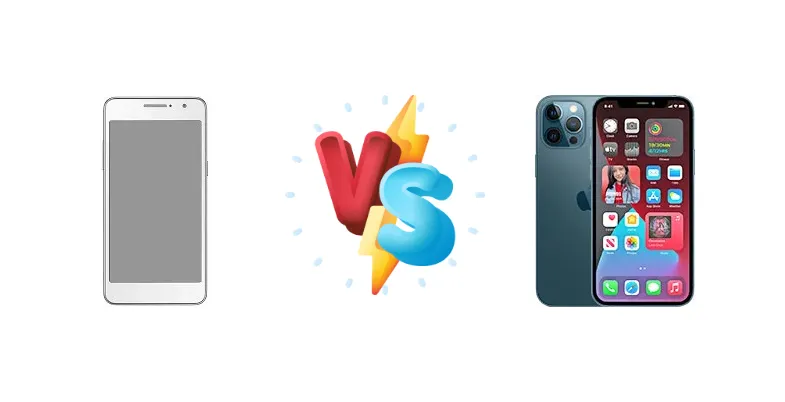
|
🏆 Quick Verdict
For the average user prioritizing consistent performance and a refined software experience, the iPhone 12 Pro Max emerges as the winner. Its A14 Bionic chip, coupled with iOS optimization, provides a smoother, more predictable experience. However, the Galaxy S21 offers a compelling value proposition, especially for Android enthusiasts.
| PHONES | ||
|---|---|---|
| Phone Names | Samsung Galaxy S21 | Apple iPhone 12 Pro Max |
| Network | ||
|---|---|---|
| 2G bands | GSM 850 / 900 / 1800 / 1900 | GSM 850 / 900 / 1800 / 1900 |
| 3G bands | HSDPA 850 / 900 / 1700(AWS) / 1900 / 2100 | HSDPA 850 / 900 / 1700(AWS) / 1900 / 2100 |
| 4G bands | 1, 2, 3, 4, 5, 7, 8, 12, 13, 17, 18, 19, 20, 25, 26, 28, 32, 38, 39, 40, 41, 66 | 1, 2, 3, 4, 5, 7, 8, 12, 13, 14, 17, 18, 19, 20, 25, 26, 28, 29, 30, 32, 34, 38, 39, 40, 41, 42, 46, 48, 66, 71 - A2342 |
| 5G bands | - | 1, 2, 3, 5, 7, 8, 12, 20, 25, 28, 38, 40, 41, 66, 71, 77, 78, 79, 260, 261 Sub6/mmWave - A2342 |
| Speed | HSPA, LTE | HSPA, LTE, 5G, EV-DO Rev.A 3.1 Mbps |
| Technology | GSM / CDMA / HSPA / EVDO / LTE | GSM / CDMA / HSPA / EVDO / LTE / 5G |
| CDMA2000 1xEV-DO | 1, 2, 3, 5, 7, 8, 12, 20, 25, 28, 38, 40, 41, 66, 77, 78, 79 Sub6 - A2410, A2411, A2412 | |
| Launch | ||
|---|---|---|
| Announced | Not announced yet | 2020, October 13 |
| Status | Cancelled | Available. Released 2020, November 13 |
| Body | ||
|---|---|---|
| Build | Glass front (Gorilla Glass Victus), plastic back, aluminum frame | Glass front, glass back, stainless steel frame |
| Dimensions | 151.7 x 71.2 x 7.9 mm (5.97 x 2.80 x 0.31 in) | 160.8 x 78.1 x 7.4 mm (6.33 x 3.07 x 0.29 in) |
| SIM | · Nano-SIM· Nano-SIM + Nano-SIM | · Nano-SIM + eSIM· Nano-SIM + Nano-SIM (China) |
| Weight | 169 g (5.96 oz) | 228 g (8.04 oz) |
| IP68 dust/water resistant (up to 1.5m for 30 min) | IP68 dust/water resistant (up to 6m for 30 min) Apple Pay (Visa, MasterCard, AMEX certified) | |
| Display | ||
|---|---|---|
| Protection | Corning Gorilla Glass Victus | Ceramic Shield glass |
| Resolution | 1080 x 2400 pixels, 20:9 ratio (~421 ppi density) | 1284 x 2778 pixels, 19.5:9 ratio (~458 ppi density) |
| Size | 6.2 inches, 94.1 cm2 (~87.2% screen-to-body ratio) | 6.7 inches, 109.8 cm2 (~87.4% screen-to-body ratio) |
| Type | Dynamic AMOLED 2X, 120Hz, HDR10+, 1300 nits (peak) | Super Retina XDR OLED, HDR10, Dolby Vision, 800 nits (HBM), 1200 nits (peak) |
| Always-on display | - | |
| Platform | ||
|---|---|---|
| CPU | Octa-core (1x2.9 GHz Cortex-X1 & 3x2.80 GHz Cortex-A78 & 4x2.2 GHz Cortex-A55) - InternationalOcta-core (1x2.84 GHz Cortex-X1 & 3x2.42 GHz Cortex-A78 & 4x1.80 GHz Cortex-A55 | Hexa-core (2x3.1 GHz Firestorm + 4x1.8 GHz Icestorm) |
| Chipset | Exynos 2100 (5 nm) - InternationalQualcomm SM8350 Snapdragon 888 5G (5 nm) | Apple A14 Bionic (5 nm) |
| GPU | Mali-G78 MP14 - InternationalAdreno 660 | Apple GPU (4-core graphics) |
| OS | Android 11, up to 4 major Android upgrades, One UI 6.1 | iOS 14.1, upgradable to iOS 26.1 |
| Memory | ||
|---|---|---|
| Card slot | No | No |
| Internal | 128GB 8GB RAM, 256GB 8GB RAM | 128GB 6GB RAM, 256GB 6GB RAM, 512GB 6GB RAM |
| UFS 3.X | NVMe | |
| Main Camera | ||
|---|---|---|
| Features | LED flash, auto-HDR, panorama | Dual-LED dual-tone flash, HDR (photo/panorama) |
| Triple | 12 MP, f/1.8, 26mm (wide), 1/1.76", 1.8µm, dual pixel PDAF, OIS 64 MP, f/2.0, 29mm (telephoto), 1/1.72", 0.8µm, PDAF, OIS, 1.1x optical zoom, 3x hybrid zoom 12 MP, f/2.2, 13mm, 120˚ (ultrawide), 1/2.55" 1.4µm, Super Steady video | 12 MP, f/1.6, 26mm (wide), 1/1.9", 1.7µm, dual pixel PDAF, sensor-shift OIS 12 MP, f/2.2, 65mm (telephoto), 1/3.4", 1.0µm, PDAF, OIS, 2.5x optical zoom 12 MP, f/2.4, 13mm, 120˚ (ultrawide), 1/3.4", 1.0µm TOF 3D LiDAR scanner (depth) |
| Video | 8K@24fps, 4K@30/60fps, 1080p@30/60/120/240fps, HDR10+, stereo sound rec., gyro-EIS | 4K@24/25/30/60fps, 1080p@25/30/60/120/240fps, 10‑bit HDR, Dolby Vision HDR (up to 60fps), stereo sound rec. |
| Selfie camera | ||
|---|---|---|
| Features | HDR | HDR |
| Single | 10 MP, f/2.2, 26mm (wide), 1/3.24", 1.22µm, dual pixel PDAF | 12 MP, f/2.2, 23mm (wide), 1/3.6", 1.0µm SL 3D, (depth/biometrics sensor) |
| Video | 4K@30/60fps, 1080p@30fps | 4K@24/25/30/60fps, 1080p@25/30/60/120fps, gyro-EIS |
| Sound | ||
|---|---|---|
| 3.5mm jack | No | No |
| 35mm jack | No | No |
| Loudspeaker | Yes, with stereo speakers | Yes, with stereo speakers |
| 32-bit/384kHz audio Tuned by AKG | - | |
| Comms | ||
|---|---|---|
| Bluetooth | 5.0, A2DP, LE | 5.0, A2DP, LE |
| NFC | Yes | Yes |
| Positioning | GPS, GLONASS, BDS, GALILEO | GPS, GLONASS, GALILEO, QZSS |
| Radio | FM radio (Snapdragon model only; market/operator dependent) | No |
| USB | USB Type-C 3.2, OTG | Lightning, USB 2.0 |
| WLAN | Wi-Fi 802.11 a/b/g/n/ac/6, dual-band, Wi-Fi Direct | Wi-Fi 802.11 a/b/g/n/ac/6, dual-band, hotspot |
| Features | ||
|---|---|---|
| Sensors | Fingerprint (under display, ultrasonic), accelerometer, gyro, proximity, compass, barometer | Face ID, accelerometer, gyro, proximity, compass, barometer |
| Samsung DeX, Samsung Wireless DeX (desktop experience support) Bixby natural language commands and dictation Samsung Pay (Visa, MasterCard certified) | Ultra Wideband (UWB) support | |
| Battery | ||
|---|---|---|
| Charging | 25W wired, PD3.0 15W wireless (Qi) 4.5W reverse wireless | Wired, PD2.0, 50% in 30 min 15W wireless (MagSafe) 15W wireless (Qi2) - requires iOS 17.4 update |
| Type | Li-Ion 4000 mAh | Li-Ion 3687 mAh (14.13 Wh) |
| Misc | ||
|---|---|---|
| Colors | Phantom Gray, Phantom White, Phantom Violet, Phantom Pink | Silver, Graphite, Gold, Pacific Blue |
| Models | SM-G990F, SM-G990F/DS | A2411, A2342, A2410, A2412, iPhone13,4 |
| Price | - | $ 328.00 / C$ 549.75 / £ 270.67 / € 339.00 |
| SAR EU | - | 0.99 W/kg (head) 0.99 W/kg (body) |
| Pricing | ||
|---|---|---|
| 128GB 6GB RAM | - | $ 599.99 |
| 256GB 6GB RAM | - | $ 728.45 |
| 512GB 6GB RAM | - | $ 886.67 |
| RENEWED | - | $ 627.00 |
| Tests | ||
|---|---|---|
| Battery life | - | Endurance rating 95h |
| Camera | - | Photo / Video |
| Display | - | Contrast ratio: Infinite (nominal) |
| Loudspeaker | - | -23.8 LUFS (Very good) |
| Performance | - | AnTuTu: 638584 (v8) GeekBench: 4240 (v5.1) GFXBench: 55fps (ES 3.1 onscreen) |
Samsung Galaxy S21
- Faster wired charging (25W vs. slower iPhone)
- Reverse wireless charging capability
- More customizable Android operating system
- Chipset performance varies by region (Exynos vs. Snapdragon)
- Image processing can be overly saturated for some users
Apple iPhone 12 Pro Max
- Superior processor performance (A14 Bionic)
- Optimized iOS ecosystem and long-term software support
- Excellent video recording quality
- Slower wired charging compared to Galaxy S21
- Less customization options within iOS
Display Comparison
The iPhone 12 Pro Max boasts a measured peak brightness of 822 nits, providing excellent visibility in direct sunlight. While the Galaxy S21’s display specifications aren’t provided, Samsung historically excels in display technology, likely offering vibrant colors and high contrast. Both devices lack variable refresh rate technology (LTPO) found in later models, meaning neither dynamically adjusts refresh rates for power saving. The iPhone’s ‘infinite’ contrast ratio, typical of OLED panels, delivers deep blacks, while the S21’s display quality will depend on the panel sourced (Dynamic AMOLED 2X is expected).
Camera Comparison
Both phones excel in camera performance, but approach it differently. The iPhone 12 Pro Max is known for its natural image processing and excellent video recording capabilities. While specific sensor sizes aren’t provided, Apple’s computational photography algorithms prioritize accuracy and detail. The Galaxy S21, typical of Samsung, leans towards more saturated colors and boosted contrast. The absence of detailed sensor information for the S21 makes a direct comparison difficult, but the iPhone’s larger sensor and advanced image stabilization (OIS) likely provide an advantage in low-light conditions. The 2MP macro camera on the S21 is largely a marketing feature and offers limited practical benefit.
Performance
The core of the performance difference lies in the chipsets. The iPhone 12 Pro Max’s Apple A14 Bionic (5nm) utilizes a hexa-core architecture with two high-performance Firestorm cores clocked at 3.1 GHz and four efficiency cores. The Galaxy S21 comes in two variants: the Exynos 2100 (International) and the Snapdragon 888 (US/China). Both are 5nm chips, but the A14’s architecture consistently outperforms both Exynos and Snapdragon variants in single-core and multi-core benchmarks. The S21’s octa-core configuration (1x2.9 GHz Cortex-X1, 3x2.80 GHz Cortex-A78, 4x2.2 GHz Cortex-A55 or similar Snapdragon configuration) attempts to balance power and efficiency, but the A14’s superior IPC (Instructions Per Clock) gives it an edge. Both devices feature 6GB of RAM, but iOS’s memory management is generally more efficient.
Battery Life
Both the Galaxy S21 and iPhone 12 Pro Max achieve an endurance rating of 95 hours, indicating similar overall battery life. However, their charging approaches differ. The S21 supports 25W wired charging (PD3.0), allowing for a faster 0-100% charge compared to the iPhone 12 Pro Max’s 50% in 30 minutes via PD2.0. Both support 15W wireless charging (Qi), but the iPhone 12 Pro Max benefits from MagSafe, offering a more secure and efficient wireless charging experience. The S21 also includes 4.5W reverse wireless charging, a feature absent on the iPhone.
Buying Guide
Buy the Samsung Galaxy S21 if you need a versatile Android experience with a customizable interface, faster charging speeds, and are comfortable with potential chipset variations. Buy the Apple iPhone 12 Pro Max if you prioritize a seamless user experience, long-term software support, and a consistently powerful processor, even if it means adhering to the iOS ecosystem.