
Samsung Galaxy Quantum 2 vs. A90 5G: A Deep Dive into Samsung's Snapdragon 855+ Lineup
| Phones Images | |||||
|---|---|---|---|---|---|
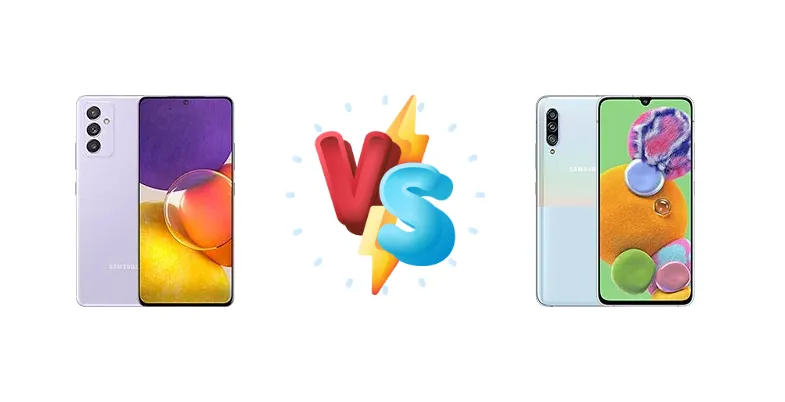
|
🏆 Quick Verdict
For the average user prioritizing security and potentially slightly improved sustained performance, the Samsung Galaxy Quantum 2 is the better choice. Its integrated QRNG chipset offers a tangible security benefit, and the Snapdragon 855+ provides a marginal performance edge over the A90 5G's Snapdragon 855. However, the A90 5G remains a compelling option if found at a significantly lower price.
| PHONES | ||
|---|---|---|
| Phone Names | Samsung Galaxy Quantum 2 | Samsung Galaxy A90 5G |
| Network | ||
|---|---|---|
| 2G bands | GSM 850 / 900 / 1800 / 1900 | GSM 850 / 900 / 1800 / 1900 |
| 3G bands | HSDPA 850 / 900 / 1700(AWS) / 1900 / 2100 | HSDPA 850 / 900 / 1700(AWS) / 1900 / 2100 |
| 4G bands | 1, 2, 3, 4, 5, 7, 8, 12, 17, 20, 26, 28, 38, 40, 41, 66 | 1, 2, 3, 4, 5, 7, 8, 12, 13, 17, 20, 26, 28, 38, 40, 41, 66 |
| 5G bands | 78 Sub6 | 41, 78 Sub6 |
| Speed | HSPA, LTE, 5G | HSPA, LTE, 5G |
| Technology | GSM / HSPA / LTE / 5G | GSM / HSPA / LTE / 5G |
| - | 1, 3, 5, 7, 8, 20, 34, 38, 39, 40, 41 | |
| Launch | ||
|---|---|---|
| Announced | 2021, April 13 | 2019, September. Released 2019, September |
| Status | Available. Released 2021, April 23 | Discontinued |
| Body | ||
|---|---|---|
| Build | - | Glass front (Gorilla Glass 6), glass back (Gorilla Glass 6), aluminum frame |
| Dimensions | 161.9 x 73.8 x 8.1 mm (6.37 x 2.91 x 0.32 in) | 164.8 x 76.4 x 8.4 mm (6.49 x 3.01 x 0.33 in) |
| SIM | Nano-SIM | · Nano-SIM· Nano-SIM + Nano-SIM |
| Weight | 176 g (6.21 oz) | 206 g (7.27 oz) |
| Display | ||
|---|---|---|
| Protection | - | Corning Gorilla Glass 6 |
| Resolution | 1440 x 3200 pixels, 20:9 ratio (~524 ppi density) | 1080 x 2400 pixels, 20:9 ratio (~393 ppi density) |
| Size | 6.7 inches, 108.4 cm2 (~90.7% screen-to-body ratio) | 6.7 inches, 108.4 cm2 (~86.1% screen-to-body ratio) |
| Type | Dynamic AMOLED 2X, 120Hz, 1200 nits (peak) | Super AMOLED |
| 120Hz@FHD / 60Hz@QHD refresh rate | Always-on display | |
| Platform | ||
|---|---|---|
| CPU | Octa-core (1x2.96 GHz Kryo 485 & 3x2.42 GHz Kryo 485 & 4x1.78 GHz Kryo 485) | Octa-core (1x2.84 GHz Kryo 485 & 3x2.42 GHz Kryo 485 & 4x1.78 GHz Kryo 485) |
| Chipset | Qualcomm SM8150 Snapdragon 855+ (7 nm), QRNG security chipset | Qualcomm SM8150 Snapdragon 855 (7 nm) |
| GPU | Adreno 640 (700 MHz) | Adreno 640 |
| OS | Android 11, One UI 3.1 | Android 9.0 (Pie), upgradable to Android 12, One UI 4.1 |
| Memory | ||
|---|---|---|
| Card slot | microSDXC (dedicated slot) | microSDXC (6GB model only) |
| Internal | 128GB 6GB RAM | 128GB 6GB RAM, 128GB 8GB RAM |
| - | UFS 3.0 | |
| Main Camera | ||
|---|---|---|
| Features | LED flash, panorama, HDR | LED flash, panorama, HDR |
| Triple | 64 MP, f/1.8, 26mm (wide), 1/1.7X", 0.8µm, PDAF, OIS 12 MP, f/2.2, 123˚ (ultrawide), 1.12µm 5 MP (macro) | 48 MP, f/2.0, 26mm (wide), 1/2.0", 0.8µm, PDAF 8 MP, f/2.2, 12mm (ultrawide), 1/4.0", 1.12µm Auxiliary lens |
| Video | 4K@30fps, 1080p@30/60/240fps; gyro-EIS | 4K@30fps, 1080p@30/60fps (gyro-EIS), 720p@960fps |
| Selfie camera | ||
|---|---|---|
| Features | HDR | HDR |
| Single | 10 MP, f/2.2, (wide) | 32 MP, f/2.0, 25mm (wide), 1/2.8", 0.8µm |
| Video | 1080p@30fps | 1080p@30fps |
| Sound | ||
|---|---|---|
| 3.5mm jack | No | No |
| 35mm jack | No | No |
| Loudspeaker | Yes, with stereo speakers | Yes |
| Comms | ||
|---|---|---|
| Bluetooth | 5.0, A2DP, LE | 5.0, A2DP, LE |
| NFC | Yes | Yes |
| Positioning | GPS, GLONASS, GALILEO, BDS | GPS, GLONASS, GALILEO, BDS |
| Radio | No | No |
| USB | USB Type-C 2.0, OTG | USB Type-C 3.1 |
| WLAN | Wi-Fi 802.11 a/b/g/n/ac, dual-band, Wi-Fi Direct | Wi-Fi 802.11 a/b/g/n/ac, dual-band, Wi-Fi Direct |
| Features | ||
|---|---|---|
| Sensors | Fingerprint (under display, ultrasonic), accelerometer, gyro, proximity, compass | Fingerprint (under display, optical), accelerometer, gyro, proximity, compass |
| - | Samsung DeX (desktop experience support) ANT+ | |
| Battery | ||
|---|---|---|
| Charging | 25W wired | 25W wired |
| Type | Li-Po 4500 mAh | Li-Po 4500 mAh, non-removable |
| Misc | ||
|---|---|---|
| Colors | Black, White, Violet | White, Black |
| Models | SM-A826S | SM-A908B, SM-A908N, SM-A9080 |
| Price | About 520 EUR | About 400 EUR |
| SAR EU | - | 0.38 W/kg (head) 1.55 W/kg (body) |
Samsung Galaxy Quantum 2
- Enhanced security with QRNG chipset
- Slightly faster processor (Snapdragon 855+)
- Potentially better thermal management
- Limited information available on display specs
- May be harder to find or more expensive than A90 5G
Samsung Galaxy A90 5G
- Potentially lower price point
- Larger display (6.7 inches)
- Wide 5G compatibility
- Standard Snapdragon 855 – less performance headroom
- Lacks the Quantum 2’s dedicated security chip
Display Comparison
Both devices likely feature similar Super AMOLED displays, given Samsung's display manufacturing prowess. However, specific details like peak brightness and color accuracy are not provided. The A90 5G's larger 6.7-inch display may offer a more immersive viewing experience, while the Quantum 2's display size is unknown. The absence of high refresh rate technology on either device means users won't experience the smoother scrolling found on newer Samsung models.
Camera Comparison
Without detailed camera specifications, a direct comparison is difficult. Both phones likely feature a multi-camera setup, but the sensor sizes and lens apertures are unknown. The image processing algorithms employed by Samsung will play a significant role in image quality. The absence of information regarding OIS (Optical Image Stabilization) makes it impossible to assess low-light performance differences. Any 2MP macro or depth sensors present on either device are unlikely to significantly impact overall camera quality.
Performance
The core difference lies in the chipsets: the Quantum 2 utilizes the Snapdragon 855+ (7nm) clocked at up to 2.96 GHz, while the A90 5G features the standard Snapdragon 855 (7nm) clocked at 2.84 GHz. While both are octa-core configurations with the same Kryo 485 architecture, the 855+’s higher clock speed translates to a modest performance boost in CPU-intensive tasks. More importantly, the 855+ benefits from improved thermal management, potentially leading to less throttling during prolonged gaming sessions. Both devices share the same RAM configuration, so real-world performance differences will be most noticeable in sustained workloads.
Battery Life
Both the Quantum 2 and A90 5G support 25W wired charging, suggesting similar charging speeds – approximately 60-70 minutes for a full charge. The battery capacity of both devices is unknown, but the Snapdragon 855 series is relatively power-efficient. Real-world battery life will depend heavily on usage patterns, with 5G connectivity and screen brightness being major factors. The slightly more efficient Snapdragon 855+ in the Quantum 2 might offer a marginal improvement in battery endurance.
Buying Guide
Buy the Samsung Galaxy Quantum 2 if you prioritize on-device security and appreciate the peace of mind offered by a dedicated QRNG chipset. This phone is ideal for users handling sensitive data or concerned about privacy. Buy the Samsung Galaxy A90 5G if you are seeking a capable 5G smartphone at a potentially lower price point, and security isn't your primary concern. It's a solid all-rounder for everyday tasks and media consumption.