
Galaxy Quantum 2 vs. Pixel 6a: A Deep Dive into Performance, Security, and Value
| Phones Images | |||||
|---|---|---|---|---|---|
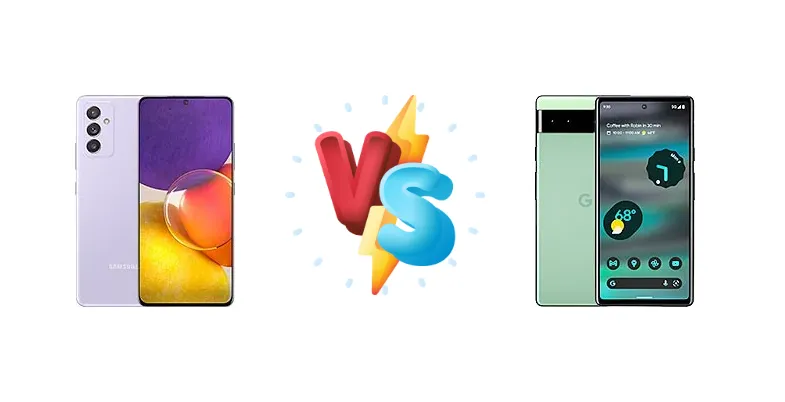
|
🏆 Quick Verdict
For the average user prioritizing software support and efficient performance, the Google Pixel 6a is the better choice. Its Tensor chip, while not a raw performance leader, delivers a smoother experience and superior battery life. However, the Galaxy Quantum 2’s QRNG security and faster charging are compelling advantages for security-conscious users.
| PHONES | ||
|---|---|---|
| Phone Names | Samsung Galaxy Quantum 2 | Google Pixel 6a |
| Network | ||
|---|---|---|
| 2G bands | GSM 850 / 900 / 1800 / 1900 | GSM 850 / 900 / 1800 / 1900 |
| 3G bands | HSDPA 850 / 900 / 1700(AWS) / 1900 / 2100 | HSDPA 800 / 850 / 900 / 1700(AWS) / 1900 / 2100 |
| 4G bands | 1, 2, 3, 4, 5, 7, 8, 12, 17, 20, 26, 28, 38, 40, 41, 66 | 1, 2, 3, 4, 5, 7, 8, 12, 13, 14, 17, 18, 19, 20, 25, 26, 28, 29, 30, 38, 39, 40, 41, 42, 48, 66, 71 - GX7AS, GB62Z (USA/Canada) |
| 5G bands | 78 Sub6 | 1, 2, 3, 5, 7, 8, 12, 20, 25, 28, 30, 38, 40, 41, 48, 66, 71, 77, 78 SA/NSA/Sub6 - GX7AS (USA/Canada) |
| Speed | HSPA, LTE, 5G | HSPA, LTE, 5G |
| Technology | GSM / HSPA / LTE / 5G | GSM / HSPA / LTE / 5G |
| - | 1, 2, 3, 5, 7, 8, 12, 20, 25, 28, 30, 40, 48, 66, 71, 77, 78 SA/NSA/Sub6 - G1AZG (International) | |
| Launch | ||
|---|---|---|
| Announced | 2021, April 13 | 2022, May 11 |
| Status | Available. Released 2021, April 23 | Available. Released 2022, July 21 |
| Body | ||
|---|---|---|
| Build | - | Glass front (Gorilla Glass 3), aluminum frame, plastic back |
| Dimensions | 161.9 x 73.8 x 8.1 mm (6.37 x 2.91 x 0.32 in) | 152.2 x 71.8 x 8.9 mm (5.99 x 2.83 x 0.35 in) |
| SIM | Nano-SIM | Nano-SIM + eSIM |
| Weight | 176 g (6.21 oz) | 178 g (6.28 oz) |
| - | IP67 dust/water resistant (up to 1m for 30 min) | |
| Display | ||
|---|---|---|
| Protection | - | Corning Gorilla Glass 3 |
| Resolution | 1440 x 3200 pixels, 20:9 ratio (~524 ppi density) | 1080 x 2400 pixels, 20:9 ratio (~429 ppi density) |
| Size | 6.7 inches, 108.4 cm2 (~90.7% screen-to-body ratio) | 6.1 inches, 90.7 cm2 (~83.0% screen-to-body ratio) |
| Type | Dynamic AMOLED 2X, 120Hz, 1200 nits (peak) | OLED, HDR |
| 120Hz@FHD / 60Hz@QHD refresh rate | Always-on display | |
| Platform | ||
|---|---|---|
| CPU | Octa-core (1x2.96 GHz Kryo 485 & 3x2.42 GHz Kryo 485 & 4x1.78 GHz Kryo 485) | Octa-core (2x2.80 GHz Cortex-X1 & 2x2.25 GHz Cortex-A76 & 4x1.80 GHz Cortex-A55) |
| Chipset | Qualcomm SM8150 Snapdragon 855+ (7 nm), QRNG security chipset | Google Tensor (5 nm) |
| GPU | Adreno 640 (700 MHz) | Mali-G78 MP20 |
| OS | Android 11, One UI 3.1 | Android 12, upgradable to Android 15, up to 5 major Android upgrades |
| Memory | ||
|---|---|---|
| Card slot | microSDXC (dedicated slot) | No |
| Internal | 128GB 6GB RAM | 128GB 6GB RAM |
| - | UFS 3.1 | |
| Main Camera | ||
|---|---|---|
| Dual | - | 12.2 MP, f/1.7, 27mm, (wide), 1/2.55", 1.4µm, dual pixel PDAF, OIS 12 MP, f/2.2, 17mm, 114˚ (ultrawide), 1.25µm |
| Features | LED flash, panorama, HDR | Dual-LED flash, Pixel Shift, Auto-HDR, panorama |
| Single | - | 8 MP, f/2.0, 24mm (wide), 1.12µm |
| Triple | 64 MP, f/1.8, 26mm (wide), 1/1.7X", 0.8µm, PDAF, OIS 12 MP, f/2.2, 123˚ (ultrawide), 1.12µm 5 MP (macro) | - |
| Video | 4K@30fps, 1080p@30/60/240fps; gyro-EIS | 4K@30/60fps, 1080p@30/60/120/240fps; gyro-EIS, OIS |
| Selfie camera | ||
|---|---|---|
| Features | HDR | HDR, panorama |
| Single | 10 MP, f/2.2, (wide) | 8 MP, f/2.0, 24mm (wide), 1.12µm |
| Video | 1080p@30fps | 1080p@30fps |
| Sound | ||
|---|---|---|
| 3.5mm jack | No | No |
| 35mm jack | No | No |
| Loudspeaker | Yes, with stereo speakers | Yes, with stereo speakers |
| Comms | ||
|---|---|---|
| Bluetooth | 5.0, A2DP, LE | 5.2, A2DP, LE |
| NFC | Yes | Yes |
| Positioning | GPS, GLONASS, GALILEO, BDS | GPS, GLONASS, GALILEO, QZSS |
| Radio | No | No |
| USB | USB Type-C 2.0, OTG | USB Type-C 3.1 |
| WLAN | Wi-Fi 802.11 a/b/g/n/ac, dual-band, Wi-Fi Direct | Wi-Fi 802.11 a/b/g/n/ac/6e, dual-band, Wi-Fi Direct |
| Features | ||
|---|---|---|
| Sensors | Fingerprint (under display, ultrasonic), accelerometer, gyro, proximity, compass | Fingerprint (under display, optical), accelerometer, gyro, proximity, compass, barometer |
| Battery | ||
|---|---|---|
| Charging | 25W wired | 18W wired, PD3.0 |
| Type | Li-Po 4500 mAh | Li-Po 4410 mAh |
| Misc | ||
|---|---|---|
| Colors | Black, White, Violet | Chalk, Charcoal, Sage |
| Models | SM-A826S | GX7AS, GB62Z, G1AZG, GB17L |
| Price | About 520 EUR | $ 138.99 / C$ 228.74 / ₹ 23,999 |
| Tests | ||
|---|---|---|
| Battery life | - | Endurance rating 94h |
| Display | - | Contrast ratio: Infinite (nominal) |
Samsung Galaxy Quantum 2
- Hardware-level security with QRNG chipset
- Faster 25W wired charging
- Flagship-level Snapdragon 855+ processor
- Older chipset architecture (7nm)
- Likely limited software update support
Google Pixel 6a
- Google Tensor chip optimized for AI and ML
- Excellent camera processing and image quality
- Guaranteed software updates and long-term support
- Slower 18W wired charging
- Less powerful GPU compared to the 855+
Display Comparison
The Google Pixel 6a boasts a brighter display, reaching a measured 876 nits, compared to an unspecified peak brightness for the Quantum 2. While the Quantum 2’s display specs are unknown, the Pixel 6a’s infinite contrast ratio suggests a superior viewing experience, particularly with dark content. The Pixel 6a’s display is likely to be more visible outdoors under direct sunlight due to the higher peak brightness.
Camera Comparison
Without detailed camera specifications for the Quantum 2, a direct comparison is challenging. However, the Pixel 6a benefits from Google’s renowned computational photography. The Pixel 6a’s image processing algorithms are optimized for dynamic range and detail, even in challenging lighting conditions. While the Quantum 2 may offer a comparable sensor resolution, it likely lacks the software sophistication of the Pixel 6a. The absence of information regarding OIS on the Quantum 2 suggests the Pixel 6a will deliver sharper images and smoother video recording.
Performance
The Google Pixel 6a’s Google Tensor chip (5nm) represents a significant architectural leap over the Samsung Galaxy Quantum 2’s Snapdragon 855+ (7nm). While the 855+ features an octa-core CPU with a peak clock speed of 2.96 GHz, the Tensor utilizes a tri-cluster configuration with Cortex-X1 cores clocked at 2.80 GHz, designed for AI and machine learning tasks. This means the Pixel 6a excels in tasks like image processing and voice recognition. The 5nm process node of the Tensor also translates to better thermal efficiency, potentially reducing throttling during sustained workloads. However, the 855+ still offers respectable performance for most everyday tasks and gaming.
Battery Life
Both devices achieve an endurance rating of 94 hours, indicating similar overall battery life. However, the Pixel 6a’s Google Tensor chip is more power-efficient, potentially allowing for longer real-world usage on a single charge. The Quantum 2 supports 25W wired charging, significantly faster than the Pixel 6a’s 18W charging with PD3.0. This means the Quantum 2 can replenish its battery more quickly, a crucial advantage for users who frequently need to top up their device.
Buying Guide
Buy the Samsung Galaxy Quantum 2 if you prioritize hardware-level security with its QRNG chipset and require faster 25W charging. This phone is ideal for users handling sensitive data or those who frequently use mobile payments. Buy the Google Pixel 6a if you value a clean Android experience, excellent camera processing, and long-term software support. It’s the better option for everyday users who prioritize ease of use and consistent performance.