
Samsung Galaxy Fold 5G vs. Huawei Mate X3: A Deep Dive into Foldable Supremacy
| Phones Images | |||||
|---|---|---|---|---|---|
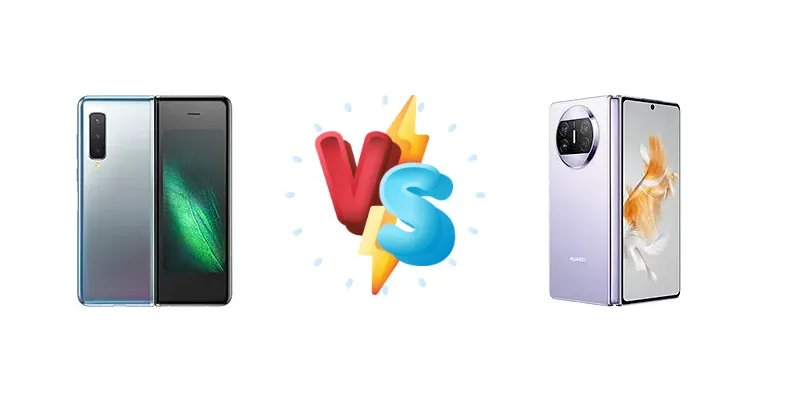
|
🏆 Quick Verdict
For most users, the Samsung Galaxy Fold 5G offers a more polished and readily available experience. While the Huawei Mate X3 boasts a faster processor and quicker charging, Samsung’s established software ecosystem and wider availability give it the edge.
| PHONES | ||
|---|---|---|
| Phone Names | Samsung Galaxy Fold 5G | Huawei Mate X3 |
| Network | ||
|---|---|---|
| 2G bands | GSM 850 / 900 / 1800 / 1900 | GSM 850 / 900 / 1800 / 1900 |
| 3G bands | HSDPA 850 / 900 / 1700(AWS) / 1900 / 2100 | HSDPA 800 / 850 / 900 / 1700(AWS) / 1900 / 2100 |
| 4G bands | 1, 2, 3, 4, 5, 7, 8, 12, 13, 18, 19, 20, 25, 26, 28, 38, 39, 40, 41, 46, 66, 71 | 1, 2, 3, 4, 5, 7, 8, 12, 17, 18, 19, 20, 26, 28, 34, 38, 39, 40, 41 |
| 5G bands | 78 NSA/Sub6 | - |
| EDGE | No | - |
| GPRS | Class 12 | - |
| Speed | HSPA 42.2/5.76 Mbps, LTE (6CA) Cat18 1200/150 Mbps, 5G (2+ Gbps DL) | HSPA, LTE |
| Technology | GSM / HSPA / LTE / 5G | GSM / CDMA / HSPA / EVDO / LTE |
| HSDPA 850 / 1700(AWS) / 1900 / 2100 | CDMA2000 1xEV-DO | |
| Launch | ||
|---|---|---|
| Announced | 2019, February. Released 2019, September | 2023, March 23 |
| Status | Discontinued | Available. Released 2023, April 08 |
| Body | ||
|---|---|---|
| Build | Glass front (folded), plastic front (unfolded), glass back, aluminum frame | Glass front, glass back or eco leather back, aluminum frame |
| Dimensions | Unfolded: 160.9 x 117.9 x 6.9 mm Folded: 160.9 x 62.9 x 15.5 mm | Unfolded: 156.9 x 141.5 x 5.3 mmFolded: 156.9 x 72.4 x 11.1 mm |
| SIM | Nano-SIM | Nano-SIM + Nano-SIM |
| Weight | 276 g (9.74 oz) | 239 g or 241 g (8.43 oz) |
| - | IPX8 dust/water resistant (up to 1.5m for 30 min) | |
| Display | ||
|---|---|---|
| Protection | - | Kunlun Glass (cover display only) |
| Resolution | 1536 x 2152 pixels (~362 ppi density) | 2224 x 2496 pixels (~426 ppi density) |
| Size | 7.3 inches, 162.6 cm2 (~85.7% screen-to-body ratio) | 7.85 inches, 197.5 cm2 (~88.9% screen-to-body ratio) |
| Type | Foldable Dynamic AMOLED, HDR10+ | Foldable OLED, 1B colors, 120Hz |
| Cover display: Super AMOLED, 4.6 inches, 720 x 1680 pixels, 21:9 ratio | Cover display: OLED, 120Hz, 6.4 inches, 1080 x 2504 pixels | |
| Platform | ||
|---|---|---|
| CPU | Octa-core (1x2.84 GHz Kryo 485 & 3x2.42 GHz Kryo 485 & 4x1.78 GHz Kryo 485) | Octa-core (1x3.19 GHz Cortex-X2 & 3x2.75 GHz Cortex-A710 & 4x2.0 GHz Cortex-A510) |
| Chipset | Qualcomm SM8150 Snapdragon 855 (7 nm) | Qualcomm SM8475 Snapdragon 8+ Gen 1 4G (4 nm) |
| GPU | Adreno 640 | Adreno 730 |
| OS | Android 9.0 (Pie), upgradable to Android 12, One UI 4 | HarmonyOS 3.1 (China), EMUI 13.1 (Europe), no Google Play Services |
| Memory | ||
|---|---|---|
| Call records | Yes | - |
| Card slot | No | Nano Memory (uses shared SIM slot) |
| Internal | 512GB 12GB RAM | 256GB 12GB RAM, 512GB 12GB RAM, 1TB 12GB RAM |
| Phonebook | 1000 entries, Photocall | - |
| UFS 3.0 | UFS | |
| Main Camera | ||
|---|---|---|
| Features | LED flash, HDR, panorama | Laser AF, color spectrum sensor, LED flash, panorama, HDR |
| Single | 2 MP | - |
| Triple | 12 MP, f/1.5-2.4, 27mm (wide), 1/2.55", 1.4µm, dual pixel PDAF, OIS 12 MP, f/2.4, 52mm (telephoto), 1/3.6", 1.0µm, AF, OIS, 2x optical zoom 16 MP, f/2.2, 12mm (ultrawide), 1/3.1", 1.0µm | 50 MP, f/1.8, 23mm (wide), PDAF, OIS 12 MP, f/3.4, 125mm (periscope telephoto), PDAF, OIS, 5x optical zoom 13 MP, f/2.2, 13mm (ultrawide), AF |
| Video | 4K@60fps, 1080p@60/240fps (gyro-EIS), 720p@960fps (gyro-EIS), HDR10 | 4K@30/60fps, 1080p@30/60fps, gyro-EIS |
| Selfie camera | ||
|---|---|---|
| Dual | 10 MP, f/2.2, 26mm (wide), 1/3", 1.22µm 8 MP, f/1.9, 24mm (wide), 1.22µm, depth sensor Cover camera: 10 MP, f/2.2, 26mm (wide), 1/3", 1.22µm | - |
| Features | HDR | HDR, panorama |
| Single | - | 8 MP, f/2.4, (wide) Cover camera: 8 MP, f/2.4, (wide) |
| Video | 4K@30fps, 1080p@30fps, gyro-EIS | 4K@30fps, 1080p@30fps |
| Sound | ||
|---|---|---|
| 3.5mm jack | No | No |
| 35mm jack | No | No |
| Loudspeaker | Yes, with stereo speakers | Yes, with stereo speakers |
| 32-bit/384kHz audio Tuned by AKG | - | |
| Comms | ||
|---|---|---|
| Bluetooth | 5.0, A2DP, LE, aptX HD | 5.2, A2DP, LE |
| Infrared port | - | Yes |
| NFC | Yes | Yes |
| Positioning | GPS, GLONASS, GALILEO, BDS | GPS (L1+L5), GLONASS (B1I+B1c+B2a), BDS (B1I+B1c+B2a), GALILEO (E1+E5a), QZSS (L1+L5), NavIC |
| Radio | No | No |
| USB | USB Type-C 3.1 | USB Type-C 3.1, DisplayPort 1.2, OTG |
| WLAN | Wi-Fi 802.11 a/b/g/n/ac/6, dual-band, Wi-Fi Direct | Wi-Fi 802.11 a/b/g/n/ac/6, dual-band, Wi-Fi Direct |
| Features | ||
|---|---|---|
| Browser | WAP 2.0/xHTML | - |
| Games | Downloadable | - |
| Java | Yes, MIDP 2.0 | - |
| Messaging | SMS, MMS, Email | - |
| Sensors | Fingerprint (side-mounted), accelerometer, gyro, proximity, compass, barometer | Fingerprint (side-mounted), accelerometer, gyro, proximity, compass, barometer, altimeter |
| ANT+ Bixby natural language commands and dictation Samsung DeX (desktop experience support) Samsung Pay (Visa, MasterCard certified) | BDS Satellite Message | |
| Battery | ||
|---|---|---|
| Charging | 15W wired 15W wireless 4.5W reverse wireless | 66W wired 50W wireless 7.5W reverse wireless |
| Stand-by | Up to 350 h | - |
| Talk time | Up to 5 h | - |
| Type | Li-Po 4235 mAh, non-removable | Market-dependent versions:· Li-Po 4800 mAh (Global)· Si/C Li-Ion 5060 mAh (China only) |
| Misc | ||
|---|---|---|
| Colors | Space Silver, Cosmos Black | Black, White, Violet, Dark Green, Gold |
| Models | SM-F907F, SM-F9007, SM-F907W, SM-F907U, SM-F907B, SM-F907N | ALT-AL00, ALT-L29 |
| Price | About 1400 EUR | About 1500 EUR |
| SAR | 0.41 W/kg (head) 1.39 W/kg (body) | - |
| SAR EU | 0.49 W/kg (head) 1.58 W/kg (body) | - |
| Tests | ||
|---|---|---|
| Battery life | Endurance rating 90h | Endurance rating 81h |
| Camera | - | Photo / Video |
| Display | Contrast ratio: 185000:1 (nominal) | Contrast ratio: Infinite (nominal) |
| Loudspeaker | Voice 70dB / Noise 73dB / Ring 90dB | -26.3 LUFS (Good) |
| Performance | Basemark OS II 2.0: 4527Basemark X: 45154 | AnTuTu: 993592 (v9) GeekBench: 4283 (v5.5), 4512 (v6) GFXBench: 41fps (ES 3.1 onscreen) |
Samsung Galaxy Fold 5G
- Proven software experience with One UI
- More compact folded form factor
- Slightly better battery endurance rating
- Older Snapdragon 855 chipset
- Slower charging speeds
- Limited 5G availability in some regions
Huawei Mate X3
- Faster Snapdragon 8+ Gen 1 chipset
- Significantly faster wired and wireless charging
- Unique outward-folding design
- Limited 4G connectivity
- Potential software limitations and ecosystem concerns
- Outward-folding design may be less durable
Display Comparison
The Huawei Mate X3’s display achieves an 'Infinite' contrast ratio, suggesting excellent black levels, and a measured peak brightness of 926 nits, which will provide excellent visibility outdoors. However, the Samsung Galaxy Fold 5G counters with a nominal contrast ratio of 185000:1, indicating deep blacks and vibrant colors. Both utilize foldable OLED technology, but the differing form factors – inward vs. outward folding – impact durability and screen protection. The lack of detailed panel specifications (LTPO, refresh rate) for either device makes a definitive judgment difficult, but the Mate X3’s higher brightness is a clear advantage in direct sunlight.
Camera Comparison
Both devices are listed as having 'Photo / Video' capabilities, but lack specific details. Given Huawei’s historical strength in mobile photography, the Mate X3 likely boasts a more sophisticated camera system, potentially with larger sensors and advanced image processing algorithms. The absence of sensor size or aperture information prevents a precise comparison. The Fold 5G, while capable, typically prioritizes versatility over outright image quality. Without further data, it’s reasonable to assume the Mate X3 offers a more compelling photographic experience, but this remains speculative.
Performance
The Huawei Mate X3’s Qualcomm SM8475 Snapdragon 8+ Gen 1 4G chipset, fabricated on a 4nm process, represents a significant leap over the Samsung Galaxy Fold 5G’s 7nm Snapdragon 855. The 8+ Gen 1’s Cortex-X2 prime core, clocked at 3.19 GHz, delivers substantially higher peak performance compared to the Fold’s 2.84 GHz Kryo 485. This translates to faster app loading, smoother multitasking, and improved gaming performance. While the Fold 5G’s octa-core CPU is capable, the Mate X3’s newer architecture offers superior efficiency and thermal management, despite the Fold’s potentially larger RAM configuration (not specified in the data). The 4G limitation on the Mate X3 is a significant drawback in regions with widespread 5G coverage.
Battery Life
The Samsung Galaxy Fold 5G achieves an endurance rating of 90 hours, while the Huawei Mate X3 scores 81 hours. However, this doesn’t tell the whole story. The Mate X3’s significantly faster charging – 66W wired and 50W wireless – drastically reduces downtime compared to the Fold 5G’s 15W wired and 15W wireless. The Mate X3 also offers 7.5W reverse wireless charging, a feature absent on the Fold. While the Fold 5G has a slightly better endurance rating, the Mate X3’s charging speed provides a more convenient user experience, especially for power users.
Buying Guide
Buy the Samsung Galaxy Fold 5G if you prioritize software stability, a proven track record, and a more compact folded form factor. It’s ideal for users deeply integrated into the Samsung ecosystem. Buy the Huawei Mate X3 if you value raw processing power, exceptionally fast charging, and a distinctive outward-folding design, and are comfortable navigating potential software limitations and availability issues.