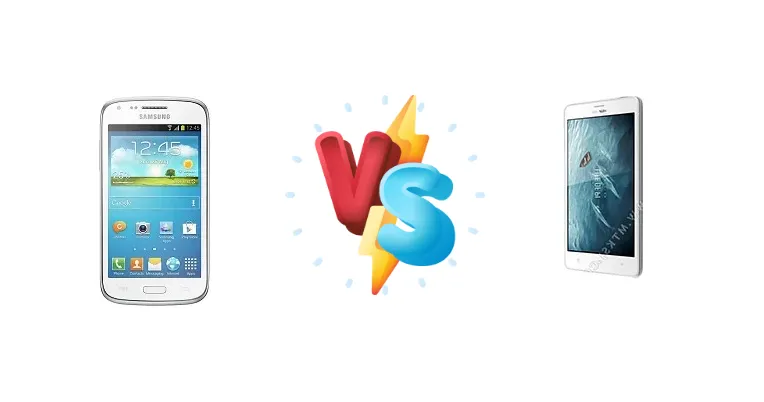
Released in different eras of the budget smartphone market, the Samsung Galaxy Core I8260 and Huawei Ascend G628 represent distinct approaches to affordability. The Core I8260, leveraging Qualcomm's Snapdragon S4 Play, aimed for a balance of features, while the Ascend G628, powered by a Mediatek octa-core processor, prioritized raw processing power. This comparison dissects their strengths and weaknesses to determine which device offers the best value today.
🏆 Quick Verdict
For the average user in 2024, the Huawei Ascend G628 is the superior choice. Its Mediatek MT6752 chipset delivers significantly more processing power than the Samsung Galaxy Core I8260’s Snapdragon S4 Play, resulting in a smoother user experience, especially with multitasking and modern applications. While the Core I8260 boasts a slightly better contrast ratio, the G628’s performance advantage outweighs this difference.
| Network |
|---|
| 2G bands | GSM 850 / 900 / 1800 / 1900 - GT-I8260 | GSM 850 / 900 / 1800 / 1900 - SIM 1 & SIM 2 (dual-SIM model only) |
| 3G bands | HSDPA 900 / 2100 | HSDPA 900 / 2100 |
| 4G bands | - | LTE |
| Speed | HSPA 7.2/5.76 Mbps | HSPA, TD-SCDMA, LTE, TD-LTE |
| Technology | GSM / HSPA | GSM / HSPA / LTE |
| | - | LTE (unspecified) |
| Launch |
|---|
| Announced | 2013, May. Released 2013, June | Exp. announcement 2015, Q3 |
| Status | Discontinued | Cancelled |
| Body |
|---|
| Build | Glass front, plastic back, plastic frame | - |
| Dimensions | 129.3 x 67.6 x 9 mm (5.09 x 2.66 x 0.35 in) | - |
| SIM | Single SIM (Micro-SIM) or Dual SIM (Micro-SIM, dual stand-by) | Single SIM (Micro-SIM) or Dual SIM (Micro-SIM, dual stand-by) |
| Weight | 124 g (4.37 oz) | - |
| Display |
|---|
| Resolution | 480 x 800 pixels, 5:3 ratio (~217 ppi density) | 720 x 1280 pixels, 16:9 ratio (~294 ppi density) |
| Size | 4.3 inches, 52.6 cm2 (~60.2% screen-to-body ratio) | 5.0 inches, 68.9 cm2 |
| Type | TFT | IPS LCD |
| Platform |
|---|
| CPU | Dual-core 1.2 GHz Cortex-A5 | Octa-core 1.7 GHz Cortex-A53 |
| Chipset | Qualcomm MSM8225 Snapdragon S4 Play | Mediatek MT6752 (28 nm) |
| GPU | Adreno 203 | Mali-T760 |
| OS | Android 4.1.2 (Jelly Bean) | Android 4.4.4 (KitKat), EMUI 2.3 |
| Memory |
|---|
| Card slot | microSDXC (dedicated slot) | microSDXC (dedicated slot) |
| Internal | 8GB (4.5GB user available), 1GB RAM | 8GB 1GB RAM |
| Main Camera |
|---|
| Features | LED flash | LED flash |
| Single | 5 MP, f/2.6, AF | 8 MP, AF |
| Video | 480p@30fps | Yes |
| Selfie camera |
|---|
| Single | VGA | 2 MP |
| Sound |
|---|
| 3.5mm jack | - | Yes |
| 35mm jack | Yes | Yes |
| Loudspeaker | Yes | Yes |
| Comms |
|---|
| Bluetooth | 3.0, A2DP | 4.0, A2DP |
| NFC | No | No |
| Positioning | GPS | GPS |
| Radio | FM radio, RDS | FM radio |
| USB | microUSB 2.0 | microUSB 2.0 |
| WLAN | Wi-Fi 802.11 b/g/n, hotspot | Wi-Fi 802.11 b/g/n |
| Features |
|---|
| Sensors | Accelerometer, proximity, compass | Accelerometer, proximity |
| Battery |
|---|
| Stand-by | Up to 500 h (2G) / Up to 300 h (3G) | - |
| Talk time | Up to 14 h (2G) / Up to 9 h (3G) | - |
| Type | Li-Ion 1800 mAh, removable | Li-Ion, removable |
| Misc |
|---|
| Colors | Metallic Blue, Chic White | Black, White |
| Models | GT-I8260, GT-I8262 | - |
| Price | About 160 EUR | About 140 EUR |
| SAR EU | 0.29 W/kg (head) 0.95 W/kg (body) | - |
Samsung Galaxy Core I8260
- Slightly better display contrast ratio (842:1)
- Established Samsung brand reputation
- Decent battery endurance (49h)
- Significantly weaker processor (Snapdragon S4 Play)
- Limited multitasking capabilities
- Outdated hardware
Huawei Ascend G628
- Much faster octa-core processor (MT6752)
- Improved multitasking and app performance
- Potentially better thermal management (28nm process)
- Display specifications largely unknown
- Less established brand reputation in some markets
- Battery life dependent on capacity (unknown)
Display Comparison
The Samsung Galaxy Core I8260 features a display with a nominal contrast ratio of 842:1, improving to 1.563:1 in sunlight. This suggests decent visibility outdoors. However, the Ascend G628’s display specifications are unavailable, making a direct comparison difficult. Given Huawei’s typical approach in this segment, it likely utilizes a standard IPS panel. The Core I8260’s higher contrast ratio provides a more visually appealing experience, with deeper blacks, but the G628’s display size and resolution remain unknown factors. Without further data, it’s difficult to assess color accuracy or viewing angles on either device.
Camera Comparison
Both devices feature cameras, but detailed specifications are limited. The Samsung Galaxy Core I8260 is listed as having a 'Photo' camera, lacking specifics on resolution or features. The Ascend G628’s camera details are also unavailable. Given the market segment, it’s likely both devices feature basic cameras suitable for casual snapshots. Without sensor size, aperture, or image processing details, a meaningful comparison is impossible. It’s safe to assume neither device will excel in low-light photography or offer advanced camera features.
Performance
The Huawei Ascend G628’s Mediatek MT6752, built on a 28nm process, is the clear winner in terms of raw processing power. Its octa-core Cortex-A53 CPU running at 1.7 GHz significantly outperforms the Samsung Galaxy Core I8260’s dual-core 1.2 GHz Cortex-A5 processor. The MT6752’s architecture allows for more efficient multitasking and handling of complex applications. The Snapdragon S4 Play, while adequate for basic tasks, will struggle with modern demands. The 28nm process of the MT6752 also suggests potentially better thermal management compared to the older Snapdragon, though real-world performance will depend on the G628’s cooling solution.
Battery Life
The Samsung Galaxy Core I8260 boasts an endurance rating of 49 hours, indicating reasonable battery life for its time. However, the Ascend G628’s battery capacity and charging capabilities are unknown. The MT6752’s more efficient architecture *could* offset a potentially smaller battery, but without concrete data, it’s difficult to say. The Core I8260’s endurance rating suggests it could comfortably last a full day with moderate use, but the G628’s performance advantage might lead to faster battery drain during intensive tasks.
Buying Guide
Buy the Samsung Galaxy Core I8260 if you prioritize a slightly better display contrast ratio and are looking for a device with a well-established brand reputation, even if it means sacrificing performance. Buy the Huawei Ascend G628 if you prioritize responsiveness, multitasking, and the ability to run more demanding apps, making it ideal for users who want the most processing power for their money.
Frequently Asked Questions
❓ Will the Huawei Ascend G628 struggle with modern Android apps?
While the Mediatek MT6752 is an older chipset, its octa-core architecture and 1.7 GHz clock speed provide enough processing power to run most Android apps, even those released a few years later. However, extremely demanding games or resource-intensive applications may experience some lag or reduced graphical settings.
❓ Is the Samsung Galaxy Core I8260 still a viable option for basic smartphone use in 2024?
The Galaxy Core I8260 can still handle basic tasks like calls, texts, and light web browsing. However, its outdated processor and limited RAM will result in a sluggish experience with anything beyond these fundamental functions. It's best suited for users with very minimal smartphone needs.
❓ Does the Mediatek MT6752 in the Ascend G628 support 4G LTE?
Yes, the Mediatek MT6752 chipset *does* support 4G LTE connectivity. This allows the Ascend G628 to connect to modern mobile networks for faster data speeds, provided the device is used with a compatible SIM card and network.