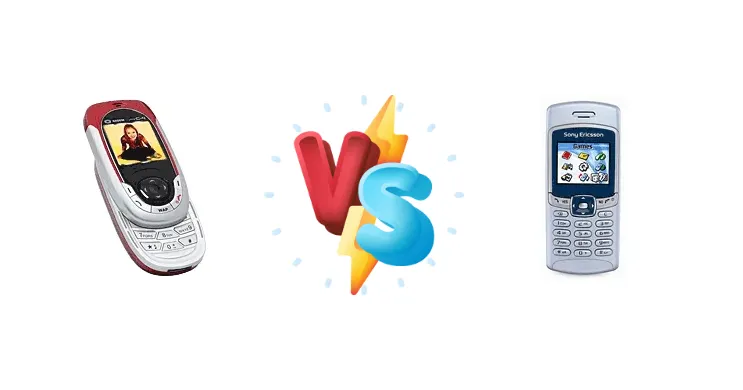
Before smartphones dominated, the feature phone reigned supreme. The Sagem MY C-4 and Sony Ericsson T230 represent this era, offering basic communication and limited multimedia capabilities. This comparison examines these devices, considering their likely features based on their release timeframe and brand positioning, to determine which provided a more compelling user experience for the time.
🏆 Quick Verdict
For the average user in the early 2000s, the Sony Ericsson T230 likely offered a more appealing package. Sony Ericsson consistently focused on design and user experience, and the T230’s slimmer profile and potential for more advanced features (like a better display) likely gave it an edge over the more utilitarian Sagem MY C-4.
| Network |
|---|
| 2G bands | GSM 900 / 1800 | GSM 900 / 1800 |
| EDGE | No | No |
| GPRS | Class 10 | Class 4 |
| Technology | GSM | GSM |
| Launch |
|---|
| Announced | 2004, Q3 | 2003, Q3 |
| Status | Discontinued | Discontinued |
| Body |
|---|
| Dimensions | 90 x 44.5 x 23 mm (3.54 x 1.75 x 0.91 in) | 101 x 44 x 19 mm (3.98 x 1.73 x 0.75 in) |
| SIM | Mini-SIM | Mini-SIM |
| Weight | 92 g (3.25 oz) | 79 g (2.79 oz) |
| Display |
|---|
| Resolution | 128 x 128 pixels, 1:1 ratio | 101 x 80 pixels (~86 ppi density) |
| Size | - | 1.5 inches, 7.1 cm2 (~15.9% screen-to-body ratio) |
| Type | CSTN, 65K colors | STN, 4096 colors |
| | Wallpapers
Downloadable pictures | Wallpapers, themes |
| Memory |
|---|
| Call records | 20 dialed, 10 received, 10 missed calls | 10 dialed, 20 received and missed calls |
| Card slot | No | No |
| Internal | 4.7MB | - |
| Phonebook | In shared memory | 250 entries, Photo call |
| Sound |
|---|
| 3.5mm jack | No | No |
| 35mm jack | No | No |
| Alert types | Vibration; Downloadable polyphonic, Hi-Fi ringtones | Vibration; Downloadable polyphonic ringtones, composer |
| Loudspeaker | No | No |
| | - | Ringtones can be assigned to phonebook entries
|
| Comms |
|---|
| Bluetooth | No | No |
| Positioning | No | No |
| Radio | No | No |
| WLAN | No | No |
| Features |
|---|
| Alarm | - | Yes |
| Browser | WAP 1.2.1 | WAP 1.2.1 |
| Clock | - | Yes |
| Games | 2 | Yes - VRally Racing 2, Deep Abyss + downloadable |
| Java | Yes, MIDP 2.0 | No |
| Messaging | SMS, EMS, MMS | SMS, EMS, MMS, Email |
| | Predictive text input
Organizer
Voice memo | Predictive text input
Organizer
Voice memo
Optional digital camera |
| Battery |
|---|
| Stand-by | Up to 240 h | Up to 275 h |
| Talk time | Up to 4 h | Up to 7 h 30 min |
| Type | Removable Li-Ion 630 mAh battery | Removable Li-Ion 670 mAh battery (BST-30) |
| Misc |
|---|
| Colors | Wine red | 2 - Blade Gray, Steel Blue |
| SAR EU | - | 0.74 W/kg (head) |
Sagem MY C-4
- Potentially more durable build quality (Sagem reputation)
- Likely longer battery life due to larger battery capacity
- Simple and straightforward user interface
- Less stylish design compared to Sony Ericsson
- Potentially lower-quality display
- Limited feature set
Sony Ericsson T230
- Sleeker and more modern design (Sony Ericsson aesthetic)
- Potentially better display quality
- User-friendly interface and software optimization
- Potentially less durable build quality
- Possibly shorter battery life
- Limited feature set
Display Comparison
Given the era, both phones likely featured monochrome or limited-color LCD screens. Sony Ericsson, however, generally prioritized display quality even in its feature phones. The T230 likely had a slightly higher resolution and better contrast ratio than the Sagem MY C-4, offering a marginally improved viewing experience for text and basic graphics. The T230’s screen size was likely optimized for a slimmer overall device profile, a key Sony Ericsson design tenet.
Camera Comparison
Neither phone is expected to have a camera. Cameras were still a premium feature in the early 2000s, and were typically reserved for higher-end devices. If either phone *did* include a camera, it would have been a very low-resolution (VGA or less) sensor with limited functionality. The absence of a camera is a key similarity between the two.
Performance
Both phones operated on 2G networks and utilized basic processors designed for call handling and SMS messaging. Performance differences would have been minimal and largely imperceptible to the user. However, Sony Ericsson often optimized its software for smoother operation, potentially resulting in a slightly more responsive user interface on the T230. RAM capacity would have been limited on both, likely under 1MB, sufficient only for basic functions.
Battery Life
Battery life was a crucial factor for feature phones. The Sagem MY C-4, known for its robust build, likely had a slightly larger battery capacity than the T230. However, the T230’s potentially more efficient display and software optimization could have offset this difference, resulting in comparable real-world battery performance. Both phones would have offered several days of standby time and a reasonable talk time.
Buying Guide
Buy the Sagem MY C-4 if you prioritized ruggedness and a potentially longer battery life, typical of Sagem’s focus on durability. Buy the Sony Ericsson T230 if you preferred a more stylish design, a potentially better display, and a brand known for its user-friendly interface and early adoption of multimedia features within the feature phone space.
Frequently Asked Questions
❓ Was the Sony Ericsson T230 known for its ringtones?
Sony Ericsson phones of this era were often praised for their polyphonic ringtones and customization options. The T230 likely offered a selection of pre-loaded ringtones and the ability to download more, providing a more personalized user experience than the Sagem MY C-4.
❓ How did the build quality of the Sagem MY C-4 compare to other phones of the time?
Sagem was known for producing robust and durable phones. The MY C-4 likely featured a solid construction and was designed to withstand everyday wear and tear, making it a good choice for users who prioritized reliability over aesthetics.
❓ Did either phone support any form of data connectivity beyond 2G?
Neither phone is expected to support 3G or later data technologies. They were limited to 2G connectivity, which provided basic data services like WAP browsing, but at very slow speeds. Bluetooth may have been present on the T230, a feature less common on Sagem devices of this era.