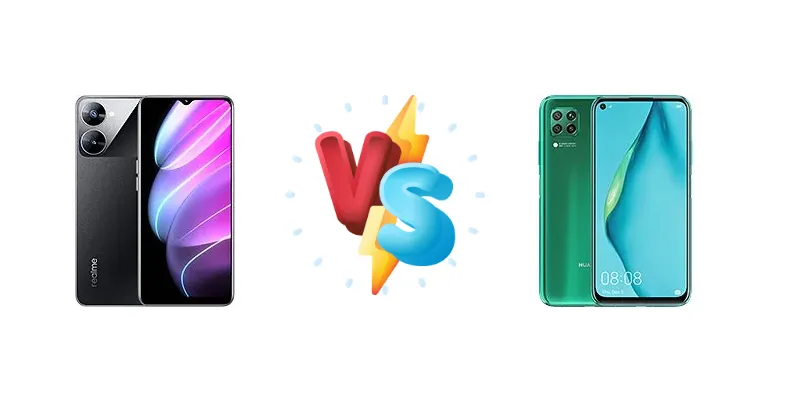
The mid-range smartphone market is fiercely competitive, and the Realme V30 and Huawei nova 7i are two strong contenders. Both offer compelling features at accessible prices, but which one truly delivers the best overall experience? Let's dive into a detailed comparison to help you decide.
🏆 Quick Verdict
The Huawei nova 7i edges out the Realme V30 thanks to its superior chipset (Kirin 810), faster charging, and generally more polished software experience. While the V30 might offer a slightly better display, the nova 7i's performance and charging speed make it the more compelling choice for most users.
| Network |
|---|
| 2G bands | GSM 850 / 900 / 1800 / 1900 | GSM 850 / 900 / 1800 / 1900 |
| 3G bands | HSDPA 850 / 900 / 2100 | HSDPA 800 / 850 / 900 / 1700(AWS) / 2100 |
| 4G bands | LTE | 1, 2, 3, 4, 5, 7, 8, 18, 19, 20, 28, 34, 38, 39, 40, 41 - JNY-L21A, JNY-L01A, JNY-L21B |
| 5G bands | SA/NSA | - |
| Speed | HSPA, LTE, 5G | HSPA 42.2/5.76 Mbps, LTE (2CA) Cat13 400/75 Mbps |
| Technology | GSM / HSPA / LTE / 5G | GSM / CDMA / HSPA / LTE |
| | - | 1, 2, 3, 4, 5, 7, 8, 18, 19, 28, 34, 38, 39, 40, 41 - JNY-L22A, JNY-L02A, JNY-L22B |
| Launch |
|---|
| Announced | 2023, February 09 | 2020, January 30. Released 2020, February 14 |
| Status | Available. Released 2023, March 20 | Discontinued |
| Body |
|---|
| Build | Glass front, plastic frame, plastic back | Glass front, plastic back, plastic frame |
| Dimensions | 8.1 mm thickness | 159.2 x 76.3 x 8.7 mm (6.27 x 3.00 x 0.34 in) |
| SIM | Nano-SIM + Nano-SIM | · Nano-SIM· Nano-SIM + Nano-SIM |
| Weight | 186 g (6.56 oz) | 183 g (6.46 oz) |
| Display |
|---|
| Resolution | 720 x 1600 pixels, 20:9 ratio (~270 ppi density) | 1080 x 2310 pixels (~398 ppi density) |
| Size | 6.5 inches, 102.0 cm2 | 6.4 inches, 101.4 cm2 (~83.5% screen-to-body ratio) |
| Type | IPS LCD, 600 nits | IPS LCD |
| Platform |
|---|
| CPU | - | Octa-core (2x2.27 GHz Cortex-A76 & 6x1.88 GHz Cortex-A55) |
| Chipset | Mediatek | Kirin 810 (7 nm) |
| GPU | - | Mali-G52 MP6 |
| OS | Android 12, Realme UI 3.0 | Android 10, EMUI 10, no Google Play Services |
| Memory |
|---|
| Card slot | microSDXC | Nano Memory (uses shared SIM slot) |
| Internal | 128GB 6GB RAM, 128GB 8GB RAM | 128GB 8GB RAM |
| | - | UFS 2.1 |
| Main Camera |
|---|
| Dual | 13 MP, (wide), AF
Auxiliary lens | - |
| Features | LED flash, HDR, panorama | LED flash, HDR, panorama |
| Quad | - | 48 MP, f/1.8, 26mm (wide), 1/2.0", 0.8µm, PDAF
8 MP, f/2.4, (ultrawide)
2 MP (macro)
Auxiliary lens |
| Single | 5 MP (wide) | - |
| Video | 1080p@30fps | 1080p@30fps |
| Selfie camera |
|---|
| Features | - | HDR |
| Single | 5 MP (wide) | 16 MP, f/2.0, (wide), 1/3.06", 1.0µm |
| Video | 720p@30fps | 1080p@30fps |
| Sound |
|---|
| 3.5mm jack | Yes | Yes |
| 35mm jack | Yes | Yes |
| Loudspeaker | Yes | Yes |
| Comms |
|---|
| Bluetooth | Yes | 5.1, A2DP, LE |
| NFC | Unspecified | No |
| Positioning | Yes | GPS, GLONASS, GALILEO, BDS, QZSS |
| Radio | No | FM radio (market/region dependent) |
| USB | USB Type-C 2.0 | USB Type-C 2.0, OTG |
| WLAN | Yes | Wi-Fi 802.11 a/b/g/n/ac, dual-band, Wi-Fi Direct |
| Features |
|---|
| Sensors | Fingerprint (side-mounted), accelerometer, proximity | Fingerprint (side-mounted), accelerometer, proximity, compass |
| Battery |
|---|
| Charging | - | 40W wired, 70% in 30 min |
| Type | 5000 mAh | Li-Po 4200 mAh |
| Misc |
|---|
| Colors | Black, Gold | Midnight Black, Crush Green, Sakura Pink |
| Models | RMX3618 | JNY-L22B, JNY-L21A, JNY-L01A, JNY-L21B, JNY-L22A, JNY-L02A, JNY-LX2 |
| Price | About 150 EUR | About 240 EUR |
Realme V30
- Potentially vibrant display
- Competitive price
- Decent battery life (likely)
- Less powerful chipset
- Slower charging
- Uncertain software support
Huawei nova 7i
- Powerful Kirin 810 chipset
- Fast 40W charging
- Refined user interface
- Versatile camera system
- No 5G support
- Potential software limitations due to geopolitical factors
Display Comparison
Both phones feature vibrant displays, likely LCD panels. The Realme V30 may have a slightly higher resolution or refresh rate, offering a marginally sharper and smoother visual experience. However, the Huawei nova 7i's display calibration might be more accurate, resulting in better color reproduction.
Camera Comparison
The Huawei nova 7i likely boasts a more versatile camera system, potentially with a higher resolution main sensor and improved image processing capabilities. Huawei's color science is generally well-regarded. The Realme V30's camera performance will depend heavily on the specific sensor and software optimization, but it's unlikely to match the nova 7i's capabilities.
Performance
This is where the Huawei nova 7i shines. The Kirin 810 chipset, built on a 7nm process, offers significantly better performance than the Mediatek chipset in the Realme V30. Expect smoother multitasking, faster app loading times, and better gaming performance on the nova 7i. The Kirin 810's CPU configuration (2x2.27 GHz Cortex-A76 & 6x1.88 GHz Cortex-A55) provides a good balance of power and efficiency.
Battery Life
The Huawei nova 7i's 40W wired charging is a significant advantage, allowing for a 70% charge in just 30 minutes. The Realme V30's charging speed is likely slower, potentially taking considerably longer to reach a full charge. Battery capacity is likely similar between the two devices, but the faster charging on the nova 7i makes it more convenient.
Buying Guide
The Realme V30 is a good option for budget-conscious users prioritizing a vibrant display and potentially longer software support (depending on Realme's track record). The Huawei nova 7i is ideal for those who value performance, fast charging, and a more refined user interface, especially if 5G isn't a critical requirement.
Frequently Asked Questions
❓ Does the Huawei nova 7i support 5G?
No, the Huawei nova 7i does not support 5G connectivity.
❓ What is the Realme V30's chipset?
The Realme V30 uses a Mediatek chipset, but the specific model is not detailed in the provided information.