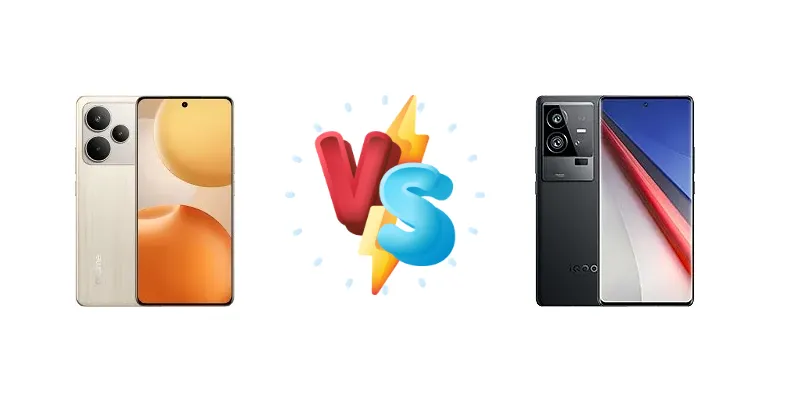
The Realme P4 Pro and vivo iQOO 11 Pro represent distinct approaches to the modern smartphone. The P4 Pro aims to deliver a strong feature set at a more accessible price point, leveraging the Snapdragon 7 Gen 4. Conversely, the iQOO 11 Pro is a performance-focused device, equipped with the flagship Snapdragon 8 Gen 2 and boasting incredibly fast 200W charging. This comparison dissects the key differences to help you determine which device best suits your needs.
🏆 Quick Verdict
For the average user prioritizing raw performance and ultra-fast charging, the vivo iQOO 11 Pro is the clear winner. Its Snapdragon 8 Gen 2 chipset provides a substantial performance leap over the P4 Pro’s Snapdragon 7 Gen 4, and the 200W charging is a game-changer. However, the Realme P4 Pro offers a compelling value proposition for those seeking a balanced experience without the flagship price tag.
| Network |
|---|
| 2G bands | GSM 850 / 900 / 1800 / 1900 | GSM 850 / 900 / 1800 / 1900 |
| 3G bands | HSDPA 850 / 900 / 2100 | HSDPA 800 / 850 / 900 / 1700(AWS) / 1900 / 2100 |
| 4G bands | 1, 3, 5, 8, 28, 40, 41 | 1, 2, 3, 4, 5, 7, 8, 12, 17, 18, 19, 20, 25, 26, 28, 34, 38, 39, 40, 41, 42, 66 |
| 5G bands | 1, 3, 5, 8, 28, 40, 41, 77, 78 SA/NSA | 1, 2, 3, 5, 7, 8, 12, 20, 28, 38, 40, 41, 66, 77, 78, 79 SA/NSA |
| Speed | HSPA, LTE, 5G | HSPA, LTE, 5G |
| Technology | GSM / HSPA / LTE / 5G | GSM / CDMA / HSPA / CDMA2000 / LTE / 5G |
| | - | CDMA2000 1x |
| Launch |
|---|
| Announced | 2025, August 20 | 2022, December 08 |
| Status | Available. Released 2025, August 27 | Available. Released 2022, December 21 |
| Body |
|---|
| Build | Glass front (Gorilla Glass 7i), fiber-reinforced plastic frame, plastic back | - |
| Dimensions | 162.3 x 76.2 x 7.7 mm | 164.8 x 75.3 x 8.9 mm or 9.1 mm |
| SIM | Nano-SIM + Nano-SIM | Nano-SIM + Nano-SIM |
| Weight | 189 g (6.67 oz) | 210.5 g or 213 g (7.44 oz) |
| Display |
|---|
| Protection | Corning Gorilla Glass 7i | - |
| Resolution | 1280 x 2800 pixels, 19.5:9 ratio (~453 ppi density) | 1440 x 3200 pixels, 20:9 ratio (~518 ppi density) |
| Size | 6.8 inches, 112.8 cm2 (~91.2% screen-to-body ratio) | 6.78 inches, 111.0 cm2 (~89.4% screen-to-body ratio) |
| Type | AMOLED, 1B colors, 144Hz, HDR10+, 4608Hz PWM, 1800 nits (HBM), 6500 nits (peak) | LTPO4 AMOLED, 1B colors, 144Hz, HDR10+, 1800 nits (peak) |
| Platform |
|---|
| CPU | Octa-core (1x2.8 GHz Cortex-720 & 4x2.4 GHz Cortex-720 & 3x1.8 GHz Cortex-520) | Octa-core (1x3.2 GHz Cortex-X3 & 2x2.8 GHz Cortex-A715 & 2x2.8 GHz Cortex-A710 & 3x2.0 GHz Cortex-A510) |
| Chipset | Qualcomm SM7750-AB Snapdragon 7 Gen 4 (4 nm) | Qualcomm SM8550-AB Snapdragon 8 Gen 2 (4 nm) |
| GPU | Adreno 722 | Adreno 740 |
| OS | Android 15, up to 3 major Android upgrades, Realme UI 6.0 | Android 13, Funtouch 13 (International), OriginOS 3 (China) |
| Memory |
|---|
| Card slot | No | No |
| Internal | 128GB 8GB RAM, 256GB 8GB RAM, 256GB 12GB RAM, 512GB 12GB RAM | 256GB 8GB RAM, 256GB 12GB RAM, 512GB 16GB RAM |
| | - | UFS 4.0 |
| Main Camera |
|---|
| Dual | 50 MP, f/1.8, 24mm (wide), 1/1.56", 1.0µm, PDAF, OIS
8 MP, f/2.2, 16mm, 112˚ (ultrawide) | - |
| Features | LED flash, HDR, panorama | Dual-LED flash, HDR, panorama |
| Single | - | 16 MP, f/2.5, (wide) |
| Triple | - | 50 MP, f/1.8, (wide), 1/1.49", 1.0µm, PDAF, OIS
13 MP, f/2.5, 50mm (telephoto), PDAF, optical zoom
50 MP, f/2.3, 15mm, 150˚ (ultrawide), 1/2.76", 0.64µm, AF |
| Video | 4K@30/60fps, 1080p@30/60/120fps, gyro-EIS, OIS | 8K@30fps, 4K@24/30/60fps, 1080p@30/60/120/240fps, gyro-EIS |
| Selfie camera |
|---|
| Features | Panorama | HDR |
| Single | 50 MP, f/2.4, 22mm (wide), 1/2.88", 0.61µm | 16 MP, f/2.5, (wide) |
| Video | 4K@30/60fps, 1080p@30/60fps | 1080p@30fps, gyro-EIS |
| Sound |
|---|
| 3.5mm jack | - | No |
| 35mm jack | No | No |
| Loudspeaker | Yes, with stereo speakers | Yes, with stereo speakers |
| | - | 32-bit/384kHz audio |
| Comms |
|---|
| Bluetooth | 5.4, A2DP, LE, aptX HD, LHDC 5 | 5.3, A2DP, LE, aptX HD, aptX Adaptive, aptX Lossless |
| Infrared port | Yes | Yes |
| NFC | No | Yes |
| Positioning | GPS, GLONASS, GALILEO, BDS | GPS, GLONASS, GALILEO, BDS |
| Radio | No | No |
| USB | USB Type-C 2.0 | USB Type-C 2.0, OTG |
| WLAN | Wi-Fi 802.11 a/b/g/n/ac/6, dual-band | Wi-Fi 802.11 a/b/g/n/ac/6, dual-band, Wi-Fi Direct |
| Features |
|---|
| Sensors | Fingerprint (under display, optical), accelerometer, gyro, proximity, compass | Fingerprint (under display, ultrasonic), accelerometer, gyro, proximity, compass |
| Battery |
|---|
| Charging | 80W wired
10W reverse wired
Bypass charging | 200W wired, PD3.0, 100% in 10 min
50W wireless
10W reverse wireless |
| Type | Si/C Li-Ion 7000 mAh | 4700 mAh |
| Misc |
|---|
| Colors | Birch Wood, Dark Oak Wood, Midnight Ivy | Black, Green, White (BMW M branding) |
| Models | RMX5116 | V2254A |
| Price | ₹ 22,250 | About 800 EUR |
Realme P4 Pro
- More affordable price point
- Efficient Snapdragon 7 Gen 4 chipset
- 80W wired charging with bypass charging
- Significantly lower performance than the iQOO 11 Pro
- Likely less advanced camera system
- Slower charging speeds compared to the iQOO 11 Pro
vivo iQOO 11 Pro
- Flagship Snapdragon 8 Gen 2 performance
- Ultra-fast 200W wired charging
- 50W wireless charging and 10W reverse wireless charging
- Higher price tag
- Potentially higher power consumption
- May run hotter under sustained load
Display Comparison
While display specifications are missing for the Realme P4 Pro, the iQOO 11 Pro is expected to feature a high-refresh-rate AMOLED panel. The core difference lies in the processing power driving the visuals. The Snapdragon 8 Gen 2’s Adreno 740 GPU will deliver significantly smoother frame rates in graphically intensive games compared to the Adreno 644 found in the Snapdragon 7 Gen 4. The iQOO 11 Pro’s panel likely benefits from a higher peak brightness and potentially LTPO technology for adaptive refresh rates, contributing to better battery life during static content viewing.
Camera Comparison
Without specific camera details for the Realme P4 Pro, it’s difficult to make a direct comparison. However, the iQOO 11 Pro is likely to feature a more sophisticated camera system, potentially including a larger main sensor and advanced image processing capabilities powered by the Snapdragon 8 Gen 2’s ISP. The iQOO 11 Pro’s chipset allows for faster image processing, improved low-light performance, and potentially 8K video recording. The P4 Pro will likely offer a capable camera for everyday photography, but may lack the advanced features and image quality of the iQOO 11 Pro.
Performance
The performance gap between the Snapdragon 8 Gen 2 and the Snapdragon 7 Gen 4 is substantial. The iQOO 11 Pro’s chipset utilizes a 1x3.2 GHz Cortex-X3 prime core, alongside 2x2.8 GHz Cortex-A715 cores and 2x2.8 GHz Cortex-A710 cores, offering significantly higher single-core and multi-core performance than the P4 Pro’s 1x2.8 GHz Cortex-720, 4x2.4 GHz Cortex-720, and 3x1.8 GHz Cortex-520 configuration. Both chips are built on a 4nm process, but the architectural advancements in the 8 Gen 2 translate to a noticeable advantage in demanding tasks. The iQOO 11 Pro will excel in gaming, video editing, and multitasking, while the P4 Pro will handle everyday tasks smoothly but may show limitations under sustained heavy load.
Battery Life
The iQOO 11 Pro’s 200W wired charging is its standout feature, capable of charging the device from 0 to 100% in just 10 minutes. This is a massive advantage over the Realme P4 Pro’s 80W charging, which, while still fast, will take considerably longer. The iQOO 11 Pro also offers 50W wireless charging and 10W reverse wireless charging, providing greater flexibility. While battery capacity isn’t specified for either device, the iQOO 11 Pro’s faster charging mitigates the impact of a potentially smaller battery, ensuring minimal downtime.
Buying Guide
Buy the Realme P4 Pro if you need a well-rounded smartphone experience with solid performance for everyday tasks and gaming, and value efficient charging without needing the absolute fastest speeds. Buy the vivo iQOO 11 Pro if you prioritize top-tier performance for demanding games and applications, and require the convenience of incredibly rapid 200W charging, even if it comes at a higher cost.
Frequently Asked Questions
❓ Does the Snapdragon 7 Gen 4 in the Realme P4 Pro struggle with demanding games like Genshin Impact?
While the Snapdragon 7 Gen 4 is a capable chip, Genshin Impact and other graphically intensive games will likely require reduced graphics settings to maintain a smooth frame rate on the Realme P4 Pro. The iQOO 11 Pro’s Snapdragon 8 Gen 2 will handle these games at higher settings with ease.
❓ How much faster is 200W charging compared to 80W in real-world use?
The iQOO 11 Pro’s 200W charging can fully charge the device in approximately 10 minutes, while the Realme P4 Pro’s 80W charging will take around 30-45 minutes. This difference is particularly noticeable for users who frequently need to quickly top up their battery.
❓ Will the iQOO 11 Pro get noticeably hotter than the Realme P4 Pro during extended gaming sessions?
The Snapdragon 8 Gen 2 is a more powerful chip and will generate more heat under sustained load. While vivo likely implements effective thermal management solutions, the iQOO 11 Pro may get warmer than the Realme P4 Pro during prolonged gaming. However, this is a trade-off for the significantly higher performance.