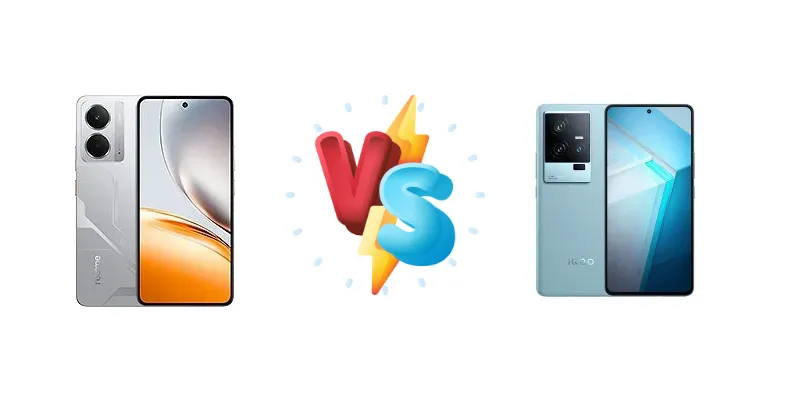
The Realme Neo7x and vivo iQOO 11S represent distinct approaches to the smartphone market. The Neo7x aims for affordability with a newer generation mid-range chip, while the iQOO 11S leverages a previous-generation flagship processor and ultra-fast charging. This comparison dissects the core differences to help you determine which device best suits your needs and budget.
🏆 Quick Verdict
For the average user prioritizing raw performance and future-proofing, the vivo iQOO 11S is the clear winner. Its Snapdragon 8 Gen 2 offers a substantial performance leap over the Neo7x’s Snapdragon 6 Gen 4, coupled with blazing-fast 200W charging. However, the Neo7x presents a compelling value proposition for budget-conscious users.
| Network |
|---|
| 2G bands | GSM 850 / 900 / 1800 / 1900 | GSM 850 / 900 / 1800 / 1900 |
| 3G bands | HSDPA 850 / 900 / 2100 | HSDPA 800 / 850 / 900 / 1700(AWS) / 1900 / 2100 |
| 4G bands | 1, 3, 5, 8, 28, 34, 38, 39, 40, 41 | 1, 2, 3, 4, 5, 7, 8, 12, 17, 18, 19, 20, 26, 28, 34, 38, 39, 40, 41 |
| 5G bands | 1, 5, 8, 28, 41, 77, 78 SA/NSA | 1, 3, 5, 8, 28, 40, 41, 77, 78 SA/NSA |
| Speed | HSPA, LTE, 5G | HSPA, LTE, 5G |
| Technology | GSM / HSPA / LTE / 5G | GSM / CDMA / HSPA / CDMA2000 / LTE / 5G |
| Launch |
|---|
| Announced | 2025, February 25 | 2023, July 04 |
| Status | Available. Released 2025, February 25 | Available. Released 2023, July 10 |
| Body |
|---|
| Dimensions | 163.2 x 75.7 x 8 mm (6.43 x 2.98 x 0.31 in) | 164.9 x 77.1 x 8.4 mm or 8.7 mm |
| SIM | Nano-SIM + Nano-SIM | Nano-SIM + Nano-SIM |
| Weight | 194 g (6.84 oz) | 207 g or 210 g (7.30 oz) |
| Display |
|---|
| Protection | - | Corning Gorilla Glass Victus |
| Resolution | 1080 x 2400 pixels, 20:9 ratio (~395 ppi density) | 1440 x 3200 pixels, 20:9 ratio (~518 ppi density) |
| Size | 6.67 inches, 107.4 cm2 (~86.9% screen-to-body ratio) | 6.78 inches, 111.0 cm2 (~87.3% screen-to-body ratio) |
| Type | AMOLED, 120Hz, 2000 nits (peak) | LTPO4 AMOLED, 1B colors, 144Hz, HDR10+, 1800 nits (peak) |
| Platform |
|---|
| CPU | Octa-core (1x2.3 GHz Cortex-A720s & 3x2.2 GHz Cortex-A720s & 4x1.8 GHz Cortex-A520s) | Octa-core (1x3.2 GHz Cortex-X3 & 2x2.8 GHz Cortex-A715 & 2x2.8 GHz Cortex-A710 & 3x2.0 GHz Cortex-A510) |
| Chipset | Qualcomm Snapdragon 6 Gen 4 (4 nm) | Qualcomm SM8550-AB Snapdragon 8 Gen 2 (4 nm) |
| GPU | Adreno 810 | Adreno 740 |
| OS | Android 15, Realme UI 6.0 | Android 13, OriginOS 3 (China) |
| Memory |
|---|
| Card slot | No | No |
| Internal | 128GB 8GB RAM, 256GB 8GB RAM, 512GB 12GB RAM | 256GB 12GB RAM, 256GB 16GB RAM, 512GB 16GB RAM, 1TB 16GB RAM |
| Main Camera |
|---|
| Features | LED flash, HDR, panorama | Dual-LED flash, HDR, panorama |
| Single | 50 MP, f/1.8, 27mm (wide), 1/2.88", 0.61µm, PDAF | - |
| Triple | - | 50 MP, f/1.9, 23mm (wide), 1/1.49", 1.0µm, PDAF, OIS
13 MP, f/2.5, 47mm (telephoto), PDAF, 2x optical zoom
8 MP, f/2.2, 16mm (ultrawide) |
| Video | 4K@30fps, 1080p@30/60/120fps, gyro-EIS | 8K@30fps, 4K@30/60fps, 1080p@30/60/120/240fps, gyro-EIS |
| Selfie camera |
|---|
| Features | - | HDR |
| Single | 16 MP, f/2.4, 23mm (wide), 1/3.09", 1.0µm | 16 MP, f/2.5, (wide) |
| Video | 1080p@30fps | 1080p@30fps, gyro-EIS |
| Sound |
|---|
| 35mm jack | Yes | No |
| Loudspeaker | Yes, with stereo speakers | Yes, with stereo speakers |
| Comms |
|---|
| Bluetooth | 5.2, A2DP, LE | 5.3, A2DP, LE, aptX HD, aptX Adaptive, aptX Lossless |
| Infrared port | Yes | Yes |
| NFC | Yes | Yes |
| Positioning | GPS, GLONASS, GALILEO, BDS, QZSS | GPS, GLONASS, GALILEO, BDS, NavIC |
| Radio | No | No |
| USB | USB Type-C | USB Type-C 2.0, OTG |
| WLAN | Wi-Fi 802.11 a/b/g/n/ac, dual-band | Wi-Fi 802.11 a/b/g/n/ac/6, dual-band, Wi-Fi Direct |
| Features |
|---|
| Sensors | Fingerprint (under display, optical), accelerometer, gyro, proximity, compass | Fingerprint (under display, optical), accelerometer, gyro, proximity, compass |
| Battery |
|---|
| Charging | 45W wired, 50% in 30 min | 200W wired, PD3.0, UFCS |
| Type | Si/C Li-Ion 6000 mAh | 4700 mAh |
| Misc |
|---|
| Colors | Gray, White | Black, Sky Blue, Legendary White (BMW M branding) |
| Models | - | V2304A |
| Price | About 170 EUR | About 500 EUR |
Realme Neo7x
- More affordable price point
- Modern Snapdragon 6 Gen 4 chipset
- Decent 45W fast charging
- Significantly lower performance than the iQOO 11S
- Likely less advanced camera system
- Potentially limited long-term software support
vivo iQOO 11S
- Flagship-level Snapdragon 8 Gen 2 performance
- Blazing-fast 200W charging
- Likely superior camera system
- Higher price tag
- Potentially more prone to thermal throttling under extreme load (though the 8 Gen 2 is efficient)
- May be overkill for basic users
Display Comparison
While display specifications are absent in the provided data, both devices likely utilize AMOLED panels given their respective brands' tendencies. However, the iQOO 11S, positioned as a flagship, likely boasts a higher peak brightness and potentially LTPO technology for adaptive refresh rates, resulting in improved power efficiency and smoother visuals. The Neo7x will likely prioritize cost-effectiveness, potentially sacrificing some display fidelity.
Camera Comparison
Without specific camera sensor details, it’s difficult to make a definitive judgment. However, the iQOO 11S, being a flagship-level device, is expected to feature a larger primary sensor with Optical Image Stabilization (OIS), resulting in better low-light performance and sharper images. The Neo7x will likely employ a more modest camera setup focused on providing acceptable image quality for everyday use. The image processing algorithms on the iQOO 11S will likely be more advanced, offering features like improved dynamic range and noise reduction.
Performance
The core difference lies in the chipsets. The iQOO 11S’s Snapdragon 8 Gen 2 (4nm) is a significant upgrade over the Realme Neo7x’s Snapdragon 6 Gen 4 (4nm). The 8 Gen 2 features a prime Cortex-X3 core clocked at 3.2 GHz, designed for peak performance, alongside more powerful Cortex-A715 and A710 cores. The Neo7x’s A720s cores, while efficient, are architecturally less capable. This translates to a substantial advantage for the iQOO 11S in CPU-intensive tasks and gaming. The 4nm process node in both chips contributes to efficiency, but the 8 Gen 2’s larger and more sophisticated design allows for sustained performance under load, minimizing thermal throttling. The iQOO 11S will likely support faster RAM (LPDDR5x) further enhancing performance.
Battery Life
The iQOO 11S’s 200W wired charging is a game-changer. It can likely charge from 0-100% in under 20 minutes, offering unparalleled convenience. The Realme Neo7x’s 45W charging, while respectable, pales in comparison, requiring significantly longer to fully charge. While battery capacity isn’t specified, the iQOO 11S’s superior power efficiency from the Snapdragon 8 Gen 2 could offset a potentially smaller battery size, providing comparable or even better real-world battery life.
Buying Guide
Buy the Realme Neo7x if you need a reliable daily driver for everyday tasks, social media, and light gaming, and prioritize a lower price point. You'll benefit from a modern chipset and decent charging speeds without breaking the bank. Buy the vivo iQOO 11S if you demand top-tier performance for demanding games, content creation, or heavy multitasking, and value the convenience of incredibly fast charging. This is the choice for power users.
Frequently Asked Questions
❓ Will the Snapdragon 6 Gen 4 in the Realme Neo7x struggle with graphically demanding games like Genshin Impact?
The Snapdragon 6 Gen 4 is capable of running Genshin Impact, but you'll likely need to lower the graphics settings to medium or low to maintain a stable frame rate. The iQOO 11S with its Snapdragon 8 Gen 2 will provide a much smoother experience at higher settings.
❓ How much faster is the 200W charging on the iQOO 11S compared to the 45W charging on the Realme Neo7x in real-world use?
The iQOO 11S can potentially charge from 0-100% in under 20 minutes, while the Neo7x will likely take over an hour. This means you can quickly top up your iQOO 11S during short breaks, whereas the Neo7x requires a more substantial charging period.
❓ Is the performance difference between the Snapdragon 6 Gen 4 and 8 Gen 2 noticeable for everyday tasks like browsing and social media?
For basic tasks, the difference won't be dramatically noticeable. Both phones will handle these tasks smoothly. However, the iQOO 11S will feel snappier and more responsive when multitasking or switching between apps.
❓ Does the iQOO 11S's Snapdragon 8 Gen 2 tend to overheat during prolonged gaming sessions?
The Snapdragon 8 Gen 2 is a relatively efficient chip, but it can still generate heat under sustained load. The iQOO 11S likely incorporates a robust cooling system to mitigate throttling, but some performance reduction may occur during extended gaming sessions. The Neo7x, with its less powerful chip, will likely experience less thermal throttling.