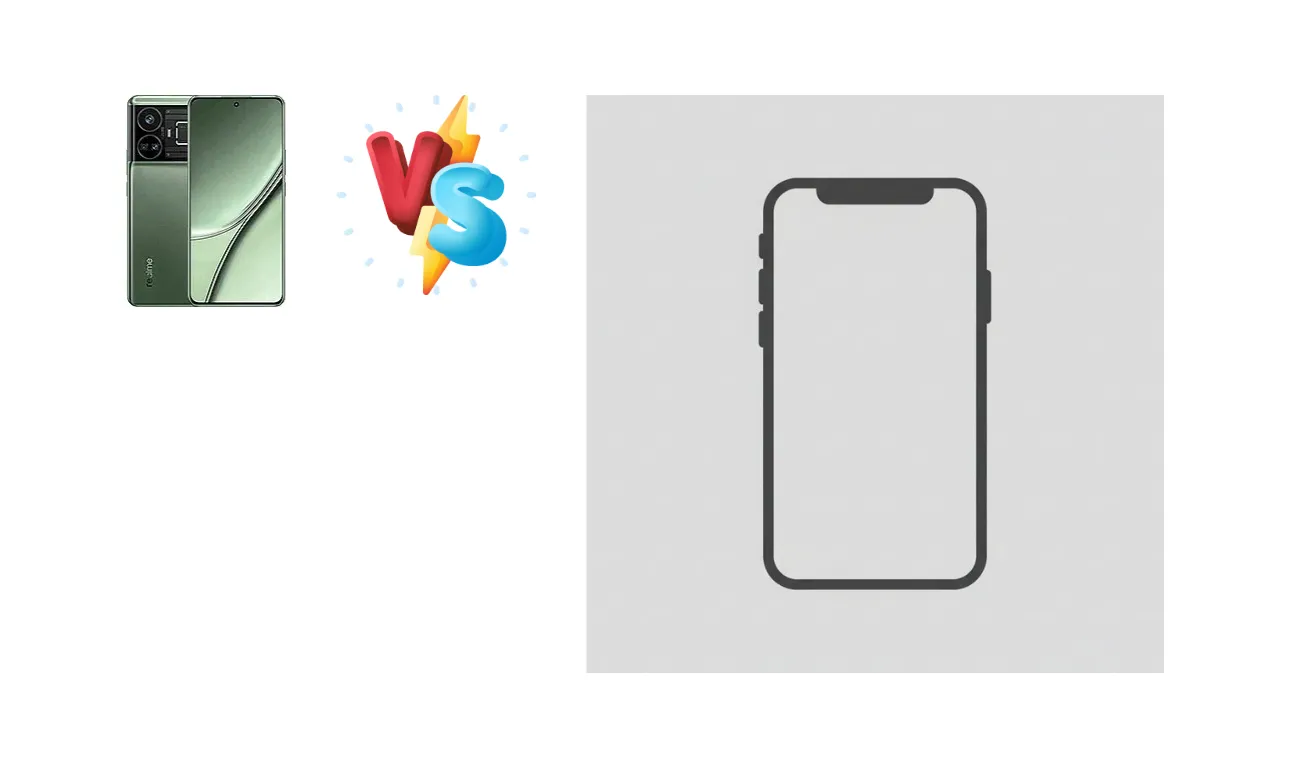
Both the Realme GT5 240W and the ZTE nubia Red Magic 8 Pro+ represent the pinnacle of Android performance in 2023, powered by the Qualcomm Snapdragon 8 Gen 2. However, they cater to slightly different audiences. The GT5 aggressively pushes charging technology, while the Red Magic 8 Pro+ doubles down on a dedicated gaming experience. This comparison dissects their strengths and weaknesses to determine which device reigns supreme.
🏆 Quick Verdict
For the average user prioritizing all-around performance and incredibly fast charging, the Realme GT5 240W is the better choice. Its 240W charging is a game-changer, and while the Red Magic offers a more refined gaming experience, the GT5’s broader capabilities make it more versatile.
| Network |
|---|
| 2G bands | GSM 850 / 900 / 1800 / 1900 | GSM 850 / 900 / 1800 / 1900 - SIM 1 & SIM 2 |
| 3G bands | HSDPA 850 / 900 / 2100 | HSDPA 850 / 900 / 1700(AWS) / 1900 / 2100 |
| 4G bands | 1, 3, 5, 7, 8, 28, 34, 38, 39, 40, 41 | LTE |
| 5G bands | 1, 3, 5, 8, 28, 41, 77, 78 SA/NSA | SA/NSA |
| Speed | HSPA, LTE, 5G | HSPA, LTE-A, 5G |
| Technology | GSM / CDMA / HSPA / EVDO / LTE / 5G | GSM / CDMA / HSPA / EVDO / LTE / 5G |
| | - | CDMA2000 1xEV-DO |
| Launch |
|---|
| Announced | 2023, August 28 | 2022, December 26 |
| Status | Available. Released 2023, September 04 | Available. Released 2022, December 28 |
| Body |
|---|
| Build | Glass front, aluminum frame, glass back | Glass front, glass back, aluminum frame |
| Dimensions | 163.1 x 75.4 x 8.9 mm (6.42 x 2.97 x 0.35 in) | 164 x 76.4 x 8.9 mm (6.46 x 3.01 x 0.35 in) |
| SIM | Nano-SIM + Nano-SIM | Dual SIM (Nano-SIM, dual stand-by) |
| Weight | 205 g (7.23 oz) | 230 g (8.11 oz) |
| | - | Pressure sensitive zones (520Hz touch-sensing)
Built-in cooling fan
Aviation aluminum middle frame |
| Display |
|---|
| Protection | - | Unspecified |
| Resolution | 1240 x 2772 pixels, 20:9 ratio (~451 ppi density) | 1116 x 2480 pixels, 20:9 ratio (~400 ppi density) |
| Size | 6.74 inches, 109.2 cm2 (~88.8% screen-to-body ratio) | 6.8 inches, 111.6 cm2 (~89.1% screen-to-body ratio) |
| Type | AMOLED, 1B colors, 144Hz, HDR10+, 1400 nits (peak) | AMOLED, 1B colors, 120Hz, 1300 nits (peak) |
| Platform |
|---|
| CPU | Octa-core (1x3.2 GHz Cortex-X3 & 2x2.8 GHz Cortex-A715 & 2x2.8 GHz Cortex-A710 & 3x2.0 GHz Cortex-A510) | Octa-core (1x3.2 GHz Cortex-X3 & 2x2.8 GHz Cortex-A715 & 2x2.8 GHz Cortex-A710 & 3x2.0 GHz Cortex-A510) |
| Chipset | Qualcomm SM8550-AB Snapdragon 8 Gen 2 (4 nm) | Qualcomm SM8550-AB Snapdragon 8 Gen 2 (4 nm) |
| GPU | Adreno 740 | Adreno 740 |
| OS | Android 13, Realme UI 4.0 | Android 13, Redmagic OS 6 |
| Memory |
|---|
| Card slot | No | No |
| Internal | 1TB 24GB RAM | 256GB 12GB RAM, 512GB 16GB RAM, 1TB 16GB RAM |
| | - | UFS 4.0 |
| Main Camera |
|---|
| Features | Dual-LED dual-tone flash, HDR, panorama | LED flash, HDR, panorama |
| Single | - | 16 MP, f/2.0, (wide), 1.12µm, under display |
| Triple | 50 MP, f/1.9, 24mm (wide), 1/1.56", 1.0µm, PDAF, OIS
8 MP, f/2.2, 16mm, 112˚ (ultrawide), 1/4.0", 1.12µm
2 MP (macro) | 50 MP, f/1.9, 25mm (wide), 1/1.57", 1.0µm, PDAF
8 MP, f/2.2, 120˚, 13mm (ultrawide), 1/4.0", 1.12µm
2 MP, f/2.4, (macro) |
| Video | 4K@30/60fps, 1080p@30/60fps, gyro-EIS | 8K@30fps, 4K@30/60fps, 1080p@30/60/120/240fps |
| Selfie camera |
|---|
| Features | HDR, panorama | HDR |
| Single | 16 MP, f/2.5, 25mm (wide), 1/3.09", 1.0µm | 16 MP, f/2.0, (wide), 1.12µm, under display |
| Video | 1080p@30fps, gyro-EIS | 1080p@30/60fps |
| Sound |
|---|
| 3.5mm jack | - | Yes |
| 35mm jack | No | - |
| Loudspeaker | Yes, with stereo speakers | Yes, with stereo speakers |
| | - | 32-bit/384kHz audio |
| Comms |
|---|
| Bluetooth | 5.3, A2DP, LE, aptX HD | 5.3, A2DP, LE |
| Infrared port | Yes | - |
| NFC | Yes | Yes (market/region dependent) |
| Positioning | GPS (L1+L2+L5), GLONASS, BDS, GALILEO, QZSS | GPS (L1+L5), GLONASS, BDS, GALILEO |
| Radio | No | No |
| USB | USB Type-C 2.0 | USB Type-C 3.2, OTG, accessory connector, DisplayPort |
| WLAN | Wi-Fi 802.11 a/b/g/n/ac/6/7, tri-band, Wi-Fi Direct | Wi-Fi 802.11 a/b/g/n/ac/6e, tri-band, Wi-Fi Direct |
| Features |
|---|
| Sensors | Fingerprint (under display, optical), accelerometer, gyro, proximity, compass | Fingerprint (under display, optical), accelerometer, gyro, proximity, compass |
| Battery |
|---|
| Charging | 240W wired, PD, 20% in 80 sec | 165W wired, PD3.0, 100% in 14 min (advertised) |
| Type | 4600 mAh | Li-Po 5000 mAh, non-removable |
| Misc |
|---|
| Colors | Flowing Silver, Starry Oasis | Black, Transparent |
| Models | RMX3823 | - |
| Price | About 470 EUR | About 700 EUR |
Realme GT5 240W
- Unrivaled 240W charging speed
- High peak display brightness (1100 nits)
- Powerful Snapdragon 8 Gen 2 processor
- Potential for thermal throttling under sustained load
- Camera system may not be flagship-level
ZTE nubia Red Magic 8 Pro+
- Dedicated gaming features (triggers, cooling)
- Optimized software for gaming
- Potentially better sustained performance due to cooling
- Slower charging speed (165W)
- Camera likely less versatile than GT5
Display Comparison
Both devices utilize high-end displays, but differ in their approach. The Realme GT5 boasts a measured peak brightness of 1100 nits, ensuring excellent visibility even in direct sunlight. While the Red Magic 8 Pro+’s display specs aren’t provided, nubia typically focuses on high refresh rates and color accuracy for gaming. The GT5’s brightness advantage is significant for general use, while the Red Magic likely prioritizes color gamut coverage and response time. The absence of LTPO information for either device means we can’t assess dynamic refresh rate efficiency.
Camera Comparison
Detailed camera specifications are lacking for both devices. Given the market positioning, the Red Magic 8 Pro+ likely prioritizes gaming features over camera prowess, potentially resulting in a more basic camera system. The Realme GT5, while not necessarily a camera-focused phone, typically includes a more versatile camera setup. Without sensor size or aperture information, it’s difficult to make a definitive judgment, but the GT5 is likely to offer a more comprehensive photographic experience. The inclusion of a 2MP macro lens on either device would be largely inconsequential.
Performance
Both the Realme GT5 240W and the ZTE nubia Red Magic 8 Pro+ are equipped with the Qualcomm SM8550-AB Snapdragon 8 Gen 2 (4 nm) chipset, featuring the same Octa-core CPU configuration. This means raw processing power will be nearly identical. However, the Red Magic 8 Pro+’s cooling system – a hallmark of the Red Magic line – likely allows it to sustain peak performance for longer durations during intensive gaming sessions, mitigating thermal throttling. The GT5, while powerful, may experience more throttling under sustained load due to a less aggressive cooling solution. RAM configurations and storage speeds (UFS 4.0 is expected on both) will also play a role, but the chipset is the primary performance determinant.
Battery Life
The Realme GT5 240W’s defining feature is its groundbreaking 240W wired charging, capable of adding 20% charge in just 80 seconds. This is significantly faster than the Red Magic 8 Pro+’s 165W charging, which takes a claimed 14 minutes for a full charge. While the Red Magic’s 165W is still incredibly fast, the GT5’s speed is in a different league. The GT5’s endurance rating of 108 hours suggests a reasonable battery life despite the focus on fast charging, but real-world usage will depend on screen-on time and power consumption. The Red Magic’s battery capacity isn’t specified, but its gaming-centric design likely prioritizes sustained performance over maximizing battery life.
Buying Guide
Buy the Realme GT5 240W if you need the absolute fastest charging speeds available, a bright display for everyday use, and a phone that excels at a variety of tasks. Buy the ZTE nubia Red Magic 8 Pro+ if you prioritize a dedicated gaming experience with features like active cooling, shoulder triggers, and a software suite optimized for gaming performance, and are willing to trade some charging speed for it.
Frequently Asked Questions
❓ How much faster is 240W charging compared to 165W in real-world use?
While both are incredibly fast, 240W charging on the Realme GT5 240W can add approximately 20% charge in 80 seconds, whereas the Red Magic 8 Pro+ takes significantly longer to reach 100%. This translates to a much quicker top-up when you're short on time, making the GT5 ideal for users who frequently need a quick boost.
❓ Will the Red Magic 8 Pro+ overheat during extended gaming sessions?
The Red Magic 8 Pro+ is specifically designed for gaming and incorporates advanced cooling solutions, such as a built-in fan and vapor chamber. This helps to mitigate thermal throttling and maintain consistent performance during long gaming sessions, although some throttling is still possible under extreme conditions.
❓ Is the Realme GT5 240W's fast charging damaging to the battery's long-term health?
Realme employs sophisticated charging algorithms and battery management systems to minimize the impact of fast charging on battery health. While all batteries degrade over time, the GT5’s charging system is designed to optimize charging speed while protecting the battery from excessive heat and voltage stress.
❓ Does the Red Magic 8 Pro+ support high refresh rate gaming?
Nubia Red Magic phones are known for their high refresh rate displays, and the 8 Pro+ is expected to support high refresh rates (likely 120Hz or higher) for a smoother gaming experience. However, specific game compatibility and settings will determine the actual frame rates achieved.