
Realme GT2 Explorer Master vs. vivo X80 Pro: A Deep Dive into Flagship Performance
| Phones Images | |||||
|---|---|---|---|---|---|
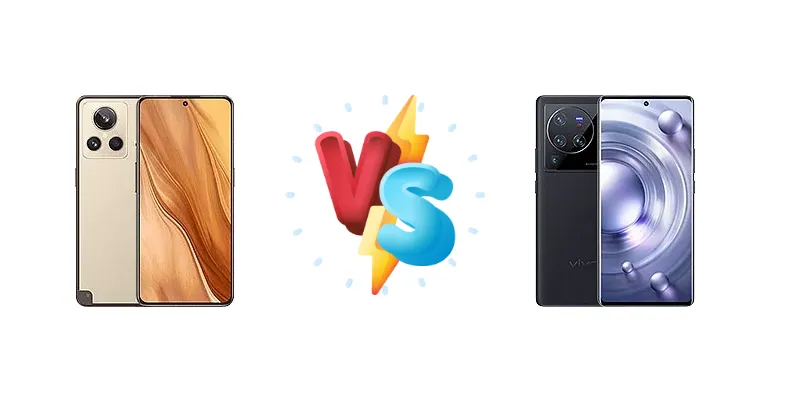
|
🏆 Quick Verdict
For users prioritizing peak performance and incredibly fast charging, the Realme GT2 Explorer Master is the clear winner. Its Snapdragon 8+ Gen 1 offers a noticeable edge in sustained performance, and the 100W charging is unmatched. However, the vivo X80 Pro excels in display brightness and offers a more refined camera experience, making it ideal for content creators and multimedia enthusiasts.
| PHONES | ||
|---|---|---|
| Phone Names | Realme GT2 Explorer Master | vivo X80 Pro |
| Network | ||
|---|---|---|
| 2G bands | GSM 850 / 900 / 1800 / 1900 | GSM 850 / 900 / 1800 / 1900 |
| 3G bands | HSDPA 850 / 900 / 1700(AWS) / 1900 / 2100 | HSDPA 800 / 850 / 900 / 1700(AWS) / 1900 / 2100 |
| 4G bands | 1, 2, 3, 4, 5, 7, 8, 12, 17, 18, 19, 26, 34, 38, 39, 40, 41 | 1, 2, 3, 4, 5, 7, 8, 12, 13, 17, 18, 19, 20, 26, 28, 32, 38, 39, 40, 41, 42, 66 - International |
| 5G bands | 1, 3, 5, 8, 28, 41, 77, 78 SA/NSA | 1, 2, 3, 5, 7, 8, 20, 28, 38, 40, 41, 66, 77, 78 SA/NSA - International |
| Speed | HSPA, LTE, 5G | HSPA, LTE, 5G |
| Technology | GSM / CDMA / HSPA / EVDO / LTE / 5G | GSM / CDMA / HSPA / EVDO / LTE / 5G |
| - | 1, 3, 5, 7, 8, 12, 20, 28, 66, 38, 40, 41, 77, 78, 79 SA/NSA - China | |
| Launch | ||
|---|---|---|
| Announced | 2022, July 12 | 2022, April 25 |
| Status | Available. Released 2022, July 19 | Available. Released 2022, April 29 |
| Body | ||
|---|---|---|
| Build | Glass front, ceramic back or eco leather back, aluminum frame | Glass front (Schott Xensation Up), glass back or ceramic back or eco leather back, aluminum frame |
| Dimensions | 161.3 x 74.3 x 8.2 mm (6.35 x 2.93 x 0.32 in) | 164.6 x 75.3 x 9.1 mm (6.48 x 2.96 x 0.36 in) |
| SIM | Nano-SIM + Nano-SIM | Nano-SIM + Nano-SIM |
| Weight | 195 g (6.88 oz) | 215 g / 219 g (7.58 oz) |
| - | IP68 dust/water resistant (up to 1.5m for 30 min) | |
| Display | ||
|---|---|---|
| Protection | - | Schott Xensation Up |
| Resolution | 1080 x 2400 pixels, 20:9 ratio (~393 ppi density) | 1440 x 3200 pixels, 20:9 ratio (~517 ppi density) |
| Size | 6.7 inches, 108.4 cm2 (~90.4% screen-to-body ratio) | 6.78 inches, 111.4 cm2 (~89.9% screen-to-body ratio) |
| Type | OLED, 1B colors, 120Hz, HDR10+ | LTPO3 AMOLED, 1B colors, 120Hz, HDR10+, 1500 nits (peak) |
| Platform | ||
|---|---|---|
| CPU | Octa-core (1x3.19 GHz Cortex-X2 & 3x2.75 GHz Cortex-A710 & 4x1.80 GHz Cortex-A510) | Octa-core (1x3.00 GHz Cortex-X2 & 3x2.50 GHz Cortex-A710 & 4x1.80 GHz Cortex-A510)Octa-core (1x3.05 GHz Cortex-X2 & 3x2.85 GHz Cortex-A710 & 4x1.80 GHz Cortex-A510) |
| Chipset | Qualcomm SM8475 Snapdragon 8+ Gen 1 (4 nm) | Qualcomm SM8450 Snapdragon 8 Gen 1 (4 nm)Mediatek Dimensity 9000 (4 nm) |
| GPU | Adreno 730 | Adreno 730Mali-G710 MC10 |
| OS | Android 12, Realme UI 3.0 | Android 12, upgradable to Android 14, Funtouch 14 (Global), OriginOS Ocean (China) |
| Memory | ||
|---|---|---|
| Card slot | No | No |
| Internal | 256GB 8GB RAM, 256GB 12GB RAM | 256GB 8GB RAM, 256GB 12GB RAM, 512GB 12GB RAM |
| - | UFS 3.1 | |
| Main Camera | ||
|---|---|---|
| Features | Dual-LED flash, HDR, panorama | Laser AF, color spectrum sensor, Zeiss optics, Zeiss T* lens coating, Pixel Shift, dual-LED dual-tone flash, HDR, panorama |
| Quad | - | 50 MP, f/1.6, (wide), 1/1.3", PDAF, OIS 8 MP, f/3.4, (periscope telephoto), 1/4.4", 1.0µm, PDAF, OIS, 5x optical zoom 12 MP, f/1.9, 50mm (telephoto), 1/2.93", 1.22µm, dual pixel PDAF, 2x optical zoom, gimbal OIS 48 MP, f/2.2, 114˚ (ultrawide), 1/2.0", AF |
| Single | - | 32 MP, f/2.5, 24mm (wide), 1/2.8", 0.8µm |
| Triple | 50 MP, f/1.9, 24mm (wide), 1/1.56", 1.0µm, multi-directional PDAF, OIS 50 MP, f/2.2, 150˚ (ultrawide) 3 MP, f/3.3, 20mm (microscope), AF, 40x magnification | - |
| Video | 4K@30/60fps, 1080p@30/60fps, gyro-EIS | 8K@30fps, 4K@30/60fps, 1080p@30/60fps, gyro-EIS |
| Selfie camera | ||
|---|---|---|
| Features | - | HDR |
| Single | 16MP, f/2.5, 25mm (wide) | 32 MP, f/2.5, 24mm (wide), 1/2.8", 0.8µm |
| Video | 1080p@30fps | 1080p@30fps |
| Sound | ||
|---|---|---|
| 3.5mm jack | No | No |
| 35mm jack | No | No |
| Loudspeaker | Yes, with stereo speakers | Yes, with stereo speakers |
| - | 32-bit/192kHz audio | |
| Comms | ||
|---|---|---|
| Bluetooth | Yes | 5.2 (Snapdragon)/ 5.3 (Dimensity), A2DP, LE, aptX HD, aptX Adaptive, aptX Lossless |
| Infrared port | - | Yes |
| NFC | Yes | Yes |
| Positioning | GPS (L1+L5), GLONASS, BDS, GALILEO, QZSS, NavIC | GPS (L1+L5), GLONASS, BDS, GALILEO, QZSS, NavIC |
| Radio | No | No |
| USB | USB Type-C 2.0, OTG | USB Type-C 3.1 (Global)/ 3.2 (China), OTG |
| WLAN | Yes | Wi-Fi 802.11 a/b/g/n/ac/6, dual-band, Wi-Fi Direct |
| Features | ||
|---|---|---|
| Sensors | Fingerprint (under display, optical), accelerometer, gyro, proximity, compass | Fingerprint (under display, ultrasonic), accelerometer, gyro, proximity, compass |
| Battery | ||
|---|---|---|
| Charging | 100W wired | 80W wired, 100% in 38 min 50W wireless, 100% in 50 min Reverse wired |
| Type | 5000 mAh | 4700 mAh |
| Misc | ||
|---|---|---|
| Colors | Gray, White, Gold | Cosmic Black, Blue, Orange |
| Models | RMX3551 | V2185A, V2145 |
| Price | About 500 EUR | About 850 EUR |
| Tests | ||
|---|---|---|
| Battery life | Endurance rating 126h | Endurance rating 79h |
| Camera | Photo / Video | Photo / Video |
| Display | Contrast ratio: Infinite (nominal) | Contrast ratio: Infinite (nominal) |
| Loudspeaker | -25.8 LUFS (Very good) | -25.1 LUFS (Very good) |
| Performance | AnTuTu: 1045876 (v9) GeekBench: 4021 (v5.1) | - |
Realme GT2 Explorer Master
- Superior CPU performance with Snapdragon 8+ Gen 1
- Industry-leading 100W wired charging
- Longer battery endurance (126h)
- Lower peak display brightness
- Potentially less refined camera image processing
vivo X80 Pro
- Brighter display for better outdoor visibility
- Versatile camera system with advanced image processing
- Option of MediaTek Dimensity 9000 for potentially better thermals
- Shorter battery endurance (79h)
- Slower CPU performance compared to Snapdragon 8+ Gen 1
Display Comparison
The vivo X80 Pro boasts a significantly brighter display, reaching 1014 nits measured, compared to the Realme GT2 Explorer Master’s 798 nits. This translates to superior visibility under direct sunlight. Both displays share an 'Infinite' (nominal) contrast ratio, typical of OLED panels. While both likely employ LTPO technology for adaptive refresh rates (not explicitly stated in the data, but standard for this class), the X80 Pro’s higher peak brightness provides a tangible advantage for outdoor use and HDR content consumption. The X80 Pro's brightness is a key differentiator for users who frequently use their phones outdoors.
Camera Comparison
Both phones feature capable camera systems, but the provided data lacks specifics beyond 'Photo / Video' capabilities. However, given vivo’s reputation, the X80 Pro likely prioritizes image processing and color science, aiming for pleasing, ready-to-share photos. The X80 Pro’s inclusion of a Dimensity 9000 variant could also benefit image signal processing (ISP) performance. While sensor size and aperture data are missing, the X80 Pro’s brand positioning suggests a more comprehensive camera experience, potentially with better low-light performance and video stabilization. The Realme GT2 Explorer Master likely focuses on delivering a more raw, unedited image, appealing to users who prefer manual control.
Performance
The Realme GT2 Explorer Master’s Snapdragon 8+ Gen 1 (4nm) represents a generational leap over the Snapdragon 8 Gen 1 (4nm) found in the vivo X80 Pro. The ‘+’ variant features a more efficient architecture, resulting in improved thermal performance and sustained clock speeds. The X80 Pro also offers a MediaTek Dimensity 9000 option, which competes closely with the Snapdragon 8 Gen 1, potentially offering better thermal management in some scenarios. The GT2 Explorer Master’s CPU, with its Cortex-X2 clocked at 3.19 GHz, edges out the X80 Pro’s 3.00 GHz (Snapdragon) or 3.05 GHz (Dimensity) Cortex-X2. This translates to snappier responsiveness in demanding applications and games. The 4nm process node on both chipsets contributes to improved power efficiency, but the architectural improvements in the 8+ Gen 1 give the Realme the edge.
Battery Life
The Realme GT2 Explorer Master’s endurance rating of 126 hours significantly surpasses the vivo X80 Pro’s 79 hours. However, this doesn’t tell the whole story. The X80 Pro compensates with significantly faster charging: 80W wired (38 minutes to 100%) and 50W wireless (50 minutes to 100%), plus reverse wired charging. The GT2 Explorer Master offers 100W wired charging, which is even faster, but lacks wireless charging. The X80 Pro’s lower endurance rating suggests a smaller battery capacity, but the faster charging mitigates this, allowing for quick top-ups throughout the day. Users prioritizing all-day battery life with less frequent charging will favor the Realme, while those who prefer quick bursts of power will appreciate the vivo’s charging capabilities.
Buying Guide
Buy the Realme GT2 Explorer Master if you need uncompromising gaming performance, lightning-fast charging, and don't mind a potentially less polished camera experience. Buy the vivo X80 Pro if you prefer a brighter, more color-accurate display, a versatile camera system with excellent image processing, and appreciate the option of a MediaTek Dimensity 9000 variant for potentially better thermal management.