
Realme GT2 Explorer Master vs. Google Pixel 6 Pro: A Deep Dive Comparison
| Phones Images | |||||
|---|---|---|---|---|---|
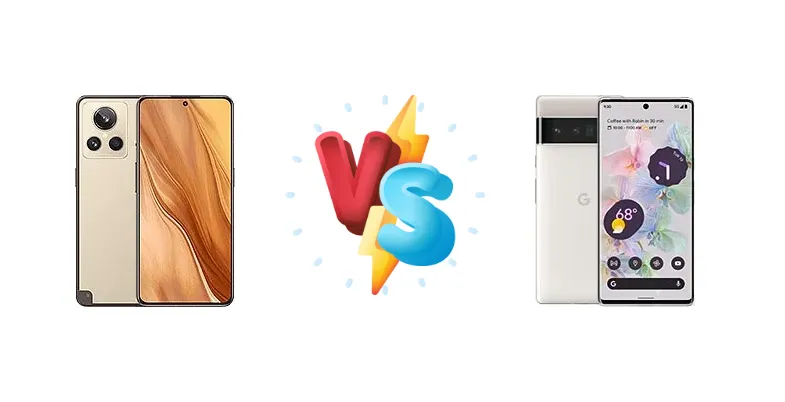
|
🏆 Quick Verdict
For the average user prioritizing a balance of performance, camera quality, and software experience, the Google Pixel 6 Pro emerges as the stronger choice. However, gamers and power users who demand the fastest possible processing and charging speeds will find the Realme GT2 Explorer Master a compelling alternative.
| PHONES | ||
|---|---|---|
| Phone Names | Realme GT2 Explorer Master | Google Pixel 6 Pro |
| Network | ||
|---|---|---|
| 2G bands | GSM 850 / 900 / 1800 / 1900 | GSM 850 / 900 / 1800 / 1900 |
| 3G bands | HSDPA 850 / 900 / 1700(AWS) / 1900 / 2100 | HSDPA 800 / 850 / 900 / 1700(AWS) / 1900 / 2100 |
| 4G bands | 1, 2, 3, 4, 5, 7, 8, 12, 17, 18, 19, 26, 34, 38, 39, 40, 41 | 1, 2, 3, 4, 5, 7, 8, 12, 13, 14, 17, 18, 19, 20, 25, 26, 28, 29, 30, 32, 38, 39, 40, 41, 42, 46, 48, 66, 71 - GLUOG, G8VOU |
| 5G bands | 1, 3, 5, 8, 28, 41, 77, 78 SA/NSA | 1, 2, 3, 5, 7, 8, 12, 14, 20, 25, 28, 30, 38, 40, 41, 48, 66, 71, 77, 78, 257, 258, 260, 261 SA/NSA/Sub6/mmWave - G8VOU |
| Speed | HSPA, LTE, 5G | HSPA, LTE, 5G |
| Technology | GSM / CDMA / HSPA / EVDO / LTE / 5G | GSM / CDMA / HSPA / EVDO / LTE / 5G |
| - | 1, 2, 3, 5, 7, 8, 12, 14, 20, 25, 28, 30, 38, 40, 41, 48, 66, 71, 77, 78 SA/NSA/Sub6 - GLUOG | |
| Launch | ||
|---|---|---|
| Announced | 2022, July 12 | 2021, October 19 |
| Status | Available. Released 2022, July 19 | Available. Released 2021, October 28 |
| Body | ||
|---|---|---|
| Build | Glass front, ceramic back or eco leather back, aluminum frame | Glass front (Gorilla Glass Victus), glass back (Gorilla Glass Victus), aluminum frame |
| Dimensions | 161.3 x 74.3 x 8.2 mm (6.35 x 2.93 x 0.32 in) | 163.9 x 75.9 x 8.9 mm (6.45 x 2.99 x 0.35 in) |
| SIM | Nano-SIM + Nano-SIM | Nano-SIM + eSIM |
| Weight | 195 g (6.88 oz) | 210 g (7.41 oz) |
| - | IP68 dust/water resistant (up to 1.5m for 30 min) | |
| Display | ||
|---|---|---|
| Protection | - | Corning Gorilla Glass Victus |
| Resolution | 1080 x 2400 pixels, 20:9 ratio (~393 ppi density) | 1440 x 3120 pixels, 19.5:9 ratio (~512 ppi density) |
| Size | 6.7 inches, 108.4 cm2 (~90.4% screen-to-body ratio) | 6.7 inches, 110.6 cm2 (~88.9% screen-to-body ratio) |
| Type | OLED, 1B colors, 120Hz, HDR10+ | LTPO AMOLED, 120Hz, HDR10+ |
| - | Always-on display | |
| Platform | ||
|---|---|---|
| CPU | Octa-core (1x3.19 GHz Cortex-X2 & 3x2.75 GHz Cortex-A710 & 4x1.80 GHz Cortex-A510) | Octa-core (2x2.80 GHz Cortex-X1 & 2x2.25 GHz Cortex-A76 & 4x1.80 GHz Cortex-A55) |
| Chipset | Qualcomm SM8475 Snapdragon 8+ Gen 1 (4 nm) | Google Tensor (5 nm) |
| GPU | Adreno 730 | Mali-G78 MP20 |
| OS | Android 12, Realme UI 3.0 | Android 12, upgradable to Android 15, up to 5 major Android upgrades |
| Memory | ||
|---|---|---|
| Card slot | No | No |
| Internal | 256GB 8GB RAM, 256GB 12GB RAM | 128GB 12GB RAM, 256GB 12GB RAM, 512GB 12GB RAM |
| - | UFS 3.1 | |
| Main Camera | ||
|---|---|---|
| Features | Dual-LED flash, HDR, panorama | Laser AF, Dual-LED flash, Pixel Shift, Auto-HDR, panorama |
| Single | - | 11.1 MP, f/2.2, 20mm (ultrawide), 1.22µm |
| Triple | 50 MP, f/1.9, 24mm (wide), 1/1.56", 1.0µm, multi-directional PDAF, OIS 50 MP, f/2.2, 150˚ (ultrawide) 3 MP, f/3.3, 20mm (microscope), AF, 40x magnification | 50 MP, f/1.9, 25mm (wide), 1/1.31", 1.2µm, dual pixel PDAF, OIS 48 MP, f/3.5, 104mm (periscope telephoto), 1/2.0", 0.8µm, PDAF, OIS, 4x optical zoom 12 MP, f/2.2, 17mm, 114˚ (ultrawide), 1.25µm |
| Video | 4K@30/60fps, 1080p@30/60fps, gyro-EIS | 4K@30/60fps, 1080p@30/60/120/240fps; gyro-EIS, OIS |
| Selfie camera | ||
|---|---|---|
| Features | - | HDR, panorama |
| Single | 16MP, f/2.5, 25mm (wide) | 11.1 MP, f/2.2, 20mm (ultrawide), 1.22µm |
| Video | 1080p@30fps | 4K@30fps, 1080p@30/60fps |
| Sound | ||
|---|---|---|
| 3.5mm jack | No | No |
| 35mm jack | No | No |
| Loudspeaker | Yes, with stereo speakers | Yes, with stereo speakers |
| Comms | ||
|---|---|---|
| Bluetooth | Yes | 5.2, A2DP, LE, aptX HD |
| NFC | Yes | Yes |
| Positioning | GPS (L1+L5), GLONASS, BDS, GALILEO, QZSS, NavIC | GPS (L1+L5), GLONASS (G1), BDS (B1I+B1c+B2a), GALILEO (E1+E5a), QZSS (L1+L5) |
| Radio | No | No |
| USB | USB Type-C 2.0, OTG | USB Type-C 3.1 |
| WLAN | Yes | Wi-Fi 802.11 a/b/g/n/ac/6e, dual-band, Wi-Fi Direct |
| Features | ||
|---|---|---|
| Sensors | Fingerprint (under display, optical), accelerometer, gyro, proximity, compass | Fingerprint (under display, optical), accelerometer, gyro, proximity, compass, barometer |
| - | Ultra Wideband (UWB) support | |
| Battery | ||
|---|---|---|
| Charging | 100W wired | 23W wired, PD3.0, 50% in 30 min 23W wireless Reverse wireless |
| Type | 5000 mAh | Li-Ion 5003 mAh |
| Misc | ||
|---|---|---|
| Colors | Gray, White, Gold | Cloudy White, Sorta Sunny, Stormy Black |
| Models | RMX3551 | GLUOG, G8VOU, GF5KQ |
| Price | About 500 EUR | € 199.99 / $ 204.99 / £ 275.00 / ₹ 29,699 |
| Tests | ||
|---|---|---|
| Battery life | Endurance rating 126h | Endurance rating 84h |
| Camera | Photo / Video | - |
| Display | Contrast ratio: Infinite (nominal) | Contrast ratio: Infinite (nominal) |
| Loudspeaker | -25.8 LUFS (Very good) | - |
| Performance | AnTuTu: 1045876 (v9) GeekBench: 4021 (v5.1) | AnTuTu: 585485 (v8), 719815 (v9) GeekBench: 2831 (v5.1) GFXBench: 39 fps (ES 3.1 onscreen) |
Realme GT2 Explorer Master
- Significantly faster charging (100W)
- More powerful processor (Snapdragon 8+ Gen 1)
- Potentially longer battery life (126h endurance)
- Lacks wireless charging
- Less refined software experience
- Camera performance relies heavily on hardware
Google Pixel 6 Pro
- Exceptional computational photography
- Smooth and intuitive software experience
- Wireless and reverse wireless charging
- Slower charging speed (23W)
- Less powerful processor (Google Tensor)
- Shorter battery life (84h endurance)
Display Comparison
Both devices feature displays with an 'Infinite' contrast ratio, typical of modern OLED panels. However, the Pixel 6 Pro boasts a higher peak brightness of 846 nits compared to the Realme GT2 Explorer Master’s 798 nits, making it more visible under direct sunlight. While both offer excellent viewing experiences, the Pixel’s slightly brighter panel provides a marginal advantage in outdoor usability. Neither specification details refresh rate, but both are expected to be 120Hz based on market positioning.
Camera Comparison
While both phones offer capable camera systems, their approaches differ significantly. The Pixel 6 Pro leverages Google’s renowned computational photography algorithms, delivering consistently excellent image quality, particularly in challenging lighting conditions. The Realme GT2 Explorer Master, while capable, likely relies more on hardware specifications. Without detailed sensor information, it’s difficult to make a definitive judgment, but the Pixel’s image processing pipeline is a key differentiator. The Pixel 6 Pro’s strength lies in its software-driven enhancements, while the Realme’s potential lies in its raw hardware capabilities. The absence of detailed camera specs for the Realme makes a direct comparison difficult.
Performance
The Realme GT2 Explorer Master’s Snapdragon 8+ Gen 1 (4nm) is architecturally superior to the Google Tensor (5nm) in terms of raw CPU and GPU power. The Snapdragon’s Cortex-X2 prime core, clocked at 3.19 GHz, surpasses the Pixel’s Cortex-X1 at 2.80 GHz. This translates to faster app loading times and smoother performance in demanding games. The 4nm process node of the Snapdragon also contributes to better thermal efficiency, potentially reducing throttling during sustained workloads. However, the Google Tensor excels in AI and machine learning tasks, powering features like Magic Eraser and Live Translate, areas where the Snapdragon relies more on traditional processing.
Battery Life
The Realme GT2 Explorer Master’s endurance rating of 126 hours significantly exceeds the Pixel 6 Pro’s 84 hours, indicating superior battery life. This is partially offset by the Pixel 6 Pro’s wireless charging capabilities (23W) and reverse wireless charging, features absent on the Realme. The Realme’s 100W wired charging is a game-changer, capable of fully charging the device in a fraction of the time compared to the Pixel’s 23W charging, which takes approximately 30 minutes to reach 50%. The Realme prioritizes speed, while the Pixel offers convenience and flexibility.
Buying Guide
Buy the Realme GT2 Explorer Master if you need uncompromising gaming performance, incredibly fast 100W charging, and aren't heavily invested in the Google ecosystem. Buy the Google Pixel 6 Pro if you prefer a refined software experience, exceptional computational photography, and long-term software support, even if it means sacrificing some raw processing power and charging speed.