
Realme GT2 Explorer Master vs Asus ROG Phone 6 Pro: Which Flagship Reigns Supreme?
| Phones Images | |||||
|---|---|---|---|---|---|
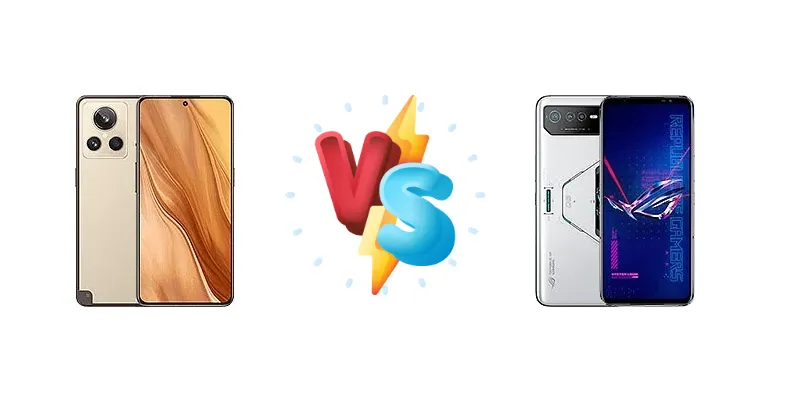
|
🏆 Quick Verdict
For the average user prioritizing a sleek design and incredibly fast 100W charging, the Realme GT2 Explorer Master offers a compelling package. However, gamers and power users will find the Asus ROG Phone 6 Pro’s dedicated gaming features, slightly brighter display, and more comprehensive charging standards (PD3.0, QC5) to be worth the premium.
| PHONES | ||
|---|---|---|
| Phone Names | Realme GT2 Explorer Master | Asus ROG Phone 6 Pro |
| Network | ||
|---|---|---|
| 2G bands | GSM 850 / 900 / 1800 / 1900 | GSM 850 / 900 / 1800 / 1900 |
| 3G bands | HSDPA 850 / 900 / 1700(AWS) / 1900 / 2100 | HSDPA 800 / 850 / 900 / 1700(AWS) / 1900 / 2100 |
| 4G bands | 1, 2, 3, 4, 5, 7, 8, 12, 17, 18, 19, 26, 34, 38, 39, 40, 41 | 1, 2, 3, 4, 5, 7, 8, 12, 13, 17, 18, 19, 20, 25, 26, 28, 29, 30, 32, 34, 38, 39, 40, 41, 42, 43, 48, 66, 71 - Version A |
| 5G bands | 1, 3, 5, 8, 28, 41, 77, 78 SA/NSA | 1, 2, 3, 5, 7, 8, 12, 13, 18, 20, 25, 26, 28, 38, 40, 41, 48, 66, 71, 77, 78, 79 SA/NSA/Sub6 - Version A |
| Speed | HSPA, LTE, 5G | HSPA 42.2/5.76 Mbps, LTE (6CA) Cat20 2024/210 Mbps, 5G |
| Technology | GSM / CDMA / HSPA / EVDO / LTE / 5G | GSM / CDMA / HSPA / LTE / 5G |
| - | 1, 3, 5, 8, 28, 41, 77, 78, 79 - Version B | |
| Launch | ||
|---|---|---|
| Announced | 2022, July 12 | 2022, July 05 |
| Status | Available. Released 2022, July 19 | Available. Released 2022, July 13 |
| Body | ||
|---|---|---|
| Build | Glass front, ceramic back or eco leather back, aluminum frame | Glass front (Gorilla Glass Victus), glass back (Gorilla Glass 3), aluminum frame |
| Dimensions | 161.3 x 74.3 x 8.2 mm (6.35 x 2.93 x 0.32 in) | 173 x 77 x 10.3 mm (6.81 x 3.03 x 0.41 in) |
| SIM | Nano-SIM + Nano-SIM | Nano-SIM + Nano-SIM |
| Weight | 195 g (6.88 oz) | 239 g (8.43 oz) |
| - | IPX4 water resistant 2" OLED display (on the back) Pressure sensitive zones (Gaming triggers) | |
| Display | ||
|---|---|---|
| Protection | - | Corning Gorilla Glass Victus |
| Resolution | 1080 x 2400 pixels, 20:9 ratio (~393 ppi density) | 1080 x 2448 pixels (~395 ppi density) |
| Size | 6.7 inches, 108.4 cm2 (~90.4% screen-to-body ratio) | 6.78 inches, 109.5 cm2 (~82.2% screen-to-body ratio) |
| Type | OLED, 1B colors, 120Hz, HDR10+ | AMOLED, 1B colors, 165Hz, HDR10+, 800 nits (typ), 1200 nits (peak) |
| Platform | ||
|---|---|---|
| CPU | Octa-core (1x3.19 GHz Cortex-X2 & 3x2.75 GHz Cortex-A710 & 4x1.80 GHz Cortex-A510) | Octa-core (1x3.19 GHz Cortex-X2 & 3x2.75 GHz Cortex-A710 & 4x1.80 GHz Cortex-A510) |
| Chipset | Qualcomm SM8475 Snapdragon 8+ Gen 1 (4 nm) | Qualcomm SM8475 Snapdragon 8+ Gen 1 (4 nm) |
| GPU | Adreno 730 | Adreno 730 |
| OS | Android 12, Realme UI 3.0 | Android 12, upgradable to Android 13 |
| Memory | ||
|---|---|---|
| Card slot | No | No |
| Internal | 256GB 8GB RAM, 256GB 12GB RAM | 512GB 18GB RAM |
| - | UFS 3.1 NTFS support for external storage | |
| Main Camera | ||
|---|---|---|
| Features | Dual-LED flash, HDR, panorama | LED flash, HDR, panorama |
| Triple | 50 MP, f/1.9, 24mm (wide), 1/1.56", 1.0µm, multi-directional PDAF, OIS 50 MP, f/2.2, 150˚ (ultrawide) 3 MP, f/3.3, 20mm (microscope), AF, 40x magnification | 50 MP, f/1.9, (wide), 1/1.56", 1.0µm, PDAF 13 MP, f/2.2, (ultrawide) 5 MP (macro) |
| Video | 4K@30/60fps, 1080p@30/60fps, gyro-EIS | 8K@24fps, 4K@30/60/120fps, 1080p@30/60/120/240fps, 720p@480fps; gyro-EIS |
| Selfie camera | ||
|---|---|---|
| Features | - | Panorama, HDR |
| Single | 16MP, f/2.5, 25mm (wide) | 12 MP, 28mm (wide) |
| Video | 1080p@30fps | 1080p@30fps |
| Sound | ||
|---|---|---|
| 3.5mm jack | No | Yes |
| 35mm jack | No | Yes |
| Loudspeaker | Yes, with stereo speakers | Yes, with stereo speakers (2 amplifiers) |
| - | 32-bit/384kHz audio | |
| Comms | ||
|---|---|---|
| Bluetooth | Yes | 5.2, A2DP, LE, aptX HD, aptX Adaptive, aptX Lossless |
| NFC | Yes | Yes |
| Positioning | GPS (L1+L5), GLONASS, BDS, GALILEO, QZSS, NavIC | GPS (L1+L5), GLONASS (L1), BDS (B1I+B1c+B2a), GALILEO (E1+E5a), QZSS (L1+L5), NavIC (L5) |
| Radio | No | No |
| USB | USB Type-C 2.0, OTG | USB Type-C 3.1 (side), USB Type-C 2.0 (bottom), OTG, accessory connector |
| WLAN | Yes | Wi-Fi 802.11 a/b/g/n/ac/6e, tri-band, Wi-Fi Direct |
| Features | ||
|---|---|---|
| Sensors | Fingerprint (under display, optical), accelerometer, gyro, proximity, compass | Fingerprint (under display, optical), accelerometer, gyro, proximity, compass |
| Battery | ||
|---|---|---|
| Charging | 100W wired | 65W wired, PD3.0, QC5, 100% in 42 min 10W reverse wired |
| Type | 5000 mAh | Li-Po 6000 mAh |
| Misc | ||
|---|---|---|
| Colors | Gray, White, Gold | Storm White |
| Models | RMX3551 | AI2201_D |
| Price | About 500 EUR | About 800 EUR |
| Tests | ||
|---|---|---|
| Battery life | Endurance rating 126h | Endurance rating 119h |
| Camera | Photo / Video | Photo / Video |
| Display | Contrast ratio: Infinite (nominal) | Contrast ratio: Infinite (nominal) |
| Loudspeaker | -25.8 LUFS (Very good) | -24.1 LUFS (Very good) |
| Performance | AnTuTu: 1045876 (v9) GeekBench: 4021 (v5.1) | AnTuTu: 973756 (v8), 1103188 (v9) GeekBench: 3980 (v5.1) GFXBench: 79fps (ES 3.1 onscreen) |
Realme GT2 Explorer Master
- Faster 100W wired charging
- Slightly better battery endurance rating
- Potentially more refined camera processing
- Less robust thermal management
- Lacks advanced gaming features
- Charging standard compatibility is limited
Asus ROG Phone 6 Pro
- Superior thermal management for sustained performance
- Brighter display for better outdoor visibility
- Wider charging standard support (PD3.0, QC5)
- Slightly lower battery endurance rating
- Bulkier design
- Potentially less emphasis on camera quality
Display Comparison
Both devices feature displays with an infinite (nominal) contrast ratio, indicating excellent black levels. However, the Asus ROG Phone 6 Pro edges out the Realme GT2 Explorer Master with a measured peak brightness of 829 nits compared to the Realme’s 798 nits. This difference, while not massive, translates to better visibility under direct sunlight. While both likely employ high refresh rate panels (not specified in the data, but standard for this class), the ROG Phone’s larger size may allow for a more immersive gaming experience. The lack of information on PWM dimming rates prevents a definitive statement on eye strain, but users sensitive to flicker should investigate further.
Camera Comparison
Both devices are listed as having 'Photo / Video' capabilities, offering minimal insight. Without sensor size, aperture, or image processing details, a direct comparison is difficult. However, given Asus’s focus on gaming, the ROG Phone 6 Pro’s camera system is likely tuned for versatility rather than photographic excellence. The Realme GT2 Explorer Master, aligning with Realme’s broader smartphone strategy, may prioritize camera performance with potentially larger sensors and more sophisticated image processing algorithms. The absence of details necessitates further investigation through independent reviews.
Performance
Both phones are equipped with the Qualcomm SM8475 Snapdragon 8+ Gen 1 (4 nm) chipset, featuring the same CPU configuration: an octa-core setup with 1x3.19 GHz Cortex-X2, 3x2.75 GHz Cortex-A710, and 4x1.80 GHz Cortex-A510 cores. This means raw processing power is virtually identical. The ROG Phone 6 Pro’s advantage lies in its superior thermal management system, designed to sustain peak performance for longer durations during demanding gaming sessions. While the Realme GT2 Explorer Master will deliver excellent performance, it may be more prone to thermal throttling under prolonged heavy load. The RAM configuration (not specified) will also play a role, but the chipset is the primary performance determinant here.
Battery Life
The Realme GT2 Explorer Master boasts a slightly better endurance rating of 126 hours compared to the Asus ROG Phone 6 Pro’s 119 hours, suggesting marginally better battery life. However, the ROG Phone 6 Pro compensates with significantly faster charging: 65W wired with support for PD3.0 and QC5, achieving a full charge in 42 minutes, plus 10W reverse wired charging. The Realme GT2 Explorer Master’s 100W charging is faster, but lacks the broader compatibility of the ROG Phone’s standards. The ROG Phone also offers reverse wired charging, a feature absent on the Realme.
Buying Guide
Buy the Realme GT2 Explorer Master if you need a stylish, fast-charging flagship with excellent all-around performance and don't require dedicated gaming features. It's ideal for content creators, social media enthusiasts, and users who value a premium aesthetic. Buy the Asus ROG Phone 6 Pro if you prefer an uncompromising gaming experience with advanced cooling, customizable controls, and a brighter display, even if it means a bulkier design and a higher price tag.