
Realme GT Master vs Motorola Edge 20 Pro: A Detailed Comparison
| Phones Images | |||||
|---|---|---|---|---|---|
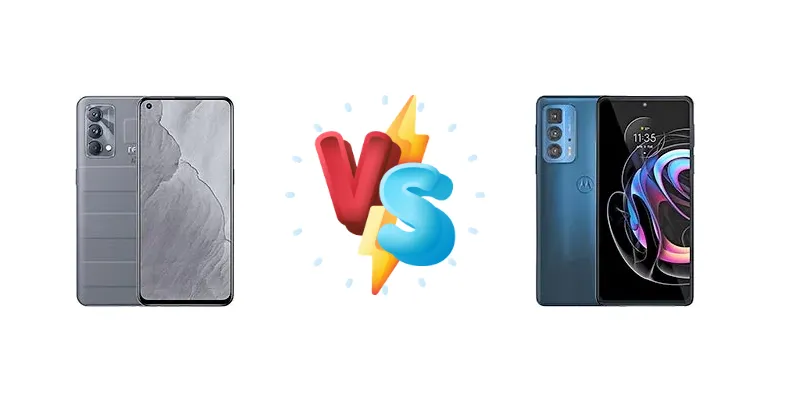
|
🏆 Quick Verdict
For the average user prioritizing everyday performance and a stylish design, the Motorola Edge 20 Pro emerges as the stronger contender. Its Snapdragon 870 provides a noticeable performance uplift over the GT Master’s Snapdragon 778G, making it better suited for demanding tasks and future-proofing. However, the Realme GT Master’s 65W charging is a significant advantage for those who value speed.
| PHONES | ||
|---|---|---|
| Phone Names | Realme GT Master | Motorola Edge 20 Pro |
| Network | ||
|---|---|---|
| 2G bands | GSM 850 / 900 / 1800 / 1900 | GSM 850 / 900 / 1800 / 1900 |
| 3G bands | HSDPA 850 / 900 / 1700(AWS) / 1900 / 2100 | HSDPA 850 / 900 / 1700(AWS) / 1900 / 2100 |
| 4G bands | 1, 2, 3, 4, 5, 7, 8, 12, 17, 18, 19, 20, 26, 28, 38, 39, 40, 41, 66 - International | 1, 2, 3, 4, 5, 7, 8, 12, 13, 17, 20, 26, 28, 32, 34, 38, 39, 40, 41, 42, 43, 66 |
| 5G bands | 1, 3, 5, 7, 8, 20, 28, 38, 40, 41, 66, 77, 78 SA/NSA - International | 1, 3, 5, 7, 8, 28, 38, 41, 66, 77, 78 SA/NSA/Sub6 |
| Speed | HSPA, LTE, 5G | HSPA 42.2/5.76 Mbps, LTE Cat18 1200/150 Mbps, 5G |
| Technology | GSM / CDMA / HSPA / EVDO / LTE / 5G | GSM / HSPA / LTE / 5G |
| 1, 3, 5, 8, 28, 41, 77, 78 SA/NSA - China | - | |
| Launch | ||
|---|---|---|
| Announced | 2021, July 21 | 2021, July 29 |
| Status | Available. Released 2021, July 30 | Available. Released 2021, August 16 |
| Body | ||
|---|---|---|
| Build | Glass front, plastic frame, plastic back | Glass front (Gorilla Glass 5), aluminum frame, glass back (Gorilla Glass 5) or eco leather back |
| Dimensions | 159.2 mm x 73.5 mm x 8.0/8.7 mm (depending on color) | 163 x 76 x 8 mm (6.42 x 2.99 x 0.31 in) |
| SIM | Nano-SIM + Nano-SIM | Nano-SIM + Nano-SIM |
| Weight | 174/180 g (depending on color) (6.14 oz) | 185/190 g (depending on color) (6.53 oz) |
| - | Water-repellent design | |
| Display | ||
|---|---|---|
| Protection | - | Corning Gorilla Glass 5 |
| Resolution | 1080 x 2400 pixels, 20:9 ratio (~409 ppi density) | 1080 x 2400 pixels, 19.5:9 ratio (~385 ppi density) |
| Size | 6.43 inches, 99.8 cm2 (~85.3% screen-to-body ratio) | 6.7 inches, 110.2 cm2 (~89.0% screen-to-body ratio) |
| Type | Super AMOLED, 120Hz, 1000 nits (peak) | OLED, 1B colors, 144Hz, HDR10+ |
| Platform | ||
|---|---|---|
| CPU | Octa-core (1x2.4 GHz Cortex-A78 & 3x2.2 GHz Cortex-A78 & 4x1.9 GHz Cortex-A55) | Octa-core (1x3.2 GHz Kryo 585 & 3x2.42 GHz Kryo 585 & 4x1.80 GHz Kryo 585) |
| Chipset | Qualcomm SM7325 Snapdragon 778G 5G (6 nm) | Qualcomm SM8250-AC Snapdragon 870 5G (7 nm) |
| GPU | Adreno 642L | Adreno 650 |
| OS | Android 11, upgradable to Android 13, Realme UI 4.0 | Android 11, planned upgrade to Android 13 |
| Memory | ||
|---|---|---|
| Card slot | No | No |
| Internal | 128GB 6GB RAM, 128GB 8GB RAM, 256GB 8GB RAM | 128GB 6GB RAM, 128GB 8GB RAM, 256GB 8GB RAM, 256GB 12GB RAM |
| UFS | UFS 3.1 | |
| Main Camera | ||
|---|---|---|
| Features | LED flash, HDR, panorama | Dual-LED flash, panorama, HDR |
| Single | 32 MP, f/2.5, 26mm (wide), 1/2.74", 0.8µm | - |
| Triple | 64 MP, f/1.8, 25mm (wide), 1/2.0", 0.7µm, PDAF 8 MP, f/2.2, 16mm, 119˚ (ultrawide), 1/4.0", 1.12µm 2 MP (macro) | 108 MP, f/1.9, (wide), 1/1.52", 0.7µm, PDAF 8 MP, f/3.4, 126mm (periscope telephoto), 1.0µm, 5x optical zoom, PDAF, OIS 16 MP, f/2.2, 13mm, 119˚ (ultrawide), 1.0µm |
| Video | 4K@30fps, 1080p@30/60fps, gyro-EIS | 8K@24fps, 4K@30/60fps, 1080p@30/60/240/960fps, gyro-EIS |
| Selfie camera | ||
|---|---|---|
| Features | HDR, panorama | HDR |
| Single | 32 MP, f/2.5, 26mm (wide), 1/2.74", 0.8µm | 32 MP, f/2.3, (wide), 0.7µm |
| Video | 1080p@30fps | 4K@30fps, 1080p@30/120fps |
| Sound | ||
|---|---|---|
| 3.5mm jack | Yes | No |
| 35mm jack | Yes | No |
| Loudspeaker | Yes | Yes |
| 24-bit/192kHz audio | - | |
| Comms | ||
|---|---|---|
| Bluetooth | 5.2, A2DP, LE | 5.1, A2DP, LE |
| NFC | Yes | Yes |
| Positioning | GPS, GLONASS, GALILEO, BDS, QZSS | GPS (L1+L5), GLONASS, BDS, GALILEO |
| Radio | No | No |
| USB | USB Type-C 2.0, OTG | USB Type-C 3.1, DisplayPort 1.4 |
| WLAN | Wi-Fi 802.11 a/b/g/n/ac/6, dual-band, Wi-Fi Direct | Wi-Fi 802.11 a/b/g/n/ac/6, dual-band, Wi-Fi Direct |
| Features | ||
|---|---|---|
| Sensors | Fingerprint (under display, optical), accelerometer, gyro, proximity, compass | Fingerprint (side-mounted), accelerometer, gyro, proximity, compass |
| Battery | ||
|---|---|---|
| Charging | 65W wired, 100% in 33 min | 30W wired |
| Type | 4300 mAh | Li-Po 4500 mAh |
| Misc | ||
|---|---|---|
| Colors | Black, Gray, White, Aurora | Midnight Blue, Blue Vegan Leather, Iridescent Cloud |
| Models | RMX3363, RMX3360, RMX3361 | XT2153-1 |
| Price | $ 142.99 / € 128.55 | About 330 EUR |
| Tests | ||
|---|---|---|
| Battery life | Endurance rating 114h | Endurance rating 112h |
| Camera | Photo / Video | Photo / Video |
| Display | Contrast ratio: Infinite (nominal) | Contrast ratio: Infinite (nominal) |
| Loudspeaker | -29.2 LUFS (Average) | -29.2 LUFS (Average) |
| Performance | AnTuTu: 529263 (v9) GeekBench: 2917 (v5.1) GFXBench: 27fps (ES 3.1 onscreen) | AnTuTu: 711090 (v9) GeekBench: 3140 (v5.1) GFXBench: 49fps (ES 3.1 onscreen) |
Realme GT Master
- Incredibly fast 65W charging
- Unique and stylish design
- Competitive price point
- Less powerful Snapdragon 778G chipset
- Slightly lower peak display brightness
Motorola Edge 20 Pro
- More powerful Snapdragon 870 chipset
- Brighter display for outdoor visibility
- Superior multitasking and gaming performance
- Slower 30W charging
- Potentially higher price
Display Comparison
Both the Realme GT Master and Motorola Edge 20 Pro feature displays with an 'Infinite' (nominal) contrast ratio, typical for OLED panels. However, the Edge 20 Pro boasts a higher peak brightness of 673 nits compared to the GT Master’s 634 nits. This translates to better visibility in direct sunlight. While both offer excellent viewing experiences, the Edge 20 Pro’s brighter display provides a slight edge for outdoor use. Neither manufacturer specifies refresh rates, but both are assumed to be 120Hz based on market positioning.
Camera Comparison
Both phones are listed as having 'Photo / Video' capabilities, lacking specific details. However, given the market positioning, we can infer differences. The Edge 20 Pro, being the more premium device, likely features a larger main sensor and more sophisticated image processing algorithms. While sensor size and aperture data are missing, the Snapdragon 870’s ISP (Image Signal Processor) is more capable than the 778G’s, leading to better dynamic range and low-light performance. The inclusion of OIS (Optical Image Stabilization) is likely on the Edge 20 Pro, further enhancing image quality. The GT Master likely focuses on a more vibrant, social media-friendly image profile.
Performance
The core difference between these two phones lies in their chipsets. The Motorola Edge 20 Pro is equipped with the Qualcomm Snapdragon 870 5G (7nm), featuring an octa-core CPU clocked up to 3.2 GHz. This is a significant step up from the Realme GT Master’s Snapdragon 778G 5G (6nm) with its peak clock speed of 2.4 GHz. The 870’s Kryo 585 cores offer superior performance per clock cycle, resulting in faster app loading times, smoother multitasking, and improved gaming performance. The 7nm process node of the 870, while older than the 6nm 778G, doesn’t negate the architectural advantages in core design and clock speed. The Edge 20 Pro will handle graphically intensive games and demanding applications with greater ease.
Battery Life
Both phones achieve similar endurance ratings – 114 hours for the Realme GT Master and 112 hours for the Motorola Edge 20 Pro. However, the charging speeds are drastically different. The Realme GT Master supports 65W wired charging, achieving a full charge in just 33 minutes. The Motorola Edge 20 Pro is limited to 30W wired charging, taking considerably longer to reach 100%. While the Edge 20 Pro’s battery may be slightly more efficient due to the chipset, the GT Master’s charging speed is a game-changer for users who frequently need to top up their battery quickly.
Buying Guide
Buy the Realme GT Master if you prioritize a unique, eye-catching design, incredibly fast 65W charging, and are comfortable with slightly less raw processing power. It’s ideal for social media enthusiasts and users who frequently top up their battery. Buy the Motorola Edge 20 Pro if you demand smoother multitasking, better gaming performance, and a more powerful processor for demanding applications. This phone is geared towards power users and those who want a device that will remain responsive for years to come.